
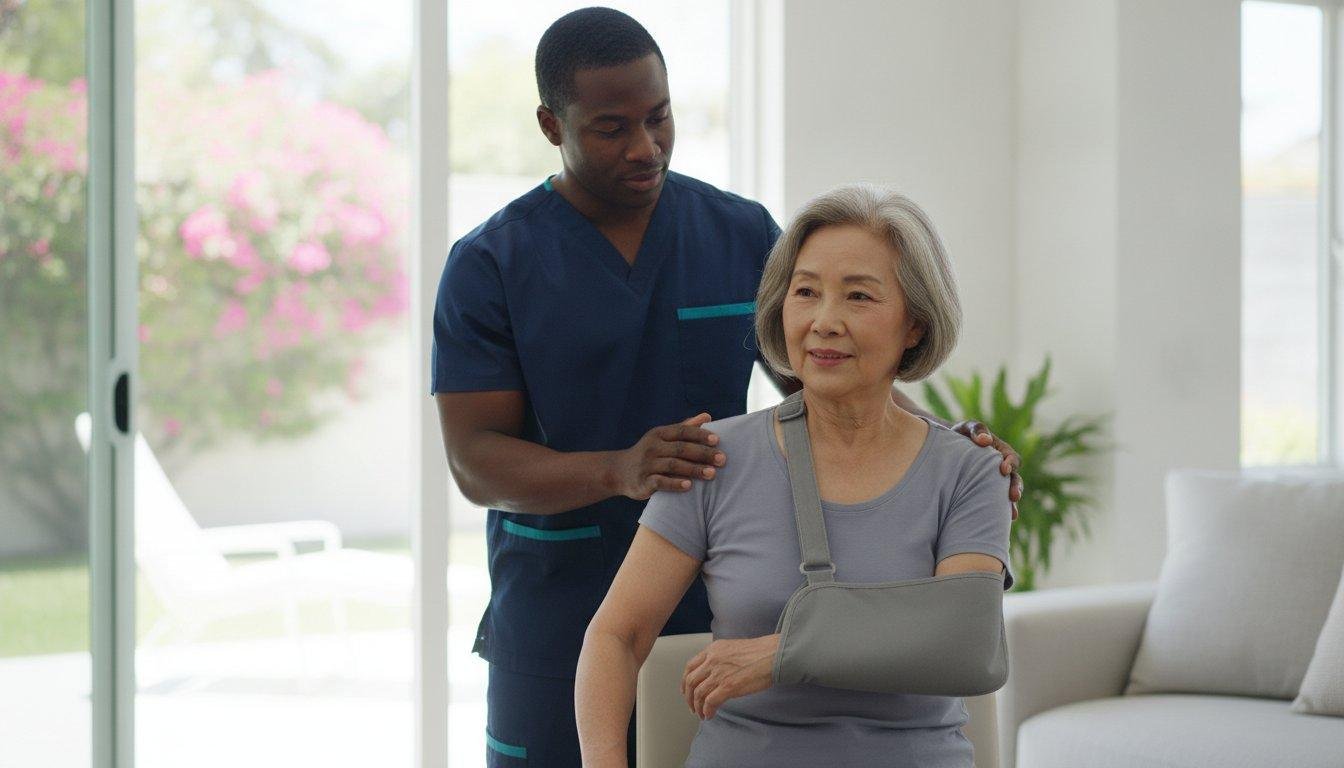
Imagine waking up after your shoulder surgery and realizing that the simple act of getting into a car for a clinic visit feels like an overwhelming hurdle. The jarring movements of traffic and the struggle to dress yourself can turn a necessary medical appointment into a source of significant physical distress and anxiety. When you’re managing post-operative pain, the last thing you need is the stress of navigating busy streets and crowded waiting rooms. Choosing professional in home physical therapy after shoulder surgery allows you to focus entirely on healing in the environment where you feel most secure.
We understand that the early recovery phase is often marked by a fear of re-injury and the frustration of lost independence. It’s natural to worry about how you’ll manage basic daily activities or finally achieve a night of pain-free sleep while your mobility is limited. This clinical guide explains how specialized home-based care accelerates your recovery and restores your range of motion by bringing expert rehabilitation directly to your door. We’ll examine the specific protocols licensed therapists use to help you regain self-sufficiency, ensuring you return to independent daily living with confidence and professional support during every stage of your healing journey.
Key Takeaways
- Learn why the first 14 days of recovery are vital for preventing complications like adhesive capsulitis and ensuring a full range of motion.
- Understand how professional in home physical therapy after shoulder surgery integrates clinical wound care with personalized exercises to protect your surgical site.
- Discover the physiological benefits of recovering at home, where lower stress levels and reduced travel pain contribute to faster overall healing.
- Follow a practical five-step guide to preparing a dedicated therapy zone in your residence to facilitate safe and effective rehabilitation sessions.
- See how an integrated approach combining skilled nursing with specialized therapy provides a comprehensive support system for restoring your independent lifestyle.
The Challenge of Post-Operative Shoulder Mobility
Transitioning from the hospital to your residence represents a significant shift in your recovery journey. This period is often defined by the restrictive nature of immobilization slings and the management of fluctuating pain levels. Engaging in Physical therapy within your own home provides a controlled environment where healing takes precedence over logistical stress. It’s during these initial days that the foundation for long-term mobility is established. The first trip to an outpatient clinic often takes a heavy emotional toll on patients who are already feeling vulnerable. A Steady Guide from Everest Peak acts as a knowledgeable partner; they simplify the complexities of your recovery while prioritizing your physical comfort.
Clinical evidence suggests that the first 14 days following your operation are critical for preventing adhesive capsulitis, commonly known as frozen shoulder. Without gentle, guided movement, the joint capsule can thicken and tighten, leading to chronic stiffness that is difficult to reverse. Utilizing in home physical therapy after shoulder surgery ensures that a licensed professional can initiate passive motion exercises safely. This early intervention protects the delicate surgical repair while maintaining the necessary elasticity of the surrounding tissues. By removing the burden of travel, we allow you to focus your energy on the actual work of rehabilitation.
Common Shoulder Procedures Requiring Home Rehab
Each surgical procedure dictates a unique rehabilitative path that requires precise clinical oversight. For instance, rotator cuff repairs require strict adherence to weight-bearing restrictions to protect the reattached tendons during the early stages of in home physical therapy after shoulder surgery. Total Shoulder Arthroplasty (TSA) involves managing the unfamiliar weight and mechanics of a prosthetic joint, requiring a therapist to guide each movement to ensure joint stability. Subacromial decompression focuses on reducing inflammation and restoring space within the joint to accelerate your return to comfortable overhead activities.
The “San Fernando Valley Factor”: Why Travel Hinders Healing
Navigating the streets of Los Angeles during the early stages of recovery presents unique challenges that can jeopardize your surgical outcomes. The vibrations from uneven pavement and the sudden braking characteristic of local traffic can cause sharp pain flares in a recently operated shoulder. There is also a heightened risk of falls when transitioning from a vehicle to an outpatient facility while your balance is compromised by a sling. Choosing in-home physical therapy San Fernando Valley services eliminates these external stressors. It allows you to remain in a stable, familiar environment while our therapists provide the clinical oversight you need to restore your lifestyle safely.
Clinical Components of In-Home Physical Therapy
In-home physical therapy is a clinical service delivered by licensed professionals to restore joint function and strength within the patient’s residence. This specialized approach to in home physical therapy after shoulder surgery prioritizes the structural integrity of the surgical repair while minimizing the patient’s physical exertion. Unlike general fitness coaching, this is a medically supervised process that integrates clinical monitoring with rehabilitative movement. A licensed therapist monitors the surgical incision during every visit to ensure the patient avoids the risks of post-operative infection. They also provide essential pain management education, coordinating closely with skilled nursing teams to align medication schedules with therapy sessions for optimal comfort and participation.
Phase 1: Protection and Passive Motion
During this initial stage, the therapist performs manual manipulation while the patient remains in a relaxed home environment. This setting reduces the physiological stress that often accompanies clinical visits, allowing the muscles to remain supple and responsive. Passive Range of Motion is the movement of a joint through its safe arc by a therapist without any effort from the patient, serving as the foundation of early shoulder recovery. By following a structured Shoulder Surgery Exercise Guide, the professional maintains joint lubrication and prevents tissue adhesion. Therapists also act as a vigilant safeguard by identifying early signs of complications like deep vein thrombosis (DVT) or localized swelling, providing a level of security that goes far beyond simple exercise instruction.
Phase 2: Restoration of Functional ADLs
As the recovery progresses, the focus shifts to restoring activities of daily living, or ADLs. A distinct advantage of in home physical therapy after shoulder surgery is the ability to adapt exercises to the specific layout of your kitchen, bathroom, and bedroom. Therapists teach safe techniques for dressing, grooming, and light meal preparation while navigating the limitations of a healing arm. This practical training ensures that you can manage your personal needs without risking a strain or fall. Incorporating 10 essential home health physical therapy exercises into your daily routine helps bridge the gap between clinical rehab and independent living. If you are preparing for an upcoming procedure, speaking with a licensed rehabilitation professional can help you establish a clear plan for your return home.
Case Study: In-Home vs. Outpatient Rehab for Rotator Cuff Repair
When evaluating the total recovery time after a rotator cuff repair, the logistical burden of travel often extends the healing timeline. Clinical outcomes are frequently dictated by the patient’s ability to remain consistent with their rehabilitation schedule without experiencing significant pain flares. Consider the contrasting experiences of two patients navigating their recovery in the Los Angeles area. Patient A chose an outpatient clinic, necessitating a 45 minute commute through San Fernando Valley traffic. The constant vibrations of the vehicle and the stress of sudden braking led to elevated cortisol levels and increased muscle tension. These physiological stressors often resulted in “guarding” behaviors during sessions, making it difficult for the therapist to achieve the necessary range of motion. Consequently, Patient A experienced several delays in their protocol due to post-travel exhaustion and localized pain.
In contrast, Patient B utilized in home physical therapy after shoulder surgery. By remaining in a stable environment, Patient B avoided the physical toll of a commute and could transition into immediate rest following each session. Their therapist conducted a comprehensive home safety assessment, modifying the patient’s living space to prevent accidental strains. This “real-world” training allowed Patient B to practice functional movements on the exact surfaces and furniture they use daily. The result was a more seamless integration of therapy into their lifestyle, leading to a faster return to independent living. Choosing in home physical therapy after shoulder surgery ensures that the focus remains entirely on clinical progress rather than the hurdles of transportation.
The Impact of Environment on Pain Perception
The comfort of a familiar setting plays a vital role in how the brain processes pain signals during rehabilitation. When a patient is in their own home, the natural “guarding” reflex; a protective tensing of the muscles; is significantly reduced compared to a sterile clinic environment. This relaxation allows for more effective manual manipulation and deeper engagement with a structured Shoulder Conditioning Program. Therapists can also creatively adapt home health physical therapy exercises using the patient’s own high-backed chairs or sturdy countertops, ensuring that the movements practiced during sessions are easily reproducible during independent hours.
Consistency and Compliance Rates
Adherence to a prescribed regimen is perhaps the most significant predictor of surgical success. Industry data suggests that home-based patients are approximately 30% more likely to adhere to their scheduled therapy sessions compared to those reliant on outpatient transport. This higher compliance rate is often supported by the family’s involvement in the clinical model. When family members witness the therapy sessions firsthand, they become an extension of the care network, offering better emotional support and ensuring that the patient follows safety protocols between visits. This collaborative approach fosters a sense of security and accountability that is difficult to replicate in a distant facility.
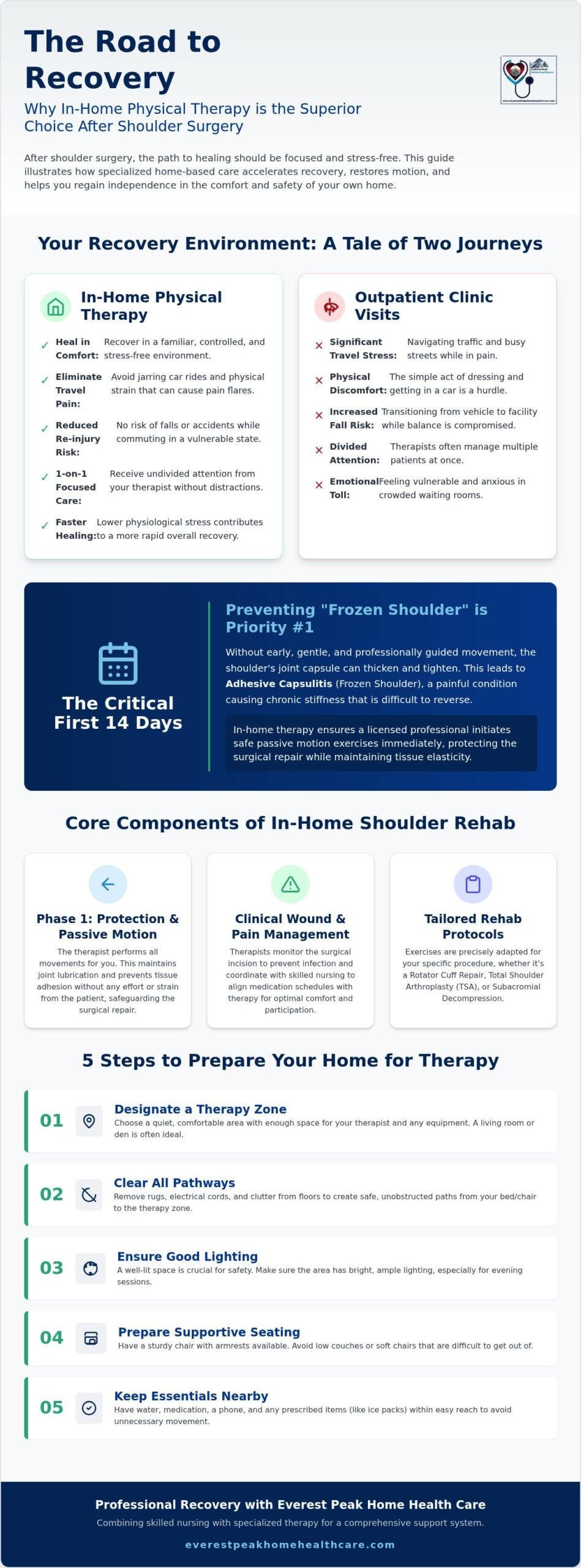
5 Steps to Prepare Your Los Angeles Home for Shoulder Rehab
Preparing your residence for the arrival of a clinical team is a proactive step that ensures the safety and efficiency of your recovery. When you transition to in home physical therapy after shoulder surgery, your living space must temporarily function as a professional rehabilitation environment. This preparation minimizes the risk of accidental injury and allows your licensed therapist to focus entirely on your physical progress. Following a structured setup plan provides a sense of security for both the patient and their family during the early stages of healing.
- Step 1: Establish a Recovery Station. Select a firm, high-backed chair that provides stable support for your spine and hips. You should avoid soft recliners or low sofas, as these often make it difficult to stand up without putting undue strain on your surgical site.
- Step 2: Clear a Therapy Zone. Ensure there is an unobstructed area of at least 6×6 feet within your home. This space allows your therapist to move freely around you to perform manual manipulation and guide you through safe exercise protocols.
- Step 3: Organize at Shoulder-Level. Place medications, water, and communication devices on countertops or side tables. By keeping essentials at waist or chest height, you avoid the need to reach or bend, which protects the integrity of your repair.
- Step 4: Optimize Lighting. Install motion-sensor lights or bright nightlights along the path from your bed to the bathroom. Safe navigation is essential during nighttime medication cycles when your balance or vision might be slightly compromised.
- Step 5: Request a Professional Walkthrough. Coordinate with post-operative care North Hollywood experts to identify potential hazards before your first session begins.
Sanitizing and Safety for Wound Healing
Maintaining clinical integrity at home involves more than just clearing floor space. You should designate a specific, sanitized surface for dressing changes and incision inspections to prevent post-surgical infections. During active in home physical therapy after shoulder surgery, it’s helpful to keep pets and children in a separate room. This ensures that neither you nor your professional therapist is distracted or bumped during delicate shoulder movements, maintaining a calm and focused environment for your rehabilitation.
Equipment and Tool Readiness
Proper tool placement can significantly impact your comfort levels between visits. Position your cold therapy unit or ice machine near a reliable power outlet and within easy reach of your recovery station. For sleeping, arrange several firm pillows to maintain a “Semi-Fowler” position, which is a 45-degree incline. This elevation reduces localized swelling and alleviates the pressure that often causes nighttime discomfort. If you’re unsure about your setup, our team can provide a professional home safety assessment to ensure your environment supports a full and steady recovery.
Professional Recovery with Everest Peak Home Health Care
Everest Peak Home Health Care offers a distinctive approach to rehabilitation by seamlessly integrating specialized physical therapy with skilled nursing care. This collaborative model ensures that your surgical wound is monitored by clinical professionals while you simultaneously work on regaining joint function. When you choose in home physical therapy after shoulder surgery, you aren’t just receiving exercise instruction; you’re gaining a comprehensive medical support system. Our licensed therapists act as steady guides throughout the recovery process, providing a sense of security and calm authority that allows you to focus entirely on your physical restoration. We prioritize your emotional well-being alongside your clinical milestones, creating an environment of trust that is essential for a successful outcome.
Our commitment to the “Compassionate Expert” model in North Hollywood means that every patient receives a personalized care plan tailored to their unique physiological needs and lifestyle goals. These plans are designed to evolve as you progress, moving from intensive clinical oversight to the restoration of your independent daily activities. Whether you are recovering from a rotator cuff repair or a total shoulder replacement, our team ensures that your rehabilitation is both thorough and dignified. You can initiate these professional services through a direct inquiry to our office or by requesting a physician referral, ensuring a smooth transition from the hospital to your home environment.
Our Multi-Disciplinary Approach
A successful recovery often requires the expertise of multiple clinical disciplines working in harmony. Our physical therapists and occupational therapists collaborate closely to ensure you achieve total shoulder independence. While the physical therapist focuses on range of motion and strength, the occupational therapist provides specialized training for complex daily tasks like dressing or meal preparation. Additionally, our medical social workers are available to help you navigate healthcare resources throughout the Los Angeles area, providing a holistic support network that simplifies the complexities of long-term recovery for your entire family.
Next Steps for Your Shoulder Recovery
Starting your journey toward a pain-free lifestyle is a straightforward process that begins with a clinical consultation. You can contact our North Hollywood office to speak with a representative who will guide you through the initial intake and assessment. It’s helpful to have your insurance information ready so our team can verify coverage and ensure a seamless start to your in home physical therapy after shoulder surgery. We are dedicated to providing the high standards of care you deserve, helping you return to the activities you love with confidence, poise, and professional grace.
Restoring Your Lifestyle with Confidence and Ease
Selecting in home physical therapy after shoulder surgery transforms a challenging recovery into a structured, manageable path toward independence. By eliminating the physical toll of commuting through San Fernando Valley traffic, you allow your body to dedicate its full energy to healing and restoring a complete range of motion. Our licensed clinical staff provides the protective oversight needed to manage wound care and pain while safely guiding you through functional daily activities in your own residence. This dignified approach to rehabilitation ensures that your recovery is defined by steady progress rather than the stress of travel.
It’s our mission to simplify the complexities of medical recovery for you and your family. We focus on providing high standards of care that prioritize your emotional well-being alongside your physical restoration. Begin your professional recovery journey with Everest Peak Home Health Care today. We remain committed to acting as your steady guide, providing the expert care and emotional support necessary to return you to the life you love with poise and professional grace.
Frequently Asked Questions
Is in-home physical therapy as effective as outpatient therapy after shoulder surgery?
In-home physical therapy is just as effective as outpatient clinic visits because it allows for intensive, one-on-one sessions tailored to your specific home environment. By removing the physical toll of a commute, you can focus your energy on the rehabilitation exercises themselves. This approach ensures that you practice movements on the actual surfaces and furniture you use daily, fostering a more seamless transition back to independent living.
How soon after shoulder surgery can I start in-home physical therapy?
Most patients begin their rehabilitation within 24 to 48 hours of returning home from the hospital. Your surgeon will provide specific orders for your care, and our licensed therapists will coordinate with your medical team to initiate gentle movements immediately. Starting in home physical therapy after shoulder surgery during this early window is essential for maintaining joint lubrication and preventing the development of chronic stiffness or scar tissue.
Does Medicare cover in-home physical therapy for shoulder replacement in Los Angeles?
Medicare Part A or Part B generally covers in-home physical therapy for shoulder replacement if a physician certifies that you’re homebound. In the Los Angeles area, patients who meet these clinical requirements typically have no copay for covered home health visits. For 2026, if your therapy costs exceed $2,480, our staff will use the necessary modifiers to certify that continued care remains medically necessary for your recovery.
What equipment do I need for my therapist to work with me at home?
Your therapist will bring the necessary clinical tools for your sessions, such as resistance bands or handheld weights. You don’t need to purchase specialized medical machinery, as we creatively utilize your own home’s features like sturdy countertops or high-backed chairs. While Everest Peak doesn’t sell medical equipment, we’ll guide you on how to position your own household items to support your in home physical therapy after shoulder surgery.
How many times a week will a physical therapist visit my home?
The frequency of visits is determined by your physician’s orders and your specific clinical needs, but most patients receive therapy two to three times per week. As you regain strength and mobility, your therapist will adjust this schedule to match your progress. This methodical approach ensures you receive consistent professional oversight without becoming overwhelmed, allowing for a steady and predictable restoration of your shoulder’s functional range of motion.
Can a home health nurse also help with my shoulder incision?
A licensed registered nurse can certainly assist with monitoring and caring for your surgical incision as part of our integrated post-operative care. Our nurses coordinate closely with your physical therapist to ensure that wound healing and exercise protocols move forward in harmony. This multi-disciplinary approach provides a sense of security, as every detail of your physical recovery and clinical health is overseen by qualified professionals.
What if I live in a second-floor apartment in North Hollywood?
Living in a second-floor apartment in North Hollywood doesn’t prevent you from receiving high-quality care at home. In fact, if navigating stairs is a taxing effort for you during your early recovery, it often reinforces your eligibility for homebound status under Medicare guidelines. Our therapists are trained to assist you in safely navigating your specific residential layout, ensuring that your location doesn’t hinder your access to professional rehabilitation.
Can I switch from in-home to outpatient therapy later in my recovery?
You can certainly transition to an outpatient clinic once your mobility has improved and you’re no longer considered homebound by your physician. This transition is a natural part of the recovery continuum as you regain the strength to handle the physical demands of travel. Our team will provide a thorough clinical summary to your new provider, ensuring that your progress remains uninterrupted as you move toward the final stages of your healing.