

After your loved one is discharged from a Los Angeles hospital, the initial relief of having them home is often replaced by the daunting task of managing their recovery. You may find yourself sitting at the kitchen table late at night, staring at insurance forms and wondering if you’ll have to drain your life savings to provide the support they need. Understanding the complexities of paying for home health care California families require can feel overwhelming when you’re already balancing the emotional weight of a health transition.
We believe that every family deserves a sense of security and a clear path forward during these challenging times. This guide provides a comprehensive roadmap of your financial options, ensuring you can secure the professional care your loved one deserves while protecting your family’s future. We’ll clarify the distinctions between Medicare and Medi-Cal, explain how clinical nursing visits differ from personal caregiving costs, and show you how to find a local agency that aligns with your coverage. By the end of this article, you’ll have the knowledge needed to make a confident, informed decision for your family’s well-being.
Key Takeaways
- Understand the fundamental distinction between skilled clinical nursing and custodial support to clarify the various avenues for paying for home health care California residents utilize.
- Identify how federal Medicare and state-specific Medi-Cal programs provide different levels of financial assistance based on medical necessity and income requirements.
- Explore how private insurance and long-term care policies can be leveraged to cover the costs of specialized therapies and personal care assistance.
- Uncover unique California resources like In-Home Supportive Services (IHSS) that offer specific financial pathways for individuals requiring non-medical aid at home.
- Learn the value of partnering with a Medical Social Worker to navigate complex eligibility rules and coordinate a comprehensive care plan for your family.
Understanding the Landscape: Paying for Home Health Care in California
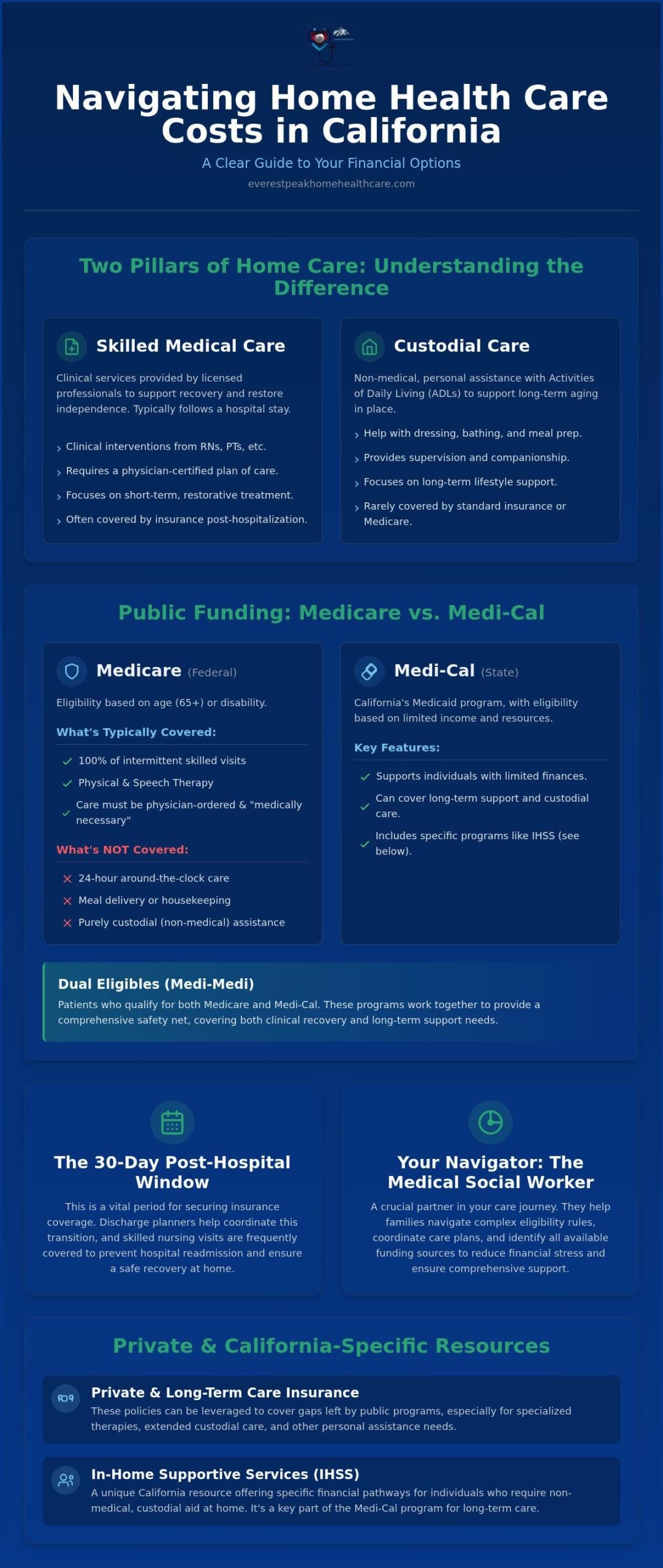
Home health care is a clinical service provided in a residential setting to restore independence and support physical recovery. When families begin the process of paying for home health care California residents often find themselves navigating two distinct categories of support. Skilled medical care involves clinical interventions from licensed professionals, such as registered nurses or physical therapists; conversely, custodial care focuses on personal assistance with daily activities like dressing or meal preparation. The broader framework of Home care in the United States establishes the foundation for these services, yet California presents unique financial challenges that require careful consideration.
California’s economic environment means that costs for these services often trend higher than national averages. With the state’s minimum wage having reached $16.90 in 2026, the baseline for staffing and operational expenses remains elevated, requiring families to plan with precision. Additionally, for insurance eligibility in 2026, the “homebound” status remains a critical benchmark. This designation requires that leaving the home is a difficult, taxing effort for the individual, ensuring that clinical resources are prioritized for those who truly need care within their own four walls.
The Immediate Need: Post-Hospital Discharge Home Care
The 30-day window following a hospital stay is a vital period for securing insurance coverage. Hospital discharge planners work diligently to coordinate your initial transition, often recommending skilled nursing care Los Angeles providers to bridge the gap between acute medical treatment and a safe return to domestic life. During this phase, clinical visits are frequently covered by primary insurance as they are deemed essential for preventing hospital readmission and ensuring patient safety.
The Financial Stress of Aging in Place
As a patient’s recovery progresses, the focus often shifts from short-term medical necessity to long-term lifestyle support. It is essential to understand that most insurance programs prioritize “medical necessity,” which includes clinical visits rather than continuous supervision. A common misconception involves 24/7 care coverage. In reality, insurance rarely covers an around-the-clock presence, making it vital to distinguish between clinical nursing visits and hourly caregiving when budgeting. Our Medical Social Workers often assist families during this transition, helping them identify which parts of their care plan qualify for coverage and which may require alternative funding sources. This clarity helps reduce the stress of paying for home health care California families often feel when managing long-term health needs.
Federal and State Programs: Medicare vs. Medi-Cal
Public programs serve as the primary foundation for many families managing the logistics of paying for home health care California offers. Medicare and Medi-Cal provide essential financial support, yet they function under distinct regulatory frameworks and eligibility requirements. While Medicare is a federal program primarily based on age or disability, Medi-Cal is California’s specific implementation of Medicaid, designed to support individuals with limited financial resources. For those who qualify for both, often referred to as “dual eligibles” or “Medi-Medis,” these programs work in tandem to provide a comprehensive safety net that covers both clinical recovery and long-term support needs.
Medicare typically covers 100% of intermittent skilled visits if specific criteria are met. This coverage generally falls under Medicare Part A or Part B, depending on whether the care follows a recent hospital stay. It’s a vital resource for clinical stabilization, ensuring that professional medical oversight is accessible without significant out-of-pocket expenses during the initial phases of recovery.
Medicare Eligibility for Home Health
To access these benefits, a patient must have a physician-certified plan of care that documents the medical necessity of the services. Medicare prioritizes short-term, restorative care provided by licensed professionals. This includes skilled nursing, physical therapy, and speech-language pathology. However, it’s important to recognize the limitations of this coverage; it doesn’t extend to 24-hour care, meal delivery, or purely custodial assistance if that is the only care required. The frequency and duration of visits are strictly regulated to ensure they remain “intermittent” rather than continuous.
Medi-Cal and Long-Term Support Services (LTSS)
Medi-Cal provides a broader scope of long-term assistance for those who meet the state’s income requirements. As of 2026, California has significantly updated its eligibility rules, focusing primarily on monthly income rather than total assets to ensure more seniors can access care. In Los Angeles, most beneficiaries receive services through Managed Care Plans, which oversee authorizations for clinical home health. For individuals whose income slightly exceeds the threshold, the “Share of Cost” program acts like a monthly deductible, allowing them to qualify for benefits once they’ve met a specific spending limit on medical expenses.
A cornerstone of California’s support system is the In-Home Supportive Services (IHSS) program, which pays for non-medical aid to help individuals remain safely in their homes. When clinical needs arise alongside these personal care requirements, our Medical Social Workers can help you navigate the complexities of dual enrollment to ensure no gaps remain in your loved one’s care plan. By coordinating these various programs, families can achieve a stable environment that supports both physical health and emotional dignity.
Private Options: Insurance, Long-Term Care, and Private Pay
When public programs don’t cover the full scope of your family’s needs, private funding sources provide the necessary flexibility to maintain a high standard of care at home. Managing the costs of paying for home health care California residents require often involves a strategic combination of commercial insurance, specialized policies, and personal savings. Commercial plans, such as PPOs, generally offer a broader selection of providers than HMOs, which typically mandate care within a restricted network and require rigorous pre-authorizations. For those who have served, the Veterans Affairs Aid and Attendance benefit offers a significant monthly stipend to help offset the expense of daily clinical or personal support for veterans and their surviving spouses.
Utilizing Private Long-Term Care Insurance
Long-Term Care Insurance (LTCI) is a powerful tool for families, but it requires a clear understanding of policy “triggers” to access benefits. Most policies initiate coverage once a professional assessment confirms that an individual requires help with two or more Activities of Daily Living (ADLs), such as bathing, dressing, or transferring. It’s vital to check if your policy has an “elimination period,” which acts as a waiting period before payments begin. Additionally, most insurers require that services be provided by a licensed agency rather than an independent contractor. This ensures that the care meets professional standards, and it allows for smoother coordination between your primary medical insurance and your private LTC benefits.
The Out-of-Pocket Reality
For many in the San Fernando Valley, private pay is the most direct route to securing immediate, personalized support. In 2026, private pay hourly rates for in-home care in the Los Angeles area generally range from $32 to $45, with specialized personal care assistance North Hollywood families rely on often falling within this bracket. While these costs are significant, there are financial mechanisms available to ease the burden:
- Tax Deductibility: In many cases, home health expenses are tax-deductible in California if the care is medically necessary and prescribed by a physician.
- HSA and FSA Accounts: You can use Health Savings Accounts or Flexible Spending Accounts to pay for qualified clinical services using pre-tax dollars.
- Asset Management: Families often bridge the gap by utilizing home equity or specialized financial products designed for seniors.
Even when choosing to pay privately, it’s wise to remain aware of state resources. If your financial circumstances shift, California’s In-Home Supportive Services (IHSS) program may eventually become a viable option to supplement your care plan. Our Medical Social Workers are always available to help you evaluate these various financial streams to ensure your loved one receives uninterrupted, high-quality support.
California-Specific Resources: IHSS and State Waivers
California’s commitment to aging in place is reflected in its robust state-specific programs, which offer financial avenues beyond traditional federal insurance. When families evaluate the total cost of paying for home health care California provides, the In-Home Supportive Services (IHSS) program often emerges as a cornerstone for non-medical assistance. This program is designed to help elderly or disabled residents remain in their own residences safely rather than transitioning to a care facility. One unique aspect of this system is that IHSS allows recipients to hire their own caregivers, including family members, in some cases. This flexibility provides a sense of continuity and trust that is particularly valuable during sensitive health transitions.
Navigating the IHSS Application Process
Securing these benefits requires a methodical approach to documentation and assessment. The process begins with a county social worker assessment, where a representative visits the home to evaluate the individual’s functional needs across various categories of daily living. You should prepare for this visit by compiling a thorough medical history and a clear list of daily challenges. A critical component of the application is the Medical Certification form (SOC 873), which must be completed by a licensed physician to verify the need for assistance. Clinical agencies like Everest Peak provide essential support during this phase by offering professional documentation that clearly articulates the patient’s medical and functional requirements. If you need assistance gathering the necessary clinical records, you can contact our Medical Social Workers to help streamline the process.
Assisted Living Waiver (ALW) vs. Home Care
California also offers Home and Community-Based Services (HCBS) waivers, which are specifically designed for those who meet the criteria for nursing facility care but prefer to receive support at home. The Assisted Living Waiver (ALW) is a prominent example; however, families must often choose between facility-based care and staying in their private residence. In 2026, ALW service rates range from $95.69 per diem for Tier 1 to $179.58 per diem for Tier 4, depending on the required level of care. For those currently in a facility who wish to return home, California’s “Money Follows the Person” initiatives provide resources to facilitate a safe transition. Local Los Angeles advocacy groups and the California Department of Aging (CDA) serve as steady guides in this landscape, ensuring that families understand their rights and the available resources for paying for home health care California residents deserve. Preparation is essential for success.
The Role of Everest Peak: Coordinating Your Care and Coverage
Managing the logistical and financial details of paying for home health care California families require is a journey that no one should undertake alone. At Everest Peak Home Health Care, we serve as a steady guide, providing the expertise needed to translate medical requirements into a sustainable, covered plan of care. Our Medical Social Workers play a pivotal role in this process, acting as dedicated advocates who identify available payment resources and assist with complex documentation. They help bridge the gap between clinical necessity and financial eligibility, ensuring that families can access the full spectrum of benefits they’ve earned. By integrating skilled nursing care with essential personal care assistance, we create a seamless recovery environment that prioritizes both clinical outcomes and the individual’s emotional well-being. This holistic approach ensures that the physical healing process is never compromised by administrative confusion.
Professional Clinical Oversight
Insurance providers and government programs maintain strict standards for reimbursement, often requiring that services be delivered by a licensed and accredited agency. Everest Peak Home Health Care meets these high standards, ensuring that your claims are supported by accurate, professional documentation from licensed registered nurses and vocational nurses. Our multi-disciplinary team, which includes physical, occupational, and speech therapists, works collaboratively to maximize the individual’s physical recovery and restore their lifestyle. This comprehensive oversight allows us to build a customized care plan that respects your financial boundaries while meeting every medical necessity. By identifying qualified professionals for each specific area of care, we provide a cause-and-effect narrative of recovery that emphasizes tangible results and long-term benefits. It’s a balanced approach that provides peace of mind to families who value quality, qualification, and integrity.
Serving the Los Angeles Community
Our roots are deep in North Hollywood and the San Fernando Valley, giving us unique insight into the local healthcare landscape and the specific resources available to Los Angeles residents. We maintain strong relationships with local hospitals and discharge planners, which ensures that transitions from the hospital to the home are smooth, safe, and fully coordinated with your insurance requirements. This local expertise allows us to respond quickly to changing health situations and provides a protective, dependable presence within the sanctuary of your own home environment. If you’re ready to secure the professional support your family deserves, Contact Everest Peak Home Health Care today to schedule a professional assessment for your loved one. We’ll help you evaluate your coverage options and develop a clear roadmap for a successful recovery, ensuring that the process of paying for home health care California residents face is clear, manageable, and dignified.
Secure Your Family’s Future with Professional Care Coordination
Securing the right support for a loved one involves more than just finding a provider; it requires a strategic understanding of the financial landscape. By distinguishing between clinical medical necessity and custodial support, you can better leverage programs like Medicare and Medi-Cal to protect your family’s savings. We’ve explored how private insurance, long-term care policies, and state-specific resources like IHSS work together to create a stable environment for recovery at home. Navigating the complexities of paying for home health care California residents require is a task that demands both expertise and empathy.
Our team of licensed clinical professionals and experienced medical social workers is dedicated to serving the Los Angeles and San Fernando Valley communities with integrity. We act as your steady guide, ensuring that every detail of your coverage is optimized to support a dignified and effective recovery. To begin building a clear roadmap for your loved one’s well-being, Schedule a Professional Care Assessment with Everest Peak today. You don’t have to manage these transitions alone; we’re here to provide the clinical excellence and compassionate oversight your family deserves. With the right partner, a peaceful and organized recovery is well within reach.
Frequently Asked Questions
Does Medicare cover home health care in California?
Medicare Part A or Part B covers 100% of the cost for intermittent skilled nursing and physical therapy for homebound seniors. You must have a plan of care certified by a physician to qualify for these benefits. This coverage is strictly for clinical medical needs; it doesn’t include 24-hour supervision or meal delivery. Our team helps coordinate these visits to ensure they align with federal guidelines while prioritizing your physical recovery and safety.
What is the difference between Medicare and Medi-Cal for home care?
Medicare is a federal program that focuses on short-term clinical recovery and rehabilitative therapy for homebound patients. Medi-Cal is California’s specific implementation of Medicaid, offering broader long-term support for individuals with limited income. While Medicare prioritizes medical necessity, Medi-Cal often covers custodial care that helps seniors with daily living activities. Understanding these differences is essential when paying for home health care California families need for long-term stability and peace of mind.
How do I qualify for IHSS in Los Angeles County?
To qualify for In-Home Supportive Services (IHSS) in Los Angeles, you must be a California resident living in your own home and eligible for Medi-Cal. A county social worker will visit to assess your functional needs and evaluate tasks like bathing, grooming, and housecleaning. Our Medical Social Workers often assist families by providing the clinical documentation required to verify these functional limitations during the application process, ensuring a smooth and successful assessment.
Is home health care covered by private health insurance?
Most private health insurance plans, including PPOs and HMOs, provide benefits for skilled nursing and physical therapy. These benefits usually require pre-authorization and are limited to a specific number of visits per calendar year. Unlike Medicare, some private plans may offer limited coverage for personal care assistance if it’s part of a documented post-operative plan. It’s best to review your policy’s Evidence of Coverage for specific home health limitations and copayments.
How much does private pay home health care cost in California?
The cost of private pay home health care in California varies based on the level of care required and the geographic location. Factors such as the frequency of visits and the specific clinical expertise needed will influence the overall investment. Families often choose this route to secure immediate support that isn’t restricted by insurance limitations. We recommend speaking with a care coordinator to understand the variables involved in creating a customized plan.
Can I get home health care after a hospital discharge if I live alone?
Living alone doesn’t disqualify you from receiving home health care; it often makes these clinical services even more critical for a safe recovery. Hospital discharge planners prioritize setting up skilled nursing and physical therapy for solo residents to prevent complications or readmission. Our team provides the professional oversight needed to ensure you’re managing medications and mobility safely. This support offers a protective and dependable presence while you regain your independence at home.
Does long-term care insurance pay for skilled nursing at home?
Most long-term care insurance policies cover skilled nursing at home once you meet specific triggers, such as needing help with two or more activities of daily living. These policies typically require that services be provided by a licensed agency to ensure professional standards. This requirement simplifies the reimbursement process and guarantees high-quality care. Using these benefits is a strategic way of paying for home health care California seniors use to age in place safely.
What happens if I run out of home health insurance benefits?
If your insurance benefits are exhausted, you can transition to private pay or explore state-funded programs like Medi-Cal and IHSS. Our Medical Social Workers specialize in identifying alternative resources to prevent any interruption in your care. They help families evaluate asset limits and income thresholds for state waivers. This coordination ensures that your loved one continues to receive dignified, high-quality support throughout their entire health transition and recovery.