

After a hospital stay or a change in health, a family may know that support at home is needed but still wonder who should make the first call. If you’re asking how to get a referral for home health care, start by speaking with the patient’s physician or care team. A family member can raise concerns and share information, while an authorized practitioner evaluates the patient’s needs and determines whether a referral for skilled services is appropriate.
A referral doesn’t automatically confirm eligibility, insurance coverage, or when services can begin. Home health care generally involves clinical services, such as nursing or therapy, while non-medical home care focuses on everyday assistance. Knowing the difference can help you ask for the right support. This guide explains whom to approach, what details to prepare, and how referral review, assessment, and care planning typically unfold. It also covers what to clarify about coverage and next steps, so you can support a clear handoff for the person receiving care.
Key Takeaways
- To understand how to get a referral for home health care, raise the patient’s needs with their treating clinician or discharge team, who can review whether skilled services are appropriate.
- Have the patient’s preferred contact information, treating clinician’s details, recent care-transition information, and main concerns ready to support a clear handoff.
- A referral, an agency’s clinical assessment, and a payer’s coverage decision are separate steps. A referral alone doesn’t guarantee eligibility or payment.
- An individualized assessment and care plan help determine which in-home clinical or rehabilitative services may address the patient’s needs.
- Everest Peak Home Health Care provides skilled nursing, physical, occupational, and speech therapy, as well as medical social services.
Home Health Care Referral: Start With the Care Need
If care at home may help after an illness, injury, surgery, or change in function, raise the concern with the patient’s treating clinician or hospital discharge team. You don’t need to know the name of the right service before asking. Describe what has changed and what feels difficult or unsafe. The care team can consider whether an evaluation for home-based clinical or rehabilitative support is appropriate.
Home health care refers to clinical services delivered at home to address assessed health or rehabilitation needs. Depending on the patient’s situation, services may include skilled nursing or physical, occupational, or speech therapy. This differs from non-medical personal care, which focuses on help with everyday activities rather than clinical treatment. The broader term home care can include both medical home health care and non-medical support, so describing the specific need helps avoid confusion.
What counts as a home health care referral?
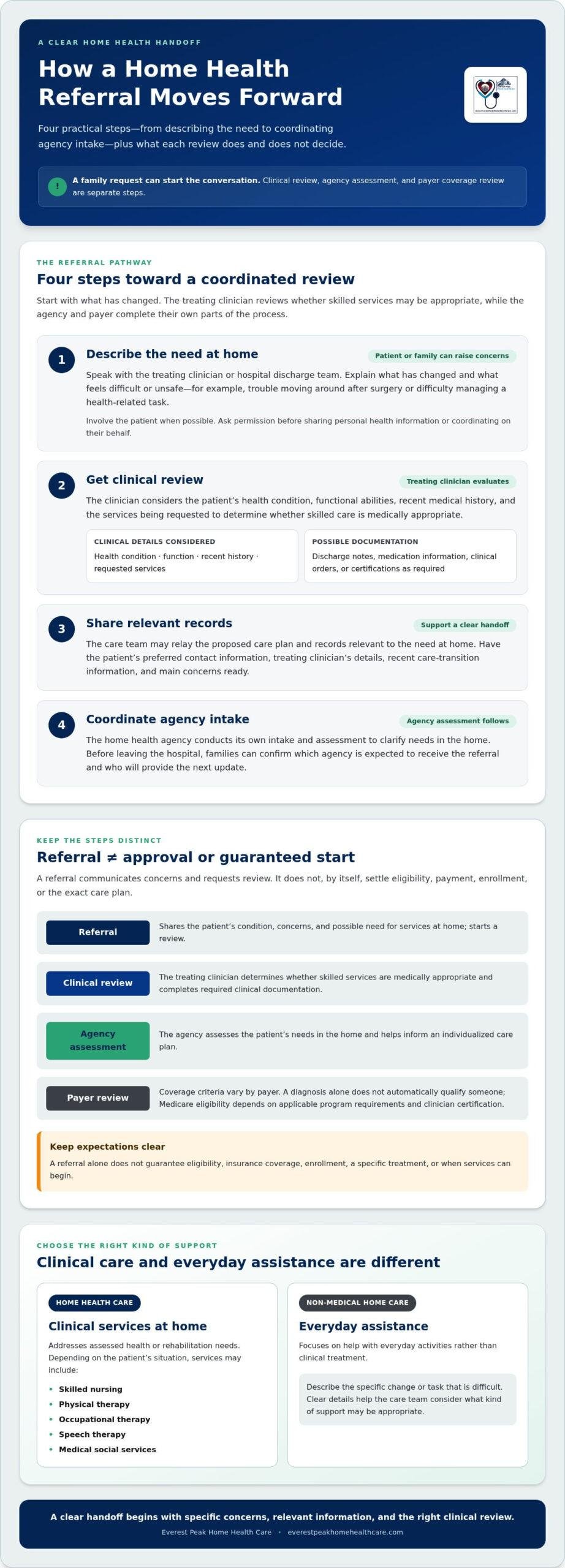
A referral communicates a patient’s condition, concerns, and possible need for services at home. It requests further review or evaluation. In practical terms, a referral starts a review of possible home services; it does not determine that the patient qualifies, that a payer will cover care, or that a particular treatment will be provided.
Depending on the service and payer, clinical orders or certifications may also be required. The treating clinician reviews the patient’s needs and determines whether skilled services are medically appropriate. An agency may then conduct its own intake and assessment. These steps are related but not interchangeable, and a referral by itself doesn’t guarantee enrollment, payment, or a specific care plan.
Who can ask for home health care?
Patients and family caregivers can raise concerns with a physician or another treating clinician. For example, a family member might explain that the patient is having difficulty moving around after surgery or needs help managing a health-related task. The patient’s own observations matter, too. Specific examples help the clinician understand how the condition affects daily life.
Hospital discharge planners and other care-team members may help coordinate the conversation and share relevant information during a transition home. They can help communicate the need, but asking for an evaluation is different from making clinical decisions. The treating clinician assesses whether home health services are appropriate and addresses any required clinical documentation or orders. If you’re unsure how to get a referral for home health care, contact the clinician involved in the patient’s current care and describe the support needed at home.
Who Initiates a Home Health Referral and What the Clinician Reviews
There’s more than one way to begin. A patient or family caregiver can raise a concern with the treating clinician, while a hospital discharge planner may help coordinate services before the patient returns home. The process generally moves through four steps: describe the need, obtain clinical review, share relevant records, and coordinate intake with the home health agency.
A family request can start the conversation, but it doesn’t replace clinical authorization or payer requirements. The treating clinician determines whether skilled services are medically appropriate and completes any required clinical documentation. Agency intake and assessment, along with a payer’s coverage review, are separate parts of the process.
Can a family member request home health care?
Yes. A family member can describe changes in the patient’s health, challenges with recovery, or difficulty managing care at home. For example, explain that walking has become harder since a procedure or that the patient needs support following a change in condition. Involve the patient in the discussion when possible, and ask permission before sharing personal health information or coordinating on their behalf. A family request helps communicate concerns, but it doesn’t establish medical need or satisfy clinical orders and payer requirements.
What does the physician or treating clinician assess?
The clinician considers the patient’s health condition, functional abilities, recent medical history, and the services being requested. They may review discharge notes, medication information, or other records relevant to the need at home. The goal is to determine whether skilled care, such as nursing or rehabilitation therapy, is appropriate and supported by the patient’s circumstances.
Coverage criteria vary by payer. For Medicare, eligibility depends on applicable program requirements and clinician certification. A diagnosis alone doesn’t automatically qualify someone for home health care. The agency’s later assessment helps clarify needs in the home. Johns Hopkins Medicine describes elements of this process in its Home Health Care Consumer Assessment resource.
How hospital discharge teams coordinate a referral
A discharge planner may help relay the proposed care plan and relevant records to an agency, especially when home services are being considered after a hospital stay. Before leaving, families can clarify which agency is expected to receive the referral and who will provide the next update. Hospital discharge is one way to coordinate a handoff, but it isn’t the only way to begin. For recovery at home after surgery, learn more about Everest Peak’s post-operative care as part of planning the transition.
What Happens After a Home Health Referral: Assessment, Coverage, and Care Planning
After a referral is sent, several reviews may follow. The agency’s intake and clinical assessment help clarify the patient’s needs and whether home-based services appear appropriate. Separately, the health plan or other payer determines coverage and any authorization requirements. These steps inform one another, but they are not the same decision.
A referral alone doesn’t guarantee eligibility, payment, or a start date. Knowing what each stage means can help families understand what’s pending and who to contact for an update.
| Stage | What it means |
|---|---|
| Referral received | The agency receives information about the patient and requested care for initial review. |
| Clinical evaluation | A clinician reviews the referral and assesses health needs, function, and the home setting. |
| Payer decision | The responsible plan or payer reviews applicable benefits, eligibility criteria, documentation, and authorization requirements. |
| Start-of-care coordination | If the appropriate steps are completed, the agency and patient or family coordinate the care plan and next arrangements. |
Does a referral guarantee Medicare or insurance coverage?
No. Coverage depends on the patient’s plan, its eligibility requirements, supporting documentation, and any required authorization. Medicare eligibility and covered services are subject to program criteria; a referral alone isn’t approval. Review Medicare’s home health care eligibility information, and contact the patient’s plan or responsible payer for individual benefit and authorization details.
What information may help the agency review a referral?
Having relevant details ready can make intake clearer. These may include:
- The treating clinician’s name and contact information
- Recent discharge information or other relevant care-transition records
- A current medication list, if requested for care coordination
- The patient’s main health, mobility, or recovery concerns
Share medical records through appropriate secure channels. Avoid sending sensitive health information through an unsecured message or form unless the recipient has identified it as a suitable method.
How the agency assessment shapes the care plan
An in-home assessment considers the patient’s clinical needs, functional goals, and home environment. Findings help inform whether nursing, physical, occupational, or speech therapy, or medical social services, may be relevant. The care plan should reflect the individual’s assessed needs rather than assume a particular service in advance. For example, skilled nursing care at home may be considered when a referral and assessment indicate a need for clinical nursing support.
Families can also explore Everest Peak Home Health Care’s home health services while coordinating the next steps.
How to Prepare for a Home Health Referral in North Hollywood and Los Angeles
Preparation can make conversations with a clinician or agency clearer, especially during a transition home. If you’re learning how to get a referral for home health care, gather the information below and keep it accessible. Write down whom you speak with and what they say the next step will be, so you can follow the handoff without assuming every referral follows the same schedule.
Referral preparation checklist for families
Before a call, collect details that help explain the patient’s situation. Include the patient’s preferred contact method and, when helpful, their permission for a family member to coordinate. Have the treating clinician’s name, recent discharge documents, current medication list, and relevant therapy instructions available. Note changes in mobility, self-care, or symptoms, along with the support available at home. Ask the patient which concerns and goals they want included in care discussions.
Keep medication and discharge information current as instructions change. Share records through a secure channel identified by the clinician or agency rather than sending sensitive details through an unsecured message.
Questions to clarify during referral follow-up
Record the date of each conversation, the person’s name and role, the preferred contact method, and any agreed follow-up. Useful questions include:
- Was the referral received, and are additional clinical records needed?
- Who will discuss the agency assessment, payer review, and next care-planning step?
- Which contact method should the family use for routine, non-emergency questions?
These notes help family members stay aligned and keep track of what is pending.
When the need may be urgent
A referral is for arranging and evaluating home-based care, not responding to a sudden medical emergency. If the patient has a severe or immediately life-threatening problem, call 911 rather than waiting for referral review or agency intake. For an urgent concern that isn’t an emergency, contact the patient’s clinician for guidance. Keep the concern, action taken, and follow-up instructions with your referral notes.
For families in North Hollywood and the surrounding Los Angeles area, organized contact details and records can make it easier to communicate the patient’s needs during a care transition. Explore Everest Peak Home Health Care services as you prepare to discuss in-home clinical or rehabilitative support.
How Everest Peak Home Health Care Supports the Referral Process
Arranging care after an illness, surgery, or hospital discharge can feel like one more responsibility at a demanding time. Based in North Hollywood, Everest Peak Home Health Care serves patients in the surrounding Los Angeles area. Its team provides in-home skilled nursing, rehabilitation therapies, and medical social services to address needs identified through referral, assessment, and care planning.
Matching assessed needs with in-home services
Different disciplines support different clinical and rehabilitation goals. Skilled nursing addresses assessed nursing needs, while physical therapy focuses on movement and mobility, occupational therapy on everyday activities, and speech therapy on communication or swallowing-related goals. Medical social services help patients and families discuss care-related concerns and resources. The appropriate disciplines depend on the individual assessment and care plan, not simply on a requested service.
Personal care assistance is distinct from skilled clinical services. It supports personal needs, while nursing and therapy involve clinical or rehabilitative care. A referral and assessment help clarify which type of support fits the patient’s circumstances. Families can also learn about in-home physical therapy as they consider rehabilitation needs.
What families can expect from a local care conversation
It’s natural to have questions about what happens after a referral, especially when a family is adjusting to a new diagnosis or a return home. Share the patient’s main concerns, current challenges, and goals for care. The conversation can clarify what information is needed, how assessment and care planning fit together, and what follow-up to expect. Coverage and eligibility decisions remain separate from the agency’s clinical assessment, so direct those questions to the responsible payer as well.
A family conversation helps organize the handoff, but it doesn’t promise eligibility, coverage, or a particular start date. To discuss the referral process and in-home clinical or rehabilitative needs, contact Everest Peak Home Health Care.
As you move forward, keep the next steps simple: speak with the treating clinician about the patient’s needs, prepare relevant contact and care information, and track who is coordinating the handoff. This helps families understand what comes next while keeping the patient’s goals at the center.
Take the Next Step Toward Support at Home
Knowing how to get a referral for home health care starts with a practical conversation: raise the patient’s needs with the treating clinician, gather relevant medical and contact information, and track the handoff. A referral begins a review, but doesn’t establish eligibility, confirm insurance coverage, or set a start date. Clinical assessment and payer decisions are separate steps.
For families in North Hollywood and the surrounding Los Angeles area, Everest Peak Home Health Care provides in-home skilled nursing, therapy, medical social services, and personal care assistance. Its licensed nurses and therapists provide care guided by assessed needs.
To discuss in-home care options and the referral process, contact Everest Peak Home Health Care. Taking one clear step at a time can help you advocate for the patient and move forward with greater confidence.
Frequently Asked Questions
How do I get a referral for home health care?
Start by discussing the patient’s needs with their treating clinician or hospital discharge team. Explain what has changed, what support is needed at home, and any recent treatment or discharge. The clinician can review whether skilled services may be appropriate and address any required orders or documentation. Agency intake and assessment, followed by any payer review, are separate steps, so a referral doesn’t itself confirm eligibility or coverage.
Can a family member request home health care for a loved one?
Yes. A family member can raise concerns with the patient’s physician or treating clinician and describe changes in mobility, recovery, or ability to manage at home. Involve the patient in the conversation when possible, and obtain their permission before coordinating or sharing personal health information. A family request can begin the discussion, but the clinician makes required clinical decisions and payer requirements still apply.
Does a doctor have to refer a patient for home health care?
Not always a physician specifically, but clinical review and documentation may be required depending on the service and payer. For Medicare, a physician or another practitioner authorized under applicable rules may evaluate and certify the need when required. In California, requirements can also depend on the patient’s coverage and circumstances. The treating clinician determines whether skilled services are medically appropriate; a family can request an evaluation but can’t make that clinical determination.
Does a home health referral guarantee Medicare coverage?
No. A referral doesn’t guarantee Medicare coverage, eligibility, or payment. Medicare home health coverage depends on meeting applicable requirements, including a documented need for covered skilled services and other eligibility criteria. The agency’s clinical assessment and Medicare’s coverage rules are distinct parts of the process. Review the patient’s benefits and specific circumstances with Medicare or the responsible plan, and ask which documentation or authorization steps apply.
What information is needed for a home health care referral?
Have the patient’s preferred contact information, treating clinician’s name and contact details, recent discharge or care-transition information, and main health or recovery concerns ready. A current medication list and relevant therapy instructions may also help clarify the situation. The clinician or agency can explain what records are needed. Share sensitive medical information only through an appropriate secure channel, and avoid sending unnecessary details through unsecured messages.
How long does it take to start home health care after a referral?
There isn’t one timeline that applies to every referral. Next steps can depend on how quickly relevant records are available, whether an assessment is needed, the clinician’s documentation, payer review or authorization, and coordination with the agency. Ask who will provide updates and what step is currently pending. If the patient’s condition changes or the concern is urgent, contact the treating clinician rather than waiting for routine referral follow-up.
What is the difference between home health care and home care?
Home health care generally refers to clinical or rehabilitative services delivered at home, such as skilled nursing or physical, occupational, and speech therapy, when appropriate to assessed needs. “Home care” is a broader term that can also describe non-medical assistance with personal needs or daily activities. Everest Peak Home Health Care serves North Hollywood and the surrounding Los Angeles area with in-home clinical services and personal care assistance, which are distinct types of support.