
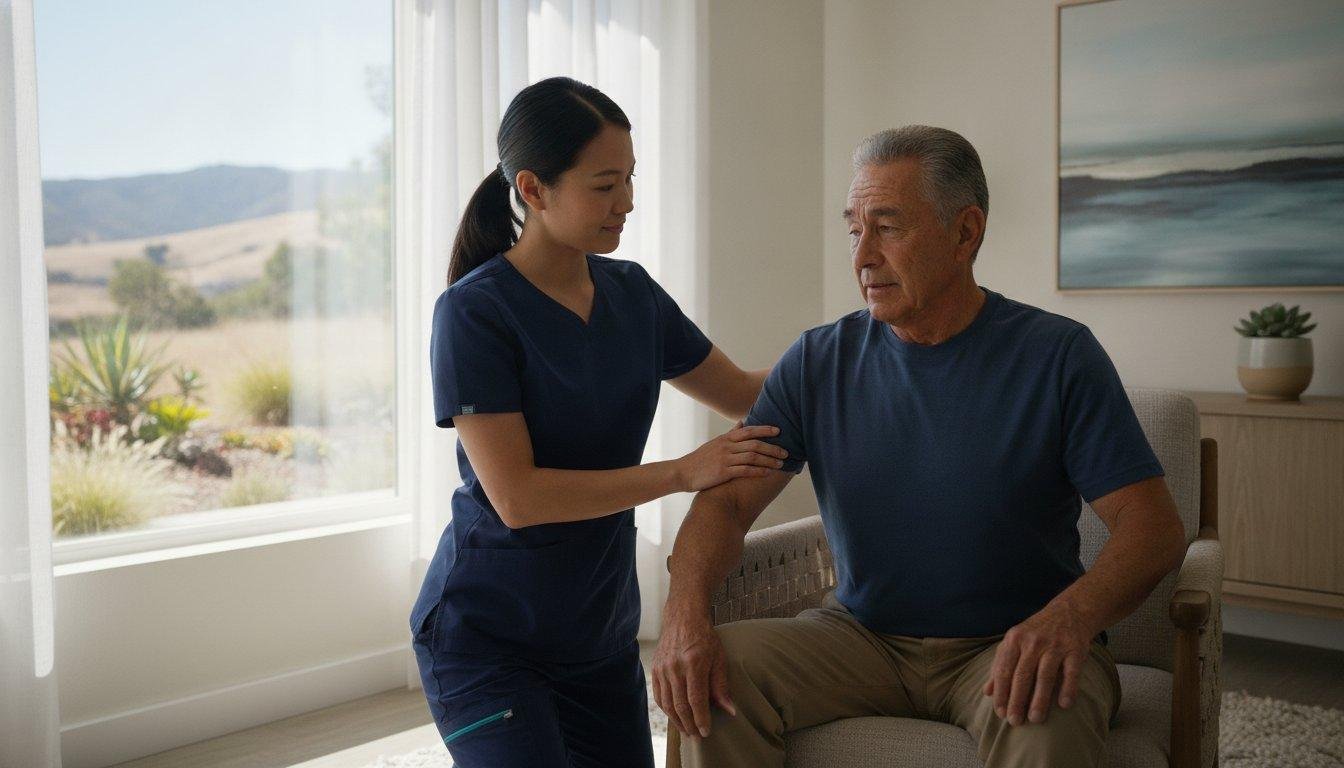
Imagine the first morning after your shoulder procedure. Your arm is immobilized in a heavy sling, your pain levels are at their peak, and the simple task of getting into a vehicle feels physically impossible. You probably recognize that early movement is vital to prevent a frozen shoulder, yet the fear of re-injuring the surgical site during a commute is a valid concern. It’s a stressful reality for many patients who feel caught between the need for professional care and the physical limitations of their initial recovery phase.
Professional in-home physical therapy after shoulder surgery offers a sophisticated clinical alternative that brings expert care into the safety of your own environment. This model of care eliminates the risks associated with transport, allowing you to focus your energy entirely on healing. This guide explains how home-based specialists help you restore range of motion safely and manage pain while helping you return to independent daily living. We will also outline the four stages of rehabilitation and the specific benefits of receiving customized, one on one attention during this critical transition.
Key Takeaways
- Understand why the initial six weeks are vital for long-term tendon health and how to navigate the complex transition from hospital to home.
- Learn the four clinical stages of rehabilitation, beginning with passive range of motion techniques designed to prevent scar tissue buildup.
- Discover the safety and clinical advantages of in-home physical therapy after shoulder surgery, which eliminates the physical strain of commuting during the early recovery phase.
- Identify practical steps to prepare your living environment, including safety sweeps for hazards and selecting the appropriate furniture for rest and support.
- Explore how an integrated approach involving physical therapy and skilled nursing ensures a more comprehensive and stable recovery process.
Navigating the Challenges of Shoulder Surgery Recovery at Home
The transition from the sterile, monitored environment of a surgical center to the home can be a jarring experience. During the initial 48 hours, the effects of anesthesia and nerve blocks begin to fade, leaving patients to manage significant discomfort while their arm is fully immobilized. This period isn’t merely a waiting game; it’s a clinical window where the foundation for long-term joint health is established. Professional in-home physical therapy after shoulder surgery serves as a vital bridge, ensuring that the structural repairs made by the surgeon are protected while the patient begins the delicate process of regaining function.
The first six weeks are particularly critical for tissue healing. For those recovering from a rotator cuff tear and rehabilitation, the surgical anchors and sutures require a stable environment to integrate with the bone. Any sudden, unguided movement can jeopardize the integrity of the repair. Beyond the physical risks, many patients experience a profound psychological shift. The loss of autonomy, coupled with the inability to drive or perform basic self-care, often leads to frustration. Having a licensed professional visit the home provides more than just physical exercise; it offers a structured routine and the reassurance that recovery is proceeding as expected. This professional presence helps mitigate the anxiety that often plagues patients during their first few weeks at home.
The Impact of Immobilization on Daily Living
Wearing a restrictive shoulder sling 24 hours a day presents immediate logistical hurdles. Simple tasks like dressing or maintaining hygiene require new, one-handed techniques that are difficult to master alone. Without professional guidance, many patients unintentionally move their shoulder in ways that cause strain. It’s easy to forget restrictions when reaching for a glass of water or trying to adjust a pillow.
- Hygiene and Dressing: Learning to navigate buttons, zippers, and bathing without compromising the surgical site is essential for skin integrity and morale.
- Frozen Shoulder Risk: Also known as adhesive capsulitis, this condition can develop if the joint becomes too stiff from lack of professionally guided, passive movement.
- Safety Hazards: Attempting to prepare meals or reach for items in the kitchen with one arm can lead to balance issues or falls, which are particularly dangerous during the early healing phase.
Managing Post-Operative Pain and Inflammation
Effective pain management is the cornerstone of a productive rehabilitation program. If pain isn’t controlled, the patient can’t participate in the necessary movements required to restore function. Clinical experts use a combination of cryotherapy and specific elevation techniques to reduce swelling. In-home physical therapy after shoulder surgery allows for real-time monitoring of your physiological response to movement. A therapist will look for “red flag” symptoms that might indicate complications, such as localized heat, excessive swelling, or unusual redness around the incision site. They’ll also ensure you’re using cold therapy units correctly to maximize recovery without damaging the skin. By keeping pain levels within a manageable range, therapy remains a tool for progress rather than a source of distress.
The Four Clinical Stages of Shoulder Rehabilitation
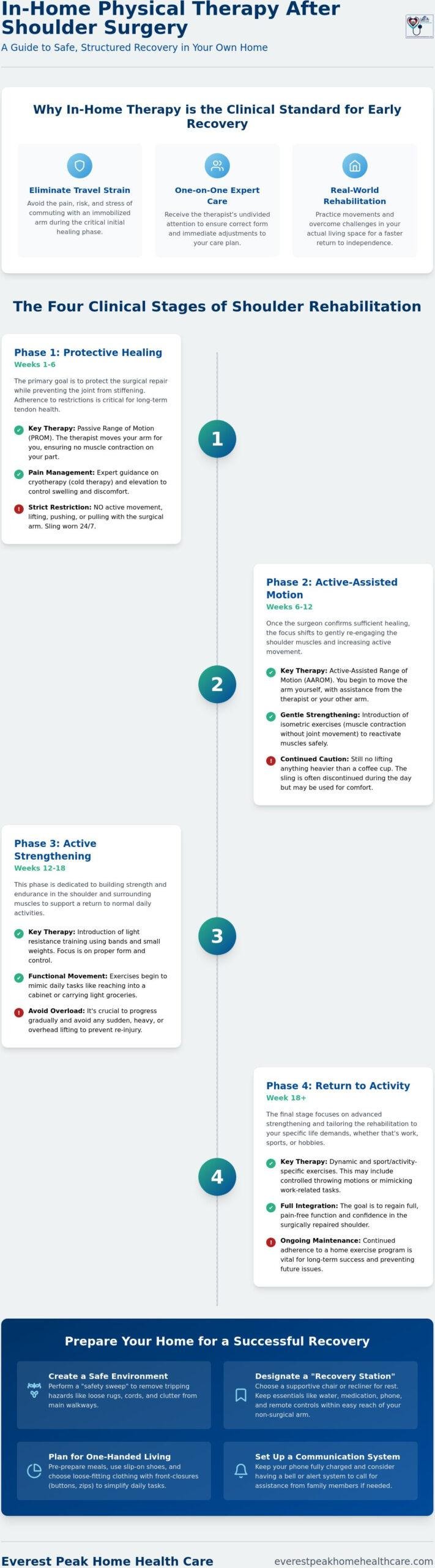
Recovery from a major shoulder procedure is a methodical process that respects the natural healing cycle of human tissue. Standard protocols typically divide this journey into four distinct phases, each with specific clinical goals. By utilizing in-home physical therapy after shoulder surgery, patients can ensure they progress through these stages under the direct supervision of a clinical expert who monitors for signs of compensation or improper form.
Phase I: Protecting the Repair with Passive Motion
During the first six weeks, the primary objective is to protect the surgical repair while preventing the joint from stiffening. Passive Range of Motion serves as the foundational requirement for successful tendon healing by allowing joint mobility without any muscular contraction. In this phase, your therapist physically supports and moves your arm through a safe range. This movement maintains joint lubrication and prevents the formation of dense scar tissue.
It’s vital to maintain strict adherence to surgeon-mandated weight-bearing restrictions during this time. Even the simple act of lifting a coffee cup can place excessive tension on new sutures. Our specialists provide the necessary post-operative care to ensure these boundaries are respected while still achieving the necessary mobility goals.
Transitioning to Active-Assisted and Strengthening Phases
As the tissue gains strength, usually around the six-week mark, the focus shifts to Phase II: Active-Assisted Range of Motion (AAROM). This stage introduces gentle muscle activation. You’ll use a pulley system attached to a home door or use your own “good arm” to guide the surgical side through specific patterns. This phase also involves the gradual introduction of isometric exercises to wake up the rotator cuff muscles without moving the joint.
The later stages of recovery focus on independence and resistance:
- Phase III: Active Range of Motion (AROM). You’ll begin moving the arm against gravity without assistance. Light resistance training with elastic bands is typically introduced to rebuild muscle endurance.
- Phase IV: Functional Strengthening. This final stage focuses on returning to specific activities, such as lifting groceries, playing sports, or returning to a physically demanding job.
Home-based specialists who provide in-home physical therapy after shoulder surgery are particularly skilled at adapting these phases to your personal environment. They may use household items like a broomstick for wand exercises or a wall for “finger climbs” to facilitate early strengthening safely. This real-world application ensures that your progress translates directly into improved quality of life within your own home.
Comparing In-Home Physical Therapy to Outpatient Clinics
While outpatient clinics often feature specialized gym equipment, the environment is frequently hectic and fast-paced. For a patient with a fresh surgical repair, a busy gym where multiple people are moving around can be both intimidating and physically risky. Choosing in-home physical therapy after shoulder surgery provides a controlled, one-on-one clinical setting that prioritizes your safety and individual recovery pace. In a clinic, a therapist may manage several patients simultaneously, which can lead to fragmented attention. At home, your therapist is dedicated solely to your session, ensuring that every movement is monitored for precision and safety.
Consistency of care is another significant advantage of the home-based model. You typically meet with the same therapist for every session, allowing them to develop a deep understanding of your specific progress and pain thresholds. This clinical relationship is harder to maintain in large clinics where you might see a different assistant or therapist each visit. By staying in your own environment, you also benefit from the ‘real-world’ advantage: you practice your rehabilitation exercises in the exact space where you’ll be performing your daily activities.
Safety and Transportation Advantages in the First 6 Weeks
A critical factor often overlooked in recovery planning is the “driving ban” that follows most shoulder procedures. Surgeons typically prohibit driving for at least six weeks due to arm immobilization and the potential use of narcotic pain medication. Relying on outpatient clinics requires a complex logistical arrangement involving family members or third-party transport services. This creates an unnecessary burden on your support system during an already stressful time.
Car transfers themselves present a tangible clinical risk during the early stages of healing. The act of maneuvering into a vehicle seat while keeping the shoulder immobilized can cause jarring movements or accidental falls on slick pavement. By opting for in-home physical therapy after shoulder surgery, you eliminate the physical stress of travel and the exhaustion of sitting in waiting rooms. Your energy is preserved for the actual rehabilitation work, which is essential for a successful outcome.
Clinical Efficacy: Is Home PT ‘Enough’?
It’s a common misconception that home-based care is less effective than clinic-based rehab. Evidence suggests that home-based rehabilitation for major orthopedic procedures, including shoulder replacements, yields functional outcomes comparable to traditional outpatient settings. Modern portable equipment, such as high-grade resistance bands and specialized pulley systems, effectively replicates the essential functions of bulky clinic machines.
The home environment also offers a unique ergonomic advantage that a clinic cannot match. A therapist can observe how you interact with your actual furniture, the height of your bed, and the layout of your kitchen. They can provide immediate, practical adjustments to your daily movements based on your specific living conditions. This personalized assessment ensures that your recovery isn’t just about gym exercises, but about regaining independence in your actual life.
Preparing Your Home for a Successful Rehabilitation Journey
A successful clinical outcome depends heavily on the physical environment where your healing occurs. Before your first session of in-home physical therapy after shoulder surgery, you should modify your living space to accommodate your temporary physical limitations. This preparation reduces the risk of accidental injury and ensures that your home functions as a supportive clinical extension of the hospital. By organizing your surroundings before the procedure, you eliminate the stress of making adjustments while managing post-operative pain.
Begin with a comprehensive safety sweep of your primary walking paths. Throw rugs are a major fall risk. When your balance is compromised by a sling, even a small bunching of fabric can lead to a tumble. You must clear all loose cords and move small furniture pieces that might obstruct your path. It’s also vital to ensure that lighting is bright enough to prevent tripping during night-time trips to the kitchen or bathroom. If you’re unsure about your home’s layout, you can request a professional safety assessment to identify potential hazards before your surgery date.
Since you cannot reach overhead or lift heavy objects, move all daily essentials to waist-level surfaces. This includes kitchen items, frequently worn clothing, and hygiene products. Organizing these items beforehand prevents the temptation to use the surgical arm in a way that violates your weight-bearing restrictions. Your therapist will also need a dedicated space for your sessions. This area should have enough floor room for the therapist to move around you and should include a sturdy chair without arms to allow for a full range of motion.
Creating a Safe, Ergonomic Recovery Zone
Many patients find that sleeping in a standard bed is painful during the first several weeks. A recliner is often the most effective “recovery chair” because it keeps the shoulder in a semi-upright position, which reduces pressure on the surgical site and minimizes nocturnal throbbing. Setting up a medication and hydration station next to this chair ensures that water and prescribed treatments are always within reach. In the bathroom, non-slip mats and handheld showerheads are essential for maintaining hygiene without risking a fall or getting your bandages wet.
The Role of the Caregiver in Home-Based Exercises
While the therapist provides the primary clinical intervention, family members play a supportive role in the recovery process. Home therapists often train caregivers to assist with specific home exercise programs that must be performed between professional visits. These assistants are taught how to monitor for signs of fatigue or over-exertion, ensuring that the patient doesn’t push beyond their physiological limits. Caregiver support is a vital supplement to, but not a replacement for, the skilled intervention of licensed therapy. Having a dedicated partner who understands your restrictions can significantly improve your adherence to the in-home physical therapy after shoulder surgery protocol.
Comprehensive Post-Operative Support from Everest Peak Home Health Care
Everest Peak Home Health Care provides a highly structured, integrated approach to recovery that addresses the multifaceted needs of post-surgical patients. While some providers offer standalone services, we believe that in-home physical therapy after shoulder surgery is most effective when coordinated with other clinical disciplines. Our team includes licensed physical therapists, occupational therapists, and skilled nursing professionals who work in unison to manage your surgical wounds, monitor medication side effects, and restore your functional independence. This collaborative framework ensures that no aspect of your health is overlooked during the critical early weeks of healing.
Our orthopedic specialists prioritize strict adherence to your surgeon’s specific rehabilitation protocols. We maintain open communication with your surgical team to ensure that every exercise and intervention aligns with their clinical objectives. During the very first visit, our therapists conduct a personalized assessment of your home environment. This evaluation goes beyond simple exercise instruction; we examine your furniture heights, lighting, and bathroom accessibility to create a customized plan that minimizes risk and maximizes comfort. This thorough approach allows you to focus entirely on your physical progress while we manage the clinical details of your environment.
Serving the San Fernando Valley and Greater Los Angeles
Our local presence in North Hollywood allows our clinical teams to maintain a responsive presence throughout the San Fernando Valley and the wider Los Angeles area. Navigating the unique logistics of the city can be challenging for families, but our local expertise ensures that your care is never delayed by scheduling conflicts or travel barriers. We are deeply committed to the dignity and comfort of our local patient community, providing the same level of professional rigor that you’d expect in a premier hospital setting within the privacy of your own residence. This local focus means our therapists are familiar with the area and can provide timely, reliable scheduling for every session.
Taking the First Step Toward Recovery
The transition from hospital discharge to home-based care should be seamless and stress-free. From the moment you arrive home, Everest Peak provides the clinical oversight necessary to manage your bedside needs. Having a professional therapist and nurse involved early in the process offers invaluable peace of mind to both the patient and their family. You don’t have to navigate the complexities of post-operative care alone. Professional in-home physical therapy after shoulder surgery ensures that your journey back to full mobility is guided by expertise and steady support.
Contact Everest Peak Home Health Care to schedule your in-home assessment.
Prioritizing Your Recovery and Long-Term Mobility
Successful rehabilitation following a shoulder procedure requires a disciplined adherence to clinical protocols and a safe, stable environment for healing. By choosing in-home physical therapy after shoulder surgery, you eliminate the logistical strain of travel while receiving specialized, one-on-one attention from clinical experts. This model of care ensures that every stage of your recovery, from passive motion to functional strengthening, is monitored with precision and professional empathy. You’ve worked hard to prepare for surgery; ensuring your recovery is equally structured is the next vital step in protecting that investment in your health.
Everest Peak Home Health Care provides comprehensive post-operative care plans tailored to your specific surgical needs. Our team of licensed registered nurses and therapists serves the San Fernando Valley and the greater Los Angeles area, offering a structured path back to independence. We invite you to Request a Professional Home Health Consultation to learn how our integrated approach can support your journey toward full mobility. Your health and safety remain our highest priorities as you transition back to your daily activities with confidence and peace of mind.
Frequently Asked Questions
How soon after shoulder surgery should I start in-home physical therapy?
You should typically begin therapy within 24 to 72 hours following your discharge from the hospital. Early intervention is essential to prevent joint stiffness and manage post-operative swelling through gentle, passive movements. Your therapist will coordinate with your surgeon to ensure the timing aligns with your specific surgical repair and overall health status, facilitating a stable transition back to your home environment.
Do I need special equipment at home for my physical therapy sessions?
You don’t need to purchase heavy machinery or specialized gym equipment for your home sessions. Licensed therapists provide portable tools such as elastic resistance bands, pulleys, and handheld weights. They are also skilled at adapting household items, like a sturdy chair or a broomstick, to facilitate safe and effective exercises. This adaptability ensures your rehabilitation is both clinically sound and practical for your specific living space.
Will my insurance cover in-home physical therapy after a rotator cuff repair?
Most insurance providers, including Medicare and major private plans, cover in-home physical therapy after shoulder surgery when it’s deemed medically necessary. Coverage details, such as co-payments or the number of authorized visits, will depend on your specific plan. For eligible homebound patients, Medicare Part A and Part B often cover these services at 100% of the cost, provided the therapy is ordered by a physician.
Can a physical therapist also help with my surgical wound care?
While physical therapists monitor your incision for signs of infection, complex wound care is primarily managed by our Skilled Nursing Care team. Nurses handle dressing changes and suture monitoring, while therapists focus on joint mobility. This integrated approach ensures your surgical site is protected while you focus on regaining your range of motion. We coordinate these disciplines to provide a comprehensive post-operative plan.
How many times per week will a therapist visit my home in North Hollywood?
Therapy frequency typically ranges from two to three visits per week during the initial phase of recovery. The exact schedule is determined by your orthopedic surgeon’s protocol and your personal progress. Our team in North Hollywood coordinates these visits to ensure you receive consistent clinical oversight without the stress of managing a complex travel schedule. This steady cadence is vital for maintaining momentum in your recovery.
Is in-home physical therapy as effective as going to an outpatient clinic?
Clinical evidence demonstrates that home-based rehabilitation for shoulder procedures produces functional outcomes comparable to those achieved in outpatient clinics. The one on one attention provided at home allows for a more personalized focus on your specific environment and ergonomic needs. This focused care often results in higher patient satisfaction and better adherence to exercise programs because the therapy is tailored to your real-world challenges.
What happens if I feel sharp pain during my home therapy exercises?
You should stop any movement immediately if you experience sharp or stabbing pain and notify your therapist. While some discomfort is expected during the early stages of in-home physical therapy after shoulder surgery, sharp pain may indicate that a movement is too aggressive for the current stage of healing. Your therapist will adjust the intensity of the session to ensure it remains productive, safe, and respectful of your pain thresholds.
Can an occupational therapist help me with dressing and bathing after surgery?
Occupational therapy is specifically designed to help you master activities of daily living like dressing, bathing, and meal preparation. While physical therapists focus on joint mechanics, occupational therapists teach you adaptive techniques to maintain your hygiene and independence while your arm is immobilized. This specialized support is crucial for preserving your dignity and safety during the first several weeks of your recovery journey.