
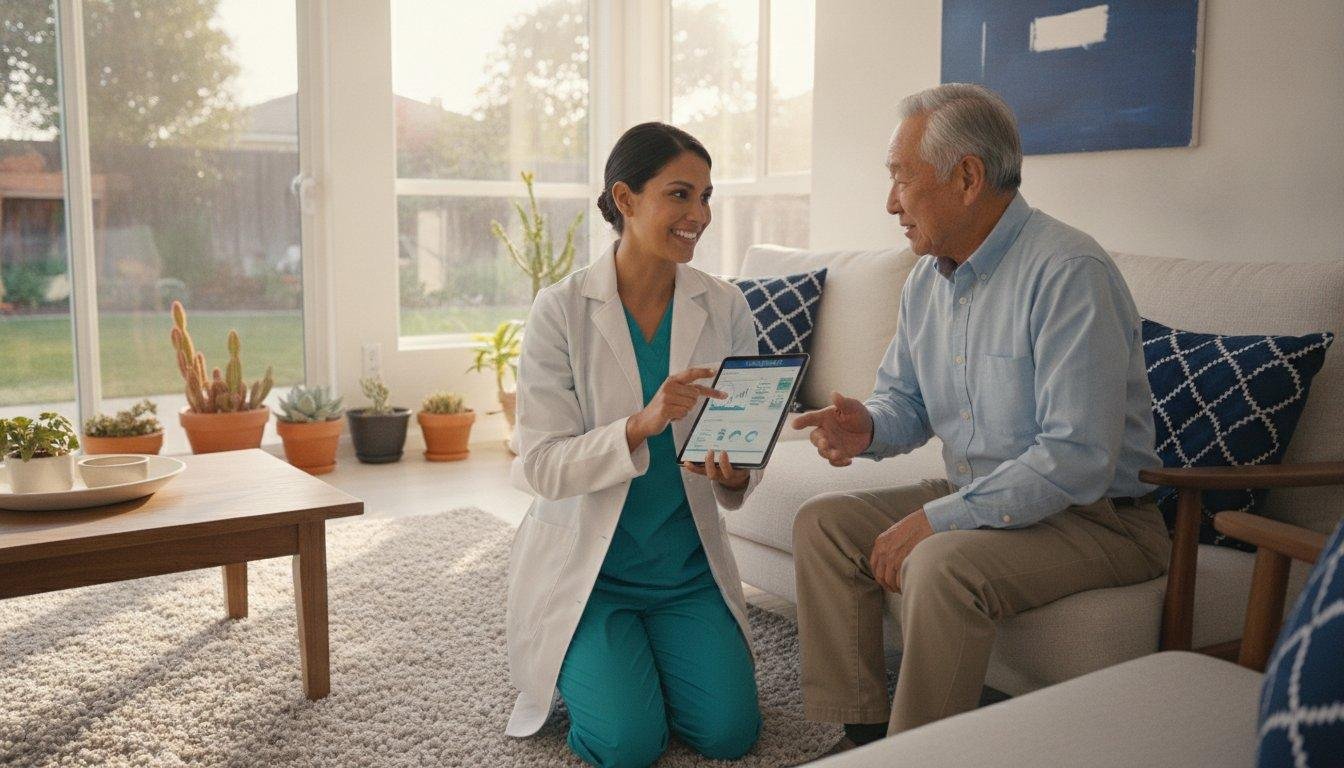
Imagine the relief of knowing exactly what your parent needs to stay safe at home, rather than guessing after a dangerous fall has already occurred. For many families, the transition from a hospital to a residence or the management of a chronic condition feels like navigating a complex maze without a map. It’s natural to feel anxious about the healthcare system or confused by the difference between basic companion help and necessary medical intervention. A comprehensive home health assessment for seniors serves as that essential map, replacing uncertainty with a structured, clinical plan of action.
We understand that maintaining independence is the ultimate goal, but it requires a foundation of safety and professional oversight. This guide explains how a professional clinical assessment establishes the framework for independent living by identifying medical risks before they become emergencies. You’ll learn how a multidisciplinary team of licensed nurses and therapists evaluates everything from medication management to environmental hazards. We provide a clear roadmap for care that ensures the home environment is not just familiar, but truly therapeutic. This process offers the medical oversight required to manage health transitions with dignity and clinical excellence.
Key Takeaways
- Understand how a professional home health assessment for seniors establishes a clinical baseline for medical, functional, and environmental safety.
- Identify critical environmental risks and fall hazards through a methodical, room-by-room safety analysis of the residence.
- Discover the importance of medication reconciliation and medical history reviews in preventing adverse health events at home.
- Prepare effectively for a clinical visit by organizing discharge papers and health history to ensure a thorough evaluation by the multidisciplinary team.
- Explore how clinical findings are translated into a customized care plan involving Skilled Nursing and specialized therapies for sustained recovery.
Understanding the Senior Home Health Assessment
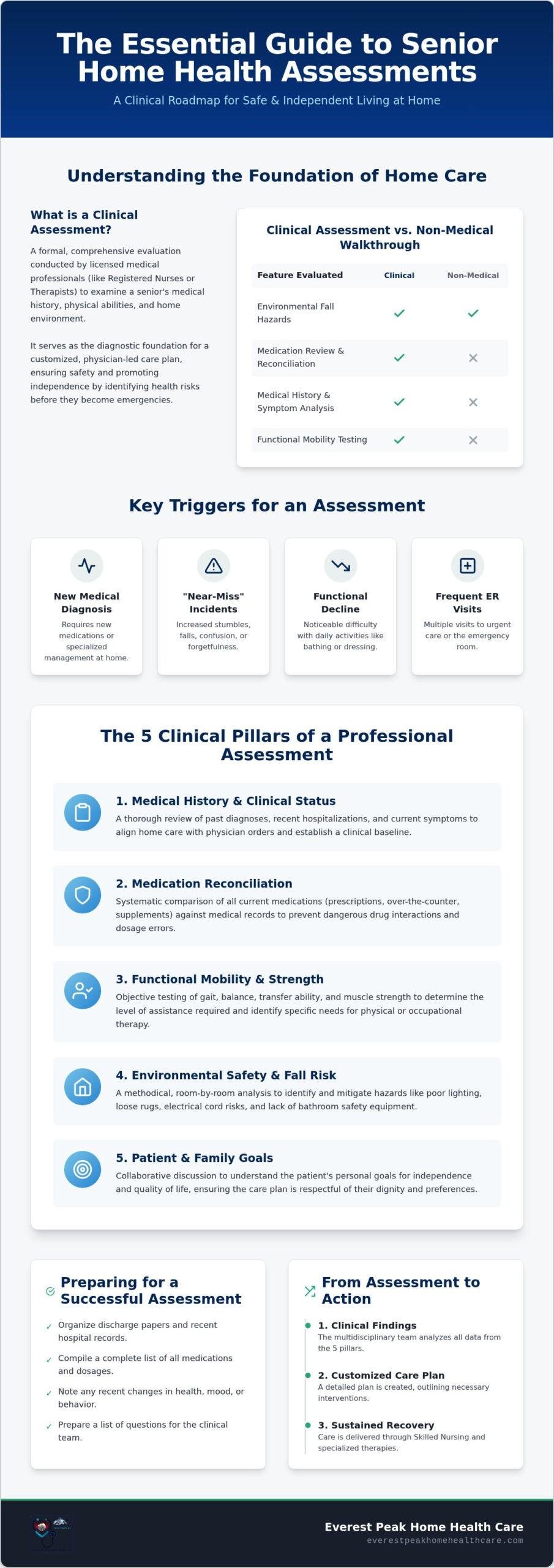
A home health assessment for seniors is a formal, comprehensive clinical evaluation that examines a patient’s medical history, physical functionality, and home environment. Unlike a casual check-in, this process serves as the diagnostic foundation for a customized care plan. The primary objective is to identify specific health risks and functional limitations so that a patient can maintain their independence safely within their own residence. It is a methodical process that prioritizes the dignity of the individual while ensuring their medical needs are met with precision.
These assessments are conducted by licensed professionals, typically Registered Nurses (RNs) or specialized Physical and Occupational Therapists. These clinicians possess the expertise to observe subtle symptoms and physiological changes that untrained eyes might overlook. By integrating medical data with a real-world environmental analysis, the assessment ensures that every intervention is tailored to the individual’s unique needs. This professional oversight provides families with the “quiet confidence” that their loved one’s health is being managed by experts.
The Clinical vs. Non-Medical Distinction
There is a significant difference between a clinical evaluation and a general home safety walkthrough. A non-medical walkthrough often focuses strictly on physical barriers like loose rugs or poor lighting. While these are important, a clinical home health assessment for seniors goes much deeper. It bridges the gap between the doctor’s office and the living room.
Licensed professionals such as RNs or LVNs use their clinical training to perform diagnostic observations. They evaluate how a patient’s specific medical condition, such as congestive heart failure or Parkinson’s disease, interacts with their daily environment. This clinical data is then used to inform physician-led care plans, ensuring that medical treatments and therapeutic exercises are both safe and effective. This higher level of scrutiny helps prevent unnecessary hospitalizations. Without this professional oversight, families may inadvertently overlook internal medical risks that are just as dangerous as external trip hazards.
When is an Assessment Necessary?
Identifying the right time for a professional evaluation can prevent a medical crisis. While many assessments occur following a recent hospital discharge, other triggers are equally important. Proactive identification is key to successful aging in place.
Families should consider a clinical assessment if they observe any of the following:
- A new medical diagnosis that requires specialized management or medication changes.
- Multiple “near-miss” incidents, such as stumbles or increased confusion.
- A noticeable decline in the ability to perform activities of daily living, like bathing or dressing.
- Frequent visits to the emergency room or urgent care centers.
Beyond these reactive triggers, many families choose a preventative assessment. This proactive approach allows clinicians to establish a health baseline and implement safety modifications before a decline occurs. It transforms the home into a controlled, therapeutic environment. This saves lives and preserves autonomy. By addressing needs early, you create a stable environment for long-term recovery and health maintenance.
The 5 Clinical Pillars of a Professional Assessment
A professional home health assessment for seniors moves beyond general observation to provide a rigorous, data-driven evaluation of five key clinical domains. These pillars ensure that every facet of a senior’s health is documented and addressed. This methodical approach allows clinicians to identify risks that are often invisible during a standard home visit. By establishing this clinical baseline, the healthcare team can prioritize interventions that directly impact the patient’s safety and recovery. The clinical team at Everest Peak Home Health Care utilizes these five pillars to establish a baseline for recovery and long-term health maintenance.
- Medical History and Clinical Status: A thorough review of previous diagnoses, recent hospitalizations, and current symptoms to align home care with physician expectations.
- Medication Reconciliation: A systematic comparison of current medications against medical records to prevent dangerous interactions or dosage errors.
- Functional Mobility and Strength: Objective testing of gait, balance, and muscle strength to determine the level of assistance required for safe movement.
- Cognitive and Emotional Wellness: Screening for memory impairment, executive function, and signs of depression or anxiety that may affect treatment compliance.
- Nutritional and Hydration Status: An evaluation of dietary intake and fluid consumption to ensure the body has the necessary resources for tissue repair and energy.
Vital Signs and Medication Safety
Nurses prioritize medication reconciliation during the home health assessment for seniors, especially following a hospital discharge. They meticulously check for medication interactions and adherence issues that could lead to readmission. For patients managing chronic conditions like hypertension or diabetes, the nurse monitors vital signs and blood glucose levels to ensure the current treatment plan is effective. This clinical oversight provides a necessary layer of safety, ensuring that medications are therapeutic rather than a source of secondary health complications.
Functional and Cognitive Screening
Functional screening involves assessing Activities of Daily Living (ADLs), such as the patient’s ability to manage grooming, hygiene, and transfers independently. During this phase, clinicians often utilize tools like the Home Fall Prevention Checklist to identify where physical limitations meet environmental risks. If a senior shows early signs of cognitive decline or memory impairment, the assessment may trigger a referral for specialized Speech or Occupational Therapy. These therapeutic interventions are designed to preserve cognitive function and teach adaptive strategies, allowing the individual to remain in their familiar home environment for as long as possible.
Identifying Environmental Risks and Fall Hazards
A professional home health assessment for seniors transforms a standard residence into a controlled, therapeutic environment by identifying hidden physical risks. While a family might notice a loose rug, a clinical evaluator examines the intersection of a patient’s specific medical condition and their physical surroundings. This room-by-room analysis prioritizes lighting, flooring transitions, and general accessibility to ensure that the home supports, rather than hinders, the recovery process. By identifying these hazards early, clinicians can implement modifications that prevent the types of accidents that often lead to hospital readmission.
The assessment includes a detailed review of the kitchen and living areas. Evaluators check for fire safety risks, such as the proximity of flammable items to the stove, and ensure that nutritional essentials are within easy reach. They also look for “hidden” hazards that families often overlook. These include poor footwear choices, such as slippers without traction, and high-gloss floor waxes that create slippery surfaces. Addressing these details is a fundamental part of establishing a safe foundation for independent living.
The High-Risk Areas: Bathrooms and Stairs
Bathrooms represent the most significant risk for seniors due to the combination of hard surfaces and moisture. A clinical assessment evaluates the necessity of specific safety modifications like grab bars, raised toilet seats, or walk-in showers. These interventions are not merely conveniences; they’re essential tools that preserve dignity and prevent catastrophic falls. Similarly, staircases are scrutinized for adequate lighting, secure handrails on both sides, and proper surface traction. Ensuring these high-traffic areas are secure is a critical outcome of the evaluation process.
Linking Environment to Mobility
A unique advantage of a clinical home health assessment for seniors is how it links the environment to specific mobility limitations. Physical Therapy assessments identify personal fall risks, such as a “shuffling gait” or balance deficits caused by neurological conditions. The home layout is then customized to support the use of assistive devices like walkers or canes. For example, a therapist might recommend widening a path through the living room to ensure a walker can pass without catching on furniture. This “service-to-outcome” plan ensures that the physical space is optimized for the patient’s current functional level. By aligning the home’s structure with the patient’s clinical needs, we create a sustainable path for safe, independent navigation.
How Families Can Prepare for a Successful Assessment
Preparation is the catalyst for a productive home health assessment for seniors. When families organize medical data and physical space beforehand, it allows the clinician to focus entirely on the patient’s recovery and safety. Ensuring that all primary caregivers are present during the visit facilitates a unified understanding of the care plan. This collaborative environment ensures that the professional guidance provided by the nurse or therapist is implemented consistently by the entire care circle. Honest conversations about daily challenges help the clinician identify the specific interventions that will offer the most significant benefit to the patient’s quality of life.
Beyond documentation, clearing pathways throughout the home is essential. A thorough walk-through requires the clinician to observe the senior’s mobility in high-traffic areas without obstruction. This physical preparation allows for a more accurate evaluation of how the senior interacts with their environment. It also provides an opportunity for the family to prepare a list of specific health concerns or questions. Having these points ready ensures that no detail is overlooked during the clinical consultation.
Documentation and Medical History
Accurate clinical data is the backbone of a successful evaluation. Families should gather all current medication bottles, recent hospital discharge papers, and physician contact information. It’s helpful to write a single sentence summarizing the senior’s primary health goal for the year, such as “returning to independent gardening” or “walking to the mailbox without assistance.” Tracking recent health changes or “near-miss” incidents, such as a stumble in the kitchen, provides the evaluator with critical context that may not be apparent during a single visit. This documentation allows the nurse to perform a more precise medication reconciliation and risk analysis.
Communicating with a Resistant Senior
It’s common for seniors to feel protective of their autonomy during health transitions. To address this, frame the home health assessment for seniors as a tool for preserving independence rather than a loss of control. Validating their concerns through a “professional empathy” approach helps reduce anxiety and build trust. Involving the senior in the decision-making process from the start ensures they feel respected as a partner in their own care. When a patient understands that the goal is to keep them safely in their own home, resistance often transforms into cooperation. This partnership is vital for the long-term success of any therapeutic plan.
If you’re ready to establish a professional foundation for your loved one’s safety, schedule a clinical home health assessment today to begin the journey toward secure, independent living.
Navigating Post-Assessment Care with Everest Peak Home Health Care
The completion of a home health assessment for seniors marks the beginning of a structured, clinical journey toward stability. Once the initial evaluation is finished, the clinical team at Everest Peak Home Health Care translates those findings into a multidisciplinary care plan tailored to the patient’s specific recovery trajectory. This plan serves as a medical blueprint, ensuring that every intervention, from wound care to balance exercises, is executed with professional rigor. By consolidating these services under a single licensed agency, families experience a seamless transition from the hospital to the home environment.
Scheduling follow-up visits is a critical component of post-assessment care. Based on the assessment, the patient may receive regular visits from Skilled Nurses to monitor vitals and manage complex medications. Concurrently, Physical Therapists may implement a regimen to improve strength and gait. Our Medical Social Workers provide an additional layer of support by assisting families with long-term planning and connecting them with community resources. For those requiring help with daily activities, Personal Care Assistance ensures that grooming and hygiene needs are met with dignity and respect.
Coordinated Clinical Care in Los Angeles
Our North Hollywood team coordinates directly with your primary care physicians to ensure the home care plan aligns with their medical orders. This integrated approach is particularly beneficial for residents in the San Fernando Valley and Greater Los Angeles, where navigating the healthcare system can feel overwhelming. Having a single agency like Everest Peak Home Health Care manage both nursing and specialized therapies eliminates the risk of fragmented care. This coordination ensures that every specialist, whether an Occupational Therapist or a Speech Therapist, is working toward the same clinical goals. It provides a level of professional oversight that acts as a protective extension of the family’s care circle.
Your Next Steps Toward Stability
The first 48 hours following a clinical home health assessment for seniors are crucial for establishing a routine. During this window, the initial care plan is activated and the first therapeutic visits are typically scheduled. This rapid response is designed to prevent the common complications that occur immediately after a hospital discharge. As the patient progresses, the care plan is not static; it’s adjusted based on ongoing clinical observations and the patient’s rate of recovery.
This dynamic approach ensures that the level of support always matches the patient’s current needs, promoting maximum autonomy. Stability isn’t achieved through a single visit, but through the methodical application of professional expertise over time. Schedule a professional home health assessment with Everest Peak Home Health Care today.
Securing a Safe Future at Home
A professional home health assessment for seniors represents more than just a safety check; it is the clinical foundation for aging in place with dignity. By evaluating medical vitals, medication safety, and functional mobility, a licensed team identifies risks before they escalate into emergencies. This methodical approach transforms a private residence into a secure, therapeutic environment tailored to the individual’s specific recovery trajectory. Having a clear clinical roadmap provides the stability families need during complex health transitions, replacing uncertainty with professional medical oversight.
Everest Peak Home Health Care’s licensed clinical team serves the Greater Los Angeles and San Fernando Valley areas with a comprehensive multidisciplinary approach. Our expertise in post-operative and chronic condition management allows us to coordinate Skilled Nursing, Physical Therapy, and Occupational Therapy into one cohesive care plan. We act as a professional extension of your family’s care circle, providing the quiet confidence that comes from expert medical oversight and a commitment to patient well-being. Request a Clinical Assessment for Your Loved One to establish a foundation for long-term health and independence. You don’t have to navigate these health challenges alone.
Frequently Asked Questions
Is a home health assessment for seniors covered by Medicare?
Medicare typically covers a clinical home health assessment for seniors when a physician certifies that the patient is homebound and requires skilled nursing or therapy services. This coverage is part of the home health benefit, which aims to support recovery in a residential setting. Families should verify specific eligibility requirements with their insurance provider or certifying physician to ensure all clinical criteria are met before the initial visit occurs.
How long does a typical clinical home health assessment take?
A typical clinical evaluation generally requires between 60 and 90 minutes to complete. This timeframe allows the Registered Nurse or therapist to perform a thorough review of medical history, conduct medication reconciliation, and evaluate the safety of the home environment. The duration may vary depending on the complexity of the patient’s medical condition or the number of specialized therapies, such as Physical or Occupational Therapy, being integrated.
Can an assessment be performed immediately after a hospital discharge?
Yes, performing an assessment immediately following a hospital discharge is a standard clinical practice designed to prevent readmission. The goal is typically to conduct the initial visit within 24 to 48 hours of the patient returning home. This rapid response allows the clinical team to verify that the home environment is safe and that discharge instructions, particularly regarding new medications or wound care, are being followed accurately.
What is the difference between a home health assessment and a home care assessment?
A home health assessment is a clinical evaluation performed by licensed medical professionals, such as RNs or Physical Therapists, to manage medical conditions. In contrast, a home care assessment typically focuses on non-medical needs like meal preparation or light housekeeping. While home care addresses daily comfort, a clinical assessment establishes a multidisciplinary plan for medical recovery, including skilled nursing and specialized therapeutic interventions for health transitions.
Does the senior need to be present for the entire assessment?
The senior must be present for the entire assessment because the evaluation focuses on their physical functionality and clinical status. The clinician needs to observe the patient’s mobility, cognitive function, and ability to perform daily tasks within their own environment. While family members are encouraged to participate and provide history, the patient’s direct involvement is essential for creating an accurate, personalized care plan that supports their recovery.
What happens if the assessment identifies a high fall risk?
If a high fall risk is identified, the clinician will immediately integrate specific interventions into the care plan, such as a referral for Physical Therapy to improve balance. They will also provide recommendations for home modifications, such as installing grab bars or improving lighting in high-risk areas like bathrooms. This proactive approach ensures that environmental hazards are mitigated while the patient develops the physical skills necessary to navigate safely.
How often should a home health assessment be updated?
A home health assessment for seniors is typically updated every 60 days during the recertification process to ensure the care plan remains aligned with the patient’s progress. However, an immediate re-evaluation should occur if there is a significant change in the patient’s condition, such as a new diagnosis or a recent fall. Continuous monitoring allows the clinical team to adjust therapeutic goals as the patient gains strength or needs different support.
Can I request a specific therapist for the assessment in North Hollywood?
We strive to accommodate requests for specific therapists within our North Hollywood and Greater Los Angeles service areas whenever scheduling and clinical specialties allow. Our multidisciplinary team includes various specialists in Physical, Occupational, and Speech Therapy. While we prioritize consistency in care, the primary goal is to ensure that the clinician assigned possesses the specific expertise required to address the patient’s unique medical challenges and recovery objectives effectively.