
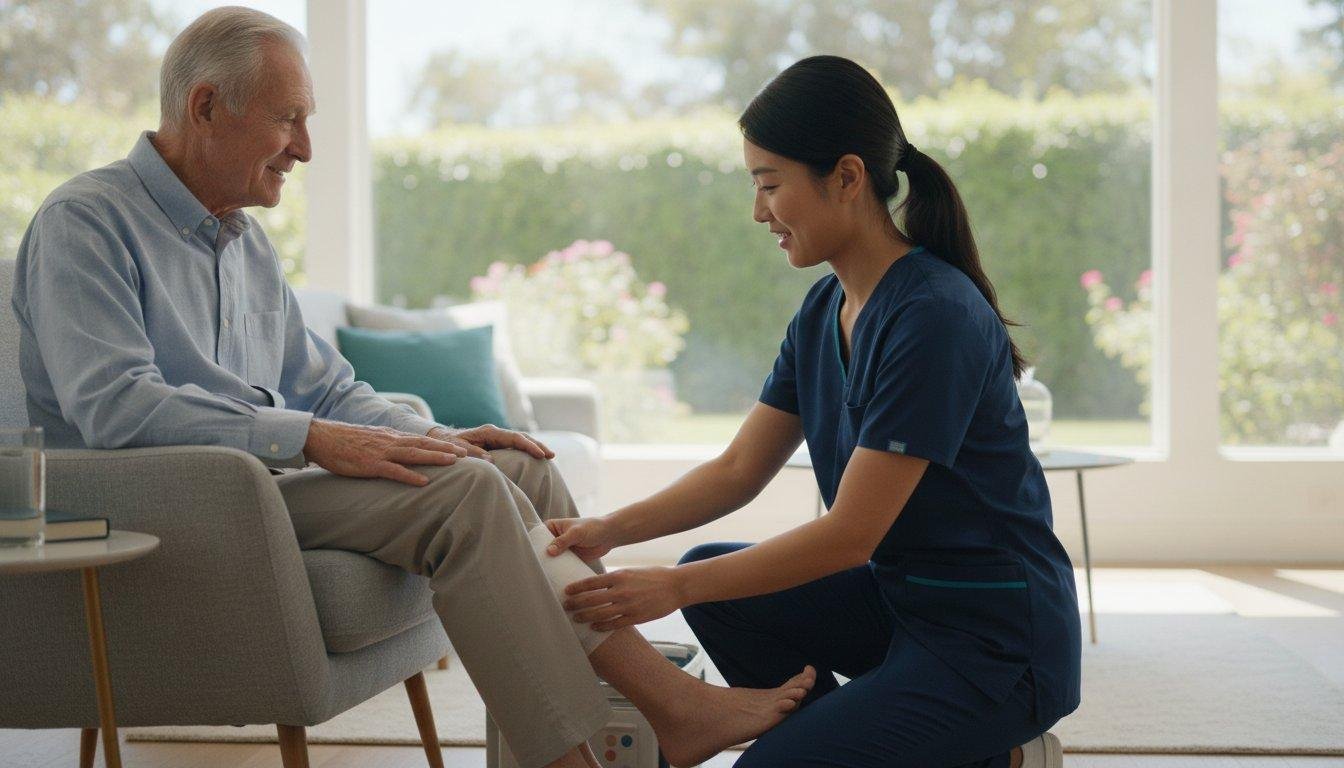
Did you know that approximately 33% of home health patients are currently managing complex wounds? For many families, this statistic represents a daily struggle with the fear of infection or the logistical challenge of transporting a non-ambulatory patient to a distant wound center. It’s natural to feel overwhelmed by the technical demands of dressing changes and the constant worry that a wound isn’t progressing as it should. We understand that your primary goal is to see your loved one recover safely without the stress of a hospital readmission.
Professional in-home wound care services offer a clinical solution that prioritizes both medical excellence and patient dignity. By bringing skilled nursing directly to the bedside, these services ensure that every assessment follows the latest evidence-based standards. You’ll discover how specialized clinical care at home accelerates the healing process, reduces chronic pain, and preserves the patient’s independence. This guide provides a detailed look at the multidisciplinary approach to wound management, including the essential roles of various medical specialists in ensuring a successful recovery.
Key Takeaways
- Understand how professional in-home wound care services focus on tissue regeneration and managing underlying systemic conditions to accelerate the clinical healing process.
- Learn about specialized treatment modalities for chronic conditions, such as advanced offloading for pressure sores and rigorous infection control for diabetic foot ulcers.
- Discover the benefits of a multidisciplinary approach where Skilled Nurses, Physical Therapists, and Occupational Therapists collaborate to improve mobility and protect wound integrity.
- Identify the essential eligibility criteria for receiving clinical care at home, including the requirement for a physician’s order and established homebound status.
- Explore how licensed clinicians provide a structured recovery path that prioritizes patient dignity while actively working to prevent complications and hospital readmissions.
Understanding In-Home Wound Care Services and Clinical Healing
In-home wound care services represent a specialized category of medical treatment designed for patients managing acute or chronic wounds within their own residence. This clinical approach moves beyond simple dressing changes; it focuses on the complex physiological process of tissue regeneration while simultaneously addressing underlying pathologies such as peripheral vascular disease, venous insufficiency, or diabetes. By receiving care through home health nursing, patients benefit from a controlled environment that significantly lowers the risk of healthcare-associated infections (HAIs) often encountered in crowded hospital settings.
The Registered Nurse (RN) serves as the primary coordinator of the wound care plan. They assess the wound’s progression, manage clinical supplies, and communicate directly with the patient’s physician to adjust treatment protocols as needed. Knowing when to transition from basic first aid to professional intervention is critical for long-term recovery. If a wound shows no visible signs of improvement after two weeks, or if you notice increased redness, warmth, or a persistent odor, it has likely “stalled.” Professional intervention is necessary at this stage to prevent systemic complications or the risk of amputation.
Benefits for Seniors and Post-Operative Patients
For seniors and those recovering from surgery, the physical strain of frequent travel to outpatient centers can impede the healing process. In-home wound care services eliminate this burden, allowing the body to remain in a state of rest. These visits also preserve a patient’s dignity during sensitive procedures, such as managing a sacral pressure ulcer or a post-surgical drain. Clinicians provide personalized education for family caregivers, teaching them how to monitor for subtle changes in skin integrity and how to manage the environment to promote faster recovery.
Preventing Hospital Readmissions Through Vigilance
Vigilance is the cornerstone of avoiding a return to the hospital. Skilled clinicians are trained to detect early signs of wound dehiscence or infection before these issues escalate into medical emergencies. By ensuring strict compliance with physician-ordered protocols in a real-world setting, nurses bridge the gap between the hospital’s discharge instructions and the patient’s daily life. This professional oversight ensures that advanced dressings and medications are applied correctly, maintaining the wound’s trajectory toward closure and reducing the likelihood of a secondary infection.
Specialized Wound Modalities and Treatable Conditions
Clinical wound management at home involves a diverse range of protocols tailored to the specific etiology of the injury. Professional in-home wound care services are equipped to handle complex cases that go far beyond basic first aid. For patients with limited mobility, the management of pressure sores, or decubitus ulcers, is a primary focus. Clinicians implement advanced offloading strategies, which may include the use of specialized support surfaces and strict repositioning schedules to relieve pressure and allow tissue to regenerate. These interventions are vital for preventing the progression of skin breakdown into deeper, more dangerous stages.
Diabetic foot ulcers require a different clinical focus, primarily centered on infection control and the mitigation of glucose-related healing delays. Because high blood sugar can impair immune function and circulation, these wounds are highly susceptible to complications. Nurses monitor for subtle signs of infection and work closely with the patient’s medical team to ensure the wound environment remains optimal for closure. Similarly, venous stasis and arterial ulcers require specialized care. Treatment often involves compression therapy to support circulation or coordinate with vascular specialists to address underlying blood flow issues. Our team at Everest Peak Home Health Care specializes in these advanced protocols to ensure the highest standard of clinical support.
Complex surgical wounds also benefit from professional home-based oversight. This includes the management of surgical sites that require Negative Pressure Wound Therapy (NPWT), commonly known as a “wound vac.” This technology uses controlled suction to remove excess fluid and promote the growth of new tissue in deep or high-risk incisions. While licensed clinicians handle the technical aspects, understanding the basics of caring for your wound at home helps families feel more prepared between nursing visits.
Chronic vs. Acute Wound Management
It’s important to distinguish between acute and chronic wounds. Acute wounds, such as surgical incisions or trauma sites, typically follow a predictable healing trajectory and require short-term monitoring. Chronic wounds are defined as those that fail to progress through the standard healing stages within 30 days. When a wound becomes stagnant, clinical intervention is necessary to “restart” the healing clock. This often involves identifying and removing barriers to recovery, such as localized infection or poor nutritional status.
Advanced Dressing Technologies and Debridement
Modern wound care has moved beyond simple gauze. Clinicians utilize advanced dressing technologies, including hydrogels to maintain moisture, alginates for highly productive wounds, and antimicrobial dressings to combat bacteria. In some cases, conservative sharp debridement is performed to remove non-viable or necrotic tissue that prevents healing. The clinical team coordinates the delivery of these specialized supplies and any necessary durable medical equipment to ensure the patient has everything required for a successful recovery at home.
A Multidisciplinary Approach: Why Skilled Nursing is Only the Start
While skilled nursing provides the clinical foundation for wound management, a truly effective recovery plan requires a broader medical perspective. In-home wound care services often succeed where isolated treatments fail because they address the patient as a whole rather than focusing solely on the injury site. This multidisciplinary approach ensures that mobility, nutrition, and social factors are all aligned to promote rapid tissue regeneration. When various specialists collaborate, the risk of complications drops significantly, and the path to independence becomes much clearer for the patient.
The synergy between these disciplines is managed through constant communication. The home health team acts as the eyes and ears for the patient’s primary surgeon, providing real-time updates on the wound’s progression. This collaborative loop allows for immediate adjustments to the care plan if the healing process stalls. By integrating diverse expertise, the team can identify systemic barriers to recovery—such as poor circulation or nutritional deficits—that might otherwise go unnoticed in a traditional outpatient setting.
The Role of Physical Therapy in Wound Healing
Physical Therapy is a critical component of the healing synergy. Beyond simply helping a patient move, physical therapists design customized exercise programs that improve systemic circulation. Enhanced blood flow is essential because it delivers the oxygen and nutrients necessary for cellular repair. For those managing diabetic foot ulcers, gait training becomes a priority. Therapists teach patients how to redistribute their weight effectively, which prevents further trauma to the wound bed. They also instruct patients and families on safe transfer techniques to eliminate the friction and shear that often compromise vulnerable skin.
Nutritional and Social Support for Recovery
Occupational Therapy and social support services add another layer of protection. Occupational Therapists help patients navigate their daily routines—such as bathing and dressing—without compromising the integrity of their dressings. Their expertise is particularly valuable when following clinical guidelines for surgical wound care at home. By modifying how a patient interacts with their environment, they reduce the risk of accidental injury to the healing site.
The role of Medical Social Workers is equally vital. They screen for protein deficiencies, as the body can’t build new tissue without adequate nutrition. Additionally, they address social determinants of health (SDOH), such as food insecurity or difficulty navigating insurance for high-cost wound supplies. They provide the emotional stability families need when navigating the complexities of chronic recovery, ensuring that no logistical hurdle stands in the way of a successful clinical outcome.
Eligibility and the Clinical Process for In-Home Visits
Accessing professional in-home wound care services requires a formal clinical pathway to ensure that treatment is medically necessary and appropriately supervised. A physician must provide a signed order for care, establishing that professional intervention is required to manage the patient’s condition. This process ensures that the clinical team operates as a direct extension of the primary doctor’s treatment plan. By following this structured approach, families can feel confident that the care provided meets established medical standards and is eligible for insurance reimbursement.
Once care begins, the frequency of nursing visits is determined by the wound’s acuity. A highly productive surgical site or a newly identified infection might require daily intensive care, while a stable, healing ulcer may only need weekly monitoring. During every visit, the clinician records precise measurements of the wound’s length, width, and depth. They also document the type and amount of exudate, or fluid, and the condition of the surrounding skin. This rigorous data collection is reported back to the physician to track progress or trigger a change in the treatment protocol if healing stalls. If you are navigating a complex recovery, you can contact Everest Peak Home Health Care to begin the clinical assessment process today.
Qualifying for Home Health Wound Care in California
In 2026, eligibility for Medicare and private insurance coverage hinges on the patient’s “homebound” status. This does not necessarily mean the individual is bedridden, but rather that leaving the home requires a considerable and taxing effort. For many patients managing complex wounds, the physical exertion and risk of infection during transit meet this criteria. To finalize eligibility, a “Face-to-Face” encounter must occur, which is a requirement where a physician or allowed practitioner must have a clinical meeting with the patient to document the medical necessity of home health services. This transition from hospital discharge to the first home visit typically occurs within 24 to 48 hours to maintain the continuity of care.
Your First Visit: Assessment and Care Plan Development
The initial assessment is a comprehensive evaluation that goes beyond the wound itself. The nurse evaluates the patient’s overall health, including a review of all current medications to identify potential contraindications to healing, such as certain steroids or immunosuppressants. Clinical photography and precise measurements are used to establish a baseline for tracking future progress. The nurse also evaluates the home environment to ensure it is conducive to recovery, checking for proper lighting and sanitary conditions for dressing changes. Setting realistic goals is a collaborative effort between the clinician and the family, focusing on visible signs of healing, a measurable reduction in pain, and the restoration of functional mobility.
Professional Wound Management with Everest Peak Home Health Care
Everest Peak Home Health Care provides specialized in-home wound care services led by a dedicated team of licensed Registered Nurses (RNs) and Licensed Vocational Nurses (LVNs). These clinicians possess the advanced technical training required to manage complex tissue injuries, ranging from deep pressure ulcers to intricate post-surgical incisions. Our approach is grounded in a methodical, unhurried style of care that prioritizes clinical excellence while maintaining a sense of quiet stability. We understand that recovery is often a stressful transition for the entire family, and our goal’s to instill confidence through reliable, professional intervention.
A commitment to professional empathy defines how we interact with every individual. We recognize that sensitive clinical procedures can be invasive, so we prioritize the preservation of patient dignity throughout the entire healing process. Total wellness requires more than just wound closure; it demands a holistic view of the patient’s health and environment. Our nursing team works in close coordination with our Physical and Occupational Therapy specialists to ensure that as the wound progresses toward closure, the patient’s also regaining the physical strength and functional independence necessary for a safe recovery.
Serving North Hollywood and the San Fernando Valley
We offer localized expertise for families who need help understanding the complex Los Angeles healthcare landscape. Our clinical team has extensive experience working within local hospital systems, which allows for a smoother transition from inpatient discharge to the first home visit. For residents in North Hollywood and the surrounding San Fernando Valley neighborhoods, our local presence ensures prompt response times and a consistent clinical presence. If your loved one requires a broader range of clinical support, our Skilled Nursing Services in Los Angeles provide a comprehensive solution for various medical needs, ensuring that no aspect of the patient’s health is overlooked.
Coordinating with Your Primary Care Physician
Effective wound management relies on a continuous and transparent feedback loop with the patient’s primary medical team. Our nurses act as the “eyes and ears” for the primary care physician or surgeon between scheduled office appointments, providing the detailed clinical data needed for informed decision-making. We offer streamlined reporting on wound measurements, tissue quality, and healing trajectories. This ensures the care plan evolves in real-time as the wound responds to treatment. By acting as a stable and knowledgeable guide, we help families move through the complexities of the recovery process with the reassurance that they’re supported by an authoritative and dependable clinical partner.
Securing a Professional Path to Recovery
Effective wound management is more than a series of dressing changes; it’s a comprehensive clinical strategy designed to restore your quality of life. By integrating the technical expertise of licensed RNs and LVNs with the specialized mobility support of Physical and Occupational Therapy, patients receive a holistic treatment plan that addresses both the wound and their overall physiological wellness. This multidisciplinary approach is essential for preventing dangerous complications and ensuring that the healing process remains on a steady, predictable trajectory within the safety of your own residence.
Everest Peak Home Health Care serves families across the San Fernando Valley and the greater Los Angeles area with a commitment to clinical excellence and patient dignity. We act as a dependable partner, providing the stable oversight needed to navigate complex health transitions without the strain of frequent hospital visits. If you’re ready to move toward visible signs of healing and greater independence, we’re here to guide you. You can Request a Clinical Consultation for In-Home Wound Care to begin your personalized healing journey. We’re dedicated to providing the steady guidance and specialized in-home wound care services your family deserves during this critical time.
Frequently Asked Questions
Is in-home wound care as effective as going to a wound center?
Yes, for many patients, it’s equally effective and potentially safer due to reduced exposure to hospital-acquired infections. Clinical studies indicate that healing outcomes in a home environment are comparable to outpatient centers when managed by licensed clinicians. The familiar setting reduces patient stress, which can positively impact the physiological healing process. This approach allows for consistent monitoring and personalized care that adapts to the patient’s daily routine.
Does Medicare or private insurance cover in-home wound care services?
Medicare Part A and most private insurance plans cover these services when they’re deemed medically necessary and the patient meets “homebound” criteria. Coverage typically requires a signed order from a physician and a documented “Face-to-Face” encounter. It’s advisable to verify specific plan benefits to understand coverage for specialized supplies or advanced dressing technologies. Our team can assist in navigating these insurance requirements to ensure your loved one receives timely care.
What types of wounds can be treated at home by a nurse?
Licensed nurses can manage a wide variety of clinical conditions, including pressure ulcers, diabetic foot ulcers, venous stasis ulcers, and complex surgical incisions. They also provide care for wounds requiring Negative Pressure Wound Therapy (NPWT) or those resulting from trauma. Professional in-home wound care services ensure these injuries are treated with the same rigor as an inpatient facility, focusing on tissue regeneration and the prevention of secondary infections.
What should I do if a wound starts to smell or change color between visits?
You should contact your home health agency or primary physician immediately if you notice a foul odor, increased redness, or unusual discharge. These changes can indicate a localized infection or a “stalled” wound that requires a clinical adjustment to the care plan. Early intervention’s the most effective way to prevent systemic complications or a hospital readmission. Your nurse will provide specific instructions on what signs to watch for between scheduled visits.
Can a home health nurse perform debridement at my house?
Yes, qualified nurses can perform conservative sharp debridement at the bedside to remove non-viable tissue that prevents healing. This procedure’s performed under a physician’s order and is a standard part of professional in-home wound care services. Removing necrotic tissue is often a necessary step to “restart” the healing clock for chronic or stagnant wounds. It creates a clean wound bed that’s more receptive to advanced dressings and topical treatments.
How long does a typical in-home wound care visit last?
A standard visit usually lasts between 45 to 60 minutes, though the duration depends on the complexity of the wound and the number of sites requiring treatment. During this time, the clinician performs a full assessment, cleans the wound, applies new dressings, and documents progress. They also spend time educating family caregivers on monitoring techniques. This methodical pace ensures that no detail of the patient’s recovery is overlooked during the clinical encounter.
What role does nutrition play in the wound healing process?
Nutrition is fundamental because the body requires increased protein, vitamins, and minerals to synthesize new tissue. A deficiency in these nutrients can significantly delay the healing trajectory or cause a wound to become chronic. Our multidisciplinary team often involves Medical Social Workers to screen for nutritional gaps and ensure the patient has access to the resources needed for recovery. Proper caloric intake provides the energy required for the complex cellular work of repair.
How do I get started with Everest Peak for my loved one’s wound care?
You can begin the process by contacting our office to discuss your loved one’s specific clinical needs. We’ll coordinate with the patient’s primary physician to obtain the necessary medical orders and establish eligibility. Once the referral’s processed, a Registered Nurse will schedule a comprehensive initial assessment at your home to develop a customized care plan. This structured approach ensures a seamless transition into our specialized home health services.