
Did you know that one in four Americans aged 65 and older falls every year, which equates to more than 14 million people? This statistic highlights a significant health challenge, yet the anxiety of feeling unstable in public or at home remains a deeply personal burden. It’s common to feel a sense of lost independence when you aren’t sure if your dizziness is related to your inner ear, your vision, or your muscular strength. Seeking professional physical therapy for balance issues is the first step in replacing that uncertainty with a clear, clinical understanding of your physical health.
At Everest Peak, we believe that stability is a complex biological skill that can be retrained through specialized care. This guide will show you how a licensed therapist identifies the specific root causes of your instability and develops a structured path to recovery. You’ll learn how a comprehensive assessment evaluates your body’s systems to create a safe, home-based treatment plan. By focusing on evidence-based interventions, we aim to restore your dignity and help you navigate your world with quiet confidence once again.
Key Takeaways
- Learn to distinguish between normal aging and clinical postural instability to break the fear-of-falling cycle that limits your daily mobility.
- Explore how professional physical therapy for balance issues targets the vision and vestibular systems to restore your brain’s spatial orientation.
- Understand how specialized gait training and targeted strengthening of the core and lower extremities work together to reduce trip hazards.
- Discover why the home environment serves as the optimal clinical setting for practicing stability on the actual surfaces you navigate every day.
- Identify the benefits of a collaborative care model where licensed physical therapists and skilled nurses coordinate to ensure your holistic recovery.
Understanding Balance Issues: More Than Just ‘Getting Older’
Many individuals assume that a decline in stability is an inevitable byproduct of aging. However, clinical postural instability is a distinct medical condition that requires targeted intervention. While occasional dizziness might stem from dehydration or a sudden change in position, chronic instability involves a breakdown in the body’s ability to maintain an upright posture. This dysfunction often arises from complex medical triggers, such as recovery from orthopedic surgery or neurological conditions like Parkinson’s disease. When balance is compromised, it directly impacts Activities of Daily Living (ADLs). These essential daily tasks include:
- Navigating uneven flooring or household thresholds
- Transferring safely from a seated to a standing position
- Maintaining stability while performing grooming or hygiene tasks
When an individual can no longer trust their footing, the resulting loss of independence often leads to social isolation and a decline in overall mental health. Professional physical therapy for balance issues provides a clinical framework to identify whether these symptoms are caused by sensory deficits or physical weakness, allowing patients to address these root causes rather than simply accepting a loss of autonomy.
The ‘Fear-of-Falling’ Cycle
One of the most significant challenges in rehabilitative care is the psychological “fear-of-falling” cycle. When a person experiences a stumble or a near-miss, they naturally develop anxiety about future movement. This anxiety leads to a self-imposed restriction on activity. Unfortunately, this lack of movement triggers muscle atrophy and further degrades coordination. Research indicates that muscle weakness is present in 72% of patients who fall, according to verified data on senior fall risk factors. By avoiding activity, individuals inadvertently increase their risk of the very event they fear. Breaking this cycle requires a structured clinical path. Professional intervention provides the physical support and psychological confidence needed to resume safe movement.
When to Seek Professional Assessment
It’s vital to recognize the early warning signs before a serious injury occurs. A “near-miss” event, such as grabbing a piece of furniture to steady yourself or feeling a momentary loss of ground awareness, is a clinical indicator that your balance systems are struggling. A licensed physical therapist performs a comprehensive assessment to determine if the issue is muscular, neurological, or related to the inner ear. For those experiencing vertigo or orientation problems, Vestibular rehabilitation offers a specialized approach to retraining the brain’s response to sensory input. Differentiating between acute gait imbalances and chronic conditions is the first step toward a customized care plan. Starting physical therapy for balance issues early can preserve your independence and prevent the long-term healthcare costs associated with fall-related hospitalizations.
The Three Biological Systems of Balance
Stability is not a single physical trait, but rather a complex calculation performed by the brain using data from three distinct biological systems. For the body to maintain postural control, the brain must constantly integrate information from your eyes, your inner ears, and your joints. When these systems are in sync, you move with confidence. However, if even one system provides inaccurate data, the resulting sensory conflict creates the instability and dizziness common in older adults. Clinical physical therapy for balance issues focuses on identifying which of these systems is underperforming so that the body can be retrained to compensate effectively.
The Visual-Spatial Connection
Vision acts as the primary anchor for our sense of position. The eyes provide the brain with essential data regarding depth perception and our orientation relative to the horizon. As we age, changes in visual acuity can make it difficult to navigate low-light environments or distinguish between similar textures, such as a beige carpet and a beige step. The brain prioritizes visual data above almost all other sensory inputs to maintain an upright posture. When eye-tracking becomes sluggish or depth perception fails, the risk of a trip or misstep increases significantly. A therapist evaluates how your gaze stabilization affects your gait, ensuring your eyes and feet work in coordination rather than in conflict.
The Vestibular and Proprioceptive Network
The vestibular system, located within the inner ear, functions like a carpenter’s level, sensing head tilt and rotational movement. Disorders in this system often cause a sensation of spinning or tilting even when you’re standing still. Working alongside this is proprioception, often called the body’s “sixth sense.” This system relies on receptors in your muscles and joints, particularly in the ankles and feet, to tell the brain where your limbs are without you having to look at them. “Feeling the floor” is essential for adjusting to uneven surfaces or sudden changes in terrain.
During a clinical assessment, a physical therapist will “stress test” these systems individually. For example, they may ask you to stand with your eyes closed to see how well your inner ear and joints handle balance without visual help. This process, known as sensory re-weighting, allows the therapist to create a customized plan that strengthens your weakest systems. If you’ve noticed a decline in your ability to walk on uneven grass or in dim hallways, the physical therapy team at Everest Peak can provide a comprehensive evaluation in the safety of your home to determine exactly where your balance system is struggling.
How Physical Therapy Targets Balance and Gait
Clinical intervention transforms a biological understanding of instability into a practical roadmap for recovery. While the three systems of balance provide the data, your muscles and nervous system must execute the response. Professional physical therapy for balance issues utilizes a multi-faceted approach to address both the physical strength and the neurological processing required for safe movement. By following a structured Physical Therapy Guide to Balance Problems, therapists can isolate specific functional deficits and apply targeted modalities to correct them.
Gait training is a cornerstone of this process. A licensed therapist analyzes the mechanics of your walk, looking for clinical markers like shortened stride length or foot drop that increase trip hazards. Improving these mechanics is vital, especially considering that falls result in approximately 1 million hospitalizations for older adults annually. Alongside gait training, strengthening exercises focus on the core, hips, and ankles. Strong gluteal muscles, for instance, provide the lateral stability needed to prevent a side-to-side stumble, while ankle strength allows for the quick “micro-adjustments” required when walking on uneven surfaces.
For those experiencing sensory conflict, therapists use gaze stabilization and habituation. Gaze stabilization involves exercises that train the eyes to remain fixed on a target while the head is in motion, which is essential for maintaining orientation while looking around a room. Habituation uses controlled, repeated exposure to specific movements that normally trigger dizziness. Over time, this process desensitizes the nervous system, reducing the intensity of dizzy spells and allowing for more fluid daily activity.
Customized Therapeutic Interventions
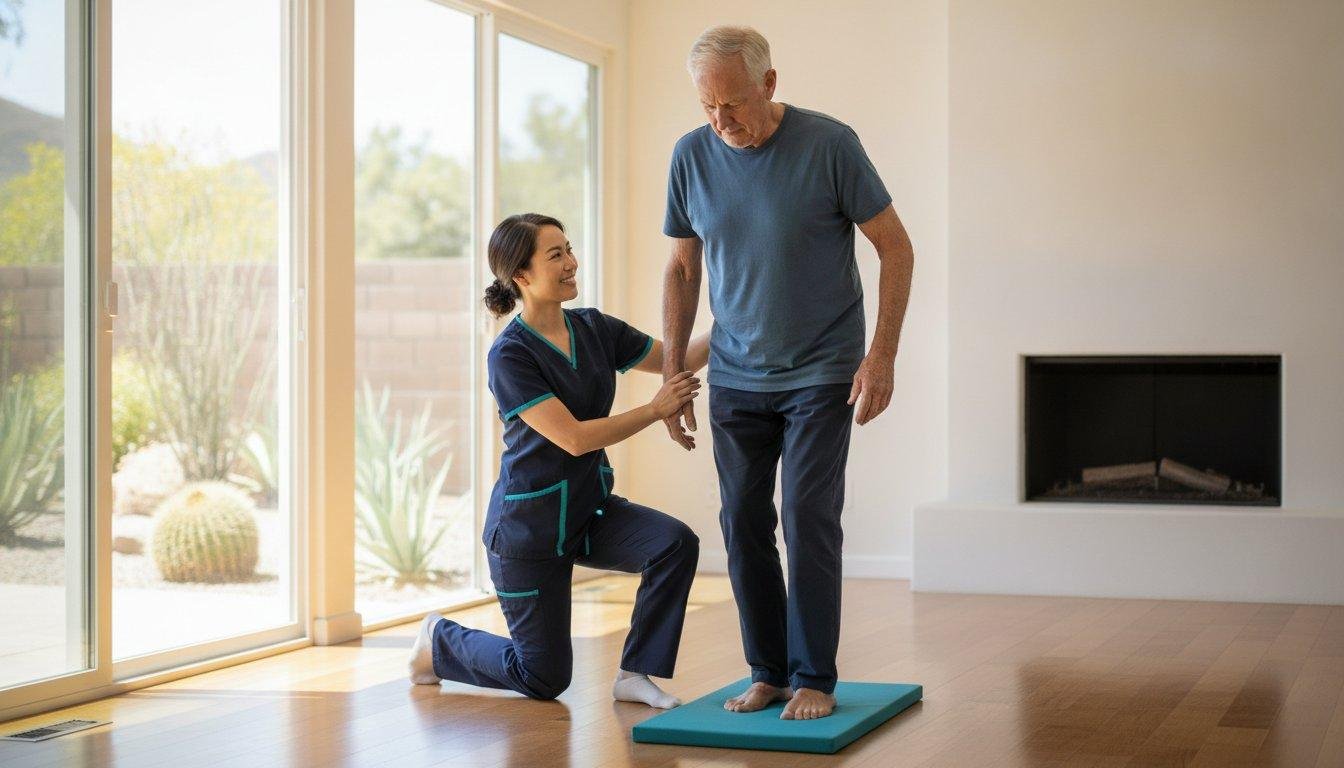
Rehabilitation begins with static balance training, such as standing on one leg while supported, before progressing to dynamic movements that mimic real-world challenges. In a home setting, therapists utilize specialized equipment like high-density foam pads to simulate uneven terrain or gait belts to ensure patient safety during difficult maneuvers. This progression is closely monitored. As your stability improves, the therapist increases the complexity of the tasks, ensuring that the challenge always matches your current functional level without compromising your safety.
Neuromuscular Re-education
This specialized discipline focuses on retraining the brain to process sensory input more efficiently. A key component is dual-task training, which requires you to perform a cognitive task, such as reciting a grocery list, while simultaneously navigating a walking path. This mimics the reality of daily life, where distractions are constant. Neuromuscular re-education utilizes repetitive, targeted movement patterns to stimulate the brain’s neuroplasticity, effectively creating new neural pathways that enhance involuntary stability. This process ensures that balance becomes a coordinated, automatic response rather than a stressful, conscious effort.
The Safety and Efficacy of In-Home Physical Therapy
For a patient already struggling with instability, the journey to an outpatient clinic can be the most dangerous part of their day. Navigating parking lots, curb transitions, and busy waiting rooms introduces unnecessary risks before the therapeutic session even begins. Receiving physical therapy for balance issues within the safety of your own residence eliminates these travel hazards entirely. This is a critical consideration, as falls are the leading cause of fatal and non-fatal injuries among older adults, resulting in 3 million emergency department visits annually. By bringing clinical expertise to the patient, we ensure that energy is spent on recovery rather than the stress of transportation.
In-home therapy also provides a unique clinical advantage: real-world environment training. A licensed therapist acts as an environmental auditor during every visit. They identify specific household hazards that a clinic setting cannot replicate, such as loose throw rugs, poor lighting in transition areas, or furniture that isn’t sturdy enough to support a “near-miss” grab. This allows the therapist to provide immediate, practical solutions that improve safety in real time. This familiar setting also fosters a sense of “professional empathy,” where the therapist becomes a trusted partner in the patient’s own space, building the quiet confidence necessary for successful rehabilitation.
Personalized Care in Your Own Environment
Rehabilitation is most effective when it directly addresses the obstacles you face every day. Instead of walking on a generic clinic floor, you practice navigating your specific hallways, stepping over your actual door thresholds, and performing safe transfers in your own bathroom. This specificity builds functional muscle memory for your unique home layout. We also prioritize involving family caregivers in the process. When a caregiver understands the correct way to assist with a gait belt or cue a proper step-over, they provide a 24/7 layer of safety that extends far beyond the scheduled therapy session. This one-on-one attention ensures that no aspect of your mobility is overlooked due to clinic distractions.
Clinical Standards for Home Health
Everest Peak maintains high clinical standards by treating the home as a professional medical environment. Our team provides licensed physical therapy for balance issues and skilled nursing care throughout North Hollywood and the San Fernando Valley. We utilize a collaborative care model where physical therapists, registered nurses, and medical social workers coordinate to address the holistic needs of the patient. This ensures that if a balance issue is exacerbated by medication side effects or a chronic condition, the entire medical team is informed and active in the solution. If you are ready to begin a structured path to recovery without the risks of travel, you can request a home-based physical therapy evaluation to secure your independence.
Clinical Balance Rehabilitation with Everest Peak Home Health Care
Everest Peak Home Health Care operates as a disciplined extension of the family’s care circle, providing a structured path to recovery for residents in North Hollywood and the Greater Los Angeles area. Our clinical approach to physical therapy for balance issues begins with a rigorous intake process designed to uncover the specific physiological and environmental factors contributing to instability. We don’t simply provide generic exercises. Instead, we conduct a comprehensive home health assessment that evaluates gait, strength, and sensory integration. By prioritizing clinical excellence and professional integrity, we help patients regain the autonomy they need to live safely in their own homes.
Our model relies on collaborative care, where licensed physical therapists work in tandem with our skilled nursing team to ensure a holistic recovery. If a patient is managing post-operative recovery or a chronic neurological condition, this coordination allows for immediate adjustments to the care plan. For instance, a registered nurse might identify a medication side effect that impacts dizziness, while the therapist modifies the balance training to compensate. This integrated strategy ensures that no aspect of the patient’s health is overlooked, maintaining a steady, methodical pace toward functional improvement.
Our Specialized Rehabilitative Team
The expertise of our licensed physical and occupational therapists is central to our mission of preserving patient dignity. We develop customized plans for those navigating complex transitions, such as returning home after orthopedic surgery or managing the progression of chronic illnesses like Parkinson’s. Our therapists focus on practical outcomes that improve quality of life, such as safe mobility in the kitchen or stable transfers in the bedroom. For families seeking specialized support, our In-Home Physical Therapy San Fernando Valley services provide the clinical rigor needed to manage high fall-risk situations effectively.
Taking the First Step Toward Stability
Initiating a home health assessment in Los Angeles is a methodical process designed to put the patient at ease. During the first clinical visit, a therapist will perform a baseline evaluation of your mobility and conduct a thorough safety audit of your living environment. They’ll discuss your specific goals, whether that involves walking to the mailbox independently or navigating stairs without fear. This initial assessment serves as the foundation for a customized roadmap to stability. If you or a loved one are experiencing the cycle of anxiety and muscle atrophy associated with instability, Contact Everest Peak Home Health Care to schedule a professional assessment. Our team is ready to provide the knowledgeable guidance and steady support required for a safe return to independence.
Restoring Your Stability and Independence
Stability is more than a physical trait; it’s the foundation of your autonomy. By addressing the biological systems that govern your orientation, you can break the cycle of anxiety and muscle atrophy that often follows a near-miss or a fall. Professional physical therapy for balance issues provides the specialized gait training and neuromuscular re-education required to navigate your world safely. Our comprehensive multi-disciplinary care teams, including licensed and bonded clinicians, ensure that your recovery is managed with the highest clinical standards right in your own environment.
We’re proud to serve the North Hollywood and San Fernando Valley communities with a deep commitment to patient dignity and long-term improvement. Taking the first step toward a steadier future is a methodical process designed for your comfort. Schedule a Clinical Home Health Assessment with Everest Peak to begin your personalized path to stability. You don’t have to navigate these health transitions alone. With the right clinical guidance, you can reclaim your confidence and move through your daily life with steady, reliable support.
Frequently Asked Questions
Is physical therapy for balance issues covered by insurance or Medicare?
Most private insurance plans and Medicare cover physical therapy for balance issues when a physician determines the service is medically necessary. For the 2026 calendar year, Medicare has established a therapy threshold of $2,480 for combined physical and speech therapy services. Once this limit is reached, your therapist will use a specific clinical modifier to certify that continued treatment is essential for your safety and functional recovery.
How many sessions of physical therapy are usually needed to see improvement in balance?
The number of sessions required depends on the root cause of your instability and your overall physical condition. Many patients begin to notice measurable improvements in their stability and confidence within four to six weeks of consistent, twice-weekly sessions. Your therapist will perform regular clinical re-assessments to monitor your progress and adjust the complexity of your exercises as your coordination and muscle strength improve.
Can physical therapy help with balance issues caused by inner ear problems?
Yes, specialized vestibular rehabilitation is a highly effective clinical intervention for balance issues originating in the inner ear. These targeted exercises retrain the brain to process sensory information more accurately, which helps resolve sensations of spinning or tilting. By using specific head and eye movements, a licensed therapist helps your nervous system compensate for vestibular deficits, allowing you to move with greater orientation and ease.
What is the difference between physical therapy and occupational therapy for balance?
Physical therapy focuses on the biomechanics of movement, such as gait training, core strengthening, and sensory retraining to improve your walking pattern. Occupational therapy addresses how these balance challenges impact your Activities of Daily Living (ADLs). While a physical therapist works on your ability to walk safely, an occupational therapist might focus on modifying your home environment or teaching you safe ways to perform tasks like cooking and dressing.
Is it safe to do balance exercises at home without a therapist present?
You should only perform balance exercises independently after a licensed therapist has evaluated your fall risk and confirmed you can perform the movements safely. During your initial sessions, your therapist will design a customized home program and teach you how to use sturdy furniture or environmental supports for stability. This professional guidance ensures that your home practice reinforces your recovery without putting you at risk for a stumble.
What should I wear for an in-home physical therapy session?
It’s best to wear loose, comfortable clothing that allows for a full range of motion, such as athletic pants and a flexible shirt. Proper footwear is the most critical element for your safety during a session. You should wear supportive, closed-toe shoes with non-slip soles, such as well-fitted sneakers. Avoid wearing slippers, sandals, or walking in socks, as these do not provide the necessary traction for balance training.
Do I need a doctor’s referral for in-home physical therapy in California?
California law allows for “Direct Access,” which lets you see a physical therapist for up to 45 days or 12 visits without a formal referral. However, for home-based services to be covered by Medicare or most private insurance providers, a physician’s referral is usually required to certify medical necessity. Our clinical team can coordinate directly with your primary care physician to ensure your treatment plan meets all necessary regulatory and insurance standards.
How do I know if my balance issues are serious enough for professional help?
If you’ve experienced a “near-miss” event, such as grabbing furniture to steady yourself, or if you feel a persistent fear of falling in public, you should seek a professional assessment. You don’t need to wait for an actual injury to occur before starting physical therapy for balance issues. Proactive clinical intervention identifies the weak links in your biological systems early, which is the most effective way to preserve your long-term independence.