

Imagine standing at the edge of your bed and feeling as though the short walk to the kitchen is an insurmountable peak. It’s natural to feel hesitation or even fear when you’re recovering from surgery or a significant health transition at home. You want to regain your strength, yet the clinical instructions provided during your discharge often feel confusing or overwhelming. This is where structured home health physical therapy exercises become your most reliable tool for reclaiming your life and your dignity.
A licensed physical therapist identifies the specific limitations of your mobility, implements a tailored movement plan, and monitors your form to ensure every repetition leads to a safer outcome. We understand that the fear of falling can be just as restrictive as a physical injury. By following a professional regimen, you can replace that uncertainty with a sense of calm authority over your own body and your environment.
This guide provides a clear path forward by detailing ten essential movements designed to restore your self-sufficiency. You’ll learn how to perform these exercises with precision, understand the safety protocols that prevent re-injury, and discover how consistent, professional support helps you return to the activities you love with confidence.
Key Takeaways
- Understand how clinical home health physical therapy prevents muscle atrophy and improves circulation by bringing professional expertise directly into your residence.
- Master foundational home health physical therapy exercises, such as ankle pumps and heel slides, to safely restore range of motion and prevent post-operative complications.
- Learn to distinguish between therapeutic discomfort and injury pain to ensure your recovery remains steady and free from the fear of re-injury.
- Discover how to create a dedicated “Safety Zone” within your home by identifying and removing common household hazards that could lead to falls.
- Gain insight into how licensed therapists in North Hollywood and Los Angeles tailor specialized routines to meet the unique needs of seniors and post-operative patients.
The Role of Physical Therapy Exercises in Home Recovery
Home health physical therapy is a specialized clinical service provided by licensed professionals within the sanctuary of a patient’s own residence. Unlike general gym routines, these home health physical therapy exercises are precision-engineered to address specific physiological deficits following surgery or illness. Physical therapy focuses on restoring functional mobility through targeted interventions that prioritize safety and clinical efficacy.
The biological principle of “use it or lose it” is central to this recovery phase. When a patient engages in consistent, therapist-led movement, they stimulate vital blood flow to healing tissues and actively prevent muscle atrophy. This cause-and-effect relationship is the foundation of a successful transition from hospital-based care to the restoration of full home independence. While general fitness aims for overall wellness, clinical rehabilitative exercises are designed to retrain the nervous system and rebuild the structural integrity of joints and muscles. Incorporating specific home health physical therapy exercises into your daily routine helps bridge the gap between clinical care and independent living.
Why Exercise at Home Matters
Recovering in a familiar environment offers a significant psychological advantage that clinical settings cannot replicate. Patients often feel more secure and motivated when they practice movements in the exact spaces where they’ll use them daily. This comfort level directly impacts recovery outcomes; data suggests that active home-based rehabilitation plays a critical role in reducing hospital readmission rates by ensuring the body remains resilient during the vulnerable post-discharge period. For seniors in the San Fernando Valley, these exercises aren’t just about movement; they’re the primary mechanism for maintaining long-term self-sufficiency and preserving a dignified lifestyle.
When to Start Your Home Exercise Program
The initiation of any movement plan must align strictly with the timeline established by your surgical team or primary physician. Your body often signals readiness through reduced acute swelling and a manageable level of baseline pain. A licensed therapist from Everest Peak ensures that your program begins only when your clinical status is stable. The golden window for beginning post-operative rehabilitation typically opens within 24 to 48 hours of your discharge from the hospital. Starting during this timeframe helps mitigate the risks of stiffness and circulation issues, setting a steady pace for the weeks of recovery ahead.
5 Essential Home Health Physical Therapy Exercises for Beginners
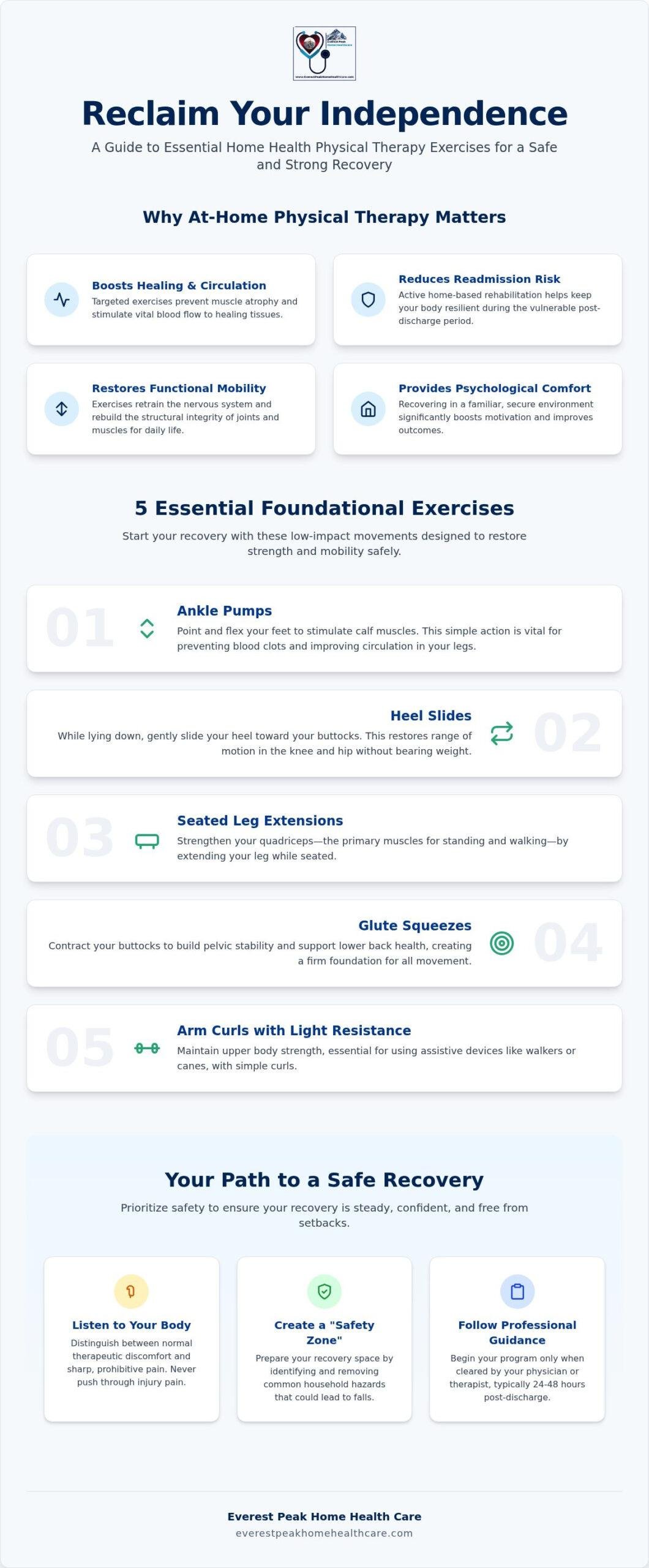
Beginning a new movement routine after a health transition requires a delicate balance of caution and consistency. These foundational home health physical therapy exercises serve as the building blocks for more advanced mobility. By focusing on low-impact movements, you allow your body to heal while maintaining the muscular engagement necessary for daily tasks. Each exercise is selected for its clinical benefit, targeting the specific areas most prone to stiffness and weakness during recovery.
- Ankle Pumps: These movements involve pointing and flexing the feet to stimulate the calf muscles. This action is vital for preventing blood clots and improving circulation in the lower extremities.
- Heel Slides: By gently sliding the heel toward the buttocks while lying down, you restore the range of motion in the knee and hip joints without placing weight on the limbs.
- Seated Leg Extensions: This exercise strengthens the quadriceps, which are the primary muscles used for safer standing and walking.
- Glute Squeezes: Contracting the buttocks builds pelvic stability and supports lower back health, creating a firm foundation for movement.
- Arm Curls with Light Resistance: Maintaining upper body strength is essential for patients who rely on assistive devices like walkers or canes.
For those seeking a comprehensive list of physical therapy exercises, clinical resources from leading medical centers provide excellent visual references to complement your home program. Having a licensed physical therapist from Everest Peak monitor your form ensures these movements remain therapeutic rather than straining.
Lower Body Mobility Movements
To perform ankle pumps effectively, lie flat in bed with your legs straight. Point your toes toward the footboard, then pull them back toward your shins. Repeat this rhythmic motion ten times per set. If your mobility is severely limited, you can use a folded bed sheet looped around the bottom of your foot to assist with heel slides. Gently pull the sheet to help your knee bend, ensuring you stay within a comfortable range of motion. Always keep your back supported against a firm chair or headboard during any seated movements to prevent spinal strain.
Core and Stability Strengthening
The muscles of the abdomen and pelvis act as the body’s powerhouse, playing a critical role in preventing falls at home. To perform gentle abdominal bracing, tighten your stomach muscles as if preparing for a light touch, holding for five seconds while continuing to breathe normally. It’s vital to avoid holding your breath, as this can create unnecessary intra-abdominal pressure. Instead, focus on a steady exhale during the most difficult part of the movement. This controlled breathing ensures that your home health physical therapy exercises support your cardiovascular health while rebuilding your physical strength.
Customizing Your Routine for Specific Recovery Needs
A standardized approach to recovery often fails to account for the unique physiological demands of different health conditions. Effective home health physical therapy exercises must be meticulously adapted to the specific surgical intervention or chronic condition being treated. For instance, the protocols for home health care for knee replacement recovery differ significantly from the endurance-based focus of cardiac rehabilitation. While a heart patient may prioritize steady, low-impact aerobic conditioning, an orthopedic patient focuses on structural stabilization and joint mechanics. Similarly, patients requiring in home physical therapy after shoulder surgery follow a distinct set of protocols focused on restoring rotator cuff integrity and upper extremity range of motion.
Licensed therapists play a vital role in this process by monitoring daily fluctuations in a patient’s pain levels. If discomfort increases, the professional adjusts the frequency or intensity of the movements to prevent setbacks. This responsive care model ensures that the patient remains on a steady path toward restoration without the risk of overexertion. Following established strategies for safer home workouts allows for a balanced progression that respects the body’s healing timeline.
Post-Operative Joint Recovery
In cases of knee replacement, achieving full extension often takes clinical priority over flexion in the initial weeks. If the knee can’t straighten completely, it impacts the patient’s gait and long-term stability. Weight-bearing precautions also dictate which home health physical therapy exercises are safe to perform at any given stage. By utilizing in-home physical therapy San Fernando Valley, residents receive the precise oversight needed to navigate these complex orthopedic requirements. A therapist ensures that each movement respects the surgeon’s specific discharge protocols while maximizing the patient’s functional gains.
Balance and Fall Prevention for Seniors
For older adults, the focus often shifts toward improving proprioception, which is the body’s subconscious sense of its position in space. Specialized physical therapy for seniors at home incorporates movements that challenge balance in a controlled setting. You can use sturdy household features, such as a heavy kitchen counter, as a makeshift ballet barre to provide security during standing exercises. This approach integrates occupational therapy concepts, teaching patients how to transition safely between different surfaces, such as moving from a seated position to a walker. This comprehensive oversight transforms the home environment into a safe, therapeutic space that fosters independence and reduces the fear of falling.
Safety Protocols: Avoiding Common In-Home Exercise Mistakes
While home health physical therapy exercises are the cornerstone of a successful recovery, performing them without proper clinical oversight can lead to preventable setbacks. Safety in a home setting requires a proactive approach that transforms your living space into a secure, therapeutic environment. A licensed professional ensures that each movement is performed with correct form, but the patient and their family must also maintain the integrity of the “Safety Zone” between visits.
One of the most critical skills a patient can develop is the ability to distinguish between therapeutic discomfort and injury pain. It is normal to feel a mild stretching sensation or muscle fatigue as you rebuild strength. However, sharp, stabbing, or radiating pain is a clear signal that the tissue is being stressed beyond its current capacity. If you experience these sensations, you should stop the movement immediately and consult your therapist. Practicing the “Buddy System” by having a caregiver present during new or challenging exercises provides an additional layer of security, offering both physical stabilization and emotional reassurance.
Environmental Assessment
The physical layout of your home plays a significant role in your safety during exertion. Proper lighting is essential to prevent missteps, especially during standing or balance-focused home health physical therapy exercises. You should ensure that your exercise area is brightly lit and free from common trip hazards such as throw rugs, loose electrical cords, or general clutter. A licensed physical therapist from Everest Peak can perform a comprehensive home safety evaluation to identify these hidden risks before you begin your recovery journey.
Your choice of equipment also matters. When performing seated exercises, always use a firm, stable chair with armrests and no wheels. Soft couches or chairs with deep cushions can swallow your weight, making it difficult to maintain proper spinal alignment or stand up safely. Additionally, you must wear supportive, non-slip footwear even when exercising indoors; socks or smooth-soled slippers do not provide the traction necessary for stable movement on hardwood or tile floors.
Managing Pain and Inflammation
Post-exercise care is just as important as the movements themselves. Utilizing the RICE method—Rest, Ice, Compression, and Elevation—helps manage the natural inflammation that occurs after physical activity. Monitoring your vital signs, such as heart rate and oxygen saturation levels, provides objective data on how your body is responding to the workload. You should also watch for red-flag symptoms that require immediate attention, including dizziness, sudden shortness of breath, or chest pressure.
If your pain levels do not return to their baseline within two hours of completing your routine, the intensity of the exercises was likely too high for your current stage of recovery. This “2-hour pain rule” is a helpful benchmark for adjusting your effort in future sessions. By respecting these boundaries, you ensure that your progress remains steady and your body has the opportunity to repair itself effectively between sessions.
Partnering with Professional Therapists in North Hollywood
A successful recovery journey relies on the expertise of a steady guide who understands the nuances of your specific health transition. At Everest Peak, our licensed therapists visit your residence to create a bespoke plan that translates complex clinical goals into manageable home health physical therapy exercises. This personalized approach ensures that your rehabilitation is not a generic routine, but a targeted strategy designed for your unique physical environment and mobility needs. By bringing professional care into your home, we provide a level of security that allows you and your family to focus on the restoration of your lifestyle.
The primary benefit of professional oversight is the ability to monitor your form in real time within your actual living space. A therapist identifies subtle postural shifts or compensatory movements that an automated app or a distant clinic might overlook. This clinical precision ensures that every repetition of your home health physical therapy exercises contributes to your strength without risking strain. As you gain confidence, your therapist manages the transition from guided sessions to a self-managed program, empowering you with the tools needed for long-term independence.
For patients navigating complex medical recoveries, our physical therapy team works in tandem with other clinical professionals. We frequently coordinate with skilled nursing care Los Angeles to provide comprehensive medical oversight. This collaboration ensures that your physical rehabilitation remains perfectly aligned with your medication management and wound care protocols, creating a seamless network of support characterized by integrity and excellence.
Expert Supervision in the San Fernando Valley
Our deep roots in the local community allow North Hollywood families to access high-quality care without the stress of traveling to a distant facility. Everest Peak therapists maintain direct communication with your Los Angeles-based surgeon to ensure that your home program strictly adheres to their surgical protocols. This collaborative effort prioritizes your safety while focusing on restoring your self-sufficiency. By providing compassionate, clinical attention, we help you regain the ability to navigate your home with the dignity and grace you deserve.
Getting Started with Everest Peak
The process of beginning your in-home rehabilitation is designed to be methodical and thorough. Following your hospital discharge, an Everest Peak clinician conducts an initial physical therapy assessment to establish your baseline mobility and safety requirements. During this first visit, we review your medical history, evaluate your home for potential hazards, and introduce the foundational movements that will begin your recovery. Our goal is to provide a clear, logical path forward that leads to peace of mind for both the patient and their loved ones.
Contact Everest Peak Home Health Care to schedule your professional therapy assessment today.
Reclaiming Your Independence at Home
Mastering home health physical therapy exercises is about more than just physical movement; it’s the essential bridge between clinical recovery and the restoration of your daily lifestyle. By focusing on foundational movements like ankle pumps and pelvic stability, you actively prevent complications while building the strength needed for self-sufficiency. Every repetition performed under the guidance of a professional ensures that your progress remains steady and safe from the risk of re-injury. This structured approach allows you to move with confidence as you navigate your own living space.
Our licensed clinical professionals serve North Hollywood and the San Fernando Valley with a commitment to results-oriented care that respects the sanctity of your home. We understand that navigating health transitions can feel overwhelming, but you don’t have to walk this path alone. Our steady guides are here to simplify the complexities of your recovery and provide the compassionate support your family deserves. We prioritize your emotional well-being alongside your physical gains to ensure a dignified recovery experience.
To begin your journey toward a more mobile and confident future, Request a Professional Home Health Assessment with Everest Peak today. We look forward to helping you regain your strength and peace of mind in the comfort of your own environment.
Frequently Asked Questions
Is it safe to do physical therapy exercises at home without a therapist present?
Yes, provided you have been cleared by a professional and are following a routine you’ve already practiced with your therapist. Safety is paramount, so we recommend performing new or complex movements only when your Everest Peak clinician is on-site. Once you demonstrate proper form and stability, your therapist will designate specific exercises for your independent daily routine to maintain progress between clinical visits and ensure your safety.
How many times a day should I perform my home health physical therapy exercises?
Most patients achieve the best results by performing their prescribed home health physical therapy exercises two to three times daily. However, the exact frequency depends on your surgical protocol and current energy levels. Your therapist will provide a specific schedule that balances activity with rest, ensuring your tissues have adequate time to repair. Consistency is the key to preventing muscle atrophy and restoring your range of motion as you heal.
What should I do if an exercise causes sharp pain instead of a mild stretch?
You should stop the movement immediately if you experience sharp, stabbing, or radiating pain. While a mild stretching sensation or muscle fatigue is expected, acute pain is a signal that your body is being overstressed. Rest the affected area and apply ice if swelling occurs. Report these sensations to your physical therapist during your next visit so they can adjust the intensity of your routine to ensure your safety.
Do I need special equipment like weights or bands for home physical therapy?
Many effective rehabilitative movements require no special equipment and utilize your own body weight for resistance. In the early stages of recovery, we often use common household items like sturdy chairs, kitchen counters, or even bed sheets to assist with stretching. If your recovery plan requires resistance bands or light weights, your Everest Peak therapist will advise you on the best options to support your specific strengthening goals without cluttering your home environment.
Can home health physical therapy exercises help prevent future falls?
Yes, targeted home health physical therapy exercises are highly effective at reducing fall risks by improving balance, coordination, and lower-body strength. Our clinicians focus on proprioception drills that retrain your body to sense its position in space. By strengthening the powerhouse muscles of your core and legs, you gain the stability needed to navigate uneven surfaces or transitions between rooms with much greater confidence and security in your daily life.
How long does a typical home physical therapy session last?
A standard therapist-led visit usually lasts between 45 and 60 minutes. This duration allows for a thorough assessment of your progress, guided exercise practice, and adjustments to your clinical plan. When you are exercising independently, your routine might be shorter, often ranging from 15 to 30 minutes. Your therapist ensures that each session is long enough to be effective without causing excessive fatigue that could hinder your recovery during these early stages.
Will my insurance cover a physical therapist coming to my home in North Hollywood?
Many insurance providers, including Medicare, cover in-home physical therapy for patients who meet homebound criteria following surgery or illness. Because coverage details vary based on your specific plan and the 2026 regulatory updates, we recommend verifying your benefits early. Our administrative team in North Hollywood can help you understand your options and coordinate with your Los Angeles-based physician to ensure your clinical visits are properly authorized and documented for your insurance provider.
What is the difference between physical therapy and occupational therapy at home?
Physical therapy focuses on restoring large-scale mobility, strength, and gross motor skills like walking or standing. In contrast, occupational therapy helps you adapt to your environment to perform specific activities of daily living, such as dressing or grooming. While a physical therapist helps you reach the kitchen safely, an occupational therapist ensures you can prepare a meal once you arrive. Both services work together at Everest Peak to provide a comprehensive and dignified recovery experience.