

While the surgeon’s precision in the operating room is vital, the long-term success of your new joint is often decided in the quiet hallways of your own home. It’s natural to feel a sense of trepidation when you first return to North Hollywood after a major procedure. You might worry about the risk of an accidental fall, feel overwhelmed by a complex medication schedule, or wonder if you’re performing your rehabilitation exercises correctly. Professional home health care for knee replacement provides the clinical oversight and emotional reassurance needed to transform this period of vulnerability into a structured path toward independence.
We understand that a seamless recovery requires more than just physical effort; it demands a dedicated team to manage the clinical details while you focus on healing. This article explains how a coordinated home health team ensures your safety, prevents post-operative complications, and guides you through a personalized therapy plan. A skilled nursing professional monitors your incision to prevent infection, while a physical therapist helps you regain a full range of motion. You’ll discover the specific steps taken to facilitate a dignified return to your daily life without the constant anxiety of managing your recovery alone.
Key Takeaways
- Understand the critical distinction between physician-ordered clinical services and basic non-medical caregiving to ensure you receive the appropriate level of medical support.
- Learn how specialized home health care for knee replacement coordinates physical therapy and skilled nursing to manage pain while effectively restoring your range of motion.
- Discover why receiving one-on-one clinical attention in a familiar environment often leads to a more seamless transition back to independent living compared to a recovery facility.
- Identify essential steps for preparing your living space, such as removing fall hazards and organizing a recovery station, to maintain your safety during the initial weeks of healing.
- Explore how a professional post-operative plan provides the protective oversight needed to prevent surgical site infections and ensure the long-term success of your new joint.
What is Home Health Care for Knee Replacement Recovery?
Clinical home health care is a specialized, physician-ordered service designed to bridge the gap between your hospital discharge and your return to full independence. Unlike non-medical caregiving, which focuses on daily tasks like meal preparation or light housekeeping, home health care for knee replacement involves a team of licensed medical professionals who provide skilled clinical interventions. This service is a formal extension of your surgical team’s care, ensuring that the precision of the operating room is matched by a rigorous and safe recovery environment within your own home.
The first 2 to 4 weeks following a knee replacement are arguably the most critical for the long-term longevity of the joint. During this window, your body begins the complex process of healing bone and soft tissue while managing the formation of scar tissue. Without professional oversight, patients may inadvertently move in ways that stress the new joint or, conversely, fail to move enough to prevent stiffness. The primary goal of this clinical support is to transition you from a state of hospital-level dependency to a life of confident, independent mobility in your own neighborhood.
The Clinical Necessity of Post-Op Home Care
A successful surgical outcome depends heavily on the prevention of post-operative complications that can arise shortly after returning home. Licensed nurses play a vital role by monitoring for signs of Deep Vein Thrombosis (DVT) or surgical site infections, which require immediate clinical attention to prevent serious setbacks. Additionally, your physical therapist ensures you remain in strict compliance with the surgeon’s specific weight-bearing protocols. These professionals provide the protective oversight needed to manage your pain levels effectively while guiding you through the delicate period before you are physically ready to travel to an outpatient facility.
Who Qualifies for Home Health Services?
To receive these services under most insurance plans, a patient must meet the “homebound” requirement, which simply means that leaving the home requires a taxing effort or the assistance of another person. Your orthopedic surgeon typically initiates the referral to an agency like Everest Peak Home Health Care during your discharge planning. Once the referral is made, a clinical professional performs an initial assessment in your North Hollywood home to establish a personalized care plan. This evaluation ensures that every aspect of your recovery, from your medication schedule to your home’s physical layout, is optimized for your safety and self-sufficiency.
The Recovery Team: Clinical Roles in Your Home
Effective home health care for knee replacement relies on a synchronized team of experts who address every facet of your post-operative health. While the surgeon focuses on the joint’s mechanics, your home clinical team manages the practical reality of living with that joint. This comprehensive approach to home health care for knee replacement ensures that no detail, from your emotional resilience to your physical gait, is overlooked during the healing process. By bringing these services directly to you, we eliminate the stress of travel while maintaining the highest standards of medical supervision.
Physical therapists act as the primary guides for your mobility restoration. They specialize in gait training to ensure you’re walking correctly and safely on various surfaces. Recovering from a knee replacement involves steady progress through specific milestones, and having a professional by your side prevents the development of poor movement habits that can lead to long-term discomfort. These experts monitor your progress closely, adjusting your plan as your strength and range of motion improve. This same principle of bringing expert clinical care directly to patients applies across many orthopedic procedures; for example, patients who choose in home physical therapy after shoulder surgery benefit from the identical advantage of avoiding the physical strain of traveling to a clinic during the most vulnerable stage of healing.
In-Home Physical Therapy Goals
Your therapist designs a regimen focusing on extension, flexion, and strengthening the quadriceps to support the new joint. You’ll learn to perform home health physical therapy exercises safely within the context of your own living room. This includes mastering the use of walkers or canes on carpets, tiles, and stairs to minimize fall risks. These sessions aren’t just about movement; they’re about building the confidence required to navigate your home without fear.
Occupational therapists are equally vital, as they adapt your daily routines to protect the surgical site. They provide practical strategies for bathing and dressing that prioritize your safety while you regain strength. Simultaneously, medical social services assist with the logistical hurdles of recovery, offering resources and emotional support when the transition feels complex or overwhelming. Their presence ensures that the household environment remains a place of healing rather than a source of stress.
Skilled Nursing and Wound Management
Registered nurses provide essential skilled nursing care by monitoring your surgical site for signs of irritation or infection. They educate you on the proper administration of anticoagulants to prevent blood clots and coordinate your pain management protocols with your physician’s orders. Professional wound care serves as a vital preventative measure against surgical site infections that could otherwise jeopardize your surgical success. If you’re preparing for discharge, our team can help you transition into a structured post-operative care plan that prioritizes your comfort and long-term health.
Choosing the Right Recovery Setting: Home vs. Facility
Selecting the appropriate environment for your rehabilitation is a decision that significantly impacts both your physical progress and your emotional well-being. While a Skilled Nursing Facility (SNF) offers 24-hour institutional supervision, home health care for knee replacement provides a level of one-on-one attention that is difficult to achieve in a communal setting. A dedicated clinician focuses exclusively on your specific needs during each visit, ensuring that every exercise and medical check is performed with meticulous care. This personalized approach fosters a deeper bond of trust between the patient and the care provider, creating a sense of security that is vital for a confident recovery.
Clinical outcomes often favor the home environment due to the significantly reduced risk of hospital-acquired infections. In a private residence, you aren’t exposed to the various pathogens common in high-traffic medical facilities, which is a critical advantage when protecting a fresh surgical site. Additionally, home health care is a cost-effective alternative to inpatient stays, as it utilizes your existing living space while delivering professional medical services. This transition allows you to remain in the presence of family and familiar comforts, which often accelerates the healing process by reducing the psychological strain associated with long-term hospitalization.
Why Recovery at Home is Often Preferred
Recovering in a familiar setting helps lower the risk of post-operative delirium, a condition characterized by confusion that can sometimes occur in seniors after major surgery in unfamiliar environments. By practicing mobility in the actual hallways and rooms where you live, you gain functional strength that translates directly to your daily life. Receiving clinical post-operative care in North Hollywood allows you to maintain your dignity and personal routines, such as sleeping in your own bed and following your preferred meal times. These small but significant factors contribute to a more positive outlook and a smoother transition back to self-sufficiency.
Criteria for Selecting a Home Health Agency
When evaluating potential agencies, you should verify that the organization holds a current California state licensure and is Medicare-certified. These credentials ensure that the agency adheres to high standards of clinical safety and professional conduct. It’s helpful to ask specific questions before making your choice:
- Does the agency employ licensed registered nurses and physical therapists with specific experience in orthopedic recovery?
- How frequently will the clinical team visit your home during the first two weeks?
- Does the agency coordinate directly with your orthopedic surgeon to ensure your specific protocols are followed?
A reputable agency remains in constant communication with your surgical team, acting as a steady guide that simplifies the complexities of medical recovery for you and your family. This clinical coordination ensures that your progress is documented and shared with your doctor, resulting in a cohesive care plan that prioritizes your long-term surgical success.
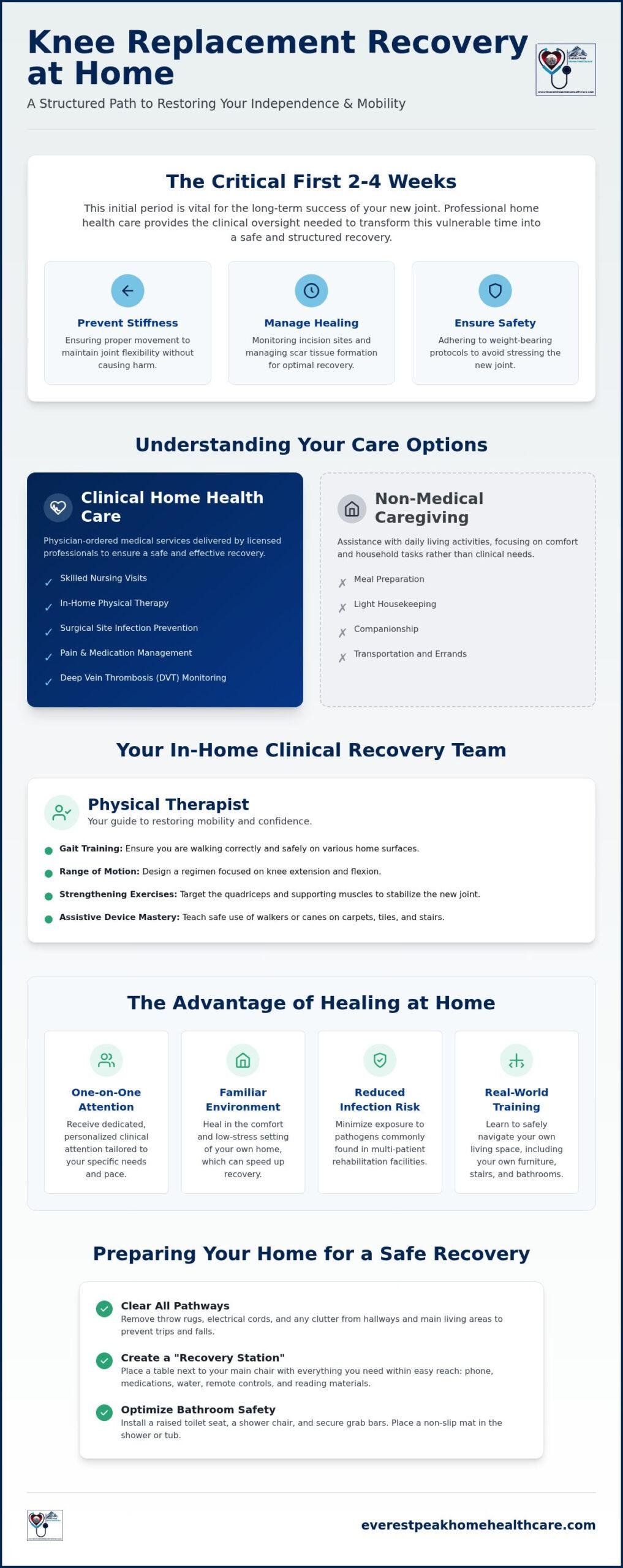
Preparing Your Home for a Safe Recovery
The transition from a clinical setting to your personal residence requires a thoughtful transformation of your living space to accommodate temporary mobility limitations. A professional team providing home health care for knee replacement begins this process with a meticulous environmental assessment to ensure your surroundings support your healing. An Occupational Therapist evaluates your home’s layout to identify subtle risks, such as loose floorboards or narrow passages, that could jeopardize your surgical success. This proactive approach ensures that your residence remains a protective sanctuary for healing rather than a source of potential injury.
Creating a dedicated ‘recovery station’ is a foundational step in maintaining your independence during the first few weeks of rehabilitation. This area should include a sturdy chair with a firm seat and armrests, positioned within easy reach of your medication, phone, water, and lighting controls. Clear pathways are essential for safe walker use, requiring the removal of throw rugs and loose electrical cords that pose significant tripping hazards. Enhanced lighting in hallways and bathrooms is equally vital, as it provides the visual clarity needed to navigate safely during nighttime hours when fatigue might affect your balance.
Home Safety Checklist for Knee Patients
Minor modifications to your bathroom can significantly reduce the strain on your new joint while enhancing your personal safety. Installing grab bars in the shower and utilizing a raised toilet seat allow you to manage hygiene tasks with minimal discomfort and reduced risk of slipping. It’s equally helpful to ensure that the chairs you use most frequently have firm cushions and sturdy armrests to provide the necessary leverage when standing. We define a safe home environment as one that minimizes joint strain during daily activities, allowing you to focus your energy entirely on your home health physical therapy exercises and recovery goals.
The Role of Personal Care Assistance
While clinical therapy addresses your physical restoration, personal care assistance in North Hollywood supports the practical demands of your daily life. These professionals assist with hygiene and grooming tasks that may be difficult to perform alone during the initial stages of recovery. By managing light household tasks and meal preparation, they bridge the gap between clinical therapy and daily living needs, ensuring your environment remains organized and supportive. This comprehensive oversight allows you to prioritize your rehabilitation without the distraction of domestic stressors. If you’re concerned about the safety of your home layout, our experts at Everest Peak Home Health Care can provide a professional assessment to guide your preparations.
Everest Peak: Professional Post-Op Support in Los Angeles
Everest Peak Home Health Care operates with a clear commitment to providing clinical excellence within the comfort of your own residence. We understand that the days following a major surgery require a steady guide who can navigate the complexities of medical protocols while offering genuine emotional support. Our team provides high-quality home health care for knee replacement by coordinating specialized visits from licensed registered nurses and physical therapists who prioritize your safety and long-term surgical success. By focusing on the restoration of your quality of life, we help you regain the self-sufficiency needed to return to your daily routines in the Los Angeles area.
We maintain a seamless integration with major hospitals and surgical centers across the region, ensuring that your transition from the operating room to your living room is handled with professional grace. Our clinicians communicate directly with your orthopedic surgeon to implement their specific recovery protocols without delay. This coordination is essential for providing effective in-home physical therapy in the San Fernando Valley, as it allows us to begin your rehabilitation while your progress is still being closely monitored by your surgical team.
Local Expertise in North Hollywood and Beyond
Our deep understanding of the local healthcare landscape allows us to act as a dependable extension of your existing medical network. We employ responsive, local staff who are intimately familiar with the needs of San Fernando Valley families and the specific requirements of North Hollywood physicians. We place a significant emphasis on physical therapy for seniors at home to ensure that every individual has the opportunity to achieve lasting mobility and independence. This localized approach ensures that your care is not only clinically sound but also personally relevant to your lifestyle.
Getting Started with Everest Peak
Transitioning from hospital discharge to home recovery is a simplified process when you partner with a dedicated agency. Within the first 24 hours of your return home, a clinical professional will conduct a comprehensive assessment to establish your medication schedule and initial therapy goals. You can expect a thorough review of your surgical site and a clear explanation of the steps we’ll take together toward your recovery. If you’re planning an upcoming surgery, contacting our team for a clinical consultation is the first step toward securing a professional and compassionate support network for your healing journey.
Securing Your Path to Lasting Mobility
The journey toward a full recovery begins with the realization that your home environment is often the most effective setting for regaining your strength. By integrating skilled nursing oversight with personalized physical therapy, you ensure that every milestone is met with clinical precision and personal care. We’ve discussed how identifying home hazards and utilizing a multidisciplinary team can prevent complications and accelerate your return to daily activities. Professional home health care for knee replacement provides the protective boundary you need during those vital early weeks of healing.
Our licensed clinical staff is dedicated to serving the San Fernando Valley with expert post-operative coordination that prioritizes your dignity and self-sufficiency. We act as a steady guide, simplifying the transition from hospital to home so you can focus entirely on your physical progress. Schedule your professional post-operative home health assessment with Everest Peak today. You don’t have to navigate this transition alone; we’re here to ensure your new joint provides the mobility and freedom you deserve.
Common Questions About Home Recovery
Is home health care for knee replacement covered by insurance?
Most insurance plans, including Medicare Part A and Part B, cover home health care for knee replacement when a physician certifies it as medically necessary. To qualify, you must be considered homebound, which means leaving your residence requires a taxing effort. For those with Medicare, covered clinical services often have a $0 copay, though it’s always wise to verify your specific plan’s deductible and coverage limits before your surgery date.
How often will a physical therapist visit my home after surgery?
Physical therapists generally visit your home two to three times per week during the initial stages of your recovery. These sessions focus on gait training, range-of-motion exercises, and strengthening the muscles surrounding your new joint. The exact frequency depends on your surgeon’s specific protocols and your personal progress. As you regain strength and mobility, the therapist may adjust the schedule to ensure you’re meeting your rehabilitation milestones safely and effectively.
What is the difference between home health and outpatient therapy?
The primary difference lies in your mobility level and the setting of care. Home health is designed for individuals who are homebound and require clinical services to be brought to them. Outpatient therapy requires you to travel to a clinic for your appointments. Home health provides one-on-one attention in your actual living environment, allowing you to practice movements like navigating your specific stairs or kitchen, which can be more practical for early-stage recovery.
Can home health nurses manage my post-operative pain medication?
Skilled nursing professionals monitor your pain levels and educate you on the proper administration of prescribed medications, including anticoagulants and analgesics. While they don’t provide 24/7 administration, they ensure you understand your schedule and monitor for adverse side effects or complications. By coordinating directly with your orthopedic surgeon, our nurses help optimize your pain management plan to ensure you stay comfortable enough to participate actively in your physical therapy sessions.
How long does home health care usually last after a knee replacement?
Home health services typically last between two and six weeks following your surgery. This period is intended to stabilize your condition and help you reach a level of mobility where you can safely transition to an outpatient facility. The duration is determined by your clinical progress and your doctor’s assessment of your needs. Once you can leave your home without taxing effort, you’ll likely continue your rehabilitation at a local therapy center.
What happens if I have a complication during my home recovery?
If a complication arises, such as signs of infection or unusual swelling, your visiting nurse or therapist will perform a clinical assessment and immediately contact your surgical team. They act as a vital link between you and your doctor, providing the professional oversight needed to address issues before they become emergencies. It’s important to remember that home health is not an emergency medical service; for life-threatening situations, you should always contact local emergency responders immediately.
Do I need to buy special medical equipment before I come home?
Most patients require assistive devices like a front-wheeled walker, a raised toilet seat, or a shower chair to navigate their home safely. While Everest Peak does not sell medical equipment, our therapists can help you identify exactly what you need during your initial home safety assessment. Your surgeon’s office or hospital discharge planner typically coordinates the delivery of these items through a third-party durable medical equipment provider before you return home.
Can Everest Peak help if I live in North Hollywood or the San Fernando Valley?
Yes, Everest Peak Home Health Care is based in North Hollywood and proudly serves families throughout the San Fernando Valley and the greater Los Angeles area. Our local presence allows us to be highly responsive to our patients’ needs and maintain close relationships with the region’s leading orthopedic networks. We’re committed to helping our neighbors regain their independence and quality of life through professional, compassionate clinical support right where they feel most comfortable.