
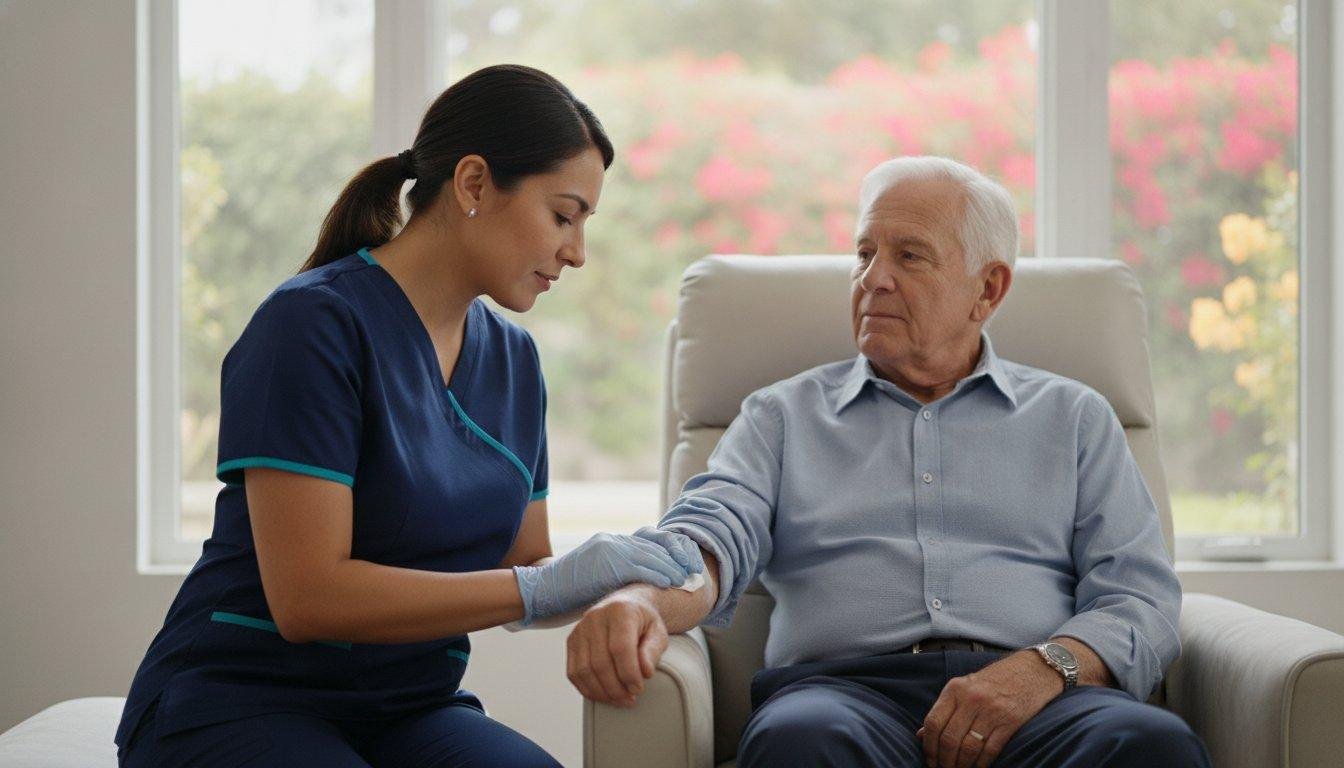
For many families in Los Angeles, the most daunting part of a surgical recovery isn’t the procedure itself, but the fear of managing a complex wound once they leave the hospital. It’s common to feel a sense of deep anxiety when faced with intricate dressing changes or the constant worry that a hidden infection might be developing. Professional in home wound care services address these concerns by bringing clinical expertise directly to your bedside, removing the physical and emotional strain of transporting a mobility-impaired patient to a distant wound center.
We understand that you want the best possible outcome for your loved one, which includes successful wound closure and a significant reduction in daily pain. This guide provides a comprehensive look at how skilled nursing oversight promotes faster healing and prevents the need for hospital readmissions. You’ll learn how a licensed clinical team utilizes advanced recovery protocols to monitor progress, educate caregivers, and restore a sense of dignity to the healing process. By integrating professional medical assessments with a compassionate, home-based approach, we help you navigate the complexities of recovery with confidence and peace of mind.
Key Takeaways
- Distinguish between basic personal assistance and the clinical wound management provided by licensed nurses to ensure medical safety and specialized oversight.
- Learn how professional in home wound care services eliminate the stress of transporting mobility-impaired patients while maintaining a sterile, clinical environment for recovery.
- Understand the specialized protocols used to manage surgical incisions and pressure ulcers, which are designed to promote faster closure and minimize the risk of infection.
- Discover what to expect during a clinical home visit, including detailed wound staging, professional documentation, and the application of sterile dressings.
- Identify the essential qualifications and local expertise required to select a dependable provider in the Los Angeles area for your family’s peace of mind.
What are Professional In-Home Wound Care Services?
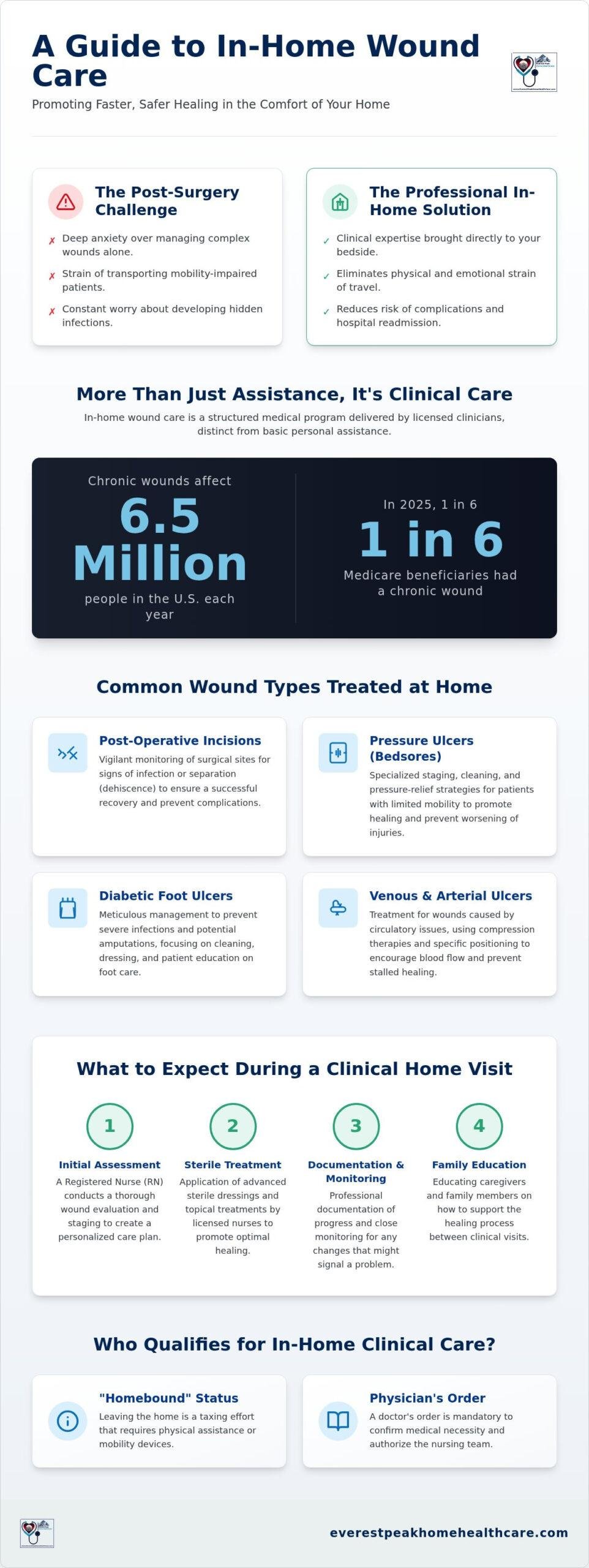
Professional in home wound care services represent a specialized clinical intervention designed for patients who require advanced medical attention within the comfort of their own residence. This service is far more than basic first aid; it’s a structured medical program delivered by licensed clinicians who understand the nuances of tissue repair. Chronic wounds affect approximately 6.5 million people in the United States each year, according to Top Doctor Magazine (June 2026), highlighting the widespread need for professional intervention. While personal care assistance focuses on daily tasks like bathing or meal preparation, clinical wound management involves technical procedures such as sterile dressing changes, wound cleansing, and the application of advanced topical treatments to facilitate healing.
This professional oversight is essential for maintaining the integrity of the healing process and restoring the patient’s lifestyle. By having a licensed nurse monitor the recovery site, families can significantly reduce the risk of secondary complications like cellulitis or deep-tissue infections that often lead to hospital readmissions. Research indicates that 1 in 6 Medicare beneficiaries had a chronic wound in 2025, a statistic that underscores why specialized oversight is a critical component of modern home health. These clinicians act as a steady guide, identifying subtle changes in wound color, temperature, or drainage that might signal a problem long before it becomes a medical emergency.
The Role of the Skilled Nursing Team
A Registered Nurse (RN) leads the clinical journey by conducting a thorough initial assessment and developing a comprehensive care plan tailored to the patient’s specific needs. They work in tandem with Licensed Vocational Nurses (LVNs) who provide the consistent, hands-on monitoring required for successful recovery. This team-based model is a vital component of skilled nursing care Los Angeles families trust during vulnerable transitions. Many practitioners utilize the principles of Wound, ostomy, and continence nursing to ensure every procedure meets rigorous evidence-based standards.
Who Qualifies for Wound Care at Home?
Accessing clinical support at home requires meeting “homebound” criteria, which applies when leaving the residence is a taxing effort requiring physical assistance or mobility devices. It’s a common solution for those recovering from major surgery or managing chronic ulcers that make frequent clinic visits impractical. A physician’s order is mandatory to initiate these visits. This document confirms the medical necessity of the service and authorizes the nursing team to provide specialized care that promotes successful wound closure and patient comfort. By establishing this clinical foundation, families ensure their loved ones receive the high standards of care necessary for a safe recovery.
Common Wound Types Treated by Home Health Professionals
Home health professionals encounter a diverse array of injuries that demand more than just a standard bandage. Effective in home wound care services rely on a multi-disciplinary approach where licensed nurses collaborate closely with physical and occupational therapists. This team ensures that while the wound’s being treated, the patient’s mobility and strength are also being addressed to prevent future injuries. Whether it’s a planned surgical site or an unexpected chronic ulcer, professional oversight is the key to a safe recovery. By identifying the specific nature of the injury, clinicians can apply the most effective evidence-based treatments.
Pressure ulcers, often called bedsores, are a significant concern for patients with limited mobility in the San Fernando Valley. These injuries require specialized staging and pressure-relief strategies that only a trained clinician can provide. Similarly, diabetic foot ulcers demand meticulous management. Without professional care, these wounds can lead to severe infections or even amputations. Nurses also treat venous and arterial ulcers caused by circulatory issues, using compression therapies and specific positioning to encourage blood flow. This clinical focus prevents the “stalled” healing process that often leads to hospital readmissions.
Post-Operative Incision Care
Managing a surgical site requires a vigilant eye for dehiscence, which is the partial or complete separation of wound edges. Nurses monitor for excessive drainage or signs of infection that could compromise the procedure’s success. Following specific surgeon protocols, they handle suture and staple removal in the home, sparing the patient a difficult trip to the clinic. For those needing comprehensive support, our post-operative care North Hollywood services provide a seamless transition from hospital to home, ensuring proper closure and minimal scarring.
Chronic and Non-Healing Wounds
Many patients struggle with wounds that simply refuse to close on their own. Clinical intervention restarts the healing process by utilizing advanced dressings and physician-prescribed topical treatments. It’s not just about the dressing; it’s about addressing underlying factors like nutrition and blood flow. Resources like the Wound Management Home Skills Program provide excellent frameworks for understanding these complex needs. If you’re feeling overwhelmed by a non-healing injury, consulting with a professional home health team can provide the clarity and clinical support you need to move forward.
Home Care vs. Wound Centers: Comparing the Benefits
Choosing between a specialized wound center and professional in home wound care services involves more than just comparing travel times. For residents in the San Fernando Valley, the “transportation barrier” is a significant obstacle that can lead to missed appointments and delayed healing. By receiving care at home, patients avoid the physical exhaustion of multiple weekly trips to a clinic, allowing their energy to be focused entirely on tissue repair. This approach also minimizes exposure to hospital-acquired infections (HAIs), which are a documented risk in crowded clinical environments. Home-based recovery allows the patient to remain in a controlled, sanitary space while receiving the same high-level clinical oversight found in a facility.
Consistency of care is another clinical advantage of the home-based model. When the same nursing team visits a patient in their own environment, they develop a deep understanding of the individual’s baseline health. This familiarity allows for the early detection of subtle changes in wound status that a rotating staff at a clinic might overlook. Additionally, clinicians can perform a real-time assessment of the home environment. They might identify a specific chair, rug, or bedding arrangement that contributes to pressure ulcers or poses a fall risk. These insights are impossible to gain in a sterile clinic setting but are vital for long-term recovery.
Clinical Efficacy and Patient Comfort
Research suggests that healing often progresses more efficiently when a patient is in a low-stress, familiar setting. Performing complex dressing changes in the patient’s own bed or favorite chair preserves their dignity and reduces the anxiety often associated with medical procedures. This level of personalized attention is a cornerstone of what is skilled nursing care at home, providing the long-term stability needed for chronic wound management. When a patient feels secure and comfortable, their body is better positioned to prioritize the biological processes of cellular repair and tissue growth.
Care Coordination with Your Doctor
A professional home health agency serves as the primary physician’s eyes and ears during the recovery period. Nurses provide digital reporting of wound measurements and high-resolution photos, ensuring that the surgeon or specialist is always informed of the recovery trajectory. This seamless transition from hospital discharge to home-based recovery ensures that the care plan is followed precisely, reducing the likelihood of complications. By acting as a steady guide through the recovery process, the clinical team ensures that the patient remains the central focus of the medical ecosystem, bridging the gap between the hospital and a successful return to daily life.
What to Expect During a Wound Care Home Visit
A clinical home visit is a methodical, reassuring process designed to ensure no detail of the patient’s recovery is overlooked. When a licensed nurse arrives for in home wound care services, they begin with a comprehensive initial assessment. This involves measuring the wound’s dimensions, staging the severity of the tissue damage, and documenting the site with high-resolution clinical photos. This data provides a clear narrative of the healing process, allowing the medical team to adjust treatments based on real-time evidence of progress or stagnation.
The clinical procedure itself follows strict sterile protocols to maintain a safe environment for tissue repair. The clinician performs meticulous wound cleansing and applies specialized dressings that are selected based on the wound’s moisture levels and tissue type. If a physician has specifically ordered debridement to remove non-viable tissue, the nurse executes this task with professional precision to encourage healthy granulation. This level of technical expertise ensures that the wound remains in an optimal state for closure while minimizing the patient’s discomfort during the process.
Education is a cornerstone of the visit, as the clinician acts as a steady guide for the entire family. Nurses provide hands-on training to caregivers, teaching them exactly how to assist their loved ones safely between professional visits. This collaborative approach empowers the family, reducing the anxiety often associated with managing a complex injury at home. By the end of the visit, the caregiver understands the specific steps needed to maintain the integrity of the dressing and the comfort of the patient. A complete recovery plan also extends beyond wound treatment, and families should be aware that medication management home health protocols are an equally critical component of safe post-operative care at home.
Comprehensive Health Monitoring
Total patient well-being requires looking beyond the wound itself. Clinicians check vital signs like blood pressure and temperature during every visit to identify early warning indicators of systemic issues. They also evaluate nutritional status, as adequate protein and vitamin intake are essential drivers of skin integrity. Identifying red flags like increased localized heat, spreading redness, or an unusual odor allows the team to intervene quickly, preventing minor issues from escalating into serious infections.
The Integrated Therapy Approach
Successful recovery often requires a synergy between different clinical specialties. For example, in-home physical therapy San Fernando Valley professionals work alongside the nursing team to improve circulation through tailored movement plans. Occupational therapy also plays a vital role by adapting daily tasks to protect the wound site from unnecessary friction or pressure. This multi-disciplinary strategy ensures that the patient’s physical strength and independence are restored alongside their physical healing. If you’re ready to secure this level of comprehensive oversight, contact our specialized nursing team to discuss a personalized recovery plan.
Choosing the Right Wound Care Provider in Los Angeles
Selecting a provider in a sprawling city like Los Angeles requires careful consideration of both clinical credentials and local responsiveness. Quality care starts with the right team. Families should prioritize agencies that employ Licensed Registered Nurses (RNs) and Licensed Vocational Nurses (LVNs) who possess specific training in advanced wound management. This specialized knowledge transforms basic dressing changes into a medical strategy that prevents complications and promotes faster healing. A provider with deep roots in the North Hollywood and San Fernando Valley communities can offer a level of localized support that larger, national institutions often struggle to match.
A comprehensive approach is vital for long-term stability. It’s essential to verify that your chosen agency offers a full spectrum of home health services, including physical and occupational therapy, to support the patient’s total rehabilitation. Initiating care is typically a collaborative process that begins before the patient even leaves the hospital. By working closely with a hospital discharge planner, families can secure a direct referral for in home wound care services. This ensures that professional clinical oversight begins the moment the patient returns to their own home, creating a seamless bridge between acute hospital care and home-based recovery. Families should also confirm that their chosen provider has robust medication management home health safety protocols in place, as proper drug oversight is an essential complement to wound treatment during post-acute recovery.
The Everest Peak Commitment to Dignity
At Everest Peak, we act as a steady guide for families navigating the complexities of medical recovery. Our clinical teams are specifically trained to handle sensitive health transitions with both technical precision and deep-seated empathy. We focus on restoring the individual’s lifestyle while maintaining high standards of clinical professionalism throughout the San Fernando Valley. For those who require additional help with daily tasks, we also provide personal care assistance North Hollywood residents can rely on to complement their medical nursing program. This integrated model ensures that both the physical wound and the patient’s daily comfort are prioritized.
Next Steps for Families and Caregivers
Taking the first step toward professional recovery starts with a clinical consultation to assess the specific needs of your loved one. Our team works diligently with insurance providers to verify home health benefits, ensuring that families understand their coverage options under current 2026 guidelines. Preparing the home environment is also a key part of the process. We recommend identifying a well-lit, quiet area where the nursing team can perform assessments and dressing changes comfortably. By establishing this foundation of clinical support, you provide your loved one with the best possible environment for a successful and dignified recovery at home.
Restoring Your Health and Comfort at Home
Navigating a complex recovery requires a partner who understands both the clinical requirements and the human experience. By choosing professional in home wound care services, you ensure that every dressing change and assessment is handled with the highest standards of medical precision. Our licensed RN and LVN clinical teams act as a steady guide, providing the expert care transitions necessary for post-operative patients to thrive. This approach not only promotes faster healing but also preserves the dignity of the individual within the familiar surroundings of their own home.
Families in North Hollywood and the San Fernando Valley don’t have to face the uncertainty of wound management alone. With the right clinical oversight, the fear of infection or improper healing is replaced by a clear, documented path to recovery. We prioritize your loved one’s physical safety and emotional well-being throughout every stage of the healing process.
Contact Everest Peak Home Health Care for professional wound management in Los Angeles.
We’re here to support your journey toward full health with the integrity and excellence your family deserves.
Frequently Asked Questions
Is in-home wound care as effective as going to a wound center?
Clinical recovery at home is highly effective for the majority of patients. It provides the same level of professional oversight found in a center but within a familiar, low-stress environment. This approach eliminates the physical strain of transportation and reduces exposure to hospital-acquired infections. For many residents in Los Angeles, the personalized attention from a consistent nursing team leads to better adherence to the recovery plan, which is a critical factor in successful healing.
Does Medicare cover in-home wound care services in California?
Medically necessary in home wound care services are often covered by Original Medicare in California with a $0 out-of-pocket cost for eligible beneficiaries as of 2026. To qualify, a patient must be considered homebound and require the skills of a licensed nurse. A physician must certify this medical necessity and provide a specific order for care. Our team assists families by verifying these benefits and ensuring all required documentation meets current regulatory standards.
What are the warning signs of a wound infection I should look for?
Identifying early warning indicators is vital for preventing serious complications. You should monitor the site for increased redness, localized heat, or a foul-smelling odor. Other red flags include unusual drainage, such as pus, or a sudden increase in pain at the wound site. Systemic symptoms like a fever or chills also require immediate clinical attention. Our nurses train caregivers to recognize these signs to ensure timely intervention between scheduled professional visits.
How often will a nurse visit for wound care?
The frequency of nursing visits depends entirely on the physician’s orders and the specific complexity of the injury. Some patients require daily dressing changes, while others may only need a professional assessment two or three times per week. During the initial visit, the nurse evaluates the wound’s status and establishes a schedule designed to optimize tissue repair. This plan is regularly updated as the clinical team monitors progress and adjusts the care strategy accordingly.
Can a home health nurse remove surgical staples or sutures?
Licensed Registered Nurses and Vocational Nurses are fully qualified to remove surgical staples or sutures in the residential setting. This procedure is performed according to the specific protocols provided by your surgeon. Handling this task at home eliminates the need for a taxing trip back to a surgical center, which is especially beneficial for mobility-impaired patients in the San Fernando Valley. The nurse also assesses the incision site for proper closure during the removal process.
What is the difference between a home health aide and a wound care nurse?
A wound care nurse is a licensed medical professional, such as an RN or LVN, who performs clinical procedures and medical assessments. In contrast, a home health aide provides personal care assistance with daily activities like grooming and hygiene. While aides are vital for emotional and physical support, they cannot perform sterile dressing changes. Professional in home wound care services require the clinical expertise of a licensed nurse to manage the complexities of healing safely.
Do I need a special bed or equipment for home wound care?
While some injuries benefit from specialized pressure-relief surfaces, you don’t always need a hospital bed to receive care at home. If a physician determines that specific equipment is medically necessary, they will provide a separate order for it. It is important to note that Everest Peak does not sell medical equipment directly. Our clinical team focuses on the medical assessment and treatment of the wound, ensuring your current home setup is optimized for safety.
Can I receive physical therapy and wound care at the same time?
Receiving physical therapy and wound care simultaneously is often the most effective approach for total patient rehabilitation. Physical therapists help improve circulation and mobility, which directly supports the body’s ability to repair damaged tissue. Our integrated team coordinates these sessions to ensure they complement each other perfectly. For example, a therapist might adapt exercises to avoid putting stress on a specific wound site, while the nurse monitors the area for any changes during activity.