
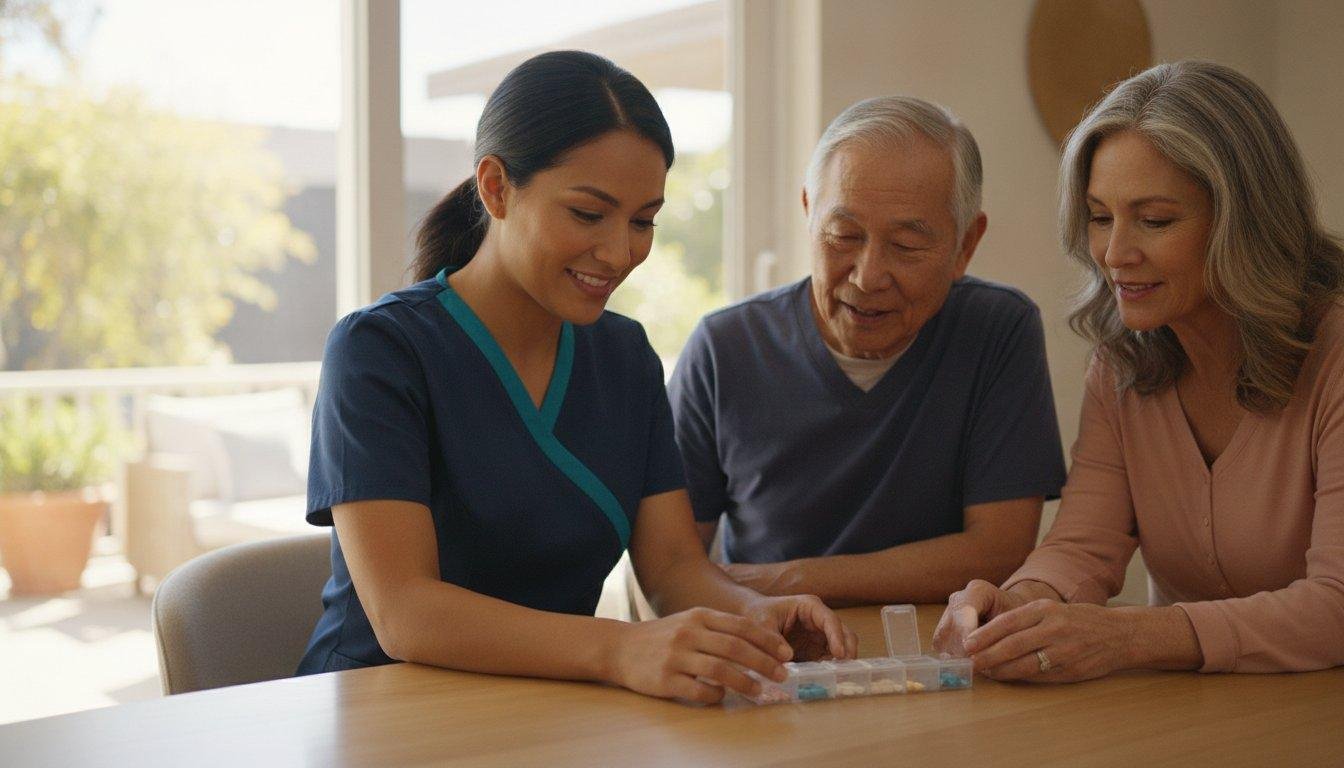
Did you know that recent clinical reviews show 91% of patients in post-acute care take more than five medications daily, with many taking over ten? When your loved one returns home, the responsibility of medication management home health needs can feel overwhelming. It’s natural to feel anxious about potential drug interactions or the terrifying possibility of a missed dose. We understand that you want to be a supportive caregiver, but you shouldn’t have to navigate these complex medical requirements without a steady guide by your side.
You likely believe that keeping every pill organized is the key to a safe recovery, and you’re right to prioritize this detail. This article provides a comprehensive safety checklist designed by clinical experts to help you master these complexities and improve recovery outcomes. We’ll explore how to create a reliable tracking system, identify red flags for adverse reactions, and implement professional strategies that significantly reduce the risk of hospital readmission. By following this guide, you’ll gain the confidence that comes from having organized oversight and a clear path toward a healthy, dignified lifestyle at home.
Key Takeaways
- Understand how polypharmacy—taking five or more daily prescriptions—increases the risk of adverse drug events and why the home environment requires extra vigilance.
- Learn why professional medication management home health care requires a licensed nurse to perform reconciliation and monitor for therapeutic effectiveness.
- Discover clinical standards for organizing your home environment and maintaining a Master Medication List to ensure safety during complex health transitions.
- Identify the benefits of using a single primary pharmacy and how skilled nursing professionals facilitate essential communication between various medical specialists.
- Gain peace of mind by implementing a clear system that reduces hospital readmission risks and restores your loved one’s sense of security and lifestyle.
The Risks of Polypharmacy and Medication Errors at Home
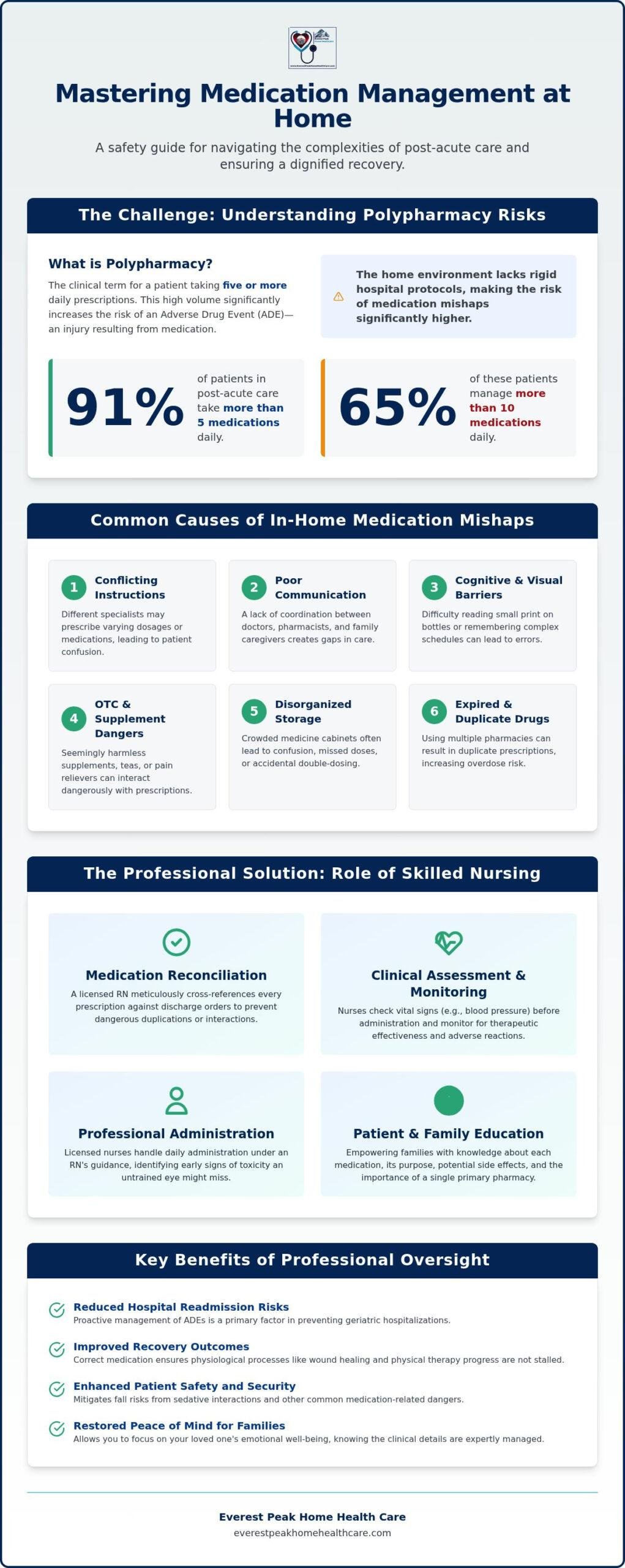
Polypharmacy is the clinical term for a patient taking five or more daily prescriptions. While these medications are often necessary to manage chronic conditions, the sheer volume creates a complex puzzle for families to solve. In 2025, a systematic review revealed that 91% of individuals in post-acute care were taking at least five medications, while 65% were managing more than ten. This high volume significantly increases the likelihood of an adverse drug event (ADE), which is any injury resulting from medical intervention related to a drug.
The home environment doesn’t have the rigid protocols found in hospitals, making the risk of mishaps significantly higher. Families often struggle to identify the hidden dangers of over-the-counter (OTC) supplements that may seem harmless. A common herbal tea or a standard pain reliever can interact dangerously with clinical prescriptions, leading to unexpected health declines. Professional Medication Therapy Management is essential because it provides the clinical oversight needed to reconcile these various substances. Implementing structured medication management home health protocols ensures that every pill serves its intended purpose without compromising the patient’s safety.
Common Causes of In-Home Medication Mishaps
Confusion often stems from a lack of communication between prescribing specialists. A cardiologist might prescribe a blood thinner while a general practitioner suggests a different dosage, leaving the patient caught in the middle of conflicting instructions. Visual and cognitive barriers also play a role; reading small print on bottles becomes difficult as we age, and remembering complex schedules can be a source of constant anxiety. The chaos of a crowded medicine cabinet often includes expired drugs or duplicate prescriptions from different pharmacies, creating a recipe for accidental double-dosing.
The Impact of Medication Errors on Recovery
Medication errors aren’t just administrative mistakes; they have physical consequences that stall the healing process. Sedative interactions can lead to increased fall risks and frailty, which can undo weeks of progress made in physical therapy. Inappropriate polypharmacy also affects physiological processes like wound healing, potentially leading to infections or prolonged recovery times. Adverse drug events are a primary driver of geriatric hospitalizations and represent a leading cause of hospital readmissions across the San Fernando Valley.
The Role of Skilled Nursing in Medication Management
Effective medication management home health services involve more than just setting a phone alarm or filling a plastic pillbox. A licensed Registered Nurse (RN) performs a critical process known as Medication Reconciliation, where every current prescription is meticulously cross-referenced against new discharge orders to prevent dangerous duplications or interactions. This high-level review is essential because it mitigates the dangers of polypharmacy that often arise when a patient receives instructions from multiple specialists. By acting as a clinical bridge, the nurse ensures that complex medical orders translate into a safe, manageable daily routine for the family.
Nurses don’t just oversee the schedule; they monitor the therapeutic effectiveness of each drug to ensure the recovery is staying on track. They observe how a patient responds to a new dosage, looking for subtle improvements in mobility or cognitive function while remaining vigilant for adverse reactions. This professional oversight provides a sense of security, knowing that a qualified expert is managing the technical details of the recovery process while you focus on supporting your loved one’s emotional well-being.
Clinical Assessment vs. Simple Reminders
It’s vital to distinguish between a simple reminder and a clinical assessment. While a family caregiver might remind a loved one to take their pills, a skilled nurse evaluates the patient’s physical state before any administration occurs. For instance, an RN will check vital signs like blood pressure or heart rate before giving specific cardiac medications to ensure it’s clinically safe to proceed. Licensed Vocational Nurses (LVNs) often handle the daily administration under the RN’s guidance, identifying early signs of toxicity that an untrained eye might miss. If you’re exploring what is skilled nursing care at home, it’s this level of precise clinical intervention that defines the service.
Education for Patients and Family Caregivers
Empowerment through education is a cornerstone of our approach at Everest Peak. Our nurses don’t just hand over a bottle; they teach the “why” behind each medication, which significantly improves patient compliance and reduces anxiety. When a patient understands how a specific pill aids their healing, they’re more likely to follow the regimen with confidence. We also provide hands-on instruction for complex administration techniques, such as managing injections, inhalers, or transdermal patches. This guidance helps families recognize “red flag” symptoms immediately, allowing you to act as a dependable partner in your loved one’s care network while we provide the professional oversight they need.
The Essential Home Medication Safety Checklist
Mastering medication management home health requires moving beyond simple memory and into a disciplined, clinical-grade routine. Families often feel the weight of this responsibility, but having a structured protocol provides the security needed to prevent errors. Clinical experts emphasize that addressing Medication safety risks involves a three-step approach: organizing the environment, verifying every dose, and documenting every response. This methodical oversight ensures that the home remains a sanctuary for recovery rather than a place of medical uncertainty.
Step 1: Inventory and Organization
A safe recovery begins with a clean slate. You should start by purging all expired or discontinued medications, as keeping old prescriptions increases the risk of accidental ingestion. Residents in the San Fernando Valley can utilize local “take-back” programs or designated disposal sites in North Hollywood to safely discard these substances. Once the inventory is clear, you’ll need to establish an organized storage system. While high-tech automated dispensers are available, many families find success with simple multi-dose pill organizers that are clearly labeled by day and time. It’s also vital to maintain proper storage conditions; most medications require a cool, dry place away from the humidity of a bathroom or the heat of a kitchen window to remain effective.
Step 2: Tracking and Administration
To ensure total accuracy, every caregiver should follow the “Five Rights” of medication administration before a single pill is taken. This clinical standard includes verifying the right patient, the right drug, the right dose, the right route, and the right time. We recommend creating a “Master Medication List” that includes the drug name, dosage, purpose, and prescribing doctor. This document should travel with the patient to every appointment. You can maintain consistency by using redundant alerts, such as a combination of phone apps and a physical wall chart, to track administration. Managing “as needed” (PRN) medications requires extra care; always log the reason for the dose and the time it was given to avoid over-utilization or dangerous stacking.
Step 3: Monitoring and Reporting
The final step in a professional checklist is the consistent recording of the patient’s physical response. Maintaining a dedicated journal to track side effects, changes in appetite, or shifts in sleep patterns helps your medical team make informed adjustments. This documentation is essential when you receive skilled nursing care Los Angeles families trust, as it allows the visiting nurse to quickly assess the regimen’s effectiveness. You should call your home health nurse if you notice mild rashes or persistent nausea, but you must call 911 immediately for “red flag” symptoms like difficulty breathing, facial swelling, or sudden confusion. Preparing for the next doctor’s visit with these updated logs ensures that your clinical team has the data they need to restore your loved one’s health and lifestyle.
Coordinating Care Between Doctors and Pharmacies
The logistical side of healthcare is often where safety protocols break down. Families in Southern California frequently navigate a fragmented system where multiple specialists prescribe medications independently. One of the most effective ways to simplify medication management home health is to consolidate all prescriptions at a single primary pharmacy. This centralizes the patient’s records, allowing the pharmacist to serve as a second layer of defense against drug interactions. When families “pharmacy hop” to find the lowest price or a more convenient location, they lose this critical safety net.
Our Registered Nurses act as a steady guide during these complex transitions, facilitating direct communication between your primary physician and various specialists. We manage the burden of insurance authorizations and refill requests, ensuring there are never gaps in therapy that could lead to a health setback. This comprehensive oversight is a hallmark of in-home nursing in Los Angeles, where we prioritize the patient’s stability and the family’s peace of mind.
Streamlining the Prescription Process
Efficiency in the pharmacy process reduces the daily stress on caregivers. We often recommend requesting 90-day supplies for chronic medications and setting up home delivery to minimize trips to the store. Utilizing “Medication Synchronization” is another professional strategy where the pharmacy aligns all refill dates to a single day each month. This organized approach improves medication management home health outcomes by allowing our nurses to address potential poly-pharmacy issues at every follow-up appointment, ensuring that no unnecessary medications remain in the patient’s regimen.
Handling Transitions of Care
The period immediately following a hospital stay is a high-risk window for medication errors. Our clinical team specializes in reconciling hospital discharge papers with the medications already present in the home. It’s common to find “duplicate therapies” after surgical procedures, where a patient might be prescribed a new brand-name drug that performs the same function as their existing generic prescription. Identifying these overlaps is a vital component of post-operative care North Hollywood families rely on for a safe return to their normal lifestyle. If you feel overwhelmed by the coordination required for a safe recovery, our expert nurses are ready to provide the clinical support and logistical oversight your family deserves.
Everest Peak: Professional Medication Oversight in Los Angeles
At Everest Peak Home Health Care, we serve as a steady guide for families navigating the intricate details of clinical recovery. Our approach to medication management home health is rooted in a multidisciplinary philosophy that prioritizes the patient’s physical stability and emotional well-being. We understand that residents in North Hollywood and the San Fernando Valley require a higher standard of care when transitioning from a hospital to the home environment. Our Registered Nurses coordinate closely with Physical and Occupational Therapists to ensure that every aspect of the patient’s medication regimen supports their rehabilitative goals.
This collaborative effort allows us to monitor the impact of prescriptions from various clinical angles. While a nurse manages the technical reconciliation of dosages, a physical therapist observes if a specific medication causes dizziness that might hinder mobility. An occupational therapist assesses if the patient can safely handle their pill organizers or if further adaptive strategies are needed. This comprehensive oversight ensures that no detail of the individual’s care is overlooked, creating a sense of security for the entire family.
Why Families Trust Everest Peak for Clinical Support
Integrity and excellence are the foundations of our service model. We maintain a rigorous vetting process for all our clinical staff, ensuring that every Licensed Registered Nurse and Vocational Nurse possesses the specialized expertise required for complex post-operative care. Families trust us because we don’t apply a one-size-fits-all solution to healthcare. Instead, we develop personalized care plans that respect the patient’s unique medical history and lifestyle goals. Our commitment to transparent communication means that family members are always informed about changes in the care plan, fostering an environment of trust and mutual respect.
- Qualified Professionals: Every nurse is fully licensed and undergoes continuous training in the latest clinical protocols.
- Dignified Care: We prioritize the sanctity of the home environment, providing support that restores the individual’s self-sufficiency.
- Organized Oversight: Our team manages the logistical burden of coordinating with doctors and pharmacies so you don’t have to.
Get Started with Professional Home Health Care
Requesting a clinical assessment is the first step toward a more organized and safe recovery process. Our intake specialists can help you determine eligibility for services, including those covered by Medicare and private insurance providers. As of 2026, the list of practitioners who can perform the required face-to-face encounter for home health eligibility includes Physicians, Nurse Practitioners, Clinical Nurse Specialists, and Physician Assistants. We will help you navigate these regulatory requirements to ensure your loved one receives the skilled nursing support they need without unnecessary delays. Everest Peak Home Health Care provides the clinical expertise needed to transform a chaotic medicine cabinet into a safe, managed recovery plan.
Securing Your Loved One’s Path to Recovery
Mastering medication management home health protocols isn’t a burden you have to carry alone. By implementing a clinical-grade checklist and consolidating your medical coordination, you transform a complex set of instructions into a predictable, safe routine. This organized approach significantly reduces the risk of adverse interactions and provides your family with the clarity needed to focus on healing rather than logistics. You’ve already taken the most important step by educating yourself on these essential safety standards and recognizing the value of professional oversight.
At Everest Peak, we specialize in providing licensed RN and LVN oversight for post-operative recovery throughout Los Angeles. Our compassionate professionals act as a steady guide, ensuring every dose is handled with clinical precision and deep-seated empathy. We’re dedicated to restoring your sense of security through high-quality, clinical-grade care in the sanctity of your own home. We invite you to Request a Professional Medication Safety Assessment from Everest Peak to secure the high standards of care your family deserves. You’re fully capable of managing this transition, and we’re here to help you complete the journey with total confidence and peace of mind.
Frequently Asked Questions
Does Medicare pay for medication management in home health?
Medicare typically covers medication management when it is part of a broader skilled nursing care plan for homebound patients. For the 2026 calendar year, CMS finalized a home health payment update of 2.4%, which includes these essential clinical assessments. A licensed nurse must perform the reconciliation to ensure total safety. This professional oversight helps prevent adverse drug events and supports the patient’s physical recovery within their own home environment.
What is the difference between a home health aide and a nurse for medications?
A licensed nurse, such as an RN or LVN, performs clinical tasks like administering injections and conducting thorough medication reconciliation. A home health aide provides reminders and assistance with daily living activities. Nurses possess the clinical training required to monitor for subtle side effects and toxicity. Aides are restricted to non-medical support, such as helping with hygiene, grooming, or light personal care assistance during the recovery process.
How do I create a master medication list for my elderly parent?
You should document the drug name, exact dosage, purpose, prescribing physician, and administration schedule in a single, clear document. It’s vital to include over-the-counter supplements and vitamins to identify potential interactions. Keep this list in a visible location and bring a copy to every doctor’s visit. This organized system improves medication management home health outcomes by providing a transparent record for every member of the patient’s clinical care team.
Can a home health nurse fill my pillbox for the week?
A licensed Registered Nurse or Vocational Nurse can organize medications into a weekly pillbox as part of their scheduled clinical visit. This task is often paired with a thorough review of the patient’s current prescriptions to ensure total accuracy. By having a professional handle this organization, families gain confidence that the correct doses are prepared. It also allows the nurse to identify expired medications or duplicate therapies that might compromise safety.
What should I do if my loved one refuses to take their prescribed medication?
You should remain calm and try to understand the reason behind the refusal, such as fear of side effects or difficulty swallowing. Avoid high-pressure language and instead offer a gentle explanation of the pill’s healing benefits. If the refusal persists, contact your home health nurse or the prescribing physician immediately. Our clinical team can provide education to the patient or suggest alternative administration methods to maintain the recovery’s steady progress.
How do I safely dispose of expired medications in Los Angeles?
Residents in Los Angeles and North Hollywood should utilize designated take-back locations at local pharmacies or police stations. You can also look for specific hazardous waste collection events organized by the city. Never flush medications down the toilet or throw them in the trash, as this can harm the environment. Safely discarding old prescriptions is a vital step in master medication management home health safety protocols for every household.
What are the red flags of a bad drug interaction I should watch for?
You should watch for sudden confusion, severe rashes, difficulty breathing, or extreme dizziness after a new dose is administered. Other warning signs include persistent nausea, swelling of the face, or significant changes in heart rate. If these red flag symptoms occur, seek medical attention immediately. Our nurses train families to identify these early indicators of toxicity to ensure that clinical interventions happen before a situation becomes a medical emergency.
How often should a medication reconciliation be performed?
A licensed professional should perform a medication reconciliation at every transition of care, such as after a hospital discharge or a visit to a new specialist. It’s also standard practice to review the list during every home health nursing visit to account for any changes in the patient’s condition. This methodical approach ensures that the medical regimen remains accurate and effective throughout the entire rehabilitative process in the San Fernando Valley.