
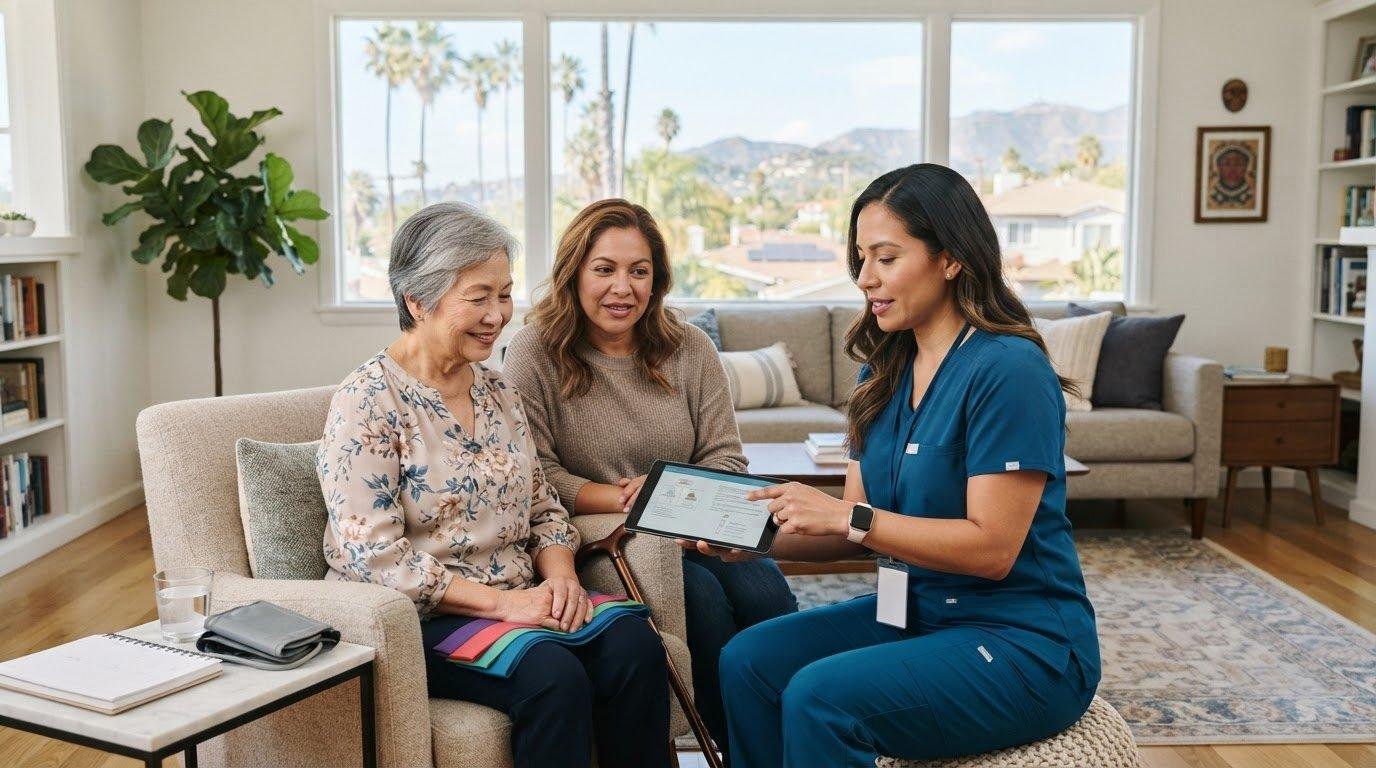
What if the right support for an older adult could address changing health needs while respecting independence? After a hospital stay or a decline in mobility, families often need to work out what kind of help is appropriate. It is not always clear which services are clinical and which assist with everyday activities. If you are researching geriatric home health care LA families can explore, understanding that distinction is a useful first step.
It is understandable to want a loved one to remain safe at home without losing choices or routines that matter to them. A suitable plan depends on the person’s health, daily abilities, and goals. A conversation with their clinician or care team can help clarify what support may be appropriate.
This guide explains what home-based clinical care and personal care assistance may involve, when each type of support could help, and what to ask a physician or discharge team. It also offers practical steps for comparing local services and coordinating care after a health change, with the older adult’s preferences at the center.
Key Takeaways
- Geriatric home health care LA may include clinical services and personal care assistance, which address different needs.
- Learn how skilled nursing, therapy, and medical social services may support an older adult at home.
- Use a four-step approach: identify concerns, discuss needs with the care team, ask providers specific questions, and review a proposed plan.
- Include the older adult in decisions and consider their preferences, privacy, and daily independence.
- Compare providers by service fit, professional roles, communication, scheduling, and local availability.
Geriatric Home Health Care in LA: Who Needs It?
Geriatric home health care is clinical care provided in an older adult’s home by qualified health professionals. General aging support may also include nonmedical help with everyday activities. Families exploring geriatric home health care LA options can use this distinction to focus their questions: does the older adult need clinical services, help with daily routines, or both?
Home health care is not emergency medical care. A sudden or life-threatening change requires emergency help, not a scheduled home health visit. For other concerns, the older adult’s clinician or care team can assess the situation and discuss whether care at home may be appropriate. A plan should reflect the person’s health, goals, abilities, and professional recommendations, not a general checklist or a family member’s assumption.
The terms can overlap in everyday conversation. An overview of home care in the United States discusses medical home health care alongside nonmedical personal care. Understanding the difference can help families ask more focused questions when comparing support options in Los Angeles.
How home health can support an older adult at home
Appropriate care at home may let an older adult work on recovery or function in familiar surroundings while keeping personal preferences and routines in view. For example, therapy may focus on movement or daily tasks relevant to the person’s home life, while nursing care may address clinical needs. The services depend on an individual assessment and care planning. Home-based care is not suitable for every situation or level of need.
The service mix and visit schedule depend on the person’s circumstances and the plan developed with relevant professionals. Ask what each visit is intended to address, how the provider will communicate progress or concerns, and when the plan may be reviewed.
Situations that may prompt families to explore care
A change in mobility, new difficulty managing health needs, or a return home after treatment may prompt questions about additional support. None of these changes automatically means home health care is needed. They are reasons to discuss what the older adult is experiencing and which options may fit.
Start by asking the older adult what they want to preserve in daily life and what feels difficult or unsafe. With their involvement whenever possible, bring specific observations to their clinician or care team. That conversation can help distinguish clinical needs from everyday assistance and identify practical next steps without treating uncertainty as a diagnosis.
What Geriatric Home Health Services May Include in Los Angeles
Home services for older adults may involve clinical care, rehabilitation, assistance with daily activities, or a combination, depending on the person’s assessed needs and care plan. In geriatric home health care LA families may encounter different professional roles. Ask what each service involves and who determines whether it fits the individual’s circumstances.
Clinical and rehabilitative support at home
Nurses address clinical needs, while therapists work on functions such as movement, daily tasks, communication, and swallowing. Skilled nursing may include monitoring health concerns and wound care, as appropriate to the plan. Learn more about the role of skilled nursing care at home.
Therapy goals vary by discipline. Physical therapy may address strength, balance, or mobility; occupational therapy focuses on participation in everyday tasks; and speech therapy may support communication or swallowing needs. If mobility is a concern, an in-home physical therapy overview can help families understand the service. A clinician or care team can help determine which services to discuss with a provider based on the older adult’s situation and goals.
Personal care and social-service support
Personal care assistance is nonclinical help with activities of daily living, such as bathing, dressing, and other routine tasks. It differs from skilled nursing and therapy: the focus is practical assistance, not clinical assessment or treatment. Ask providers which tasks are included and how the support is arranged.
Medical social workers may help families discuss care-related concerns and navigate relevant resources. The medical social services family guide offers further context. For broader local information, consult Los Angeles County Older Adult Services.
These services are not interchangeable. A plan may include one type of support or several, depending on care planning. Ask the provider to explain each service’s purpose, which professional provides it, and how it relates to the older adult’s goals. Everest Peak Home Health Care, based in North Hollywood and serving the surrounding Los Angeles area, offers nursing, therapy, medical social services, and personal care assistance. Families can explore its home health services as one local option.
Geriatric Home Health vs. Personal Care in LA
These options can address different needs, but they are not interchangeable. Clinical home health focuses on health-related services provided by nursing or therapy professionals. Personal care assistance helps with activities of daily living. Facility-based support takes place in a residential or care setting. For families comparing geriatric home health care LA options, these distinctions can help shape questions for clinicians and providers.
| Option | Purpose | Typical professional roles | How families can begin exploring |
|---|---|---|---|
| Clinical home health | Address assessed health or rehabilitation needs at home. | Nurses and therapists, depending on the care plan. | Discuss the older adult’s needs and goals with their clinician or care team, then ask providers which clinical services they offer. |
| Personal care assistance | Support daily activities, such as bathing or dressing, without providing clinical treatment. | Personal care aides or other caregivers, depending on the provider’s model. | Identify which daily tasks are difficult and ask providers about scope, staffing, and schedules. |
| Facility-based support | Provide care in a residential setting, with services shaped by the type of facility. | Roles and staffing arrangements vary by setting. | Discuss the older adult’s care needs and preferences, then ask facilities what support they provide and how care is coordinated. |
Clinical home health and nonmedical personal assistance
Clinical home health is different from help with everyday routines. A nurse or therapist provides services within their professional role and the individual’s care plan; personal care assistance focuses on daily activities. Providers may differ in services, staffing, and schedules, so confirm the details rather than assuming every agency offers the same arrangement. Home health does not automatically mean round-the-clock or live-in care. Everest Peak Home Health Care does not offer 24/7 live-in care.
Home-based support and facility-based care
Home-based services take place in the older adult’s home, while facility-based support is delivered in a residential care setting. Neither option is universally better. Consider the person’s health and safety needs, preferences, available support, and the coordination each setting requires. If your family is unsure whether home remains appropriate, ask the older adult’s clinician or care team about a professional assessment and the options it may inform.
How LA Families Can Explore Geriatric Home Health Care
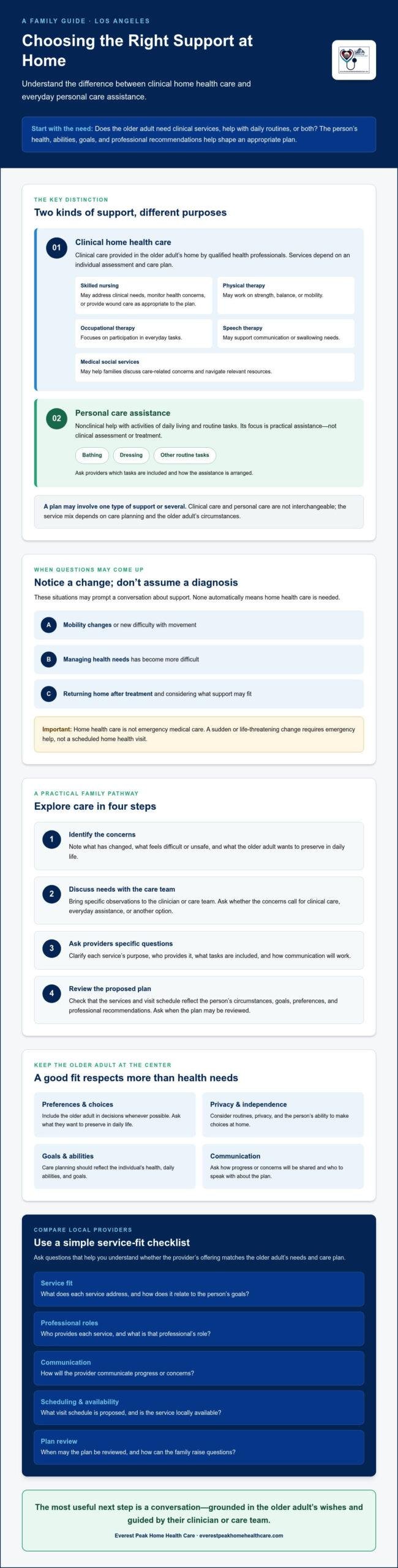
Turn broad concerns into specific questions to make the search more manageable. For geriatric home health care LA families can use a four-step process: identify what has changed, discuss needs with the older adult and care team, ask providers about their services, and review a proposed plan before deciding how to proceed.
- Identify concerns. Note changes in mobility, recovery, or managing health needs. Also record which routines the older adult wants to maintain. Keep observations factual rather than trying to diagnose the cause.
- Discuss needs. Include the older adult wherever possible. Ask their clinician or discharge team which concerns may call for clinical care and which may involve help with daily activities.
- Ask providers. Confirm which services they offer, who provides them, how scheduling is determined, how updates and concerns are communicated, and whether the older adult’s location is within their current service area.
- Review the plan. Before moving forward, make sure the proposed services, goals, responsibilities, and communication process are clear to the older adult and family.
Questions to discuss with the older adult’s care team
Ask which needs call for clinical services and which may be addressed through daily-living assistance. Find out what goals and precautions belong in the care plan, how progress will be discussed, and whom to contact with questions. If relevant, bring discharge information and an up-to-date medication list. Share only information needed to discuss care, and respect the older adult’s privacy and preferences.
Understanding coverage and coordinating support
Coverage and eligibility depend on individual circumstances and the requirements of the relevant plan or payer. Do not treat a general online summary as confirmation that a service will be covered. Ask the insurer, benefits administrator, or appropriate public program directly about current rules, documentation, and steps required before care begins. A home health benefits guide can help you prepare questions, but confirm the answers with the relevant source.
Once you have gathered information, compare the proposed support with the older adult’s priorities and the care team’s recommendations. To review available nursing, therapy, medical social services, and personal care assistance, explore Everest Peak’s home health services and confirm service fit and local availability directly.
Finding a Geriatric Home Health Provider Serving Los Angeles
Choosing a provider involves more than finding an agency with a nearby office. Find out whether its services fit the older adult’s needs, which professionals may be involved, how communication works, and whether it currently serves the person’s location. For geriatric home health care LA families should confirm these details directly, since service offerings and availability can vary between providers.
What to ask a home health agency before proceeding
A clear conversation helps families compare options without assuming every provider follows the same process. Ask how the agency learns about an older adult’s needs, explains available services, and develops or communicates a proposed plan. Confirm which professional disciplines and services may be available for the situation, and ask who will explain the roles of the people involved.
- Service fit: Which services does the agency offer, and which may be relevant to the concerns discussed with the care team?
- Professional roles: Who provides each service, and how will the family know whom to contact with questions?
- Communication: How are care updates shared, and how should families report a change or raise a concern?
- Scheduling: How are visits arranged, and what happens if needs or scheduling requirements change?
- Local availability: Does the agency currently serve the older adult’s location, and are the services being considered available there?
Before agreeing to a plan, ask the provider to explain what the services involve, how they relate to the older adult’s goals, and what the family should expect from the care process. If a detail is unclear, request a plain-language explanation. It is reasonable to compare providers and take time to consider the older adult’s preferences.
A calm next step for families in the LA area
Before contacting agencies, write down the older adult’s priorities and your family’s questions. Note which routines matter to them, what kind of support the care team has recommended, and any scheduling or communication needs to discuss. This preparation can make an initial conversation more focused and help keep the older adult involved in decisions wherever possible.
Everest Peak Home Health Care is based in North Hollywood and serves the surrounding Los Angeles area. Its services include skilled nursing, physical, occupational, and speech therapy, medical social services, personal care assistance, and post-operative care. Families can contact Everest Peak Home Health Care to ask which services may fit their situation and confirm current local availability.
Choose Support That Respects Independence
Exploring geriatric home health care LA starts with understanding what the older adult needs and wants. Clinical home health, personal care assistance, and facility-based support serve different purposes. Discuss recommendations with the care team rather than assuming one option fits every situation.
Before choosing a provider, confirm which services are available, who provides them, how scheduling and communication work, and whether the older adult’s location is served. Include your loved one in decisions wherever possible, and review the proposed plan together so everyone understands its goals and next steps.
Everest Peak Home Health Care is based in North Hollywood and serves the surrounding Los Angeles area, with nursing, therapy, medical social services, and personal care assistance among its offerings. To ask about services and local availability, contact Everest Peak Home Health Care.
Frequently Asked Questions
What does geriatric home health care include?
Geriatric home health care may include skilled nursing, physical, occupational, and speech therapy, medical social services, and personal care assistance, depending on the individual’s needs and care plan. Clinical services are provided by nursing and therapy professionals, while personal care assistance helps with activities of daily living. In California, ask the care team and provider which services are appropriate and available for the older adult’s circumstances.
Who may benefit from geriatric home health care in Los Angeles?
Older adults experiencing changes in mobility, recovering after a health event or procedure, or needing support with health-related goals may benefit from discussing home-based services with their clinician. These circumstances do not automatically mean home health is appropriate. The older adult’s needs, preferences, safety, and professional recommendations matter. Families in Los Angeles can share specific concerns with the person’s care team and ask whether clinical care, daily-living assistance, or another setting should be considered.
What is the difference between home health care and personal care?
Home health care refers to clinical services delivered at home by qualified health professionals, while personal care assistance provides nonclinical help with daily activities such as bathing or dressing. A person may need one type of support or both, but they are not interchangeable. Ask a provider to describe the tasks included, who delivers each service, and how the proposed support relates to the older adult’s care needs and goals.
Can older adults receive therapy and nursing care at home?
Yes, older adults may receive nursing care and therapy at home when those services are appropriate to their circumstances and care plan. Nursing and therapy professionals address different needs: physical therapy may focus on mobility, occupational therapy on everyday tasks, and speech therapy on communication or swallowing. A clinician or care team can help determine which services to discuss with a provider. Confirm visit schedules and service availability directly.
Does Medicare cover geriatric home health care in California?
Medicare coverage depends on the specific service, the person’s circumstances, and applicable program requirements, so a general answer cannot confirm eligibility or payment. Before arranging care, ask Medicare or the older adult’s plan administrator whether the proposed service may be covered, what conditions or documentation apply, and whether prior approval is needed. Confirm current information directly with the relevant payer, and ask providers to clarify any costs or coverage questions.
How do I choose a home health care provider in LA?
Check whether the provider offers the services the older adult needs, which professional roles are involved, how care is planned and communicated, and whether the provider currently serves the person’s location. Ask how scheduling works and whom to contact with questions or changes in needs. For geriatric home health care LA families should compare clear answers with the older adult’s preferences and recommendations from their care team.
What should families ask before arranging home health care?
Ask how the provider assesses needs, explains service options, and communicates with the older adult and family. Confirm which services and professional disciplines are available, how visits are scheduled, and how the provider handles questions or changes in needs. Discuss goals and precautions with the care team, and clarify benefit or eligibility questions with the payer. Include the older adult in the conversation and share only relevant private information.