
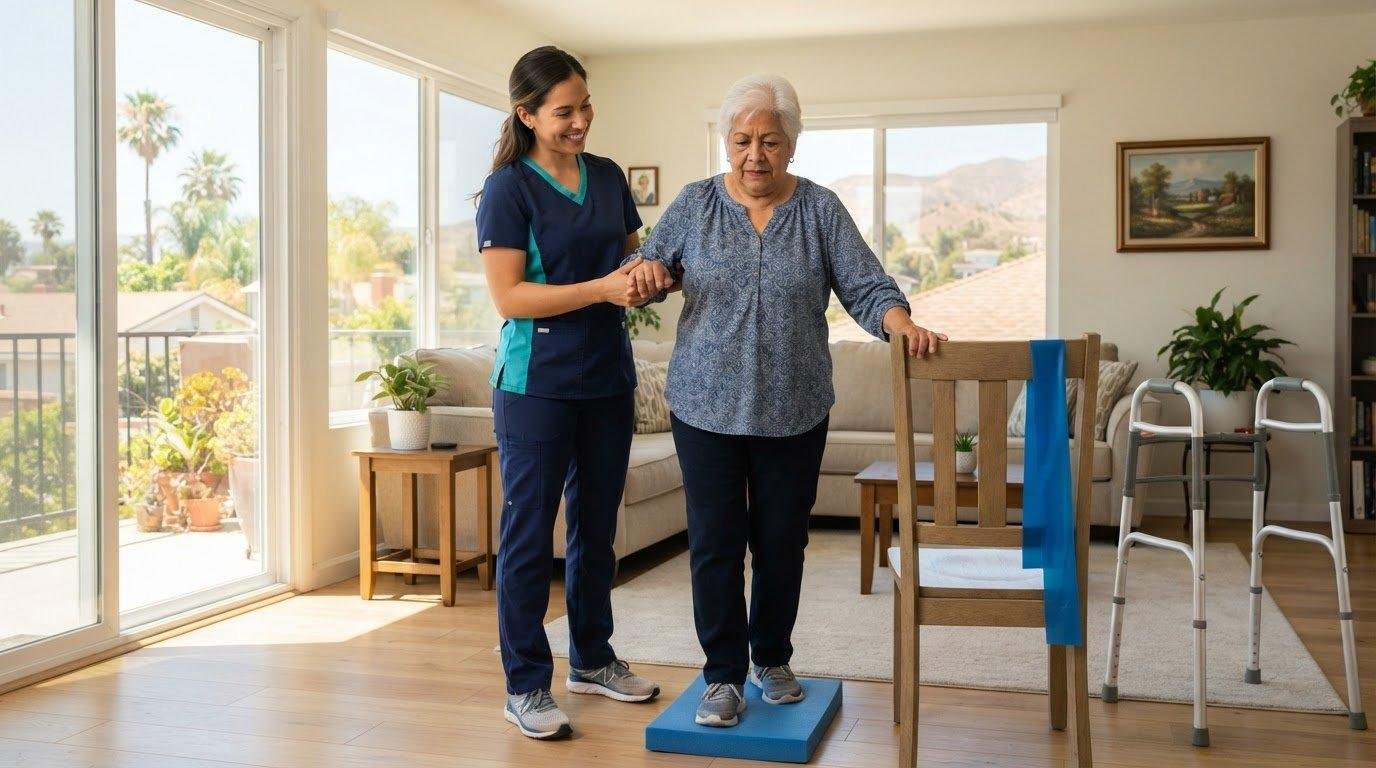
Could the place where you feel least steady also be useful for practicing movement safely? With in-home physical therapy San Fernando Valley residents can explore rehabilitation in the setting where everyday movement happens. Home-based care is not the right fit for every person or situation, so it helps to discuss individual needs with a healthcare professional.
Before considering a visit, you may have questions: Who will provide therapy, what might happen during an appointment, and how can care account for stairs, hallways, or other features of home life? A physical therapist can assess movement and work with a patient on goals suited to their needs. When appropriate, the therapist may also coordinate with other clinicians involved in care.
This overview explains who may benefit from home-based therapy, what a visit may involve, and what to ask about qualifications, scheduling, coordination, and safety. Everest Peak Home Health Care is based in North Hollywood and serves the surrounding Los Angeles area. If you are considering care in the San Fernando Valley, ask the agency whether it serves the patient’s specific address and how to explore next steps.
Key Takeaways
- In-home physical therapy brings rehabilitation into a familiar setting, with care shaped by an individual assessment and clinical needs.
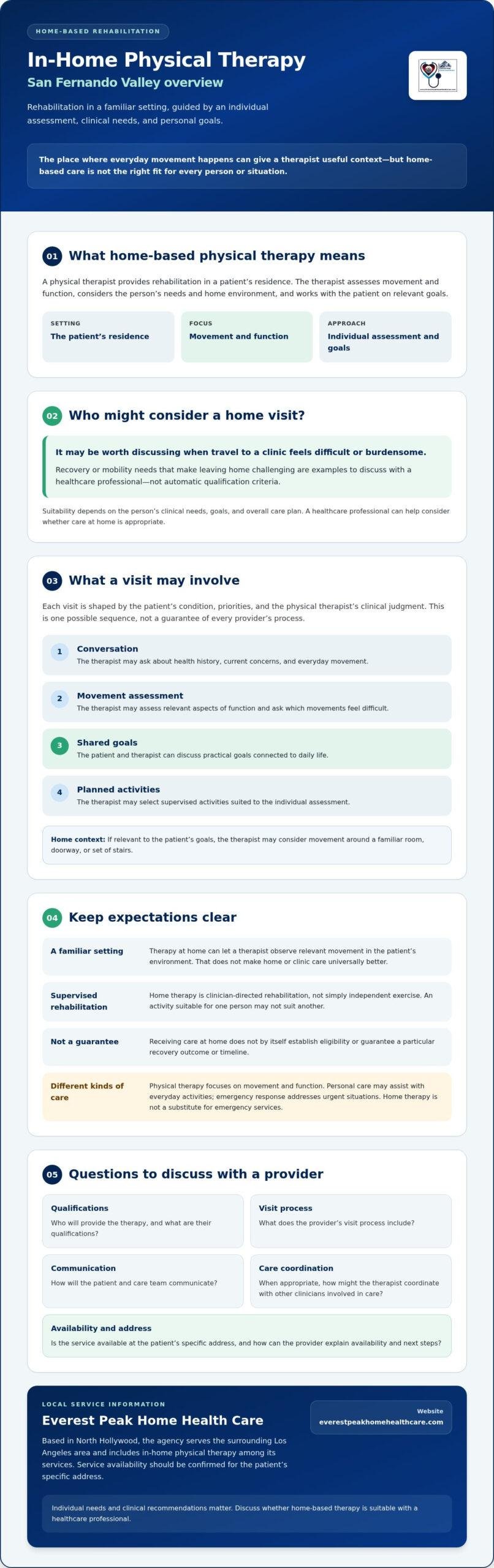
- A visit may include a discussion, movement assessment, shared goals, and planned activities. The therapist determines the specific approach.
- Home-based care is supervised rehabilitation, not simply independent exercise. Receiving care at home does not guarantee eligibility or a particular outcome.
- When considering in-home physical therapy San Fernando Valley families can ask about therapist qualifications, communication, care coordination, and availability at the patient’s specific address.
- Everest Peak Home Health Care is based in North Hollywood and includes in-home physical therapy among its services. Ask the agency how to explore care.
What Is In-Home Physical Therapy in San Fernando Valley?
In-home physical therapy is rehabilitation provided by a physical therapist in a patient’s residence, with the approach guided by an individual assessment and clinical needs. For people exploring in-home physical therapy San Fernando Valley, this means therapy takes place in a familiar setting while focusing on movement, function, and personal goals. A therapist may consider the patient’s abilities, concerns, and home environment when planning care.
Physical therapy is practiced in a range of settings, including private homes. The specific plan depends on the therapist’s assessment and, when appropriate, recommendations from the broader care team. The therapist may communicate with other clinicians involved in care so rehabilitation can be considered alongside the person’s other needs. The activities and pace should reflect the individual rather than follow a one-size-fits-all routine.
Skilled physical therapy is distinct from non-medical personal care and emergency response. A physical therapist provides rehabilitation focused on movement and function. Personal care assistance may help with everyday activities, while emergency response addresses urgent situations. Home therapy is not a substitute for emergency services. Receiving therapy at home alone does not establish eligibility for care or guarantee a particular recovery outcome.
Who May Consider Physical Therapy at Home?
Home-based therapy may be worth discussing when travel to a clinic feels difficult or burdensome, such as during recovery or when mobility needs make leaving home challenging. These examples are not automatic qualification criteria. A healthcare professional can help consider whether therapy at home suits the person’s clinical needs, goals, and overall care plan.
How Home-Based Rehabilitation Differs From Clinic Visits
The main difference is the setting: sessions take place in the patient’s residence rather than a clinic. With the patient’s needs in mind, a therapist can observe relevant movement in that environment, such as moving through a familiar room or approaching a household step. This context may inform therapy planning, but it does not make home or clinic care universally better. Suitability depends on the individual and the care recommended.
What Happens During an In-Home Physical Therapy Visit?
A home visit is shaped by the patient’s condition, priorities, and the physical therapist’s clinical judgment. As a general example, a session may begin with a conversation about health history, current concerns, and daily movement. The therapist may then assess relevant aspects of function, discuss goals with the patient, and plan suitable therapy activities. This is one possible sequence, not a guarantee of how every agency structures its visits. Ask the provider what its process includes.
The residential setting can help make that conversation specific. If movement around a particular room, doorway, or set of stairs relates to the patient’s goals, the therapist may consider that space when assessing function and planning care. The National Institute on Aging’s Growing Older at Home resource also recognizes health care, including physical therapy, among services that may be provided at home.
Assessment, Goals, and an Individualized Plan
During an assessment, a physical therapist may ask about relevant medical history, current abilities, and movements that feel difficult. The therapist uses this information to understand the person’s needs rather than relying on a generic routine. The patient and therapist can discuss practical goals, such as working toward greater ease with a movement that matters in daily life. If needs change, the plan may be adjusted. No particular timeline or result can be assumed.
Therapy Activities in the Home Environment
Depending on the assessment, a therapist may select supervised mobility or strength activities suited to the individual. These are examples of clinician-directed care, not exercises to try based on an article. An activity suitable for one person may not be right for another, so ask the treating professional before beginning or changing a routine.
Home layout can inform how a therapist discusses movement. If a patient’s goals involve getting around a familiar living space, for example, the therapist may observe relevant movement there and consider what feels challenging. This can connect therapy planning with the person’s everyday environment while keeping activities within the therapist’s recommendations. The assessment and interventions depend on the individual.
Before the first visit, ask what the initial appointment includes, what information to have available, and how the therapist communicates with other clinicians when appropriate. For details about Everest Peak Home Health Care’s in-home physical therapy and how to explore care, visit its in-home physical therapy services page and confirm current procedures directly.
Home Physical Therapy Myths: What San Fernando Valley Families Should Know
Questions about care at home are understandable, especially when a family is deciding whether rehabilitation is appropriate. The setting alone does not determine the level of clinical guidance. In-home physical therapy San Fernando Valley patients explore should be considered in light of individual needs, a professional assessment, and the provider’s care process.
Home therapy is not simply a list of exercises left for someone to complete alone. A physical therapist evaluates needs and guides an individualized plan. The American Physical Therapy Association describes home health as a practice setting for physical therapy. That does not mean home and clinic care are interchangeable or that one is universally better. The appropriate setting depends on the person and the care being considered.
Myth: Home Therapy Is Less Professional Than Clinic Therapy
A patient’s residence is the location of care, not a measure of its professional nature. A physical therapist can assess the person’s needs, recommend an approach, and guide treatment at home. Families can ask who will provide the therapy, what qualifications the clinician holds, what the care plan addresses, and how questions or changes in needs are communicated. Clinic-based therapy remains a valid option. Compare care based on the individual’s circumstances, not assumptions about the setting.
Myth: Anyone Can Start Home Therapy Without an Assessment
Receiving care at home does not automatically establish eligibility or guarantee a particular result. The appropriate process and requirements may vary according to the patient’s circumstances and payer. Before making plans, ask the provider what assessment or referral information may be needed, and confirm eligibility and payment questions with the provider and relevant healthcare or insurance professionals. A general description cannot determine whether a specific person qualifies.
Another misconception is that home-based rehabilitation must be limited to basic activity. The setting itself does not define the scope of therapy. A physical therapist determines what is suitable after considering the patient’s condition, goals, and functional needs. The home can provide relevant context for care, but it does not replace clinical judgment or mean every activity is appropriate there.
The key question is whether home-based care fits the person’s needs. Ask how the therapist assesses suitability, what goals the plan will address, and how care may be coordinated with other clinicians when appropriate. Those conversations can help San Fernando Valley families make an informed decision without assuming home therapy is automatically available or right for everyone.
How to Explore In-Home Physical Therapy Across the San Fernando Valley
Finding a suitable provider starts with practical questions, not assumptions about who qualifies or which neighborhoods are served. For in-home physical therapy San Fernando Valley residents are considering, confirm that care is available at the patient’s specific address and ask how the provider evaluates clinical needs. Before contacting an agency, gather relevant care information, such as current recommendations from healthcare professionals, and write down the patient’s main concerns and questions.
A useful checklist includes:
- Location: Confirm whether the patient’s exact address is within the provider’s current service area.
- Clinical needs: Describe the patient’s mobility or recovery concerns and ask how suitability is assessed.
- Therapist qualifications: Ask who would provide therapy and how to verify that clinician’s professional credentials.
- Communication: Find out how goals, visit plans, and progress updates are shared with the patient and, where appropriate, family or other clinicians.
- Care coordination: Ask how the therapist may communicate with other members of the care team when relevant.
Questions to Ask a Home Health Agency
Use an initial conversation to clarify the process. Who provides the therapy, and how can their qualifications be confirmed? How are goals established and updates communicated? What referral steps, if any, should the family expect, and what payment details should be reviewed? Confirm these points directly with the provider and relevant professionals because procedures and coverage can vary. Everest Peak Home Health Care is based in North Hollywood and serves the surrounding Los Angeles area, so ask whether the patient’s address is currently served and how to begin.
For a more focused overview of local care considerations, read the in-home physical therapy guide for the San Fernando Valley.
When Other Home-Based Services May Also Matter
A patient’s needs may involve more than one type of therapy. Occupational therapy addresses distinct functional goals, when clinically appropriate, and differs from physical therapy. Families can learn more in this in-home occupational therapy guide for Los Angeles. If care planning relates to recovery after surgery, the post-operative care guide for North Hollywood offers additional context.
To ask about physical therapy and confirm service-area availability for a specific address, contact Everest Peak Home Health Care.
Getting Started With Everest Peak Home Health Care
Everest Peak Home Health Care is based in North Hollywood and serves the surrounding Los Angeles area. Its services include in-home physical therapy delivered by physical therapists. If you are exploring care in the San Fernando Valley, an initial inquiry can help clarify whether the patient’s address is within the current service area and what steps may be appropriate. Asking questions is a way to learn about options, not a guarantee of acceptance, eligibility, or immediate availability.
What to Share When You Contact the Agency
Prepare a few basics so the conversation can focus on the patient’s needs. You may want to have the following information available:
- The patient’s general location or address, so the agency can confirm service-area availability.
- A brief description of current mobility or recovery concerns and what prompted the inquiry.
- The names or roles of clinicians involved in care, along with relevant recommendations the patient is comfortable sharing.
Ask which records or referral details may be needed for an initial discussion, and whether there are steps to complete before care can be considered. Confirm referral requirements, scheduling, and payment details directly with the agency and relevant professionals. Do not send sensitive health information through a website form, email address, or other channel until you have verified that it is appropriate for that information.
Coordinate Therapy With the Patient’s Care Team
Sharing relevant recommendations from the patient’s healthcare professionals can help an agency understand the broader care context. With the patient’s permission, ask how the physical therapist may communicate with other clinicians when coordination is appropriate. Other home health disciplines may also be considered based on the person’s needs and care-team recommendations, but their suitability should be discussed rather than assumed.
If nursing support is relevant to the patient’s care planning, review this skilled nursing care guide and ask whether coordination with nursing care may apply to the situation.
A helpful next step is to contact the agency with the patient’s location and questions about service-area availability, referral steps, and clinical suitability. To begin an inquiry about in-home physical therapy San Fernando Valley families are considering, contact Everest Peak Home Health Care and confirm current details directly.
Take a Clear Next Step Toward Home-Based Therapy
Home-based physical therapy brings professional rehabilitation into a patient’s residence, where a physical therapist can assess individual needs and plan appropriate care. A visit may involve discussing concerns, evaluating movement, and agreeing on functional goals, but the precise approach depends on the person and the therapist’s clinical judgment. Care at home does not automatically establish eligibility or guarantee a particular outcome.
As you explore in-home physical therapy San Fernando Valley options, confirm whether the patient’s specific address is served, ask who will provide therapy, and clarify referral steps, payment details, and how care may be coordinated with other clinicians. Preparing current care information and questions can make an initial conversation more focused.
Everest Peak Home Health Care is based in North Hollywood, serves the surrounding Los Angeles area, and has physical therapists on its team. To discuss in-home therapy and ask about service-area availability or how to begin, contact Everest Peak Home Health Care. A thoughtful conversation can help you identify a suitable next step for the patient and family.
Frequently Asked Questions
What does an in-home physical therapist do?
An in-home physical therapist assesses a patient’s movement and functional needs, then guides rehabilitation activities suited to the individual. Depending on the assessment, therapy may address mobility, strength, or movements connected with daily routines. The therapist may consider the home environment when discussing relevant goals and can communicate with other clinicians when appropriate. The specific plan depends on the patient’s condition and professional judgment, not a standard exercise routine.
Who can receive in-home physical therapy in the San Fernando Valley?
People with recovery or mobility needs, or for whom traveling to a clinic is difficult, may wish to discuss home therapy with a healthcare professional. These circumstances do not automatically establish eligibility. A physical therapist or other relevant clinician can help determine whether the setting suits the person’s needs. If you are considering in-home physical therapy San Fernando Valley, confirm the provider serves the patient’s specific address and ask about referral and eligibility steps.
Is home physical therapy as effective as going to a clinic?
Neither setting is universally more effective. Suitability depends on the patient’s condition, goals, and clinical needs. Home visits let a therapist consider movement in the residential environment, while a clinic offers a different treatment setting. Ask the treating professional which option aligns with the patient’s care plan and how progress will be reviewed. A home setting alone does not guarantee a specific result, and clinic-based care may remain appropriate for some patients.
What happens during the first home physical therapy visit?
A first visit may begin with a discussion of the patient’s health history, current concerns, and priorities, followed by an assessment of relevant movement and function. The physical therapist may then discuss shared goals and possible therapy activities. The exact sequence and assessment depend on the person’s condition and the clinician’s judgment, and agency procedures can differ. Ask the provider beforehand what information to have ready and what its first appointment typically involves.
Does Medicare cover in-home physical therapy in California?
Medicare may cover in-home physical therapy through different pathways, depending on the patient’s circumstances and the type of care. A qualifying home health episode under Part A generally covers these visits without a copayment; outpatient therapy at home under Part B generally involves 20% coinsurance after the deductible. Coverage and eligibility are not automatic. Confirm current requirements, cost-sharing, and provider participation with Medicare and the agency before arranging care.
Can family members stay during a home physical therapy session?
Families can ask the patient and therapist whether it would be helpful for a family member to remain during a session. A relative may be able to share relevant observations or listen to instructions, if the patient agrees and the therapist considers it appropriate. The patient’s preferences, privacy, and the session’s clinical focus should guide the decision. Confirm the provider’s approach in advance, especially if a family member hopes to support care between visits.
How do I find in-home physical therapy near North Hollywood?
Start by identifying providers serving the patient’s address, then ask who provides therapy, how to confirm professional qualifications, and what referral or payment details apply. Everest Peak Home Health Care is based in North Hollywood and serves the surrounding Los Angeles area; its team includes physical therapists. Contact the agency to confirm current service availability for the specific location and discuss whether home-based physical therapy may suit the patient’s needs.