
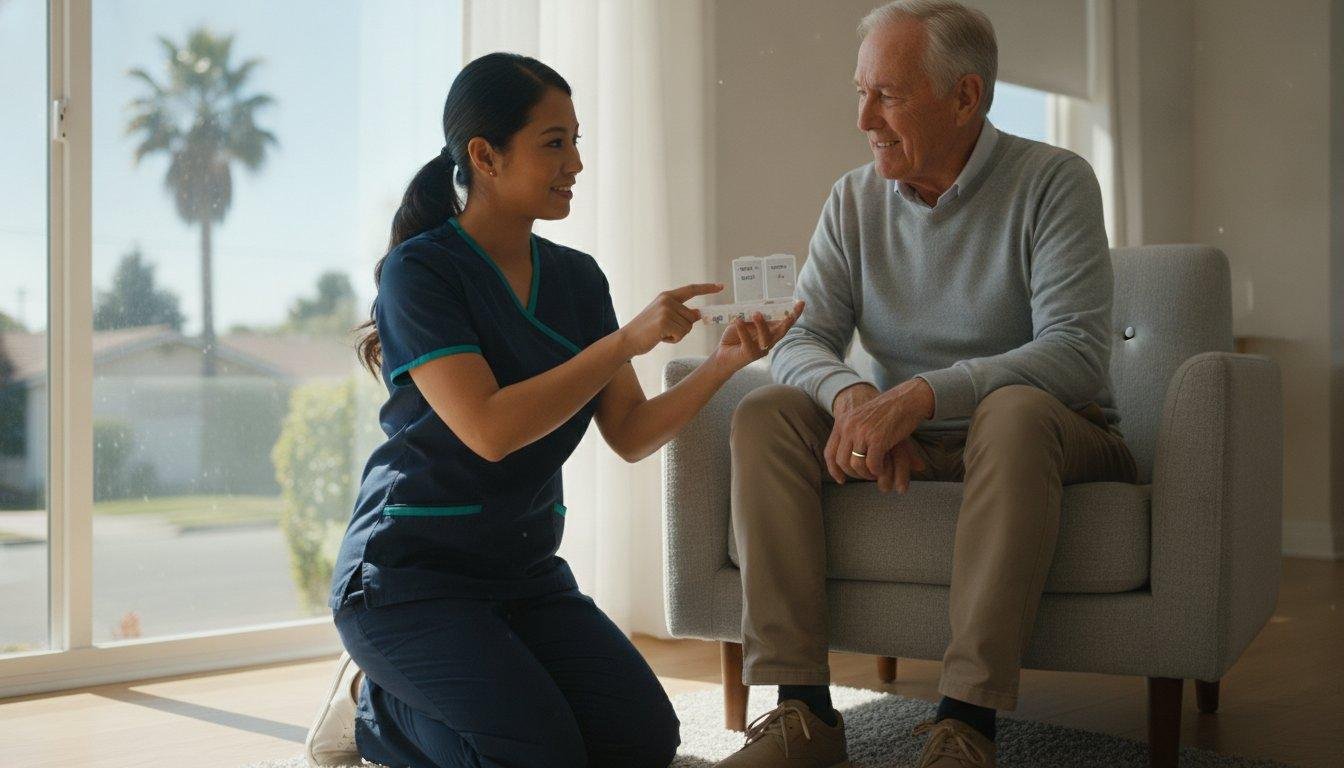
Did you know that drug overdose deaths among adults aged 65 and older in Los Angeles County increased by 14% in 2025, even as general rates began to decline? It’s a sobering statistic that underscores why professional in-home medication management Los Angeles has become a vital clinical necessity for senior safety. If you’re feeling overwhelmed by a cabinet full of bottles from different specialists, you aren’t alone. Many families live with the constant anxiety that a single missed dose or an accidental double-up could lead to a serious medical emergency or a sudden hospital readmission.
We’re here to show you how skilled nursing oversight and professional medical assessments create a reliable safety net for your loved one during their recovery. This guide explores how a multidisciplinary approach reduces the risk of adverse drug events and provides the peace of mind your family needs to focus on long-term health and stability. We’ll examine the specific roles that licensed nurses and therapists play in ensuring every prescription is administered with clinical precision and care.
Key Takeaways
- Understand the clinical risks of polypharmacy and why managing five or more daily prescriptions requires professional oversight to prevent adverse drug reactions.
- Learn how Registered Nurses perform medication reconciliation to identify and resolve potential conflicts between prescriptions from different medical specialists.
- Distinguish between the roles of personal care assistants and licensed nurses, specifically regarding the clinical judgment required for administering “as needed” medications.
- Discover why the first 48 hours after hospital discharge are critical and how professional in-home medication management Los Angeles ensures a seamless transition of care.
- See how a multidisciplinary approach involving nursing, physical therapy, and occupational therapy creates a comprehensive environment for safe recovery at home.
The Risks of Medication Mismanagement for Seniors in Los Angeles
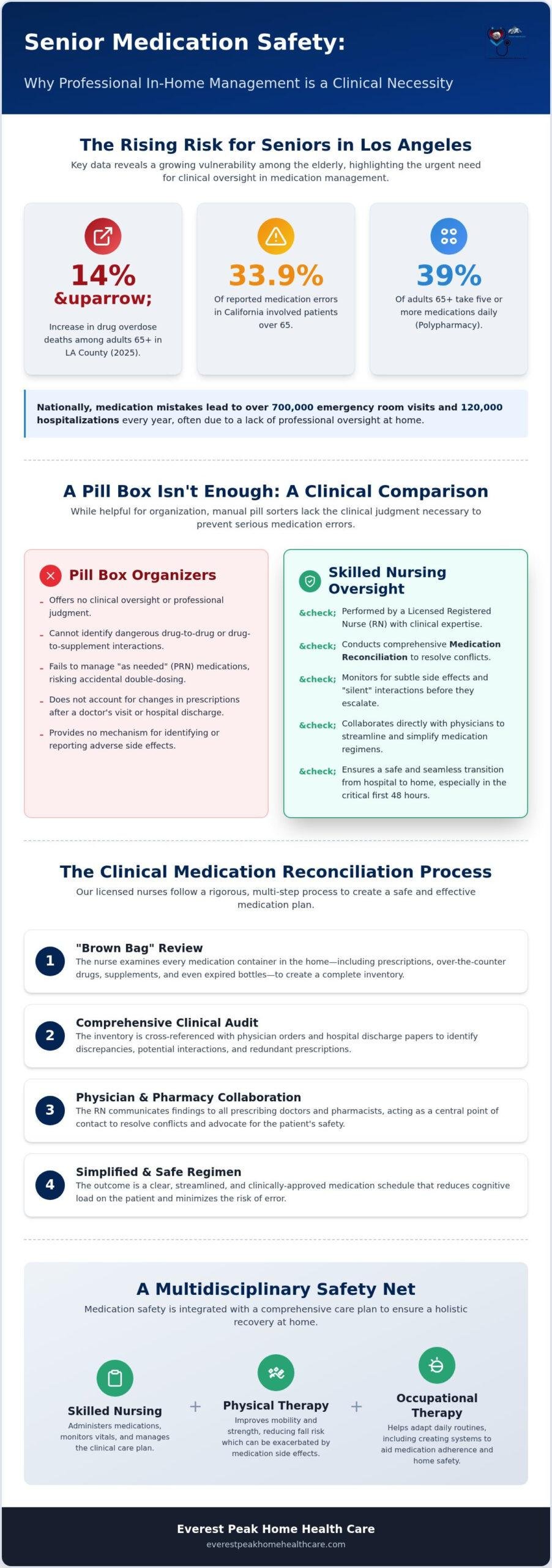
Professional Medication therapy management serves as a critical clinical safeguard for vulnerable patients who are transitioning from hospital care to their private residences. In the complex healthcare environment of Southern California, the risk of error is high. According to state data from late 2025, 33.9% of reported medication errors in California involved patients over the age of 65. Effective in-home medication management Los Angeles acts as a protective layer, ensuring that pharmacological regimens are clinical assets rather than hazards that lead to unnecessary suffering.
Polypharmacy represents one of the most significant challenges for aging adults. Research indicates that approximately 39% of adults aged 65 and older take five or more medications daily. When a patient manages multiple prescriptions from different specialists, the risk of adverse drug events (ADEs) increases exponentially. Nationally, these mistakes lead to more than 700,000 emergency room visits and 120,000 hospitalizations every year. In Los Angeles County, these errors contribute heavily to hospital readmission rates, often occurring when a patient’s home care plan lacks professional clinical oversight to bridge the gap between various doctors.
Common Challenges with Complex Prescription Regimens
Patients often struggle to track dosages across multiple specialists and various pharmacies. This logistical burden is frequently compounded by physical challenges, such as the inability to open child-proof containers or read small print on labels. For those experiencing memory loss or cognitive decline, the barriers to adherence become even more severe. Without a structured system, a patient might skip a dose of a life-saving blood thinner or accidentally double their intake of a sedative. These cognitive barriers require a professional eye to ensure the right medication is taken at the correct time.
Why a Pill Box is Often Not Enough
While manual pill organizers are common, they offer no clinical oversight or protection against systemic errors. A plastic box cannot identify a dangerous interaction between two medications prescribed by different doctors. Professional in-home medication management Los Angeles provides more than just reminders; it involves a licensed nurse who can identify subtle side effects before they escalate into emergencies. Skilled nursing care ensures that “as needed” medications are used appropriately, preventing the “double-dosing” that occurs when a patient forgets they’ve already taken their pills. This level of clinical vigilance is what transforms a residential setting into a safe environment for long-term recovery.
Clinical Medication Reconciliation: The Skilled Nursing Advantage
While non-medical caregivers may offer basic assistance with pill organizers, the clinical complexity inherent in managing chronic conditions requires a more sophisticated level of expertise. Everest Peak’s approach to in-home medication management Los Angeles centers on the rigorous process of medication reconciliation. This is not a clerical task; it’s a comprehensive clinical audit performed by a Licensed Registered Nurse (RN) who applies professional judgment to ensure every drug prescribed serves a safe, specific purpose. By bridging the gap between hospital discharge and home recovery, our nurses provide a level of vigilance that goes far beyond simple reminders.
Our nurses investigate “silent” interactions where prescriptions might conflict with over-the-counter drugs or herbal supplements. This vigilance is essential because, as highlighted in the National Institute on Aging guide to taking medicines safely, even common vitamins can significantly alter the metabolic path of vital prescriptions. By collaborating directly with primary care physicians in the Los Angeles area, our nursing staff helps to streamline regimens. This coordination often leads to a simplified daily routine that reduces the patient’s cognitive load and improves overall compliance.
The Process of Clinical Medication Auditing
The auditing process begins with a thorough “brown bag” review. During this clinical visit, the nurse examines every medication container in the home, including expired prescriptions that may pose a risk. We verify these findings against the latest discharge summaries from the hospital to resolve any discrepancies that occurred during the hand-off of care. Following this review, the nurse establishes a master medication record. This centralized document ensures that all healthcare providers, from cardiologists to physical therapists, are informed of the patient’s current pharmacological profile.
Monitoring Therapeutic Effectiveness and Side Effects
Effective management requires ongoing observation of how a patient’s body responds to their treatment plan. Our nurses assess if a medication is achieving the desired clinical outcome by tracking specific health markers. For example, when managing heart failure, the nurse monitors vital signs like heart rate and blood pressure in direct relation to drug timing. This methodical monitoring is a cornerstone of professional in-home medication management Los Angeles, allowing for the early detection of allergic reactions or toxicities. By identifying these issues in the home environment, we can intervene before a minor side effect escalates into a medical crisis. For families navigating these transitions, our skilled nursing care provides the professional stability needed for a safe recovery.
Comparing Home Medication Support: Skilled Nursing vs. Personal Care
Families in Southern California often find themselves at a crossroads when determining the level of support a loved one requires for medication safety. It’s essential to distinguish between logistical assistance and clinical oversight. While a caregiver provides invaluable help with daily routines, in-home medication management Los Angeles involving skilled nursing introduces a level of professional vigilance that non-medical staff cannot provide. Understanding these boundaries is the first step toward building a stable home environment that prevents avoidable health crises.
The Role of Personal Care Assistants
Personal care assistants provide essential support by helping seniors maintain their daily schedules. They offer medication “reminders,” which involve prompting a patient to take their pills at the scheduled time or assisting with the physical challenge of opening a bottle. These professionals act as the primary observers in the home. They report subtle changes in a patient’s behavior or physical state to the nursing team. Their role focuses on supporting the routines that make adherence easier, but they don’t possess the clinical training to interpret side effects or adjust regimens.
The Scope of Skilled Nursing Visits
Skilled nursing visits involve complex medical interventions that require advanced training and licensure. Nurses perform tasks such as administering injections, managing IV therapy, and handling complex wound care that involves topical or systemic medications. Unlike a caregiver, a nurse can adjust dosages under a physician’s standing orders based on real-time clinical assessments of the patient’s condition. In California, only licensed medical professionals such as Registered Nurses or Licensed Vocational Nurses are legally authorized to administer medications to patients in a home health setting.
The importance of clinical judgment is most apparent when dealing with “as needed” (PRN) medications. A patient might ask for pain relief or a sedative, but a nurse must first assess vital signs and potential interactions before administration. This proactive approach is a significant factor in preventing emergency room visits, making professional in-home medication management Los Angeles a cost-effective alternative to hospital readmission. Research into a pharmacist-led transitional care program demonstrates that when professional clinical oversight is prioritized, the rate of medication-related complications drops significantly. Transitioning from basic reminders to professional clinical oversight is a strategic move that improves long-term health outcomes and provides families with true peace of mind.
Ensuring a Safe Transition from Hospital to Home in Los Angeles
The transition from a clinical environment to a residential setting represents the most vulnerable period in a patient’s recovery journey. In the complex healthcare network of Southern California, the first 48 hours following discharge from major Los Angeles medical centers are statistically the most critical for preventing medication-related complications. Without a structured hand-off, the risk of misinterpreting new instructions or failing to fill vital prescriptions increases. Effective in-home medication management Los Angeles bridges this gap by providing professional oversight during this high-risk window, ensuring that the patient’s home environment is fully prepared to support their clinical needs.
Setting up the home for safety involves more than just clearing a countertop. It requires a clinical eye to ensure that medications are accessible to the patient yet stored in conditions that maintain their chemical stability. Our nursing team also focuses on educating families about “red flag” symptoms. These may include sudden dizziness, rashes, or unexpected fatigue that could indicate a negative reaction to a new pharmacological regimen. By empowering families to recognize these signs early, we create a collaborative safety net that extends beyond our nursing visits. This level of in-home medication management Los Angeles ensures that families aren’t left to guess during the first few days of recovery.
Step-by-Step Discharge Coordination
A successful return home begins before the patient leaves the hospital doors. Our coordination process involves obtaining the final, verified medication list from the hospital’s discharge team to resolve any last-minute changes. It’s essential that all new prescriptions are filled and physically present in the home before the patient arrives. To provide immediate clinical stability, we prioritize scheduling the initial nursing assessment within 24 hours of the patient’s return. This rapid response allows our team to perform an immediate review of the patient’s status and confirm that the discharge plan is being executed accurately.
Family Education and Empowerment
We believe that a well-informed family is a patient’s strongest advocate. During our visits, we teach caregivers how to maintain detailed medication logs and tracking sheets to prevent missed doses. Understanding the specific clinical purpose behind each drug, the “why” of the treatment, significantly improves long-term adherence and reduces patient anxiety. We also provide guidance on proper storage techniques, ensuring medications are kept at the correct temperature and secured away from children or pets. For families preparing for a loved one’s return, our Post-Operative Care services offer the clinical expertise needed to manage this transition safely.
Everest Peak’s Multidisciplinary Approach to Medication Safety
Everest Peak Home Health Care operates on a model of clinical excellence that views medication safety as a team-based responsibility. While skilled nursing provides the clinical foundation, our multidisciplinary approach ensures that every aspect of a patient’s physical and social environment supports their recovery. By integrating various therapeutic disciplines, we provide a comprehensive level of in-home medication management Los Angeles that addresses the physical, cognitive, and logistical barriers to health stability. This collaborative framework allows our team to serve families in North Hollywood and the San Fernando Valley with a responsive, localized care model that adapts to the unique medical needs of our community.
Our “Professional Empathy” model ensures that clinical rigor is always balanced with steady support. We understand that maintaining independence is a priority for our patients, so we customize every care plan to respect the individual’s dignity while ensuring their pharmacological regimen is managed with precision. This approach transforms medication management from a source of family anxiety into a structured path toward patient improvement and stability.
Therapy Integration in Medication Management
Occupational Therapy plays a vital role in adapting the home environment to promote autonomy and safety. Our specialists evaluate a patient’s fine motor skills and may recommend assistive devices, such as specialized dispensers or high-contrast labeling, to make daily pill management easier. Simultaneously, Physical Therapy practitioners monitor how specific pharmacological treatments affect a patient’s balance and gait. Since many medications can cause side effects like dizziness or muscle weakness, the therapist’s observations during mobility training are essential for preventing falls. Additionally, Medical Social Services are available to help families navigate the logistical challenges of long-term care. Our social workers can guide families through the 2026 Medicare Part D out-of-pocket cap of $2,100, ensuring that drug costs don’t become a barrier to treatment adherence.
Getting Started with Everest Peak Home Health Care
The journey to a safer recovery begins with a comprehensive initial clinical assessment conducted by one of our Licensed Registered Nurses. During this visit, we evaluate the patient’s medical history, current prescriptions, and specific home safety requirements to establish a baseline for care. We don’t operate in isolation; our team works in close coordination with your existing primary care physicians and specialists to ensure a unified care plan. This professional alignment guarantees that the in-home medication management Los Angeles we provide is a seamless extension of your doctor’s orders. To learn more about our skilled nursing, physical therapy, or occupational therapy services, you can contact our North Hollywood office to schedule a consultation. We remain committed to providing the professional stability and clinical expertise your family needs to navigate the complexities of home-based medical care.
Prioritizing Clinical Safety for a Successful Recovery at Home
Managing complex prescriptions requires more than a simple checklist; it demands the professional vigilance of a licensed clinical team. By utilizing specialized in-home medication management Los Angeles, families can effectively bridge the gap between hospital discharge and long-term stability. Our approach integrates licensed RN and LVN oversight with the expertise of physical and occupational therapists to address both the pharmacological and environmental risks that seniors face. This comprehensive strategy reduces the likelihood of adverse drug events and prevents unnecessary hospital readmissions. Based in North Hollywood and serving the greater Los Angeles area, our multidisciplinary care team is committed to preserving the independence and dignity of every patient through precise clinical care. You don’t have to navigate these medical complexities alone.
We’re here to provide the steady support and medical authority needed to ensure your home remains a safe place for healing. Let’s work together to achieve the best possible health outcomes and provide your family with the peace of mind you deserve.
Frequently Asked Questions
What is the difference between medication reminders and medication management?
Medication reminders are basic, non-clinical prompts provided by caregivers to help a patient follow a schedule. In contrast, medication management involves clinical oversight by a Licensed Registered Nurse who assesses drug interactions and therapeutic effectiveness. This professional level of in-home medication management Los Angeles ensures that the patient’s entire pharmacological profile is safe and clinically sound.
Does Medicare cover in-home medication management services in Los Angeles?
Medicare typically covers these services when they’re part of a broader skilled nursing care plan ordered by a physician. The patient must be homebound and require intermittent clinical visits for a specific medical condition to qualify. We recommend contacting our North Hollywood office to verify your specific insurance benefits and eligibility requirements for home health visits.
How does a nurse help with medication reconciliation after a hospital stay?
A nurse performs reconciliation by cross-referencing a patient’s current home prescriptions with their most recent hospital discharge summary. This clinical process identifies dangerous discrepancies, such as duplicate therapies or discontinued medications that may still be in the home. By creating a verified master list, the nurse ensures all healthcare providers are working from the same accurate data.
Can an in-home nurse administer injections or IV medications?
Yes, licensed nurses are authorized to provide clinical treatments that require professional training, including subcutaneous injections and intravenous (IV) therapy. Unlike personal care assistants, skilled nurses possess the technical expertise to manage infusion equipment and monitor for immediate side effects or allergic reactions. This level of care allows patients with complex medical needs to remain safely in their own residences.
What should I do if my elderly parent refuses to take their prescribed medication?
If a patient refuses medication, the nurse first assesses the underlying cause, which may range from difficulty swallowing to fear of side effects. We utilize a professional empathy approach to educate the patient on the clinical necessity of the drug while respecting their autonomy. If refusal persists, the nurse coordinates with the physician to explore alternative formulations or therapeutic adjustments.
How often does a nurse visit for medication management?
The frequency of nursing visits is determined by a comprehensive initial assessment and the specific orders provided by the patient’s physician. Some patients require daily clinical monitoring during a high-risk transition, while others may only need weekly visits for auditing and vital sign assessment. Our goal is to provide a stable care rhythm that matches the patient’s unique medical requirements.
What are the most common medication errors for seniors living at home?
The most common errors include “double-dosing” when a patient forgets an earlier dose and taking medications at incorrect times in relation to meals. Polypharmacy risks also lead to silent interactions between prescriptions and over-the-counter supplements. Professional in-home medication management Los Angeles mitigates these risks through regular clinical audits and the use of structured tracking systems.
How do you handle medications for patients with dementia or memory loss?
For patients with cognitive decline, we integrate Occupational Therapy to adapt the home environment and simplify the medication routine. This may involve using lockable automated dispensers or high-contrast visual cues to prevent accidental overdose. Our nurses provide consistent supervision and family education to ensure that the patient’s memory barriers don’t compromise their pharmacological safety and overall health stability.