Most people believe that home care is simply about assistance with daily chores, but for those recovering from a serious medical event, the difference between help and healing is a matter of clinical expertise. If you’re currently managing a complex recovery or helping a loved one transition from a hospital bed back to their own room, the anxiety regarding post-surgical complications is a heavy burden to carry. It’s common to feel lost when trying to distinguish between basic personal assistance and the specialized medical support required for a safe recovery. You’ve likely found that the paperwork and insurance eligibility questions surrounding home health care North Hollywood can feel just as overwhelming as the medical condition itself.
This guide simplifies that process by providing a clear, professional roadmap to clinical services that prioritize both medical safety and your personal dignity. We’ll examine the specific roles of skilled nursing, physical therapy, and rehabilitative care. We also clarify the essential Medicare requirements you need to secure high-quality oversight and avoid unnecessary hospital readmissions, ensuring you have the tools to maintain independence in the comfort of your own home.
Key Takeaways
- Distinguish physician-ordered clinical care from non-medical support to ensure your recovery is managed by licensed medical professionals.
- Understand how a multidisciplinary team of skilled nurses and therapists works together to adapt medical protocols for safe, effective use in your residence.
- Navigate the specific eligibility requirements for home health care North Hollywood, including the “homebound” status and the essential physician referral process.
- Compare the clinical and psychological advantages of recovering at home versus in a facility, focusing on patient dignity and long-term cost-effectiveness.
- Identify how professional medical oversight helps prevent hospital readmission while supporting your goal of maintaining personal autonomy and independence.
Understanding Home Health Care in North Hollywood: A Clinical Definition
Defining medical support within a private residence requires a clear distinction between clinical intervention and general assistance. While many families use the terms “caregiving” and “home health” interchangeably, they represent two very different levels of professional oversight. Home health care North Hollywood is a specific, physician-ordered service designed to treat a diagnosed illness or injury. It brings the clinical expertise of a hospital into your living room. Understanding Home Health Care involves recognizing that these services are strictly medical. Unlike non-medical senior care, which focuses on light housekeeping or meal preparation, clinical home health involves licensed practitioners performing medical tasks that would otherwise require a stay in a skilled nursing facility.
Every agency providing these services in California must be licensed by the California Department of Public Health (CDPH). This regulatory oversight ensures that the professionals entering your home meet rigorous standards for background checks, insurance coverage, and medical training. For North Hollywood residents, choosing this model of care provides a bridge to independence. It allows for a sophisticated level of recovery without the psychological strain or high costs associated with institutional settings.
The Role of the Physician in Home Health
Clinical care can’t begin without a direct authorization from your primary doctor or a hospital surgeon. This professional partnership starts with a “Plan of Care,” a detailed document that outlines your specific medical needs, the frequency of visits, and the expected outcomes of your treatment. To qualify for Medicare coverage in 2026, a “face-to-face” encounter with your physician is mandatory. This ensures that a medical expert has personally assessed your condition and determined that skilled nursing or therapy is a clinical necessity for your recovery.
Common Conditions Treated at Home
The versatility of modern medical protocols allows for the management of complex conditions that once required lengthy hospital stays. Professional teams frequently support patients through the following scenarios:
- Post-operative recovery: Essential for orthopedic procedures like hip or knee replacements, where mobility and wound monitoring are critical.
- Cardiac surgery rehabilitation: Requiring careful vital sign tracking and medication adjustments to prevent complications.
- Chronic disease management: Specialized protocols for conditions such as Diabetes, COPD, and Congestive Heart Failure (CHF).
- Wound care: Treatment for surgical incisions or pressure sores, along with the administration of complex medications.
By focusing on these clinical priorities, home health care North Hollywood services act as a protective layer for the patient. They provide the medical rigor needed to identify early warning signs of complications, effectively reducing the risk of emergency room visits and keeping you where you feel most comfortable. This structured approach ensures that every aspect of your recovery is monitored with professional precision.
The Multidisciplinary Team: Specialized Care Disciplines
Effective recovery relies on a synchronized care team where specialists communicate daily to adjust treatment based on real-time progress. In the context of home health care North Hollywood, this means your nurses and therapists are constantly sharing data to ensure your recovery trajectory remains on track. These licensed professionals are experts at adapting clinical equipment for home use, ensuring that a standard living room or bedroom becomes a safe environment for advanced healing. Every discipline within this team shares a singular focus on functional independence, which is the patient’s ability to perform essential tasks safely within their own familiar space.
This collaborative approach bridges the gap between hospital-grade medical rigor and the comfort of home. By coordinating different therapeutic disciplines, the team ensures that no aspect of the patient’s health is overlooked. This level of professional integration is what distinguishes clinical services from standard caregiving, providing a protective layer of expertise around the individual and their family.
Skilled Nursing and Clinical Monitoring
Registered Nurses (RNs) and Licensed Vocational Nurses (LVNs) provide the medical backbone of home-based recovery. Their duties include complex medication reconciliation to prevent drug interactions, sterile wound care for surgical incisions, and the continuous monitoring of vital signs to detect early complications before they require an emergency room visit. Skilled Nursing is a medically necessary service provided by licensed professionals to manage, observe, and evaluate care. This level of oversight follows the clinical definition of home health care, focusing on acute medical needs that require the specific training of a licensed nurse. It’s about more than just checking a pulse; it’s about the clinical assessment of the patient’s entire physiological state.
Rehabilitative Therapies: PT, OT, and Speech
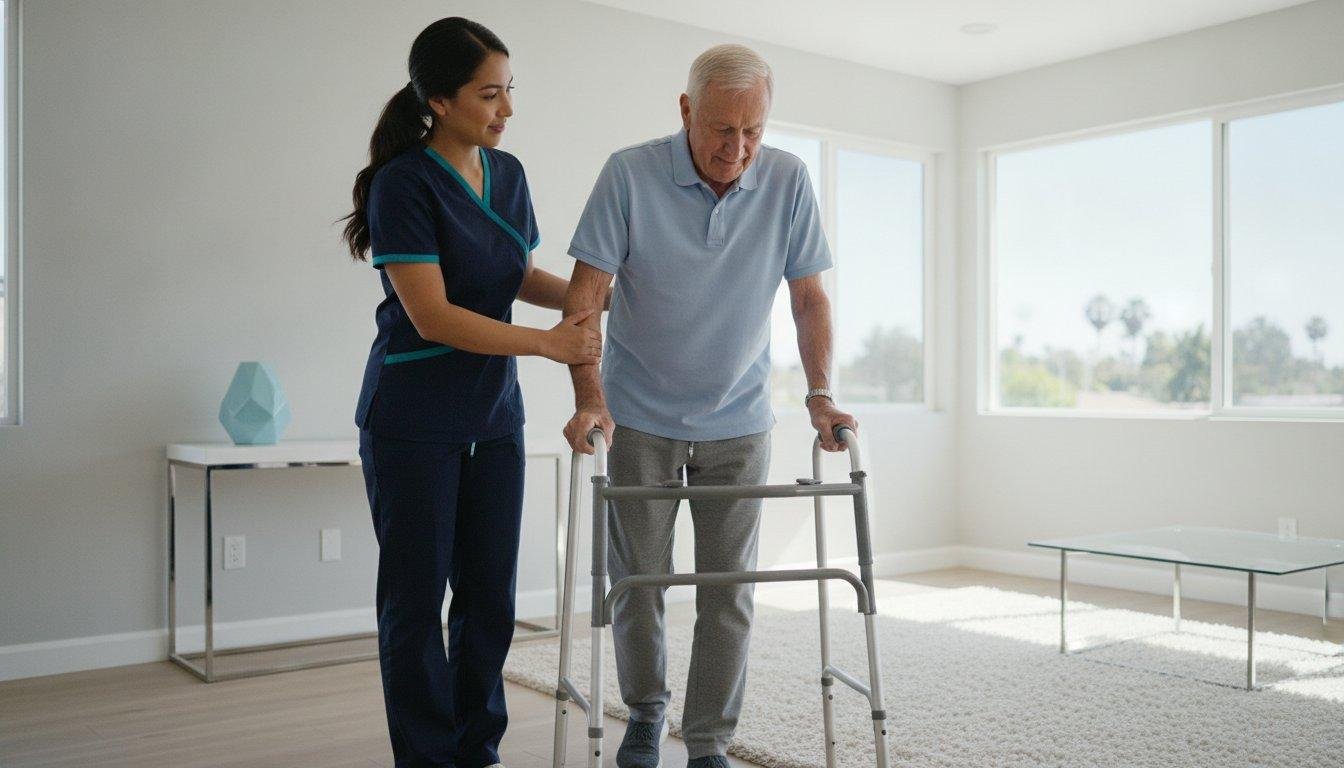
Rehabilitation is most effective when it’s tailored to the specific layout of your home. Physical Therapy focuses on gait training and balance, specifically addressing fall prevention in the North Hollywood home environment where floor transitions or narrow hallways might present unique risks. Occupational Therapy helps patients adapt their surroundings for Activities of Daily Living (ADLs), such as dressing and bathing, ensuring they can remain self-sufficient while healing. Speech Therapy addresses critical needs beyond vocalization, such as treating swallowing disorders (dysphagia) and cognitive communication challenges that often follow a stroke or neurological event. These therapies work in tandem to restore the patient’s previous level of function as quickly and safely as possible.
Medical Social Workers play a vital role by navigating the emotional and logistical aspects of care. They help families find community resources and manage the complex stress that often accompanies long-term health transitions. If you’re feeling overwhelmed by the moving parts of a recent diagnosis, you might consider reaching out to the specialists at Everest Peak Home Health Care to discuss a structured, professional care plan. Their team understands that home health care North Hollywood requires a balance of medical discipline and genuine compassion to achieve the best possible outcomes for every patient.
Home Health vs. Facility Care: Comparing Your Options
Choosing between a skilled nursing facility and home health care North Hollywood requires a careful analysis of both clinical outcomes and patient comfort. Recovering in a familiar environment offers significant psychological benefits, as patients often experience lower levels of stress and “hospital delirium” when surrounded by their own belongings and routines. This emotional stability isn’t just a matter of comfort; it’s a clinical asset that can accelerate the healing process. From a financial perspective, intermittent professional visits are often more cost-effective than the high overhead associated with 24-hour institutional stays. By focusing on targeted medical interventions, home health allows for a high level of care without the expense of a residential facility.
One of the most critical metrics in modern medicine is the hospital readmission rate. Professional home health services directly address this by providing a safety net during the vulnerable days following a discharge. Clinicians monitor for early signs of complications, such as medication adverse effects or wound infections, allowing for immediate intervention before an emergency room visit becomes necessary. It is important to clarify that clinical agencies like Everest Peak Home Health Care provide specialized medical visits rather than 24/7 live-in custodial care. This model ensures that patients receive high-level professional oversight while maintaining their autonomy at home.
Clinical Outcomes and Patient Safety
Infection control is a primary advantage of recovering at home. Hospitals and long-term care facilities are high-traffic environments where patients are more likely to be exposed to concentrated pathogens. In contrast, a private residence naturally lacks these communal risks. During a home visit, the patient receives the clinician’s undivided focus. This one-on-one attention allows for a level of detailed observation that is often impossible in a crowded facility ward. Therapists also perform environmental assessments to identify local home hazards. In the San Fernando Valley, this often involves adapting to specific architectural features, such as the sunken living rooms or narrow bathroom entries common in mid-century North Hollywood homes, to prevent falls during the recovery period.
Personal Care vs. Skilled Nursing
Understanding the distinction between medical and non-medical support is essential when Navigating Eligibility for services. Personal Care Assistance plays a vital role by supporting the patient’s clinical goals through help with hygiene, grooming, and mobility. While the nurse manages the medical plan, this non-medical support ensures the patient remains clean and stable, which directly complements the work of the physical therapist or wound care specialist. This integrated approach allows for a smooth transition from acute clinical care to long-term personal support, ensuring that the patient’s dignity and independence are preserved throughout every stage of their health journey.
Navigating Eligibility and the Referral Process
Transitioning from a local hospital to home health care North Hollywood involves a structured sequence of approvals to ensure clinical safety and insurance compliance. For many families, the administrative side of recovery feels daunting, yet understanding the eligibility criteria is the first step toward securing professional oversight. In California, most clinical home health services are covered under Medicare Part A for those who meet the specific homebound and skilled need requirements. This means the patient must require intermittent skilled nursing, physical therapy, or other specialized disciplines as determined by their physician. The process is designed to be a protective bridge, moving the patient from an acute setting to a stable environment where healing can continue with professional rigor.
Families should act as advocates during the hospital discharge process. When meeting with a discharge planner, it’s helpful to use a specific checklist to ensure a seamless transition. You should confirm that the physician has signed the home health referral and established the initial orders. It’s also vital to verify that the patient meets the clinical criteria for homebound status and to inquire about the expected timeline for the agency’s first assessment visit. Ensuring all relevant medical records are transferred to the home health provider prevents delays in the implementation of the care plan.
The “Homebound” Status Explained
The term homebound is often misunderstood as meaning a patient is completely bedridden. In clinical terms, it simply means that leaving the residence requires a considerable and taxing effort. A patient may still be considered homebound if they use a wheelchair, walker, or require the assistance of another person to exit their home. Under Medicare guidelines, certain absences are permitted without jeopardizing this status. These include attending religious services, visiting a physician for medical appointments, or participating in a licensed adult day care program. The clinical team meticulously documents these factors to ensure ongoing insurance compliance and to protect the patient’s access to care.
Steps to Initiate Care in North Hollywood
Starting the recovery journey follows a methodical four-step process designed to prioritize patient safety and clinical accuracy. First, a consultation with your primary physician or surgeon is required to authorize the medical necessity of home-based care. Once the referral is made, Everest Peak Home Health Care conducts a comprehensive clinical assessment to evaluate the patient’s current physical and cognitive state. This assessment informs the development of the multidisciplinary Plan of Care, which coordinates the schedules and goals of nurses and therapists. Finally, the implementation of scheduled visits begins, usually within 24 to 48 hours of the hospital discharge. To navigate this process with professional guidance, you can contact Everest Peak Home Health Care to discuss your specific clinical needs and verify your eligibility.
Why Everest Peak is North Hollywood’s Trusted Clinical Partner
Everest Peak Home Health operates with a deep understanding of the local community, maintaining its clinical headquarters on Hamlin Street. This local presence provides a granular perspective on the Los Angeles healthcare landscape that national providers often lack. By choosing home health care North Hollywood through a community-based partner, families benefit from a more responsive and stable extension of their care circle. The agency’s philosophy is rooted in “Professional Empathy,” a standard that balances strict medical rigor with a profound respect for the patient’s personal dignity. It’s about providing an authoritative medical presence that feels like a dependable partner rather than an intrusive service.
The coordination between our Registered Nurses, specialized therapists, and Medical Social Workers is methodical and disciplined. Daily communication among these professionals ensures that every clinical intervention is immediately followed by a practical benefit for the patient’s quality of life. If a nurse observes a change in medication tolerance, the physical therapist is instantly notified to adjust the day’s mobility goals. This level of seamless integration prevents the fragmented care that often leads to setbacks. It creates a protective environment where every specialist is fully aware of the patient’s comprehensive health status, ensuring that no detail of the recovery process is overlooked.
Licensed Expertise and Clinical Standards
Every practitioner at Everest Peak undergoes a rigorous screening process that meets and exceeds California healthcare regulations. Our Registered Nurses and therapists are selected for their clinical excellence and their ability to maintain professional standards within the unique environment of a private residence. Adhering to the strict licensing requirements of the California Department of Public Health (CDPH), the agency maintains a disciplined focus on patient safety and the preservation of independence. This commitment to excellence ensures that the medical protocols implemented in your home are as effective and regulated as those found in high-level institutional settings.
Start Your Recovery Journey Today
Initiating clinical support is a proactive step toward maintaining your health and autonomy. Everest Peak works closely with local North Hollywood physicians and surgeons to manage the referral process with professional precision. Whether you’re planning for a transition after surgery or require specialized management for a chronic condition, the agency acts as a knowledgeable guide through the complexities of the medical system. Taking this step ensures that professional medical oversight is in place before a health challenge becomes a crisis, providing your family with the stability needed during stressful transitions.
Contact Everest Peak Home Health Care for a professional assessment to begin establishing a structured, clinical path toward your recovery and long-term independence.
Secure Your Clinical Path to Recovery
Navigating a medical transition requires more than just assistance; it demands a structured, clinical approach that prioritizes your safety and long-term improvement. By understanding the distinction between medical oversight and basic caregiving, you can ensure that your recovery is managed with professional precision. Clinical home health care North Hollywood provides the necessary framework for healing by integrating skilled nursing with specialized physical, occupational, and speech therapies. This multidisciplinary model allows you to maintain your dignity and independence while receiving hospital-grade care in the comfort of your own home.
The team at Everest Peak is committed to providing this level of medical rigor through our licensed Registered Nurses and specialized therapists who serve North Hollywood and the Greater Los Angeles Area. We coordinate directly with your physicians to implement a Plan of Care that addresses your unique health challenges and prevents unnecessary hospital readmissions. You don’t have to manage the complexities of post-operative or chronic care alone. Contact Everest Peak for Professional Home Health Services to learn how we can support your journey toward a safe and successful recovery. We look forward to being a dependable partner in your health.
Frequently Asked Questions
What is the difference between home health care and home care?
Home health care involves skilled medical services provided by licensed professionals, whereas home care typically refers to non-medical support for daily activities. Physician-ordered home health care North Hollywood includes clinical interventions like wound care, medication management, or physical therapy. In contrast, non-medical home care focuses on custodial tasks like meal preparation or light housekeeping. Choosing clinical home health ensures your recovery is managed by medical experts who can monitor for complications and coordinate with your doctor.
How much does home health care cost in North Hollywood?
The cost of clinical services is primarily determined by your insurance coverage and the specific medical needs outlined in your Plan of Care. Medicare Part A often covers these services at 100% for eligible patients, meaning there’s no out-of-pocket expense for the clinical visits themselves. Private insurance plans vary in their co-payments and deductibles. It’s best to consult with your insurance provider or the agency’s intake department to verify your specific benefits and any potential costs.
Does Medicare cover home health services in California?
Medicare does cover home health services in California, provided the patient meets several strict eligibility criteria. You must be under the care of a physician and have a certified need for intermittent skilled nursing or therapy. Additionally, you must be documented as “homebound,” which means leaving your residence requires a taxing effort. When these conditions are met, Medicare Part A typically handles the full cost of clinical visits from a certified agency.
How often will a nurse or therapist visit my home?
The frequency of visits is dictated by the personalized Plan of Care developed by your physician and the clinical team. Most patients receive visits a few times per week, though this can increase during the early stages of a post-operative recovery. As you regain your independence and meet your clinical goals, the frequency of nursing or therapy sessions will gradually decrease. This methodical approach ensures you’re supported exactly when your medical needs are most acute.
Can I choose my own home health agency after a hospital stay?
You have the legal right to choose your own home health provider following a hospital or rehabilitation stay. While hospital discharge planners may offer a list of local agencies, the final decision rests with the patient and their family. It’s helpful to research providers like Everest Peak before your discharge to ensure they align with your clinical needs. Selecting an agency with local roots ensures they understand the specific healthcare landscape of your community.
What happens if my medical needs change during recovery?
If your medical status changes, your multidisciplinary team will immediately coordinate with your physician to update your Plan of Care. This might involve increasing the frequency of nursing visits or adding a new therapy discipline, such as occupational therapy, to your routine. Because your clinicians monitor your vital signs and progress during every visit, they can detect subtle shifts in your health. This proactive oversight allows for rapid adjustments that prevent setbacks or hospital readmissions.
Do I need a doctor’s referral to start services with Everest Peak?
Yes, a physician’s referral is a mandatory requirement for initiating any clinical home health services. This order ensures that a medical professional has evaluated your condition and determined that skilled care is necessary for your recovery. Everest Peak works directly with your primary doctor or surgeon to finalize the Plan of Care once the referral is received. This collaborative process ensures that every clinical intervention aligns with your overall medical strategy and recovery goals.
Is home health care available for patients with chronic conditions like heart failure?
Home health care is highly effective for managing chronic conditions such as Congestive Heart Failure (CHF), Diabetes, and COPD. Clinical teams provide specialized monitoring and education to help patients manage their symptoms and medications safely at home. By focusing on disease management and early intervention, home health care North Hollywood helps patients with chronic illnesses maintain their stability. This professional oversight is essential for improving quality of life and reducing the frequency of emergency room visits.