
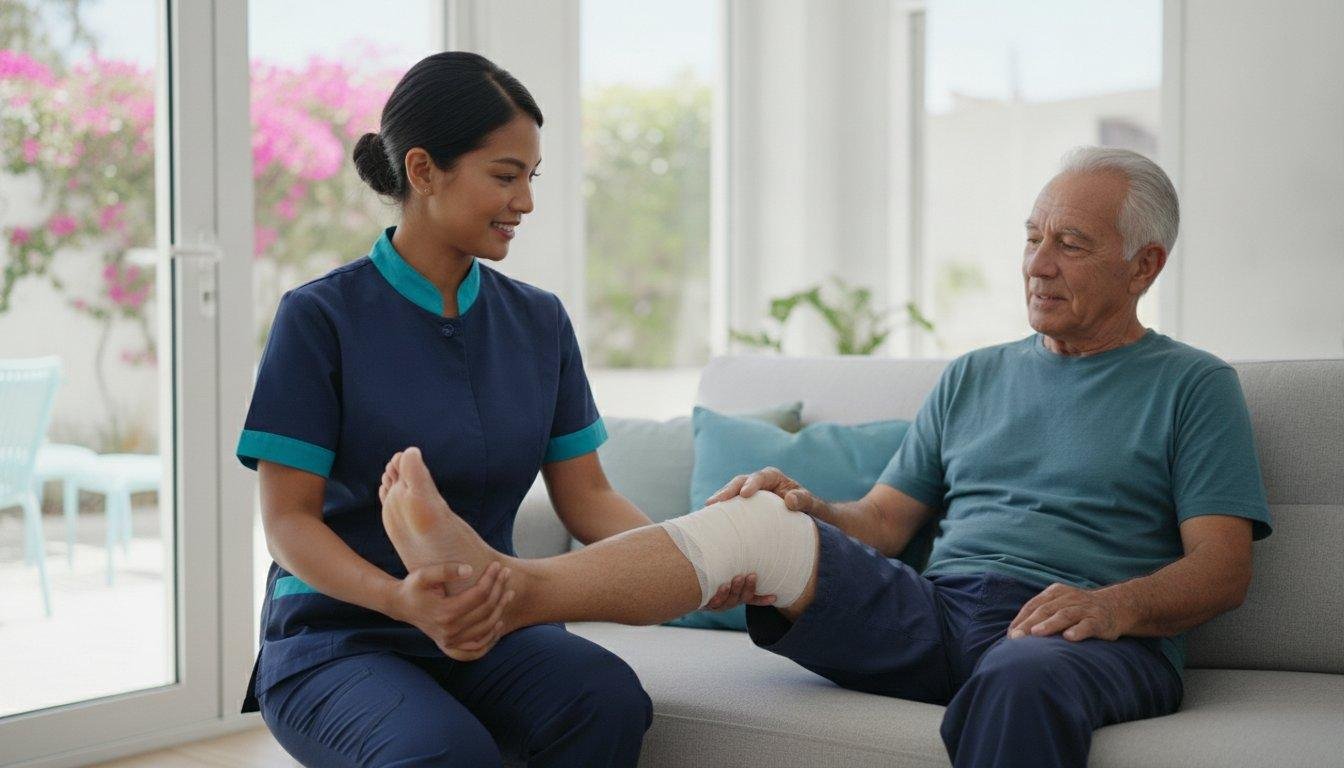
The most critical phase of your recovery doesn’t happen in the operating room; it begins the moment you cross your own threshold. It’s natural to feel a sense of apprehension as you transition from the constant monitoring of a hospital to the quiet of your home. You might worry about managing a complex medication schedule or wonder if a simple trip to the kitchen poses a risk to your new joint. This clinical guide will help you understand how professional in-home knee replacement rehab transforms these anxieties into a structured, safe path toward full mobility.
We recognize that navigating the first few weeks post-surgery requires more than just willpower; it requires a coordinated clinical partnership. This article provides the professional strategies and multi-disciplinary care models that facilitate a safe recovery while preventing complications like blood clots. We will examine the specific roles of physical and occupational therapists, the importance of skilled nursing oversight, and the practical milestones you’ll reach as you regain your independence and full range of motion.
Key Takeaways
- Understand the significance of the initial 48-hour window after hospital discharge for establishing a comprehensive clinical assessment.
- Identify the specialized contributions of Physical and Occupational Therapists in restoring joint mobility and re-learning activities of daily living safely.
- Discover professional protocols for managing edema and pain through systematic cold therapy and clinical elevation techniques.
- Learn how to conduct a professional fall risk assessment to optimize your living space for a safe in-home knee replacement rehab process.
- Recognize how professional oversight from licensed nurses and therapists protects your health by identifying potential complications early in the recovery journey.
Navigating the Initial Phase of In-Home Knee Replacement Rehab
A Knee replacement, or total knee arthroplasty, is a sophisticated orthopedic procedure that requires a equally disciplined recovery phase to ensure long term success. While the surgery itself corrects the joint, the subsequent in-home knee replacement rehab is the structured clinical program that restores your ability to walk and perform daily activities. This phase isn’t merely a series of exercises; it’s a comprehensive medical intervention designed to bridge the gap between the hospital setting and your return to independent living.
The first 48 hours following your discharge are the most pivotal. During this critical window, your home health team transitions your care from the hospital’s controlled environment to your personal residence. A Registered Nurse typically conducts the initial home visit to evaluate the integrity of the surgical incision and your hemodynamic stability. By establishing this clinical baseline early, the team can set realistic milestones for the first two weeks of 2026 recovery, such as achieving 90 degrees of knee flexion and ensuring the wound is healing without signs of complication.
The Transition from Hospital to Home
Coordinating discharge orders with a professional home health agency in the San Fernando Valley ensures that your clinical needs are met the moment you arrive home. This transition involves more than just transport; it requires a precise hand-off of surgical site protocols. Clinical standards for bandage changes and the monitoring of staples or sutures must be followed strictly to prevent infection. Early mobility goals focus on safety, specifically mastering transfer techniques from a bed to a chair or commode. These movements are the building blocks of your recovery, allowing you to move within your home without putting undue stress on the new joint.
Clinical Oversight vs. Self-Care
While self-motivation is vital, professional monitoring significantly reduces the risk of post-surgical re-hospitalization. A Registered Nurse (RN) provides essential early-stage assessments that a patient or family member might overlook. Their expertise is crucial for identifying early warning signs of Deep Vein Thrombosis (DVT), such as localized warmth, redness, or calf tenderness. They also monitor for systemic signs of infection, like persistent fever or unusual discharge from the incision. This level of clinical vigilance ensures that any deviation from a normal recovery path is addressed immediately, protecting both your health and the investment you’ve made in your new knee.
The Multi-Disciplinary Team: Coordinating Physical and Occupational Therapy
The clinical success of a total knee arthroplasty depends on the seamless integration of multiple therapeutic disciplines. While the initial nursing assessment establishes your medical baseline, the subsequent phase of in-home knee replacement rehab requires a synchronized effort between Physical Therapists (PT), Occupational Therapists (OT), and Skilled Nursing. This team based approach ensures that your recovery is comprehensive, addressing both the physiological healing of the joint and your ability to function safely within your home environment. A study on home care for knee replacement patients confirms that this level of professional oversight leads to significant improvements in functional mobility and patient confidence.
Effective coordination prevents conflicting therapeutic goals. For instance, while a Physical Therapist focuses on the mechanical strength of the quadriceps, the Occupational Therapist ensures that the patient can apply that strength to rising from a toilet seat or entering a shower. Skilled nurses remain the clinical anchor, managing medication protocols and monitoring the surgical site to ensure that pain is sufficiently controlled for the patient to participate in therapy sessions. This level of professional post-operative care creates a stable environment where recovery can progress without the setbacks of unmanaged pain or secondary complications.
Physical Therapy: Regaining Range of Motion
Physical therapy is the cornerstone of restoring the joint’s mechanical capabilities. Range of Motion (ROM) is the primary metric for knee function. In the early stages, therapists utilize specific therapeutic exercises to prevent stiffness and promote circulation. These typically include:
- Ankle Pumps: Rhythmic flexing of the feet to encourage blood flow and reduce DVT risk.
- Quad Sets: Isometric contractions of the thigh muscles to maintain muscle tone without joint movement.
- Heel Slides: Controlled bending of the knee to gradually increase flexion.
The progression from a walker to a cane follows a strict clinical timeline based on your weight-bearing tolerance. Most patients begin with a front wheeled walker for stability before transitioning to a single point cane as balance and quad strength improve, usually within the first three to four weeks.
Occupational Therapy: Adapting Your Daily Routine
Occupational therapy shifts the focus from the joint itself to the Activities of Daily Living (ADLs) that define your independence. Therapists teach specific techniques for safe bathing and dressing that protect the new joint from excessive strain or twisting. In the kitchen, they provide strategies for navigating meal preparation while using assistive devices. To facilitate autonomy, OTs often introduce specialized tools such as reachers for picking up items, sock aids to prevent deep bending, and long handled sponges for personal hygiene. These adaptations ensure you can manage your daily routine safely while your mobility is still maturing.
Clinical Strategies for Managing Post-Surgical Pain and Swelling
Effective pain and edema control are the prerequisites for functional progress. Without a disciplined approach to inflammation, the joint remains too stiff for the range-of-motion exercises discussed in previous sections. In a professional in-home knee replacement rehab setting, clinicians prioritize a systematic ‘Cold Therapy’ protocol. This involves the use of cryotherapy or ice packs for 20-minute intervals, multiple times a day, to constrict blood vessels and numb nerve endings. This is paired with the clinical ‘toes over nose’ rule for elevation. By positioning the surgical leg so the knee and ankle are above the level of the heart, gravity assists in draining fluid away from the joint, significantly reducing post-operative swelling.
The psychological impact of recovery is often underestimated. Post-operative anxiety and frustration are common when progress feels slow or pain persists. Professional empathy from a dedicated care team provides the quiet stability needed to navigate these emotional hurdles, ensuring you remain focused on your long-term mobility goals while maintaining a manageable pain profile.
Advanced Swelling Management
Distinguishing between expected post-surgical edema and concerning swelling is a primary responsibility of the clinical team. While some puffiness is normal, excessive swelling that doesn’t respond to elevation may require medical intervention. Muscle pumping exercises, such as the ankle pumps introduced during physical therapy, serve a dual purpose; they facilitate circulation and act as a natural pump for the lymphatic system. For many patients, compression stockings are prescribed to maintain steady pressure on the limbs. However, these require regular skin integrity checks by a nurse to ensure the fabric isn’t causing irritation or restricting superficial blood flow.
Pharmacological and Non-Pharmacological Pain Relief
Managing the surgical pain profile requires a delicate balance between pharmacological support and therapeutic movement. Your clinical team ensures adherence to the surgeon’s specific pain protocol while monitoring for efficacy. A key strategy during in-home knee replacement rehab is ‘pre-medicating,’ which involves taking prescribed analgesics approximately 30 to 60 minutes before an intensive physical therapy session. This window of relief allows you to push through the discomfort of stretching without reaching a state of exhaustion.
Nurses also remain vigilant for medication-related complications. Common side effects like constipation or subtle cognitive changes can impede recovery if they aren’t addressed through dietary adjustments or dosage monitoring. By combining these pharmacological checks with non-pharmacological methods like rhythmic breathing and positioning, the team ensures you stay comfortable enough to meet your daily recovery milestones.
Optimizing Your Los Angeles Home for a Safe Recovery
The safety of your residential environment is a primary factor in preventing post-operative falls and ensuring the success of your in-home knee replacement rehab. Before you return from the hospital, a clinician typically conducts a formal Fall Risk Assessment to identify potential dangers in your specific living space. In many Los Angeles homes, this involves a meticulous review of flooring and walkways. It’s vital to remove all trip hazards from the home prior to your scheduled surgery date. This includes securing or removing throw rugs, organizing loose electrical cords, and clearing cluttered pathways that could impede the use of a walker or cane.
Strategic lighting is another essential clinical modification, particularly for patients who may need to navigate to the bathroom during the night while still adjusting to new pain medications. Ensuring high visibility in hallways and transition areas reduces the cognitive load on the patient and minimizes the risk of missteps. Additionally, furniture selection plays a role in joint preservation. We recommend using firm, high-seated chairs with sturdy armrests, as these allow for a safer “push-off” and prevent the deep knee flexion that can be painful and destabilizing during the early weeks of recovery.
Setting up a central ‘Recovery Station’ allows you to maintain autonomy while keeping essential items within reach. This area should include your clinical essentials, such as medications, cold therapy supplies, and your home exercise program, alongside personal items like a phone, water, and reading materials. By organizing your space this way, you reduce the need for unnecessary or unsupervised movement during the first few days of your transition back home.
Bathroom and Bedroom Safety Modifications
The bathroom often presents the highest risk for post-surgical slips. Installing temporary grab bars and utilizing a raised toilet seat are standard clinical recommendations that facilitate safe transfers without overtaxing the surgical site. In the bedroom, bed height is a critical metric; your feet should touch the floor comfortably when you’re sitting on the edge of the mattress. For bathing, the clinical necessity of a shower chair and non-slip mats can’t be overstated, as they allow you to maintain hygiene while remaining seated and stable.
Navigating San Fernando Valley Home Layouts
Many residences in the San Fernando Valley feature multi-level layouts or narrow hallways that require specific navigation strategies. When managing stairs, clinicians teach the “up with the good, down with the bad” technique, which involves leading with the non-surgical leg when ascending and the surgical leg when descending. It’s also important to verify that your doorways provide sufficient clearance for a standard walker, which typically requires a width of at least 32 inches. If you’re concerned about your home’s layout, our team can provide a professional home safety assessment to ensure your environment is fully optimized for a secure in-home knee replacement rehab process.
Professional In-Home Rehabilitative Care with Everest Peak
Everest Peak stands as a pillar of clinical excellence for residents in North Hollywood and the broader Los Angeles area. Our approach to in-home knee replacement rehab is built on the foundation of a personalized care plan, which is meticulously developed by licensed therapists and registered nurses to meet your specific physiological needs. We don’t operate in isolation; rather, we function as a professional extension of your surgical team. This coordination ensures that the protocols established by your orthopedic surgeon are translated into actionable, daily milestones within the comfort of your own home, maintaining the high standard of care you received in the hospital.
Maintaining patient dignity is central to our mission. Recovery can be a vulnerable time, and our team is trained to provide steady support that preserves your autonomy throughout the process. By focusing on the preservation of independence, we help you transition from the initial post-surgical limitations to a state of full functional mobility. Our clinicians observe and listen, ensuring that every adjustment to your therapy is based on your unique rate of healing and comfort levels. This steady, observant care creates a sense of stability for both the patient and their family during a stressful health transition.
Why Choose Everest Peak Home Health Care?
Our specialized team of physical and occupational therapists serves the diverse neighborhoods of the San Fernando Valley with a commitment to unhurried clinical attention. We recognize that recovery involves more than just physical movement; it requires emotional and logistical support. To address this, we offer comprehensive medical social services to assist families through the complexities of health transitions. This multi-disciplinary approach ensures that no aspect of your care, from insurance navigation to emotional resilience, is overlooked. We prioritize a culture of professional empathy, where the dignity of the individual is always the primary focus of our clinical interventions.
Starting Your Recovery Journey
Initiating your recovery with us is a straightforward process that begins with a referral for skilled nursing and therapy services. Once your surgeon or hospital discharge planner contacts our office, we coordinate the timing of your first visit to ensure there is no gap in your clinical oversight. During your first clinical home health visit, a Registered Nurse will perform a thorough assessment of your surgical site, vital signs, and medication regimen. This initial session sets the stage for your in-home knee replacement rehab, establishing the baseline from which all future progress is measured. Our team will then schedule regular visits from our therapists to begin the work of restoring your strength and mobility.
To ensure your recovery is supported by a team dedicated to clinical rigor and compassionate care, Contact Everest Peak Home Health Care to schedule your post-op assessment.
Taking the Next Step Toward Full Mobility
Achieving a successful outcome after total knee arthroplasty requires a disciplined commitment to a structured, clinical recovery plan. By prioritizing the critical initial window and engaging a multi-disciplinary team of experts, you ensure that every physiological and functional aspect of your health is monitored. Professional in-home knee replacement rehab provides the necessary clinical oversight to manage complex pain schedules effectively while systematically restoring your range of motion. This coordinated approach transforms your residence into a safe, therapeutic environment where you can focus entirely on regaining your independence.
Everest Peak offers the specialized expertise of licensed registered nurses and therapists who are dedicated to your long-term wellness and joint health. Serving North Hollywood and the San Fernando Valley, our team utilizes specialized post-operative clinical protocols designed to prevent secondary complications and accelerate your return to the activities you love. You don’t have to navigate the complexities of surgical recovery without professional support. Secure Professional In-Home Rehab for Your Knee Recovery to ensure your path to mobility is guided by clinical excellence. We look forward to supporting your steady progress toward a full and active recovery.
Frequently Asked Questions
How long does in-home knee replacement rehab typically last?
Professional in-home rehabilitation typically spans two to four weeks following hospital discharge. This duration depends on your individual rate of wound healing and your ability to meet specific functional milestones, such as walking a certain distance with an assistive device. Once you achieve sufficient mobility and clinical stability, your care team will facilitate a transition to an outpatient facility to continue your long-term strengthening program.
Can I do my knee exercises alone, or do I need a therapist every time?
You are expected to perform your prescribed Home Exercise Program (HEP) independently several times a day to maintain progress. While your physical therapist visits to provide professional instruction, manual therapy, and clinical monitoring, your individual consistency is what prevents joint stiffness. Performing these exercises alone between scheduled in-home knee replacement rehab sessions is essential for achieving your full range of motion goals.
What are the signs of infection I should look for in my knee incision?
You should monitor the surgical site for increased redness, localized warmth, or new purulent drainage. Systemic signs, such as a fever over 101 degrees Fahrenheit or a sudden increase in pain that does not respond to medication, also require immediate clinical attention. Your visiting nurse will perform regular assessments of the incision to ensure the healing process is proceeding without complication or signs of infection.
How often will a physical therapist visit my home in North Hollywood?
Physical therapists generally visit two to three times per week, depending on the specific orders from your orthopedic surgeon. These visits are scheduled to provide consistent clinical oversight while allowing you time to rest and perform your independent exercises. In North Hollywood and the San Fernando Valley, our team coordinates these sessions to ensure your recovery remains on a steady, methodical trajectory toward independence.
Is it normal for my knee to feel hot or click after surgery?
Localized warmth and clicking sounds are common and typically normal during the first several months of recovery. The heat is a result of the body’s natural inflammatory response as it heals from the surgical trauma. Clicking often occurs as the new metal and plastic components of the implant interact with the surrounding soft tissues. If these symptoms are accompanied by significant swelling or instability, you should consult your therapist.
When can I start driving again after a total knee replacement?
Most patients can resume driving within four to six weeks, provided they are no longer taking narcotic pain medications. If the surgery was on your right knee, the timeline may be longer to ensure you have the necessary braking reaction time. You must receive formal clearance from your surgeon before operating a vehicle to ensure you can safely navigate traffic without risking injury to the new joint.
How do I manage stairs safely during the first week of home recovery?
Managing stairs requires a specific technique where you lead with your non-surgical leg when going up and your surgical leg when going down. During the first week, you should always have a caregiver present to provide “stand-by” assistance, even if you feel confident using the handrail. This professional precaution ensures that if you experience a sudden bout of fatigue or a loss of balance, you have immediate support to prevent a fall.
Does insurance typically cover professional in-home physical therapy?
Most commercial insurance plans and Medicare provide coverage for in-home knee replacement rehab when a physician certifies that the patient is homebound. For Medicare Part B patients in 2026, this often covers 100% of the cost for those who qualify. It’s important to verify your specific plan’s requirements regarding deductibles or the medical necessity reviews that occur once certain therapy cost thresholds are reached.