

What if the most critical factor in a successful post-operative recovery isn’t the surgery itself, but how a patient manages their first morning routine at home? For many families, the realization that a loved one can no longer safely manage personal hygiene or mobility is a source of profound anxiety. It’s common to feel overwhelmed by the transition from hospital to home, especially when you’re balancing your own professional responsibilities with the role of a primary caregiver. Professional activities of daily living assistance is more than a convenience; it’s a clinical intervention designed to prevent complications and maintain the patient’s dignity during vulnerable transitions.
You deserve a clear path forward that prioritizes both safety and respect. This guide explains how structured personal care supports long-term health outcomes and helps you distinguish between medical necessity and general support. We’ll provide a framework to help you decide when it’s time to hire professional help, ensuring your loved one receives the expert attention they need to thrive in their own environment.
Key Takeaways
- Distinguish between basic self-care tasks and complex instrumental activities to identify the exact level of support your loved one requires for safety.
- Understand how professional activities of daily living assistance acts as a clinical intervention to reduce hospital readmission rates and ensure post-operative safety.
- Learn to use standard clinical assessment tools, such as the Katz Index, to objectively evaluate functional independence and home safety risks.
- Discover how a multidisciplinary team of licensed nurses and therapists preserves patient dignity while monitoring for critical medical changes in the home.
- Identify specific environmental warning signs that indicate a transition from independent living to professional home-based support is necessary for long-term health.
What is Activities of Daily Living (ADL) Assistance?
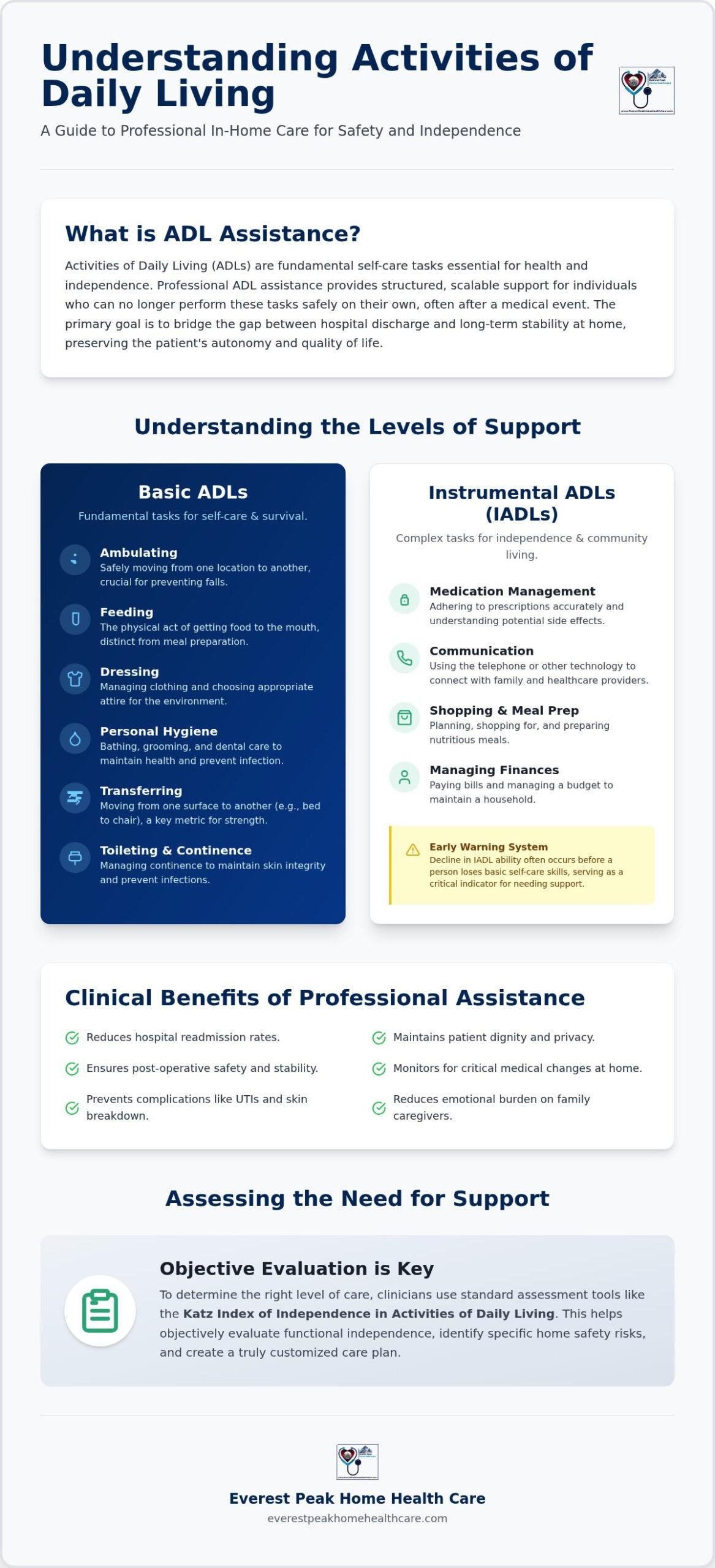
At its core, Activities of Daily Living (ADLs) represent the fundamental tasks that every individual must perform to maintain their health and independence. These are the essential self-care activities that most people perform instinctively until a change in health status occurs. Professional activities of daily living assistance provides a structured layer of support for those who can no longer execute these tasks safely on their own. This support is not a “one-size-fits-all” service; it scales according to clinical need. Some patients only require stand-by supervision to ensure safety during a transition, while others need full hands-on support to complete a task. The ultimate objective is to preserve the patient’s autonomy and quality of life within the comfort of their own home.
The need for this specialized support often follows a significant medical event. Post-operative recovery, sudden injury, or the progressive decline associated with chronic conditions can make formerly simple tasks feel insurmountable. By implementing a customized care plan, we bridge the gap between clinical discharge and long-term stability. It’s common for families to feel a sense of relief once a professional assessment identifies the specific areas where a patient needs help, as this clarity reduces the emotional burden on family caregivers.
The Six Core Activities of Daily Living
Clinicians typically categorize these foundational tasks into six specific areas. In addition to toileting, which is discussed below, these include ambulating, feeding, dressing, personal hygiene, and transferring. Ambulating is the clinical term for moving from one location to another safely, which is vital for preventing falls. Feeding refers specifically to the physical act of getting food to the mouth, which is distinct from meal preparation. Dressing involves the cognitive and physical ability to manage fasteners like buttons or zippers and choosing attire appropriate for the environment. Personal hygiene encompasses the safety protocols required during bathing, grooming, and dental care to prevent infection. Finally, transferring, or the ability to move from a bed to a chair, is a critical safety metric used to evaluate physical strength and balance.
Toileting and Continence Care
Assistance with toileting is often a sensitive aspect of home-based care, yet it is clinically essential for maintaining skin integrity and overall health. Professional activities of daily living assistance in this area focuses on regular monitoring and prompt intervention. This proactive approach significantly reduces the risk of urinary tract infections (UTIs) and skin breakdown, which are common causes of hospital readmission among seniors. Our clinicians prioritize the patient’s dignity throughout this process, using professional empathy to ensure that these necessary interventions never feel intrusive. By maintaining a clinical standard for hygiene, we help patients avoid the physical discomfort and secondary medical issues that arise from inadequate continence care.
ADLs vs. IADLs: Understanding the Levels of Support
Understanding the distinction between survival and independence is essential for effective home care. While basic ADLs focus on essential self-care, Instrumental Activities of Daily Living (IADLs) encompass the more complex tasks necessary for thriving in a community. The clinical definition of ADLs and IADLs provides a roadmap for clinicians to measure a patient’s functional status. Because IADL decline typically occurs before a patient loses the ability to perform basic self-care, these tasks serve as an early warning system for families. Professional activities of daily living assistance often begins by addressing these complex needs to maintain a patient’s safety and quality of life.
Defining Instrumental Activities of Daily Living (IADLs)
IADLs require a higher level of cognitive and physical coordination than basic self-care. These tasks are the pillars of independent living, and their successful execution prevents secondary health complications. Professionals assess these areas to ensure a patient isn’t just surviving, but actively participating in their recovery.
- Managing medications: This involves the clinical accuracy required to adhere to prescriptions and understand potential side effects.
- Communication: Using technology or the telephone to stay connected with family and healthcare providers is a critical safety necessity.
- Housework and meal preparation: A sanitary environment and consistent nutrition are foundational to the recovery process.
- Transportation and shopping: Maintaining access to essential goods and medical appointments prevents isolation and physical decline.
How Support Needs Evolve Over Time
Functional needs aren’t static; they tend to evolve as a patient ages or recovers from a clinical event. A patient might initially struggle with complex tasks like managing a checkbook or organizing a grocery list before they experience difficulties with physical mobility. Our Medical Social Services specialists are trained to identify these subtle shifts during home visits, ensuring that the care plan adapts in real time to the patient’s changing circumstances.
This proactive monitoring follows a service-to-outcome framework. For example, providing professional assistance with medication management today prevents a confusing dosage error or a dizzy spell that could lead to a fall tomorrow. By coordinating both ADL and IADL support, home health agencies create a comprehensive safety net. This integrated approach allows patients to remain in their own homes longer while ensuring that their clinical needs are met with professional empathy and technical precision. Professional activities of daily living assistance ensures that as needs become more intensive, the transition remains gradual, respectful, and clinically sound.
The Clinical Benefits of Professional ADL Assistance
While many families view personal care as a private matter, professional activities of daily living assistance is fundamentally a clinical intervention. It’s the primary mechanism for preventing hospital readmissions, particularly during the high-risk period immediately following a surgical discharge. Trained caregivers utilize “professional empathy” to observe subtle physiological changes that an untrained eye might miss. For a detailed clinical overview of Activities of Daily Living, healthcare providers look at these tasks as the most reliable predictors of a patient’s safety at home. When a professional manages these tasks, they aren’t just helping with a routine; they’re monitoring for medical red flags like edema, labored breathing, or cognitive shifts.
Addressing the “my family can do this” objection is a common hurdle for many households. While family care is rooted in deep affection, it often lacks the clinical rigor and emotional distance required for complex recovery. Family caregivers frequently experience emotional exhaustion, which can inadvertently lead to safety lapses or missed symptoms. An agency provides a multidisciplinary team, including Licensed Registered Nurses and Vocational Nurses, who oversee care plans with a level of discipline that preserves the family bond while ensuring medical standards are met. This professional oversight allows the family to focus on emotional support rather than the stressful technicalities of clinical care.
Preventing Falls and Secondary Injuries
Safely navigating the home environment is a primary concern for seniors, especially since approximately 62% of long-term care patients require assistance with three or more daily tasks. Professional support with ambulation directly reinforces Physical Therapy goals by ensuring the patient practices safe gait patterns between formal sessions. We place a heavy emphasis on “transfers,” which is the clinical process of moving from a bed to a chair or a wheelchair. These are the moments of highest risk for secondary injuries. By providing expert supervision during these transitions, we significantly reduce the likelihood of a fall that could result in a permanent loss of independence.
Maintaining Skin Integrity and Nutrition
Clinical hygiene is about more than just comfort; it’s a vital component of infection control and wound care. During bathing assistance, a trained professional performs a systematic skin assessment to identify early signs of pressure sores or irritation. This oversight is critical for patients with limited mobility who are at risk for skin breakdown. Similarly, feeding assistance goes beyond the physical act of eating. It ensures that post-operative patients receive the specific caloric intake required for tissue repair and energy. A Registered Nurse typically monitors these metrics as part of a comprehensive assessment, ensuring that every aspect of the patient’s recovery is documented and optimized.
Assessing the Need for Support: A Home Safety Framework
Determining when to transition from family care to professional activities of daily living assistance requires moving beyond subjective observation toward clinical objectivity. While families often rely on intuition, healthcare professionals utilize validated frameworks to quantify a patient’s functional status. Identifying these needs early prevents the “crisis mode” that often follows a fall or a sudden medical emergency. A structured assessment provides a clear baseline, allowing for a care plan that scales as a patient’s condition evolves.
The Katz Index and Barthel Scale
Healthcare professionals use standardized instruments to remove the guesswork from care planning. The Katz Index of Independence is a standardized tool for functional assessment that evaluates a patient’s ability to perform six core tasks independently. Along with the Barthel Scale, these instruments allow clinicians to assign a numerical value to a patient’s level of impairment. This data is essential for insurance documentation and helps determine the necessary frequency of home health visits. By using these scales, we ensure that the care plan is grounded in measurable clinical need rather than anecdotal evidence.
Practical Signs Your Loved One Needs Help
Families are often the first to notice subtle signs of decline during routine visits. While deficits in complex tasks often appear first, difficulties with basic self-care indicate a more urgent safety risk. Look for the following indicators during your next visit:
- Unexplained weight loss: This often suggests a decline in IADLs like meal preparation or the physical ability to eat, which can lead to malnutrition.
- Poor personal hygiene: Wearing the same clothes for several days or neglecting dental care are clear indicators that basic self-care tasks are becoming unmanageable.
- Physical bruising: Marks on the arms or hips may suggest “furniture walking,” where a patient relies on household objects for balance because they’re afraid of falling.
- Social withdrawal: A sudden pattern of missed medical appointments or avoiding phone calls can signal cognitive changes or a loss of confidence in navigating the home.
There is a significant difference between a family member’s observation and a formal clinical assessment conducted by a Licensed Registered Nurse. A clinical evaluation looks for the root cause of functional decline, whether it’s muscle wasting, medication side effects, or cognitive impairment. If you’ve noticed these warning signs, scheduling a professional clinical assessment is the most effective way to establish a safe and sustainable home environment. Early intervention ensures that support is introduced gradually, preserving the patient’s dignity while mitigating the risks of living alone. Professional activities of daily living assistance introduced at the right time can prevent a minor struggle from becoming a major medical event.
Professional ADL Assistance in North Hollywood: The Everest Peak Approach
In the San Fernando Valley, Everest Peak provides a clinical-first model that bridges the gap between basic home support and medical oversight. We integrate Personal Care Assistance with the expertise of our Skilled Nursing team to ensure that every interaction serves a therapeutic purpose. This multidisciplinary approach means that while a caregiver assists with dressing or hygiene, they’re also part of a larger clinical circle that includes Licensed Registered Nurses and Vocational Nurses who oversee every care plan. Our deep roots in North Hollywood allow us to navigate the local healthcare landscape effectively, providing families with a stable, professional extension of their care circle. We prioritize the preservation of independence, ensuring that activities of daily living assistance remains a tool for empowerment rather than a sign of limitation.
Every customized care plan we develop is the result of a collaborative effort between our clinical team, the patient, and their family. We don’t believe in a “one-size-fits-all” solution; instead, we look at the specific recovery goals of the individual. Whether a patient is recovering from a complex surgery or managing the challenges of age-related decline, our approach is grounded in reliability and a serious commitment to long-term well-being. This methodical progression from assessment to intervention ensures that no aspect of the patient’s care is overlooked, creating a sense of thoroughness and professional rigor that families can depend on during stressful transitions.
Integrating Occupational Therapy and Daily Support
Our Occupational Therapists play a pivotal role in helping patients reclaim their autonomy by teaching them to master ADLs again. Instead of simply performing tasks for the individual, these specialists focus on rehabilitative techniques that rebuild physical and cognitive strength. This often involves the strategic use of adaptive equipment, such as long-handled reachers or specialized fasteners, which make daily routines safer and more manageable. The quiet confidence of our therapists provides a sense of stability for patients as they navigate the frustrations of recovery. By focusing on these functional milestones, we help patients transition from needing full support to achieving a higher level of self-sufficiency.
Getting Started with Home Health Care in LA
The journey toward better home support begins with a comprehensive clinical assessment conducted by our intake team. During this initial visit, we evaluate the patient’s functional status and home environment to identify specific safety risks and care needs. We work closely with primary care physicians throughout the San Fernando Valley to ensure that our care plans align with the patient’s existing medical orders. This coordination is essential for maintaining continuity of care and preventing the complications that lead to hospital readmission. You can Learn about our Skilled Nursing Services to see how we manage more complex medical needs alongside personal support. If you’re ready to establish a professional safety net for your loved one, Contact Everest Peak for a Professional Assessment today. Our team is here to guide you through every step of the recovery process with professional empathy and clinical excellence.
Securing a Safe Path to Recovery at Home
Transitioning from a hospital setting to home care requires more than just a helping hand; it demands a structured clinical framework. By understanding the distinction between basic self-care and complex instrumental tasks, you’ll be better equipped to identify the level of support your loved one needs to remain safe. Professional activities of daily living assistance serves as a vital bridge, ensuring that recovery goals are met while maintaining the highest standards of personal dignity.
As a locally owned and operated agency in North Hollywood, Everest Peak provides comprehensive post-operative and chronic care plans tailored to your family’s unique situation. Our multidisciplinary team of Licensed Registered Nurses, Physical Therapists, and Occupational Therapists works in tandem to monitor medical red flags and promote functional independence. You don’t have to navigate these complex health transitions alone. We invite you to Schedule a Clinical Assessment with Everest Peak Home Health Care to discuss how our professional team can support your recovery journey. With the right clinical oversight, your loved one can thrive in the comfort of their own home.
Frequently Asked Questions
Is ADL assistance covered by Medicare or private insurance?
Medicare typically covers clinical home health services if a physician certifies them as medically necessary for a homebound patient. This coverage includes skilled nursing and physical therapy. However, Medicare often doesn’t pay for long-term activities of daily living assistance if it’s the only service required. Private insurance and long-term care policies provide varying levels of coverage, so it’s essential to verify your specific benefits with your provider before beginning a care plan.
What is the difference between home health care and home care?
Home health care provides clinical, medical support from licensed professionals such as nurses and therapists. In contrast, standard home care usually focuses on non-medical tasks like companionship or general housekeeping. Everest Peak bridges this gap by offering a clinical-first approach, where licensed medical staff oversee personal care plans to ensure every intervention supports the patient’s broader health goals and medical recovery.
How do I talk to my parents about needing help with daily activities?
Approaching parents about support requires a focus on preserving their autonomy and safety rather than highlighting their limitations. Frame the conversation around the goal of aging in place and preventing a medical crisis that could force a move to a facility. Emphasize that professional assistance is a tool to maintain their independence, allowing them to focus on their quality of life while experts handle the technicalities of safety and hygiene.
Can a physical therapist help with activities of daily living?
Physical therapists are instrumental in improving the mobility components of daily living, specifically ambulation and transferring. By focusing on gait training and lower-body strength, a physical therapist helps patients move safely from a bed to a chair or navigate stairs. This clinical intervention directly supports the goals of activities of daily living assistance by reducing fall risks and increasing the patient’s confidence in their physical capabilities.
What happens during a professional home health assessment?
A professional home health assessment involves a comprehensive evaluation of a patient’s physical health, cognitive function, and home safety. A licensed nurse or therapist conducts this review to identify specific challenges and risks. They use standardized tools to quantify functional needs, which then informs a customized care plan. This process ensures the support provided is clinically appropriate and coordinated with the patient’s primary care physician.
How many hours of ADL assistance are typically needed after surgery?
The duration of support after surgery varies based on the complexity of the procedure and the patient’s baseline health. Most post-operative patients require more intensive assistance during the initial two to four weeks of recovery. As the patient regains strength through physical or occupational therapy, the number of hours typically decreases. A clinical team regularly reassesses these needs to ensure the level of support matches the patient’s current stage of healing.
Does Everest Peak provide 24/7 live-in care for ADLs?
Everest Peak does not provide 24/7 live-in care. Our services focus on skilled clinical interventions and personal care assistance delivered through scheduled visits by licensed nurses and therapists. This model ensures that patients receive high-level medical oversight and professional support while maintaining their privacy. For families requiring constant supervision, we recommend exploring residential care options that can be supplemented by our clinical home health services.
What are the most common ADLs that seniors struggle with first?
Seniors often experience a decline in Instrumental Activities of Daily Living, such as managing medications or complex housework, before struggling with basic self-care. Among core ADLs, bathing and dressing are typically the first areas where individuals require help. These tasks require significant balance and fine motor coordination. Identifying these early struggles allows for the timely introduction of support, preventing secondary issues like skin breakdown or injuries from falls.