
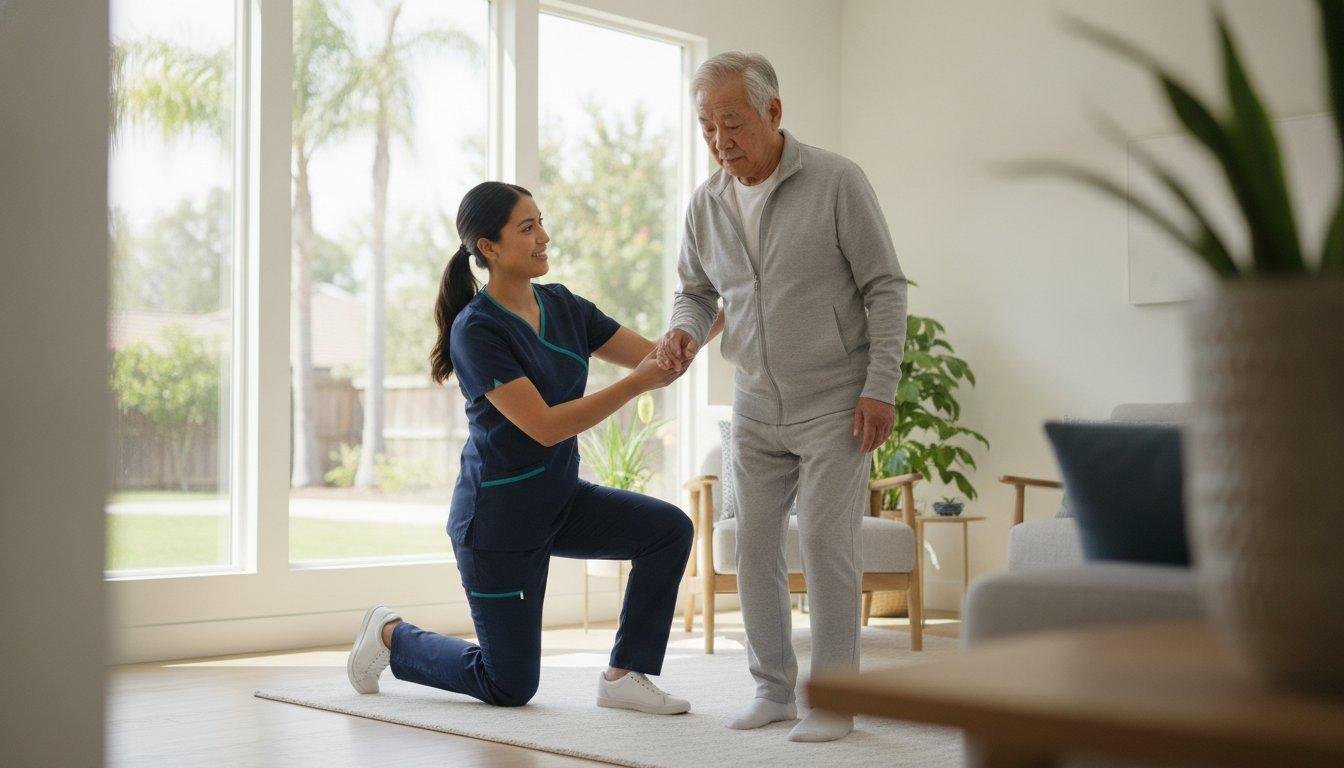
As of 2026, more than one in four older adults in the United States falls each year, a statistic that translates to over 14 million individuals facing a sudden loss of independence. You likely understand the quiet anxiety that accompanies daily tasks when persistent stiffness makes dressing difficult or when senior mobility training at home feels risky without professional guidance. It’s common to feel uncertain about which movements are appropriate for your specific medical history, especially when you’re managing health transitions without a clinical partner by your side.
Professional clinical intervention provides a structured solution to these concerns by bringing licensed physical and occupational therapy directly into your residence. This guide outlines how customized rehabilitative routines can reduce your fear of falling and restore your functional autonomy so you can remain in your own home comfortably. We’ll examine the role of professional assessments in North Hollywood and the San Fernando Valley, explore safe exercise protocols, and explain how the 2026 Medicare therapy thresholds impact your access to specialized care.
Key Takeaways
- Understand why mobility training is a specialized clinical intervention designed to improve joint range of motion and functional movement.
- Learn how professional senior mobility training at home establishes a safe baseline for recovery while preventing the risks of overexertion or injury.
- Discover the importance of functional strength in mastering activities of daily living and maintaining autonomy within your own residence.
- Identify practical steps to secure your environment by creating a dedicated training space and eliminating frequent fall hazards.
- Explore how licensed therapists use customized rehabilitative plans to help seniors navigate health transitions with confidence and stability.
Understanding Senior Mobility Training: More Than Just Exercise
Mobility training is a precise clinical approach focused on improving joint range of motion and functional movement. It differs significantly from general fitness routines because it prioritizes the quality of movement over the quantity of repetitions. For seniors in North Hollywood, establishing a foundation of mobility is the most critical step toward maintaining long-term independence. Without the ability to move joints through their intended ranges, even the strongest muscles cannot function effectively. This specialized training ensures that the body remains a reliable tool for daily life.
Many people confuse flexibility with mobility, yet they represent different clinical concepts. Flexibility refers to the passive length of a muscle, such as how far a therapist can stretch your leg. Mobility is the active control of a joint through its range of motion. It requires a combination of flexibility, strength, and neurological coordination. You might have the flexibility to reach your toes while sitting, but mobility is what allows you to lift your foot high enough to clear a threshold without tripping. Professional senior mobility training at home focuses on building this active control within the safety of your own environment.
The primary threat to senior health is often deconditioning. This physiological decline occurs when a period of inactivity leads to decreased muscle mass, reduced bone density, and diminished cardiovascular efficiency. It frequently follows a hospital stay or a minor injury that causes a fear of movement. Addressing deconditioning is a central goal of geriatric rehabilitation. By implementing structured movement protocols early, therapists can reverse these effects and prevent the “downward spiral” that often leads to a loss of autonomy.
The Connection Between Mobility and Fall Prevention
Limited mobility in the ankles and hips directly contributes to balance instability. When these joints are stiff, the body cannot make the small, rapid adjustments necessary to stay upright on uneven surfaces. Clinical research indicates that targeted mobility training can reduce the risk of fall-related injuries by approximately one-third. In a clinical context, mobility is defined as the ability of a joint to move actively through a range of motion. Improving this ability allows the body to react instinctively to slips, significantly lowering the chance of a serious fracture.
Mobility and Activities of Daily Living (ADLs)
Functional success depends on the ability to perform activities of daily living, or ADLs. Tasks like reaching into high cupboards, getting out of a low chair, or dressing independently all require specific joint movements. Occupational Therapy plays a vital role here by translating abstract mobility gains into practical daily victories. When you improve your shoulder and hip mobility, you reduce the physical strain of these routine tasks. Maintaining the ability to perform ADLs is often the deciding factor in whether a senior can stay in their own home or must transition to assisted living. Consistent senior mobility training at home provides the mechanical freedom required to navigate your living space with dignity and ease.
The Clinical Pillars of Mobility: Joint Health and Functional Strength
Clinical mobility relies on four foundational pillars that transform simple movement into a reliable biological system. Joint Range of Motion (ROM) serves as the primary clinical benchmark for safety. It measures the precise degrees a joint can move before reaching its physiological limit. When ROM is restricted, the body compensates by overusing other joints, which often leads to secondary pain or injury. Maintaining these ranges ensures that the skeletal system can absorb the impact of daily activity without failure.
Functional strength is the second pillar. It focuses on the muscular endurance required to stabilize joints during active tasks. Unlike traditional weightlifting, functional strength isn’t about muscle volume. It’s about the ability to support your body weight during a transition from sitting to standing or while carrying a grocery bag. These movements align with the Physical Activity Guidelines for Americans, which emphasize that multicomponent physical activity is essential for preventing functional decline. Professional physical therapy ensures these exercises are performed with the correct mechanics to protect your joints.
Proprioception and core stability complete the clinical framework. Proprioception is your body’s internal GPS, providing the sensory information your brain needs to understand limb position. Without strong proprioceptive feedback, the risk of a misstep increases significantly. Core stability acts as the anchor for this system. A stable core protects the spine during home movements, allowing the arms and legs to move freely without compromising the body’s structural integrity. Implementing senior mobility training at home allows you to strengthen these pillars in the exact environment where you need them most.
Joint-Specific Focus: Ankle, Hip, and Spine
Ankle dorsiflexion is often the secret to a steady gait on uneven Los Angeles sidewalks. If the ankle cannot flex upward properly, the toe is more likely to catch on a rug or a concrete crack, leading to a trip. The hip-hinge is another foundational movement. It teaches you to use the powerful muscles of the lower body to lift objects or sit down, which spares the delicate discs of the lumbar spine. Finally, maintaining thoracic spine mobility prevents the “hunched” posture that shifts your center of gravity forward. Keeping the upper back mobile ensures your balance remains centered over your feet.
The Role of Neuromuscular Coordination
Neuromuscular coordination is the communication link between the brain and the muscles. It determines how quickly your body can react when you lose your footing. Effective mobility training “rewires” the brain-body connection for safer movement by practicing controlled challenges to your balance. These exercises teach the nervous system to recruit the right muscles at the right time. This coordination ensures that a small stumble remains a minor event rather than becoming a dangerous fall. Consistent senior mobility training at home builds the reflexive strength needed to navigate your living space with confidence.
Professional In-Home Therapy vs. Independent Training
Determining the appropriate intensity for senior mobility training at home requires a professional clinical assessment. For post-operative patients or those managing chronic conditions, a “DIY” approach carries significant risks. A licensed therapist identifies the safe starting point by evaluating your current cardiovascular health and musculoskeletal limitations. This professional evaluation prevents the common pitfall of overexertion, which often leads to setbacks, increased inflammation, or new injuries. Without a clinical baseline, it’s difficult to know if a specific movement is helping your recovery or causing further deconditioning.
Licensed therapists provide a level of safety that independent training cannot match. During each visit, they monitor daily vital signs and adjust the intensity of the session based on your current pain levels and physiological response. This real-time modification ensures that the training remains therapeutic rather than destructive. Having a clinical partner in the home also offers a profound psychological benefit. It replaces the fear of falling with a sense of security, allowing you to focus entirely on your recovery goals. This professional empathy helps build the confidence necessary to push through the challenges of aging or post-surgical rehabilitation.
When is Independent Training Enough?
Independent training is generally suitable for “low-risk” individuals who are focused on general wellness rather than specific rehabilitation. These individuals might use basic mobility exercises for seniors to maintain their current range of motion and functional health. However, if you experience frequent near-falls, sudden joint stiffness, or difficulty with basic household navigation, it’s a clear sign that you require a clinical intervention. Maintenance exercises are most effective after a professional course of therapy has concluded and the therapist has cleared you for unmonitored movement. It’s vital to recognize when your needs shift from simple maintenance to a requirement for specialized support.
The Advantages of Clinical Home Health Visits
Clinical home health visits offer one-on-one attention within the specific environment where you face your daily challenges. A therapist can observe how you navigate your kitchen or bathroom and tailor the senior mobility training at home to those exact movements. These visits are often integrated with other services like Skilled Nursing or Occupational Therapy, ensuring a holistic approach to your care. Therapists also bring specialized clinical equipment, such as gait belts or professional-grade resistance tools, that most seniors don’t have available for independent use. This comprehensive support structure is essential for those navigating complex health transitions while aiming to stay in their own homes rather than moving to assisted living.
Creating a Safe Home Environment for Mobility Success
Preparing the physical space is a critical prerequisite for senior mobility training at home. Clinical outcomes depend heavily on the safety and predictability of your surroundings. We recommend designating a “Home Training Zone,” which is a clear 6×6 foot area free of all obstructions. This dedicated space allows for full limb extension and lateral movement without the risk of striking furniture. Since only 10% of homes in the United States are considered “aging-ready” with necessary modifications, taking the time to audit your environment is a vital step in preventing injury.
Environmental hazards are the leading cause of preventable falls during exercise. You should identify and remove all loose throw rugs, which are notorious for catching the edges of shoes or walkers. Electrical cords must be secured against baseboards, and pets should be moved to another room during active training sessions to prevent unexpected tripping. In many San Fernando Valley homes, tile or hardwood floors are common. While these surfaces provide the necessary firmness for balance work, they require careful monitoring for spills or loose debris that could cause a slip. Creating a controlled environment mimics a clinical facility and ensures your focus remains on movement quality.
The Home Safety Checklist for Seniors
Transition areas, such as the path from the bedroom to the bathroom, require high-visibility lighting to ensure safe navigation during low-light hours. We also suggest performing the “Sturdy Chair Test” before starting any seated exercises. A safe chair must have a firm back, no wheels, and armrests that can support your full body weight during a sit-to-stand transition. You should avoid soft sofas or folding chairs, as these lack the structural integrity needed to assist your balance effectively. Ensuring your “equipment” is stable is just as important as the exercises themselves.
Integrating Mobility into Daily Routines
You don’t always need a formal session to make progress. Your kitchen counter is an excellent tool for performing calf raises while waiting for a kettle to boil, as it provides a stable, waist-high surface for balance support. Hallways serve as ideal tracks for walking drills designed to improve stride length and foot clearance. By practicing sit-to-stand repetitions every time you get up from the dining table, you turn a standard daily activity into a functional strength exercise. If you’re unsure how to adapt your specific floor plan for safety, request a professional home safety assessment to identify hidden risks and optimize your senior mobility training at home.
Restoring Independence with Everest Peak Home Health Care
Everest Peak Home Health Care functions as a dedicated partner in the preservation of senior autonomy. We provide licensed physical and occupational therapists who perform detailed clinical visits throughout Los Angeles, specifically targeting the San Fernando Valley and North Hollywood areas. Our approach centers on the belief that effective senior mobility training at home is a cornerstone of rehabilitative success. By delivering professional expertise directly to the patient’s residence, we eliminate the physical and emotional strain of traveling to outpatient clinics. This stability is essential for families navigating the complexities of post-operative care or chronic disease management.
The Everest Peak difference lies in our commitment to clinical excellence paired with professional empathy. We recognize that aging and recovery can be stressful transitions for both patients and their families. Our therapists don’t just provide exercises; they act as knowledgeable guides who offer a structured path toward improvement. We prioritize the individual’s dignity, ensuring that every intervention respects their comfort while pushing toward measurable functional gains. This disciplined focus on patient well-being allows us to act as a protective extension of the family’s care circle, providing the quiet confidence needed during health transitions.
Expert Clinical Assessments in North Hollywood
Your journey begins with a comprehensive clinical assessment performed by our specialized therapists. During this first visit, we evaluate your joint range of motion, muscle strength, and balance stability to establish a safe baseline for treatment. We also coordinate closely with your primary physician to ensure that our care plan integrates seamlessly with your existing medical requirements. This level of coordination is vital for patients in the San Fernando Valley who are managing complex health histories. Our goal is to ensure that no aspect of your care is overlooked, providing a thorough and professional experience from the very first encounter.
Taking the First Step: Contacting Everest Peak
We understand that caregivers often feel the weight of responsibility when a loved one’s mobility declines. To support this transition, we provide caregivers with the training and resources necessary to maintain a safe environment between our scheduled visits. Initiating this process is a simple, methodical step that prioritizes the patient’s long-term health and safety. By choosing a licensed clinical partner, you ensure that senior mobility training at home is conducted under the highest standards of professional care. You can schedule a professional home health assessment with Everest Peak today to begin the process of restoring confidence and independence in your daily life.
Securing Your Independence Through Professional Clinical Support
Mastering functional movement is a journey that requires both clinical precision and a safe environment. By focusing on joint range of motion and functional strength, you can effectively reverse the effects of deconditioning and maintain your autonomy. Implementing senior mobility training at home with professional guidance provides the structured oversight necessary to ensure these improvements happen without the risk of injury or overexertion. It’s about more than just movement; it’s about ensuring your body remains a reliable tool for daily life.
Our team of licensed registered nurses and specialized therapists is dedicated to serving the North Hollywood and San Fernando Valley communities. We prioritize clinical excellence in post-operative and rehabilitative care, ensuring that every patient receives a customized plan tailored to their specific medical history. Taking this step doesn’t just improve your physical health; it secures your ability to live safely in your own home for years to come. We’re here to act as a dependable partner through every stage of your recovery.
Request a Professional Home Health Assessment in Los Angeles today to begin your path toward confident movement. You don’t have to navigate these health transitions alone.
Frequently Asked Questions
Is it safe for a senior to start mobility training at home alone?
It is generally not recommended for seniors with a clinical history of instability or chronic conditions to begin senior mobility training at home without an initial professional assessment. A licensed therapist must first identify your safe baseline to prevent overexertion or injury. Once a professional establishes a customized routine and confirms your environment is secure, you may be cleared for independent maintenance. This initial oversight is vital for preventing accidental falls during the learning phase.
How often should seniors perform mobility exercises for the best results?
Consistency is the most important factor in achieving measurable improvements in joint range of motion. Most clinical plans suggest performing gentle mobility movements daily or at least three to five times per week. These sessions don’t need to be long; often fifteen to twenty minutes of focused movement is sufficient to prevent deconditioning. Your therapist will provide a specific schedule based on your current recovery goals and physical tolerance levels.
Does Medicare cover in-home physical therapy for mobility training?
Medicare typically covers in-home physical therapy when it’s deemed medically necessary and ordered by a physician. For 2026, the Medicare therapy threshold is $2,480 for combined physical therapy and speech-language pathology services. If your mobility limitations are linked to a specific diagnosis or post-operative recovery, these professional services are often fully or partially reimbursable. This ensures access to clinical expertise without the physical burden of traveling to an outpatient facility.
What is the difference between physical therapy and general senior fitness?
Physical therapy is a clinical intervention prescribed to treat specific functional deficits or medical conditions. It involves diagnostic assessments and targeted rehabilitative protocols performed by licensed practitioners. General senior fitness focuses on overall wellness and cardiovascular health for those already at a low risk for falls. While both are valuable, physical therapy provides the medical oversight required for patients navigating complex health transitions or recovering from a recent surgical procedure.
Can mobility training help a senior who has already suffered a fall?
Mobility training is a vital component of recovery for individuals who’ve already experienced a fall. A therapist focuses on identifying the specific mechanical or neurological cause of the balance loss to prevent future incidents. Through gait training and proprioceptive exercises, seniors can regain the confidence needed to navigate their homes independently. Addressing the fear of falling is just as important as restoring physical strength during the rehabilitative process.
How long does it take to see improvements in balance and mobility?
Most patients begin to notice improvements in their stability and ease of movement within four to six weeks of consistent senior mobility training at home. Neurological adaptations, such as improved coordination and reaction time, often occur faster than muscular growth. Long-term gains in joint range of motion and functional strength require steady participation over several months. Your progress depends on the frequency of your sessions and the complexity of your initial clinical presentation.
What equipment is needed for at-home senior mobility training?
Professional mobility training requires very little specialized equipment. Most routines utilize sturdy household items like kitchen countertops for balance support or firm chairs for seated exercises. A therapist might introduce small tools such as resistance bands or gait belts to enhance safety and effectiveness. The primary requirement is a clear, well-lit space that allows for unobstructed movement. This simplicity ensures that you can focus on your form rather than complex machinery.
Do I need a doctor’s referral for home health mobility services?
You generally need a physician’s referral to access home health mobility services covered by insurance or Medicare. This referral ensures that your therapy plan is integrated with your broader medical care and that all interventions are safe for your specific health history. Our team coordinates directly with your primary care provider to streamline this process. This collaborative approach ensures that your rehabilitative goals align perfectly with your overall clinical needs and physician recommendations.