

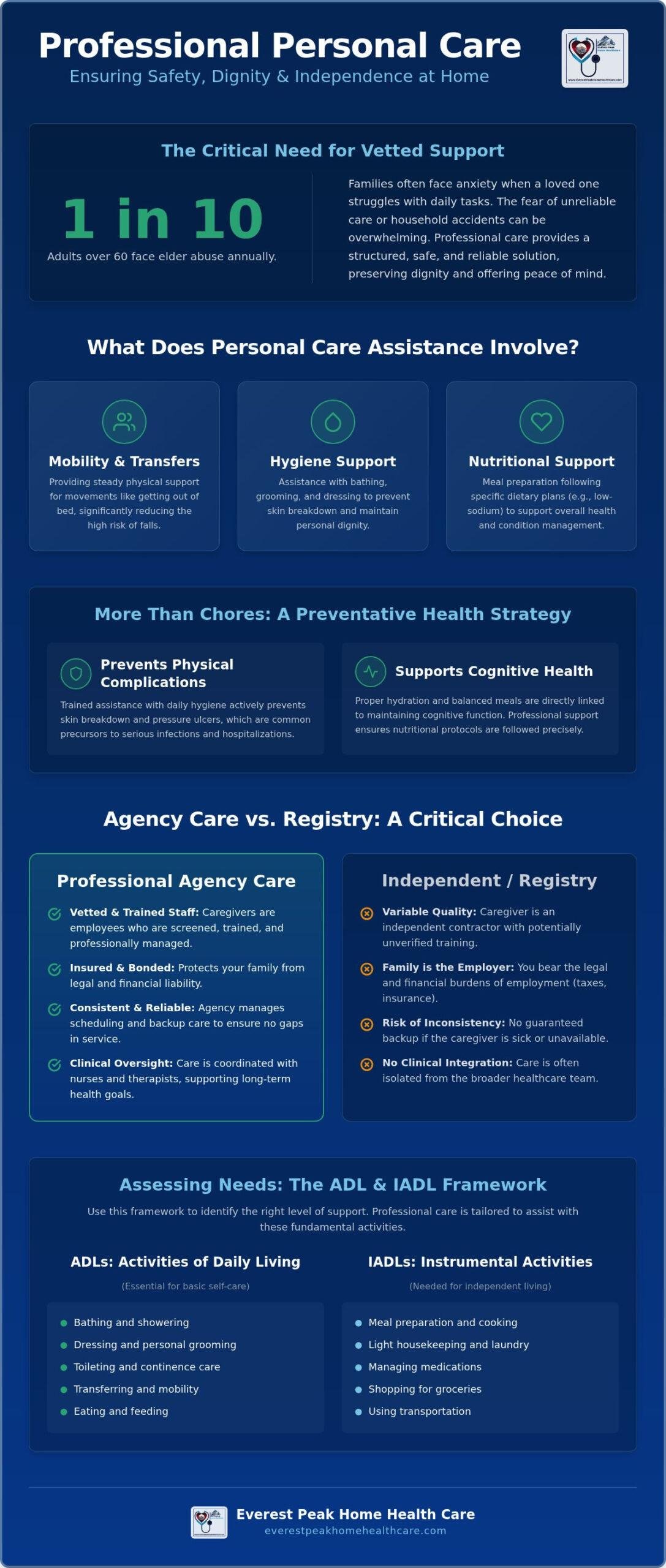
According to the U.S. Department of Justice, one in ten adults over the age of 60 experiences some form of elder abuse each year, a statistic that underscores the critical need for vetted and professional support systems. It’s common for families to feel a sense of mounting anxiety when a loved one begins to struggle with mobility or hygiene, especially when faced with the administrative complexity of programs like Medi-Cal. You want to ensure your family member is safe, yet the fear of an unreliable independent caregiver or a sudden household accident can be paralyzing. We understand that home care isn’t just about assistance; it’s about preserving the dignity of the individual through reliable, professional expertise.
This article explains how professional personal care assistance Los Angeles provides the essential daily support required to maintain safety and independence at home. You’ll learn how agency-managed care ensures consistent oversight of Activities of Daily Living (ADLs) and provides a structured environment that prevents health complications. We will preview the benefits of a clinically-informed approach, showing how professional management can transform a stressful health transition into a stable and respectful experience for the entire family.
Key Takeaways
- Professional personal care assistance Los Angeles provides a structured approach to daily living that prioritizes safety and dignity while preserving a patient’s independence.
- Learn how clinical oversight of basic hygiene and nutrition serves as a preventative measure against skin breakdown, infections, and cognitive decline.
- Discover why choosing a licensed agency over an unmanaged registry protects your family from the legal burdens of employment and ensures consistent care quality.
- Identify specific care needs by using the framework of Activities of Daily Living (ADLs) and Instrumental Activities of Daily Living (IADLs) to determine the appropriate level of support.
- Understand the benefits of an integrated care model where personal care assistants work in coordination with registered nurses and therapists to support long term health goals.
Understanding Personal Care Assistance in Los Angeles
Personal care assistance Los Angeles is a specialized category of home-based support designed to help individuals maintain their functional independence. Unlike medical treatments that focus on pathology, personal care centers on the Activities of Daily Living (ADLs) that are essential for a safe and dignified life at home. These services are often categorized as custodial care; they provide the supervision and physical support necessary for daily functioning without requiring the constant presence of a licensed clinician. This distinction is vital for families to understand when planning for long-term stability.
The role of a Personal Care Assistant (PCA) is critical within a residential health setting. These professionals, often classified as Unlicensed assistive personnel, act as the primary observers for a patient’s physical and emotional well-being. In a dense urban environment like Los Angeles, geographic factors such as traffic congestion in the San Fernando Valley can often disrupt care consistency. A professional agency manages these logistics through rigorous scheduling and local staffing, ensuring that assistants arrive on time so that a patient’s routine remains undisturbed. This reliability is something independent registries often struggle to provide.
It’s necessary to distinguish between custodial care and skilled medical care. While skilled care involves clinical interventions like wound management or physical therapy, personal care focuses on the environmental and physical barriers that prevent a patient from living safely. It serves as the foundation upon which medical recovery is built.
The Core Components of Personal Care
Professional personal care involves a structured approach to daily tasks that might otherwise pose a risk to the patient’s safety or health. This includes:
- Mobility and Transfers: Assistants provide steady physical support during movements from a bed to a chair, significantly reducing the high risk of falls in the home.
- Hygiene Support: This encompasses bathing, grooming, and dressing. These tasks are essential for preventing skin breakdown and maintaining personal dignity.
- Nutritional Support: Professional meal preparation ensures patients follow dietary plans tailored to their specific health conditions, such as low-sodium or diabetic-friendly menus.
Who Benefits Most from PCA Services?
The need for personal care assistance Los Angeles often arises during significant health transitions. Seniors in North Hollywood who are experiencing age-related decline benefit from the stability of a managed routine. Patients recovering from complex surgeries require temporary, intensive support to manage their ADLs while their bodies heal. Additionally, individuals living with chronic conditions like Parkinson’s disease or the after-effects of a stroke rely on consistent assistance to navigate the physical limitations imposed by their diagnosis. By addressing these needs early, families can prevent the common accidents that lead to hospital readmissions.
The Clinical Impact of Daily Support: Beyond Basic Chores
Professional personal care assistance Los Angeles extends far beyond domestic help; it’s a vital component of a preventative healthcare strategy. When a trained assistant manages daily hygiene, they aren’t just helping someone get ready for the day. They’re actively preventing skin breakdown and pressure ulcers, which are common precursors to serious infections. This level of clinical awareness ensures that minor skin irritations don’t escalate into hospitalizations, maintaining the patient’s health at a baseline level of safety.
Nutrition plays a similarly critical role in long-term health outcomes and cognitive stability. Proper hydration and balanced meals are directly linked to maintaining cognitive function in seniors, as dehydration or malnutrition can mimic or exacerbate symptoms of dementia. By providing structured meal preparation, personal care assistants ensure that nutritional protocols are followed with precision. For those exploring state-funded options, the In-Home Supportive Services (IHSS) program provides a framework for these services, though agency-managed care offers a higher degree of clinical supervision and reliability.
Medication reminders provide an additional layer of safety within the home environment. While personal care assistants don’t administer medications, their presence ensures that patients adhere to prescribed schedules, reducing the risk of adverse reactions or missed doses. This routine also supports psychological stability. Maintaining a regular grooming and dressing schedule fosters a sense of dignity and self-worth, which is essential for emotional resilience during difficult health transitions.
Preventing Hospital Readmissions
Daily observation is the first line of defense against health decline. Trained assistants recognize subtle changes in a condition, such as increased confusion or decreased appetite, which may indicate a urinary tract infection. In post-operative recovery, following specific protocols is essential to avoid complications. Daily monitoring by a trained assistant reduces ER visits by catching health fluctuations before they become crises. Families seeking this level of professional oversight can learn more about our personal care assistance services.
Maintaining Mobility and Independence
Preservation of physical function requires a balance between safety and activity. Assistants utilize safe ambulation techniques to help patients move through their homes without the risk of falls. Professional personal care assistance Los Angeles focuses on keeping patients active while ensuring their environment is secure. This involves encouraging “active participation” in daily tasks to maintain muscle tone and joint flexibility. Regular home environment assessments are also performed to identify and mitigate trip hazards, ensuring the home remains a safe sanctuary for aging in place.
Agency Care vs. Registry Care: Making the Right Choice in LA
Families seeking personal care assistance Los Angeles often face a choice between a licensed home health agency and a caregiver registry. While registries might appear cost-effective initially, they function as referral services rather than healthcare providers. This distinction creates a significant administrative and legal burden for the family. When you hire through a registry, you typically become the legal employer. This means you’re responsible for payroll taxes, workers’ compensation insurance, and verifying the caregiver’s eligibility to work in the United States. While California’s In-Home Supportive Services (IHSS) program provides a critical safety net for many, families who choose the registry model must understand the employer obligations involved.
Clinical oversight is the primary advantage of the agency model. In an agency setting, every personal care assistant is part of a larger medical team. This structure ensures that care isn’t just a series of isolated tasks but a coordinated effort to improve patient outcomes. In a registry model, the responsibility for vetting falls on the family. You’ve got to conduct your own background checks and ensure the individual has the necessary training for the patient’s specific condition. Agencies handle this entire process internally. Every assistant undergoes a rigorous screening and orientation process before entering a home, which includes background checks and verification of clinical competency.
Continuity of care is another area where the registry model often falters. If a caregiver from a registry calls out or has an emergency, the family is often left without support. This can be particularly stressful in a high-traffic city where scheduling is already complex. Agencies maintain a staff of professionals to ensure continuity of care, so a patient’s routine is never compromised by scheduling gaps. We provide a reliable backup system that ensures a professional is always present when needed, offering a level of stability that independent registries simply cannot match.
The Risks of the “Independent” Model
The independent or registry model carries inherent risks that can jeopardize a patient’s safety. Without professional supervision, there’s no objective third party to evaluate if care standards are being met. This lack of clinical backup can be dangerous if a patient’s condition changes suddenly. Additionally, Los Angeles homeowners may face significant liability if an independent caregiver is injured on the property without proper insurance coverage. The lack of professional oversight means that subtle changes in health may go unnoticed until they become emergencies.
The Everest Peak Agency Advantage
At Everest Peak, we provide direct supervision by licensed nursing staff for all our assistants. This ensures that every action taken in the home aligns with professional healthcare standards and the specific needs of the individual. Our care plans aren’t static; they’re structured documents that evolve as the patient’s clinical needs change. For families who require a higher level of medical intervention, we also offer Skilled Nursing Services Los Angeles to provide a seamless transition of care. This integrated approach offers peace of mind through every stage of recovery or aging.
Assessing Your Needs: A Guide for Los Angeles Families
Determining the appropriate level of support requires a shift from emotional observation to objective functional assessment. For many families, the need for personal care assistance Los Angeles becomes apparent during a crisis, yet a proactive evaluation can prevent such emergencies. Clinicians categorize these needs into two groups: Activities of Daily Living (ADLs) and Instrumental Activities of Daily Living (IADLs). ADLs represent basic self-care tasks like bathing, dressing, and transferring. IADLs involve more complex activities such as managing finances, medication, or transportation. Identifying where a loved one struggles within these categories allows for a customized care plan that targets specific deficits without over-assisting, which helps preserve their sense of autonomy.
A home safety audit is equally critical during this assessment phase. This involves a room-by-room inspection to identify environmental hazards like loose rugs, inadequate lighting, or lack of grab bars in the bathroom. Discussing these findings with a reluctant loved one requires a high level of professional empathy. Instead of focusing on what they can no longer do, frame the conversation around how support can help them remain in their home longer. It’s about empowering them to maintain their lifestyle safely rather than highlighting their limitations.
Step-by-Step Care Evaluation
We recommend monitoring a loved one’s daily routine for a full 48-hour period. This observation period often reveals subtle struggle points, such as difficulty standing up from a chair or fatigue during meal preparation, that might be missed during a brief visit. It’s also vital to consult with a primary care physician to understand the physical limitations caused by underlying medical conditions. This combined data helps determine the necessary frequency of care, whether it’s intermittent respite support for family caregivers or consistent daily assistance to manage chronic symptoms.
Local Resources and Support
Families in Los Angeles County often find themselves caught between large public service departments and private agencies. While public programs typically focus on financial eligibility, private agencies offer more immediate, clinically-driven solutions. Involving a Medical Social Worker can be invaluable for family planning, as these specialists help navigate the emotional and logistical complexities of long-term home care. A professional assessment in North Hollywood ensures that every environmental and clinical factor is accounted for before care begins. To ensure your loved one receives the highest standard of support, schedule a professional assessment with Everest Peak today.
Everest Peak: Integrated Personal Care and Clinical Excellence
Everest Peak provides a clinical infrastructure that transforms home-based support into a professional medical extension. For those requiring personal care assistance Los Angeles, our model ensures that daily help is never disconnected from clinical oversight. Based in North Hollywood, we serve the greater Los Angeles area with a team of licensed registered nurses and vocational nurses who provide direct orientation for every assistant. This structure offers families the peace of mind that comes from knowing a licensed agency is managing the complexities of care, rather than leaving the management burden on the family’s shoulders. Our commitment to the dignity and autonomy of every Los Angeles resident is reflected in our disciplined, patient-centered approach.
Our customized care plans are designed to be fluid and responsive. We recognize that health needs can fluctuate; therefore, our services can scale from basic personal care to skilled nursing if a patient’s condition becomes more complex. This seamless transition ensures that the patient remains in a familiar environment while receiving the appropriate level of medical intervention. By maintaining a high level of medical authority, we act as a dependable partner for families navigating the challenges of aging or recovery.
A Multidisciplinary Approach to Home Health
The efficacy of our care lies in the synergy between different therapeutic disciplines. Our personal care assistants work in direct coordination with our Physical Therapy team to reinforce rehabilitation goals during daily routines. While the therapist focuses on specific functional milestones, the assistant provides the steady physical support needed to practice safe ambulation and transfers throughout the day. This collaborative effort ensures that all medical and personal needs are met through a unified case management approach. Our nurses act as a clinical safety net, providing professional guidance to assistants and ensuring that every aspect of the patient’s well-being is observed and documented.
Getting Started with Everest Peak
The journey toward stable, professional support begins with an initial consultation and a thorough home health assessment. During this process, we evaluate the patient’s physical limitations, the safety of the home environment, and the specific goals of the family. We don’t just assign a provider; we focus on matching the right professional assistant to your family’s personality and care requirements. This meticulous approach fosters a stable environment where the patient feels respected and secure. To begin this process, Schedule a professional home health assessment today and discover how our integrated team can support your family’s independence.
Securing a Sustainable Path to Independence
Choosing the right support system is a pivotal decision that directly impacts the safety of your loved one and the stability of your family. Professional personal care assistance Los Angeles is more than a domestic convenience; it’s a clinically-informed strategy designed to prevent infections, reduce fall risks, and maintain cognitive health through structured daily routines. By opting for a licensed agency model, you eliminate the legal burdens of employment while ensuring your loved one is protected by a professional safety net that scales as their needs evolve.
Everest Peak is licensed by the California Department of Public Health and offers a multidisciplinary team of registered nurses, physical therapists, and occupational therapists. We serve North Hollywood and the San Fernando Valley with a commitment to clinical excellence and the preservation of patient dignity. Our integrated approach ensures that every aspect of daily living is managed with professional rigor and quiet compassion. To ensure your loved one remains safe and independent at home, Contact Everest Peak for a Professional Care Consultation. You don’t have to navigate these transitions alone; we’re here to provide the steady support your family deserves.
Frequently Asked Questions
What is the difference between personal care and home health care in Los Angeles?
Personal care focuses on non-medical support, specifically assisting with Activities of Daily Living (ADLs) such as bathing, dressing, and mobility. In contrast, home health care involves skilled medical interventions like wound management, physical therapy, or injections performed by licensed clinicians. While personal care helps a patient function safely at home, home health care addresses specific clinical recovery goals under a physician’s supervision.
How much does personal care assistance cost per hour in the San Fernando Valley?
The cost for professional support in the San Fernando Valley varies based on the complexity of the patient’s needs and the level of clinical oversight provided by the agency. Families should consult with a licensed Home Care Organization to receive a detailed assessment and a customized quote. It’s important to remember that agency-managed care includes the cost of insurance, taxes, and professional supervision, which are typically not covered in independent registry models.
Can a personal care assistant help with medications?
Personal care assistants are permitted to provide medication reminders to ensure a patient adheres to their prescribed schedule. However, they cannot legally administer medications, such as preparing pill boxes or giving injections. These clinical tasks require the expertise of a licensed vocational nurse or a registered nurse. This distinction ensures that high-risk medical tasks are always handled by staff with the appropriate clinical credentials.
Does Medicare or Medi-Cal pay for personal care assistance?
Medicare typically doesn’t cover long-term personal care assistance if it’s the only service required. However, Medi-Cal provides significant support through the In-Home Supportive Services (IHSS) program for individuals who meet specific financial and functional eligibility criteria. For families who don’t qualify for state programs, private-pay agency services offer a higher degree of clinical management and immediate availability throughout the Los Angeles area.
How do I know if my parent needs a personal care assistant or a nurse?
If your parent primarily requires help with physical tasks like getting out of bed, showering, or meal preparation, a personal care assistant is likely the appropriate choice. If they have complex medical needs such as a feeding tube, open wounds, or require frequent clinical monitoring, the services of a licensed nurse are necessary. A professional home health assessment can help determine the specific level of care required for their safety.
What happens if my assigned caregiver is unable to make it to a shift?
One of the primary benefits of using a managed agency is the guarantee of continuity of care. If an assistant is unable to attend a scheduled shift, the agency coordinates a qualified replacement from its professional staff. This prevents the scheduling gaps often found in the independent registry model. Our management team handles all logistics to ensure that your loved one’s daily routine remains stable and uninterrupted.
Are your caregivers background-checked and insured?
Every personal care assistant we employ undergoes a rigorous screening process that includes Live Scan fingerprinting and comprehensive criminal background checks. As a licensed Home Care Organization, we also maintain general liability insurance and workers’ compensation coverage. This professional infrastructure protects families from the significant liability risks associated with hiring independent or uninsured caregivers in the Los Angeles area.
Can I get personal care assistance for just a few hours a week?
We offer flexible scheduling for personal care assistance Los Angeles to accommodate the diverse needs of families in North Hollywood and the surrounding areas. Whether you require a few hours of respite care to support a family caregiver or more consistent daily assistance, we can structure a plan that fits your situation. This flexibility allows families to scale their support as a loved one’s health needs change over time.