
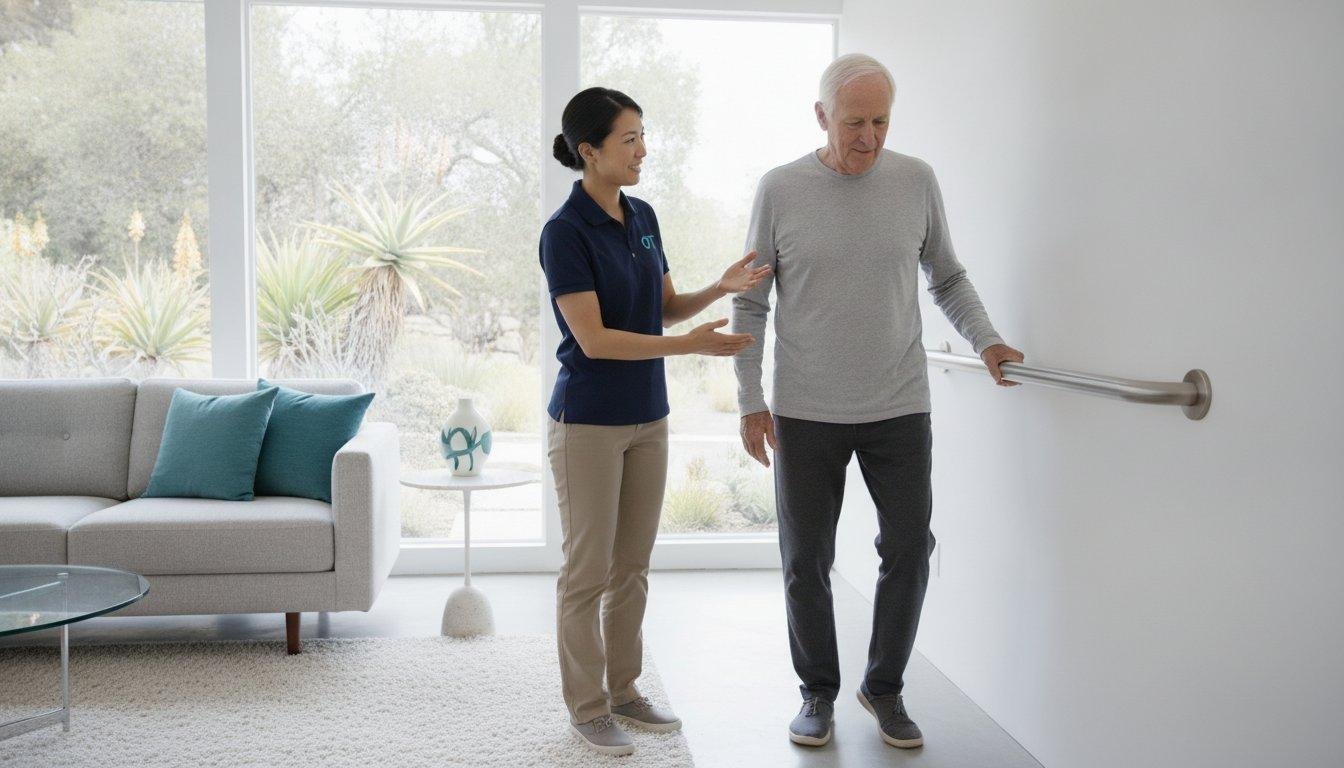
Did you know that more than one in four older adults falls each year, with approximately 37% of those incidents requiring medical treatment or restricted activity? For many families, the fear of a parent losing their independence due to a sudden fall is a constant source of anxiety. You might feel overwhelmed by generic safety checklists that don’t seem to address your specific concerns or unique living situation. Professional occupational therapy for home safety offers a more disciplined, clinical approach by identifying hidden risks that standard home inspections often overlook.
We understand that you want more than just a list of hardware; you need a clinical solution that ensures long-term stability and dignity. This guide explores the professional assessment process and provides actionable steps for home modification based on established medical standards. You’ll discover how a skilled therapist’s evaluation can transform a residence into a secure environment by aligning a patient’s physical capabilities with their surroundings. This approach offers your family a clear path forward and the professional support necessary for safe, independent living at home.
Key Takeaways
- Understand the clinical distinction between a generic safety walkthrough and a professional assessment designed to mitigate specific injury risks.
- Discover how narrative learning allows therapists to customize safety recommendations based on a patient’s unique daily routines and physical capabilities.
- Identify critical modifications for high-frequency transition zones using professional occupational therapy for home safety to prevent common household accidents.
- Learn why personal stability training is essential for teaching patients how to navigate their modified environment with confidence and autonomy.
- Explore the process of integrating specialized therapy with skilled nursing care to provide a comprehensive support system for aging safely at home.
What is Occupational Therapy for Home Safety?
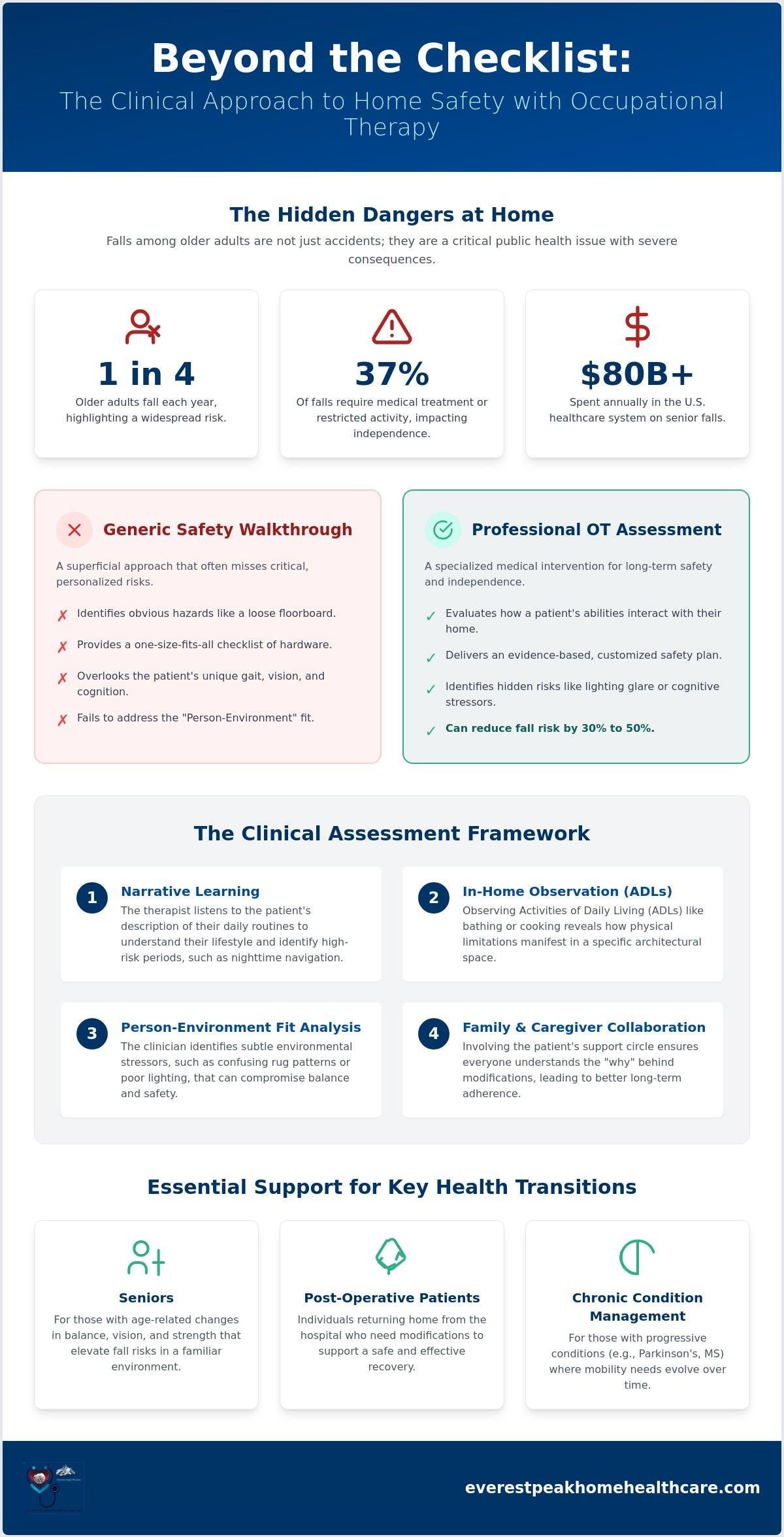
To understand the clinical role of What is Occupational Therapy in a residential setting, one must look beyond simple home repairs. While a general contractor might identify a loose floorboard, a professional therapist evaluates how that floorboard interacts with a patient’s specific gait, vision, and cognitive processing. Occupational therapy for home safety is a specialized medical intervention that focuses on the “fit” between an individual’s physical capabilities and their living environment. It isn’t merely about installing hardware; it’s a disciplined methodology designed to preserve a patient’s autonomy and prevent the catastrophic injuries that often lead to a permanent loss of independence.
For many families, fall prevention is viewed as a home improvement project. However, clinical data suggests it’s a medical necessity. With the US healthcare system spending over $80 billion annually on falls among seniors, the transition to a safer home environment is a critical component of a long-term care plan. A professional assessment moves past generic checklists to provide evidence-based solutions that can reduce the risk of falls by 30% to 50%. This clinical alignment ensures that the home remains a place of recovery rather than a source of injury.
The Clinical Value of Professional Assessment
An occupational therapist conducts a comprehensive evaluation by observing how a patient performs Activities of Daily Living (ADLs), such as bathing, dressing, or navigating the kitchen. This real-world observation is vital because it reveals how physical limitations manifest in a specific architectural space. Research indicates that these specialized interventions are directly linked to reduced hospital readmission rates, as they address the environmental triggers of physical decline. An occupational therapist identifies hidden environmental stressors, such as the cognitive load created by complex patterns on a rug or the visual disorientation caused by lighting glare on polished surfaces, which can compromise a patient’s balance. By mitigating these subtle risks, therapists create a stable foundation for the patient’s ongoing recovery and daily safety.
Who Benefits from an OT Home Safety Evaluation?
While often associated with aging, occupational therapy for home safety is essential for a wide range of individuals navigating health transitions. It provides a structured path for those who are most vulnerable to environmental hazards. Key groups who benefit include:
- Seniors: Individuals experiencing natural changes in balance, depth perception, or lower-body strength that increase fall risks.
- Post-Operative Patients: Those transitioning home after surgery or a hospital stay in Los Angeles who require temporary or permanent modifications to manage their recovery safely.
- Chronic Condition Management: Individuals living with progressive conditions such as Parkinson’s disease, multiple sclerosis, or severe arthritis where mobility needs evolve over time.
By applying a clinical lens to these specific challenges, occupational therapy ensures that the home environment supports the patient’s dignity and physical well-being throughout every stage of their health journey.
The Occupational Therapy Home Safety Assessment: A Clinical Framework
A professional in-home evaluation is a methodical process that transcends the limitations of a standard safety checklist. It begins with a technique known as narrative learning, where the therapist listens to the patient’s description of their daily life. This conversation allows the clinician to understand not just the layout of the home, but how the patient moves through it during high-risk periods, such as waking up at night or preparing meals. By understanding these personal routines, the therapist can identify specific risks that a static inspection would miss. Occupational therapy for home safety relies on this “Person-Environment” fit, ensuring that every clinical recommendation supports the patient’s unique lifestyle and physical needs.
Collaborating with family members is a cornerstone of this framework. When caregivers are involved in the assessment, they gain a deeper understanding of the “why” behind specific changes, which leads to better long-term adherence. It’s not enough to simply change the environment; the patient and their support circle must understand how to interact with that environment safely. To begin this process, families can partner with a clinical expert to coordinate Occupational Therapy services that bridge the gap between medical needs and residential reality.
Step 1: Clinical Observation of Mobility
The therapist observes the patient performing actual tasks to evaluate their functional mobility. This includes assessing transitions, such as moving from a seated position to standing, and observing their gait across various floor surfaces. The clinician looks for dangerous compensatory behaviors like “furniture walking,” where a patient relies on tables or chairs for balance instead of using appropriate mobility aids. Identifying these habits is essential for correcting posture and reducing the likelihood of a trip or loss of balance.
Step 2: Environmental Hazard Identification
During this phase, the therapist maps the home for high-risk zones. They evaluate thresholds, dimly lit hallways, and the “fit” of existing furniture heights. Professional guidance often includes specific home safety modifications to prevent falls, ensuring that every room supports the patient’s current level of function. This stage also involves checking the installation of existing equipment to ensure it meets safety standards and can support the patient’s weight and reach.
Step 3: Customized Recommendation Planning
The final step involves prioritizing modifications based on the highest risk and greatest impact on the patient’s autonomy. Recommendations are highly specific, focusing on adaptive equipment tailored to the patient’s grip strength and reach. The therapist develops a structured timeline for implementation, followed by training sessions to ensure the patient feels confident using new tools. This disciplined approach ensures that occupational therapy for home safety provides a clear, actionable path toward a more secure living environment.
Room-by-Room Modifications for Maximum Residential Safety
Implementing physical changes in a residence requires a shift from universal design to clinical adaptation. While universal design aims for broad accessibility, clinical adaptation focuses on the specific physical or cognitive deficits identified during a professional assessment. Occupational therapy for home safety prioritizes transition zones, which are the areas where a patient moves from one state of mobility to another. These zones, such as getting out of bed or stepping over a bathtub ledge, are where the majority of residential falls occur. By applying clinical logic to these spaces, therapists ensure that modifications provide maximum support during these vulnerable moments of movement.
The Bathroom: Mitigating the Highest Fall Risk
The bathroom is statistically the most hazardous room in the home due to moisture and hard surfaces. Clinical placement of grab bars is fundamentally different from generic towel rack installation. An occupational therapist identifies the exact angle and height required for a patient’s specific grip strength and reach. Research into Occupational therapy-led fall prevention emphasizes that these tools must be anchored into wall studs to prevent failure during a sudden loss of balance. Additionally, equipment like raised toilet seats and shower chairs are not just for safety; they serve as energy conservation tools for patients with limited stamina. To manage flooring, therapists recommend non-slip treatments that increase traction without creating the trip hazards often associated with loose rubber mats.
Kitchen and Living Areas: Enhancing Functional Reach
In the kitchen, the goal is to optimize functional reach to prevent over-extension. This involves reorganizing cabinets so that high-frequency items are stored between waist and shoulder height. This adjustment reduces the need for step stools or deep bending, both of which can trigger dizziness or postural instability. In living areas, seat height is a critical factor for safe egress. Chairs must be firm enough to prevent the “sinking” effect, with armrests that provide necessary leverage for standing. For patients managing age-related macular degeneration or cataracts, lighting must be customized to reduce shadows and glare, which can obscure depth perception at floor-type transitions.
Entryways and Stairs: Managing External Transitions
Navigation of stairs requires bilateral support, often necessitating the installation of dual handrails. This ensures that the patient has a stable point of contact regardless of which side is their stronger or “lead” side. For North Hollywood residences with uneven entryways, a therapist may evaluate whether a permanent ramp or a low-rise step is the safer clinical option. Managing these external transitions also includes the strict removal of clutter and the securing of electrical cords in high-traffic pathways. Occupational therapy for home safety ensures that these modifications are integrated into the patient’s daily movement patterns to foster long-term autonomy and confidence.
Behavioral Strategies: Enhancing Personal Stability and Mobility
A safe environment is only half the battle in effective fall prevention. While grab bars and improved lighting provide the necessary infrastructure, the patient’s behavior within that space determines the overall success of the intervention. Occupational therapy for home safety focuses heavily on training the individual to interact with their environment intentionally. Without these behavioral adjustments, even the most well-modified home can present risks if a patient rushes through a task or ignores their physical limitations during a moment of fatigue. This clinical training transforms a modified house into a functional, secure home.
One of the most significant psychological barriers to mobility is the “fear of falling.” This condition often creates a paradoxical risk; a patient becomes so anxious about falling that they restrict their physical activity. This sedentary behavior leads to rapid muscle atrophy and decreased balance, which significantly increases the actual likelihood of a fall. Clinicians use graded activity and narrative learning to help patients rebuild their confidence. By mastering small movements within their modified space, patients regain their autonomy without the paralyzing effects of anxiety.
Footwear also plays a critical clinical role in stability that many families overlook. Occupational therapists recommend supportive, non-slip shoes even for indoor use. Loose slippers or walking in socks can compromise proprioception, which is the body’s ability to sense its position in space. To ensure these behavioral strategies are effectively implemented, families can access professional Occupational Therapy services as part of a comprehensive home health plan.
Safe Movement Techniques
Clinicians often teach a “stop, look, and listen” approach to transitions. Before entering a new room or moving from a seated to a standing position, the patient is encouraged to pause and scan for potential obstacles or changes in lighting. Energy conservation is another vital technique; by planning daily tasks to minimize unnecessary trips, patients reduce the physical exhaustion that leads to stumbling. Therapists also provide specific training on navigating tight home spaces with mobility aids, ensuring that walkers and canes are used as tools for stability rather than becoming obstacles themselves.
Health Management and Fall Risk
Managing clinical health factors is essential for maintaining personal mobility. Occupational therapists work alongside the broader medical team to monitor how medications may cause side effects like dizziness or orthostatic hypotension, which is a sudden drop in blood pressure when standing. They also encourage the integration of daily balance and strength exercises recommended by physical therapy to keep the patient’s “physical engine” strong. Consistent hydration and balanced nutrition are vital for maintaining the cognitive alertness and muscle function required to navigate a home safely.
Coordinating Professional Home Health Care in the San Fernando Valley
Navigating the transition from a clinical facility to a residence in the North Hollywood area requires a highly coordinated effort. Everest Peak Home Health Care facilitates this process by integrating professional occupational therapy for home safety with skilled nursing and physical therapy. This multidisciplinary approach ensures that the medical needs of the patient are managed alongside their environmental requirements. When a registered nurse monitors wound healing or medication adherence while an occupational therapist modifies the living space, the patient experiences a more stable and secure recovery environment. This synergy between different therapeutic disciplines is what allows for a truly seamless transition back to independent living.
A multidisciplinary team provides a layer of protection that a single provider cannot offer. For instance, a physical therapist may focus on improving a patient’s lower-body strength, while the occupational therapist applies that improved mobility to daily tasks like bathing or meal preparation. By sharing clinical observations, these specialists create a comprehensive care plan that addresses both the internal physical capabilities and the external environmental factors. This collaborative model is essential for families in the San Fernando Valley who are seeking a disciplined and reliable path toward long-term wellness for their loved ones.
Why Choose a Licensed Home Health Agency?
There is a fundamental difference between a caregiver registry and a licensed agency like Everest Peak. A licensed agency maintains strict clinical supervision over all practitioners, ensuring that every therapist is vetted, licensed, and adhering to professional healthcare standards. This oversight provides families with a sense of security, knowing that their care is managed by a disciplined entity that prioritizes clinical excellence. Choosing a licensed provider also means that local expertise within the Los Angeles healthcare network is leveraged for better coordination with regional hospitals and specialists. This local connection ensures that the specific needs of patients in North Hollywood are met with promptness and professional rigor.
How to Get Started with Everest Peak
Initiating services begins with a thorough clinical assessment to determine the appropriate level of support. Most professional home health services, including occupational therapy for home safety, require a referral from a primary physician. We recommend discussing your concerns regarding home safety and mobility with your doctor to secure the necessary medical orders. Once a referral is made, our team conducts an in-home evaluation to develop a customized care plan tailored to the patient’s unique health challenges. Taking this structured step allows families to move from uncertainty to a clear, professional plan for aging safely at home. Contact Everest Peak Home Health Care for a professional assessment today.
Securing Independence Through Clinical Expertise
Transforming a residence into a secure environment requires a disciplined approach that balances physical modifications with behavioral training. By prioritizing transition zones and clinical assessments, families can effectively mitigate the hazards that lead to injury. Professional occupational therapy for home safety provides the necessary expertise to align a patient’s daily routines with their architectural surroundings, ensuring that autonomy is preserved without compromising health.
Securing this level of specialized support is a critical step in a successful aging-in-place strategy. Everest Peak Home Health Care offers comprehensive clinical home health visits conducted by licensed registered nurses and therapists who specialize in managing complex health transitions. We serve families throughout North Hollywood and the Greater Los Angeles Area with a commitment to clinical excellence and patient dignity. Schedule a Professional Home Safety Assessment with Everest Peak to establish a stable foundation for your loved one’s recovery. You don’t have to navigate these health transitions alone; professional guidance is available to ensure a safer path forward.
Frequently Asked Questions
What does an occupational therapist do for home safety?
An occupational therapist evaluates the dynamic between an individual’s physical capabilities and their living environment to mitigate injury risks. They observe how a patient performs daily tasks, such as bathing or cooking, to identify specific barriers to independence. This clinical intervention leads to customized recommendations that improve both safety and the patient’s quality of life by aligning the home with their functional needs.
How is an OT home assessment different from a general safety checklist?
A clinical assessment involves observing the patient in motion, whereas a generic checklist only identifies static hazards like loose rugs. The therapist uses narrative learning to understand personal routines and identifies subtle risks like lighting glare or cognitive load that a standard inspection would miss. This approach ensures that modifications are tailored to the person’s specific gait and balance rather than just the property.
Does Medicare or insurance cover occupational therapy for home safety?
Medicare Part B and many private insurance plans cover these services when they’re medically necessary and ordered by a physician. For 2026, the Medicare therapy threshold for OT services is $2,480, which is separate from physical therapy limits. This coverage often includes occupational therapy for home safety when it’s part of a broader plan of care to manage a chronic condition or recover from an injury.
How long does a typical home safety evaluation take?
A comprehensive in-home evaluation typically takes between 60 and 90 minutes to complete. This timeframe allows the therapist to conduct a thorough interview, observe the patient navigating different rooms, and map out environmental hazards. The duration may vary depending on the size of the residence and the complexity of the patient’s medical history or mobility challenges.
What are the most common home modifications recommended by OTs?
Common recommendations include the clinical placement of grab bars, the use of raised toilet seats, and the reorganization of high-frequency storage areas to enhance functional reach. Therapists also focus on improving lighting levels and ensuring that all floor surfaces provide adequate traction. These specific applications of occupational therapy for home safety are chosen to support the patient’s unique grip strength and stability requirements.
Can an occupational therapist help with fall prevention for seniors at home if they have dementia?
Occupational therapists are specifically trained to manage environmental triggers for patients with cognitive impairments. They implement strategies like high-contrast visual cues and simplified pathways to reduce confusion and wandering. By modifying the environment to match the patient’s cognitive processing, the therapist can significantly lower the risk of agitation-related falls and improve the senior’s sense of security.
Do I need a doctor’s referral for an occupational therapy home visit in California?
In California, a physician’s referral is required to initiate skilled home health services that are covered by insurance. This ensures that the therapy is integrated with your overall medical treatment plan and provides necessary clinical oversight. It also allows the home health agency to coordinate directly with your primary doctor for progress updates and insurance reimbursement.
How soon can a therapist visit my home in North Hollywood after a hospital discharge?
For patients in North Hollywood, a therapist can usually conduct an initial visit within 24 to 48 hours of receiving a physician’s referral. This rapid response is critical for identifying immediate hazards and ensuring that the patient can navigate their home safely during the most vulnerable period of recovery. Prompt intervention helps prevent the complications that often lead to hospital readmission.