
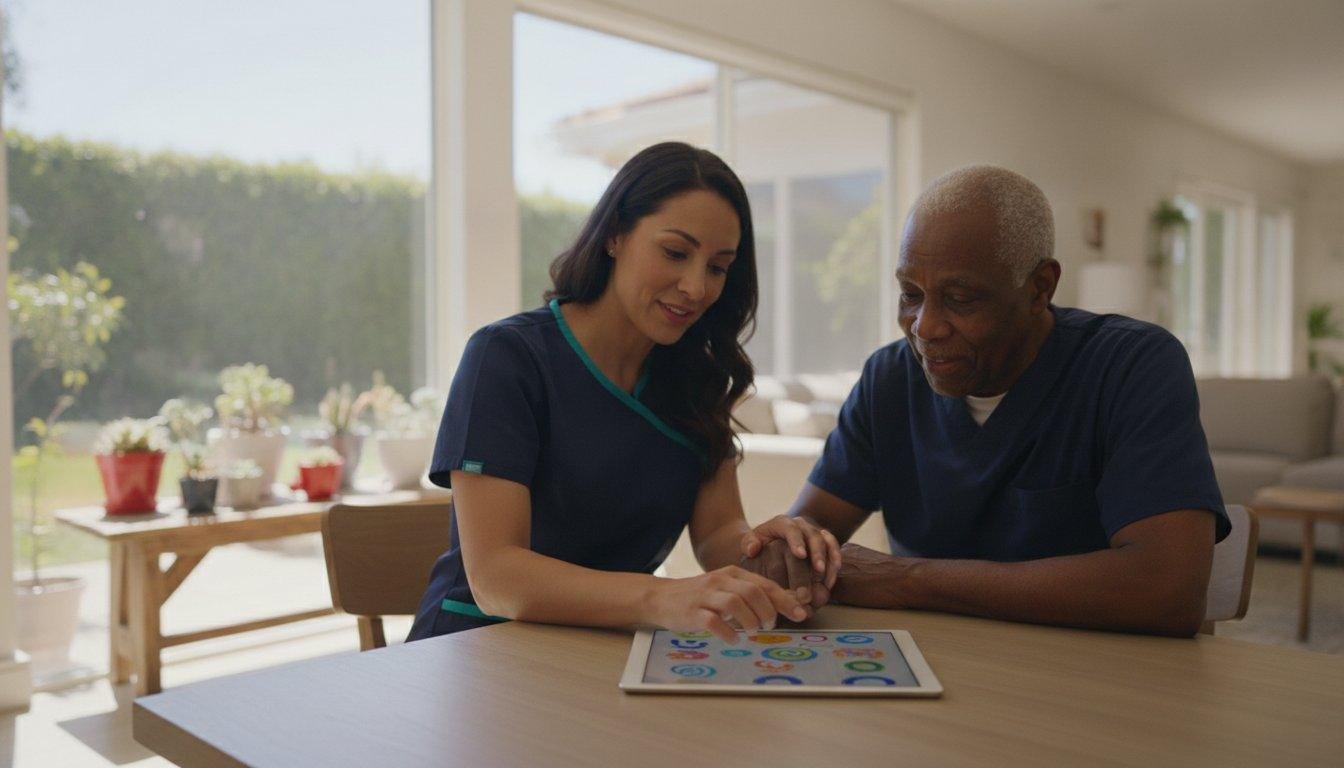
Maintaining independence in 2026 is not simply a matter of physical safety; it is about the clinical preservation of the mind within the familiar surroundings of one’s own home. Professional cognitive therapy for seniors at home has evolved into a vital medical intervention that utilizes neuroplasticity to protect a senior’s autonomy and dignity. It’s often difficult to distinguish between the typical lapses of aging and more serious cognitive shifts that require expert clinical attention.
You probably feel the weight of this uncertainty as you watch a loved one struggle with daily tasks or medication schedules, especially as updated 2026 regulations now place stricter requirements on monitoring significant cognitive changes. This clinical guide provides a clear path to improving or stabilizing cognitive function through evidence-based interventions. We’ll examine how licensed Speech and Occupational Therapists deliver specialized care that goes beyond simple mental stimulation. By the end of this article, you’ll understand how a multidisciplinary approach ensures safety and provides the expert guidance necessary to navigate these complex health transitions with steady confidence.
Key Takeaways
- Understand how clinical cognitive therapy for seniors at home leverages neuroplasticity to help the aging brain adapt and maintain essential functions.
- Learn how licensed Speech and Occupational Therapists collaborate to identify specific cognitive deficits and implement customized recovery strategies.
- Discover the clinical distinction between professional therapeutic interventions and passive mental stimulation to ensure your loved one receives effective care.
- Gain clarity on the initial assessment process and the development of a care plan that prioritizes the dignity and safety of the senior.
- Explore how a local, multidisciplinary team provides Los Angeles families with a structured path to preserving independence through specialized home health services.
Understanding Cognitive Therapy for Seniors at Home
In the evolving healthcare environment of 2026, cognitive therapy for seniors at home has transitioned from an elective support service to a critical rehabilitative intervention. This clinical discipline focuses on the restoration or maintenance of mental functions that directly impact daily living. The foundation of this work rests on the science of neuroplasticity, which confirms that the aging brain remains capable of forming new neural pathways. Even when specific areas are affected by decline, professional intervention helps the brain reorganize itself to support essential tasks. This adaptability allows for significant improvements in safety and autonomy when managed by licensed clinical experts.
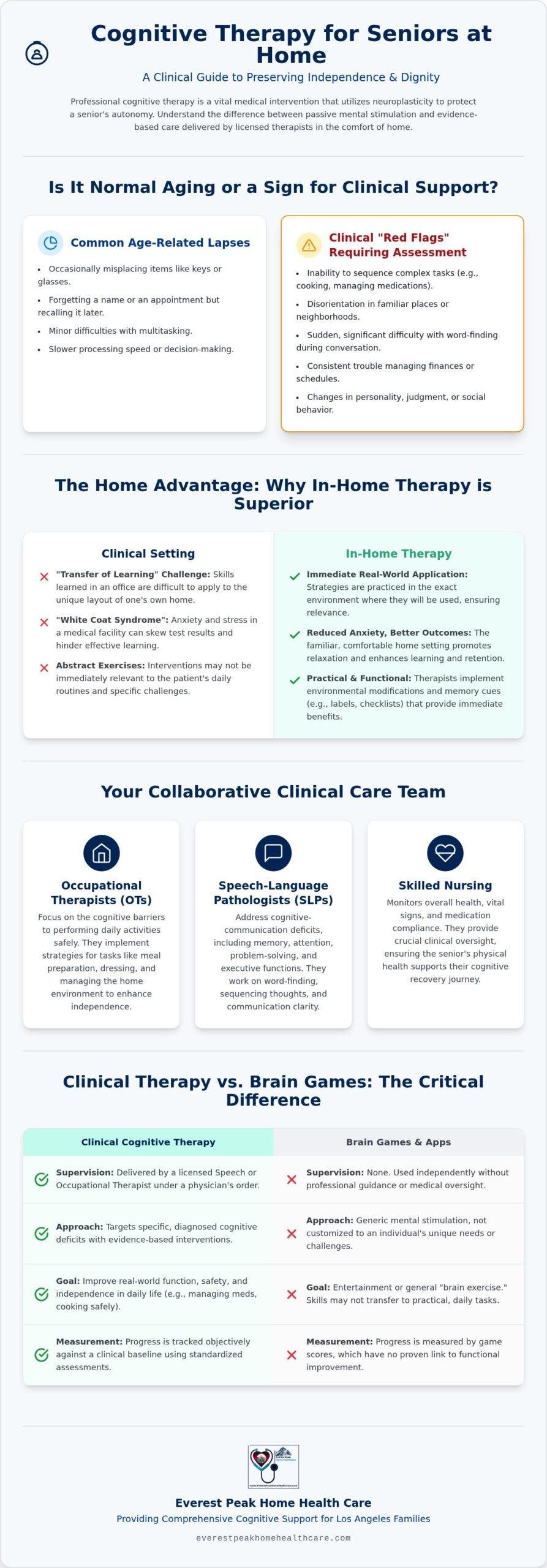
Identifying the need for professional support requires a keen eye for specific “red flags” that go beyond typical age-related forgetfulness. While misplacing keys occasionally is common, a consistent inability to sequence complex tasks, such as preparing a meal or managing a multi-step medication schedule, signals a need for clinical assessment. Other indicators include disorientation in familiar North Hollywood neighborhoods or sudden difficulties with word-finding that impede clear communication. Recognizing these signs early allows families to shift from the stress of facility-based transitions to the specialized care available within their own residence.
What is Clinical Cognitive Therapy?
Clinical cognitive therapy is an evidence-based medical treatment plan prescribed by a physician and delivered by licensed therapists. It’s distinct from general mental stimulation because it utilizes Cognitive rehabilitation therapy to target specific functional deficits identified through standardized testing. Practitioners use validated assessments to establish a clinical baseline, which allows them to track progress objectively. This medical framework differentiates between cognitive training, which focuses on specific tasks, and rehabilitation, which aims to improve the senior’s overall ability to function safely in their environment.
Why the Home Setting is Superior for Cognitive Growth
The residential environment serves as a superior setting for cognitive recovery because it eliminates the challenge of “transfer of learning.” When a senior learns a safety strategy in a clinical office, they often struggle to apply that same logic to their specific kitchen or bathroom. Practicing cognitive therapy for seniors at home ensures that every exercise is immediately relevant to the patient’s actual life. This approach significantly reduces “white coat syndrome,” a phenomenon where anxiety in a medical facility skews test results and hinders learning. By using the senior’s daily routine as a living laboratory, therapists can implement environmental modifications and memory cues that provide immediate practical benefits to the patient’s quality of life.
The Clinical Difference: How Speech and Occupational Therapists Lead Cognitive Recovery
Professional cognitive therapy for seniors at home is rarely a solitary effort; instead, it relies on a multidisciplinary team that addresses the complex intersection of mental clarity and physical safety. Speech-Language Pathologists (SLPs) and Occupational Therapists (OTs) lead this clinical charge, working in close coordination with Skilled Nursing professionals. While a nurse monitors vital signs and medication compliance, the therapists focus on the cognitive barriers that prevent a senior from managing these tasks independently. This collaborative framework ensures that every aspect of the patient’s health is observed, allowing for rapid adjustments to the care plan if a senior’s condition fluctuates.
The foundation of this recovery process is the Customized Care Plan. Unlike generic brain exercises, these plans are built upon initial clinical findings that pinpoint exactly where the cognitive breakdown occurs. Therapists don’t just look at “test scores” from a standardized assessment. They measure success through functional outcomes, such as a senior’s ability to safely navigate their kitchen or remember a daughter’s phone number during an emergency. This focus on real-world application is what preserves the patient’s dignity while providing families with measurable proof of progress.
The Role of Speech-Language Pathology (SLP)
Speech-Language Pathologists are essential for targeting executive function, which includes the high-level skills of planning, organizing, and sequencing. When a senior struggles to follow a recipe or forgets the purpose of a specific medication, the SLP introduces memory compensation strategies tailored to the individual’s remaining strengths. They also address communication barriers and word-finding difficulties that often lead to social withdrawal. By restoring the ability to express needs clearly, the SLP reduces the frustration and anxiety that frequently accompany cognitive decline.
The Role of Occupational Therapy (OT)
Occupational Therapists bridge the gap between cognitive capacity and physical action. Their primary objective is to adapt the home environment to reduce cognitive load and confusion. This might involve labeling kitchen cabinets or simplifying the steps required for “Activities of Daily Living” (ADLs) like dressing and grooming. OTs also perform critical safety assessments, identifying how spatial awareness issues might lead to falls. Through cognitive retraining, they help seniors regain the focus necessary to move through their homes with confidence and minimal risk.
If you’re noticing that a loved one is struggling with daily routines, a professional assessment can provide the clarity you need. You can learn more about how our multidisciplinary team coordinates these specialized visits by visiting Everest Peak Home Health Care. Integrating these clinical disciplines into a residential setting provides a structured, supportive path toward maintaining a senior’s autonomy and quality of life.
Clinical Cognitive Therapy vs. Brain Games: Why Professional Supervision Matters
A common misconception among families is the belief that providing a senior with a tablet app or a book of Sudoku puzzles is sufficient to halt cognitive decline. While these activities offer mental stimulation, they are often isolated tasks that lack a rehabilitative framework. Cognitive therapy for seniors at home is a structured medical intervention, whereas brain games are typically passive forms of entertainment. Without professional supervision, there is a significant risk of “pseudo-improvement.” This occurs when a senior becomes highly proficient at a specific digital game but remains unable to translate those mental gains into safer daily living or improved memory in real-world scenarios.
Professional feedback is the essential engine of neuroplastic change. A licensed therapist does not simply watch a senior perform a task; they analyze the cognitive process behind it. They identify where the “breakdown” occurs, whether it is in attention, encoding, or retrieval. By providing real-time adjustments, a therapist ensures the brain is challenged at the precise level needed to build new neural pathways without triggering the shut-down response caused by excessive frustration. This active, supervised engagement is what distinguishes a clinical treatment plan from a hobby.
The Limitations of Digital Brain Trainers
Consumer-grade cognitive apps frequently focus on high scores and speed, which often lack real-world application for a senior’s specific needs. These digital tools cannot account for the “human element,” such as the emotional barriers or physical fatigue that can impede progress during a session. Clinical data indicates that supervised therapeutic intervention provides 4x the functional benefit of unguided games because it prioritizes the transfer of skills from the exercise to the patient’s actual environment. A therapist acts as a knowledgeable guide, pivoting strategies when a senior encounters an emotional or cognitive block that an algorithm would simply ignore.
Functional Goal Setting: The Heart of Clinical Care
Clinical care shifts the focus from abstract exercises, like remembering a list of random objects, to vital safety goals, such as remembering to turn off the stove or identifying the correct dosage on a medication bottle. Therapists often employ “errorless learning,” a specialized technique that ensures the senior succeeds at every step of a task. This method prevents the encoding of mistakes in the brain and builds the confidence necessary for independence. Additionally, cognitive therapy for seniors at home integrates “dual-tasking” exercises. These require the senior to perform a mental task while physically moving, such as answering a question while walking to the kitchen. This clinical approach mirrors the complexity of daily life and is a proven method for reducing fall risks in the home.
Implementing a Cognitive Care Plan in the Home Environment
The successful transition from a clinical diagnosis to a residential treatment plan requires a highly structured roadmap that prioritizes both medical accuracy and the patient’s daily comfort. Moving cognitive therapy for seniors at home into a practical setting begins with a commitment to “professional empathy,” where the clinical goals are woven into the existing fabric of the senior’s life. This process isn’t about transforming the home into a hospital; it’s about optimizing the environment to support the brain’s recovery and stability. Families should expect the first 30 days to focus on establishing a baseline and building a routine that minimizes frustration while maximizing dignity.
Step 1: The Comprehensive Clinical Assessment
The initial visit is a multidisciplinary event. A Registered Nurse first reviews the patient’s full medical history and current medication list to identify any physiological factors that may be exacerbating cognitive symptoms. Following this, a licensed therapist performs standardized cognitive testing, such as the Montreal Cognitive Assessment (MoCA) or the Saint Louis University Mental Status (SLUMS) exam. These tools provide the objective data necessary to create a targeted care plan. The assessment concludes with a thorough home safety evaluation to identify “cognitive trip-wires,” such as confusing layouts or hazards that could lead to falls during periods of disorientation.
Step 2: Environmental Optimization
Clinical success often depends on simplifying the physical space to reduce “choice paralysis.” Occupational Therapists work with families to implement visual cues and memory stations, such as centralized pill organizers and large-format calendars. Lighting and contrast adjustments are also vital; for example, using high-contrast tape on the edges of steps helps a senior with declining spatial awareness navigate safely. These modifications reduce the cognitive load required for simple movement, allowing the senior to dedicate more mental energy to their therapeutic exercises.
Step 3: Therapeutic Intervention and Routine Building
Therapy sessions are strategically scheduled during “peak cognitive hours,” which is the time of day when the senior is most alert and least prone to fatigue. During these visits, therapists focus on incremental task mastery, breaking down complex chores like laundry or meal preparation into manageable, single-step instructions. To address the emotional challenges of cognitive decline, Medical Social Services are often integrated into the plan. This ensures that the senior and their family have the psychological support needed to navigate the stresses of health transitions.
Monitoring for changes is a continuous process. Under 2026 California regulations, such as the updated Title 22 requirements for resident reappraisal, it’s vital to adjust the intensity of therapy whenever a significant shift in mental condition occurs. Caregivers and family members are trained to recognize these subtle changes, ensuring the clinical plan remains effective. To begin this process for your loved one, you can schedule a clinical assessment for cognitive therapy for seniors at home with our North Hollywood team. This structured approach provides the stability and expert guidance necessary to preserve independence within the San Fernando Valley community.
Comprehensive Cognitive Support with Everest Peak Home Health Care in Los Angeles
Everest Peak Home Health Care operates with a primary mission to deliver clinical excellence directly to the doorsteps of families in the San Fernando Valley. Our approach to cognitive therapy for seniors at home is rooted in “professional empathy,” a philosophy that balances rigorous medical standards with a deep respect for the individual’s life history and current dignity. By maintaining our base in North Hollywood, we provide a level of responsiveness and community-specific knowledge that larger, national entities often cannot match. We understand the local healthcare networks, from the discharge planners at nearby hospitals to the specific needs of residents aging in place throughout Los Angeles.
Our agency acts as a stable bridge between a hospital discharge and long-term safety. When a senior returns home after a neurological event or a period of decline, the transition is often fraught with risk. Our multidisciplinary team ensures that this transition is managed with precision. By coordinating licensed clinicians who specialize in different areas of recovery, we create a protective circle of care that focuses on stabilizing the patient’s condition and preventing the cycle of re-hospitalization.
A Multidisciplinary Team for Total Peace of Mind
The strength of our cognitive support lies in the seamless integration of various clinical disciplines. Patients have direct access to Registered Nurses, Physical Therapists, Occupational Therapists, and Speech-Language Pathologists under one unified care plan. This collaborative model allows for continuous monitoring; for instance, if an Occupational Therapist notices a change in a senior’s physical balance, they immediately alert the Registered Nurse to assess for potential medication side effects or underlying infections. You can learn more about our Skilled Nursing Services to see how our clinical team supports holistic wellness alongside cognitive rehabilitation.
Getting Started with Everest Peak in North Hollywood
Navigating the path to clinical home health services begins with a physician’s referral. As a licensed Home Health Agency, our services are medically prescribed and often covered by insurance providers, including Medicare, when specific criteria are met. Our intake process is designed to be thorough yet unhurried, ensuring that every family feels supported from the first phone call. Once a referral is received, our Medical Social Workers assist families with long-term planning and connect them with essential community resources. We’re here to act as your knowledgeable guide through the complexities of home-based medical care.
If you’re ready to explore a structured path toward mental clarity and safety for your loved one, Contact Everest Peak for a Professional Assessment Today. Our team is dedicated to preserving the independence of seniors throughout the San Fernando Valley with clinical rigor and steady compassion.
Securing a Future of Mental Clarity and Independence
Clinical cognitive intervention represents a fundamental shift from passive mental stimulation to active, evidence-based rehabilitation that prioritizes the patient’s daily safety and functional success. By integrating the specialized expertise of Speech and Occupational Therapists, families can address the complex executive and environmental challenges that often threaten a senior’s autonomy. Implementing professional cognitive therapy for seniors at home ensures that every therapeutic strategy is practiced in the precise environment where it is needed, which significantly increases the likelihood of lasting neuroplastic adaptation.
Our licensed clinical team based in North Hollywood provides the authoritative guidance and steady support necessary to manage these stressful health transitions. We remain committed to preserving the dignity of every individual through a multidisciplinary approach that monitors both mental clarity and physical well-being. You don’t have to navigate these complexities without an expert partner. Schedule a clinical assessment for your loved one today to establish a structured path toward cognitive stability. With professional intervention and a customized care plan, your family can move forward with a renewed sense of confidence and peace of mind.
Frequently Asked Questions
Is cognitive therapy at home covered by Medicare in 2026?
Medicare Part B covers medically necessary cognitive therapy when it’s provided by licensed therapists as part of a physician-approved plan of care. In 2026, the therapy threshold is $2,480 for Speech-Language Pathology and Physical Therapy combined, and a separate $2,480 for Occupational Therapy. If services exceed these amounts, a KX modifier is required to document the ongoing medical necessity for the senior to remain safe at home.
How often does a therapist visit the home for cognitive care?
The frequency of visits is determined by the initial clinical assessment and the specific goals outlined in the doctor’s order. Most patients receive visits two to three times per week. This consistent schedule ensures that cognitive therapy for seniors at home remains effective by allowing the therapist to reinforce new memory strategies and monitor for any changes in the senior’s mental or physical condition.
Can cognitive therapy help if my parent already has advanced dementia?
Clinical intervention provides significant value even in the advanced stages of dementia by focusing on safety and environmental cues rather than memory restoration. Therapists work to simplify daily routines and provide caregiver training to manage behavioral changes. These interventions help reduce the senior’s confusion and anxiety, which directly improves their comfort and preserves their dignity during the later stages of the condition.
What is the difference between an Occupational Therapist and a Speech Therapist for memory?
Speech-Language Pathologists focus on the cognitive-linguistic aspects of memory, such as executive function, sequencing, and communication strategies. Occupational Therapists concentrate on the functional application of these skills within the home. For example, an SLP might help a senior remember a medication schedule, while an OT ensures they can physically and safely organize that medication in their specific kitchen environment.
Do I need a doctor’s order to start home health cognitive therapy in Los Angeles?
A physician’s order is mandatory to begin any skilled home health service in California. This requirement ensures that cognitive therapy for seniors at home is medically supervised and coordinated with the patient’s existing healthcare team. Licensed agencies in the San Fernando Valley work directly with your primary care provider or specialist to secure the necessary referrals and establish a formal plan of care.
What happens if my loved one is resistant to having a therapist in the home?
Therapists utilize professional empathy to build rapport and decrease the senior’s apprehension. Clinicians often introduce themselves as “home safety specialists” or “independence coaches” to avoid the stigma sometimes associated with cognitive decline. By focusing on the senior’s own goals, such as staying in their familiar North Hollywood residence, therapists can often transform initial resistance into a collaborative and trusting relationship.
How long does a typical cognitive therapy session last?
A standard therapy session typically lasts between 45 and 60 minutes. This timeframe allows the clinician to perform targeted exercises and assess the senior’s progress without causing the cognitive fatigue that can occur with longer sessions. The therapist remains observant of the patient’s energy levels, adjusting the intensity of the tasks to ensure that the session remains a positive and productive experience.
Can cognitive therapy at home prevent a move to assisted living?
Professional cognitive therapy is specifically designed to address the safety risks that often lead to facility placement. By improving medication management, reducing fall risks, and enhancing a senior’s ability to perform daily tasks, these services can significantly extend the time a senior remains in their own home. It provides families with a structured path to managing care while delaying or preventing the need for institutionalized settings.