
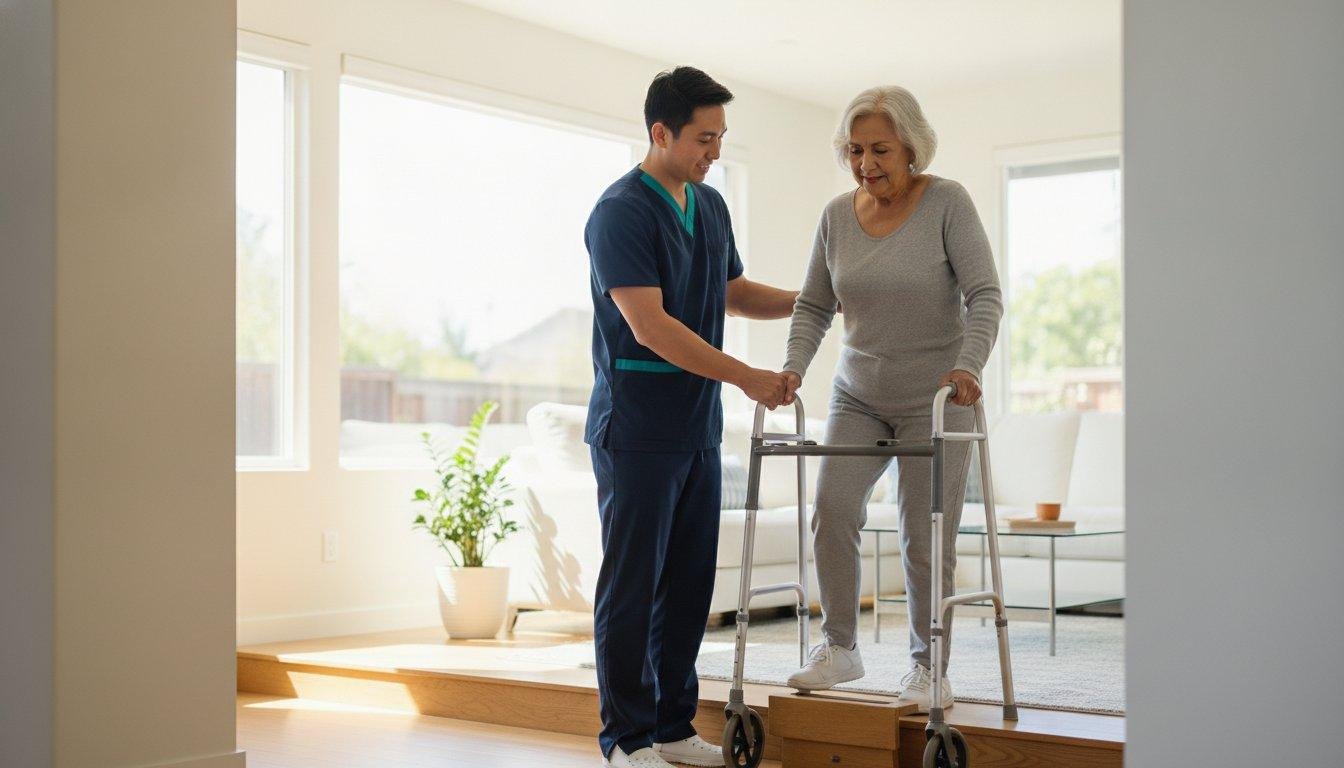
What if the most critical phase of your hip replacement recovery isn’t the surgery itself, but the first forty-eight hours after you cross your own threshold? Transitioning from a controlled hospital environment to your residence often brings a wave of anxiety regarding pain management and the risk of accidental dislocation. It’s natural to feel overwhelmed by the prospect of navigating narrow hallways or steep stairs while relying on a walker for the first time. Professional physical therapy after hip surgery at home transforms these challenges into a structured, clinical path toward healing.
This guide illustrates how specialized in-home care accelerates your recovery, ensures your safety during daily movements, and restores your mobility with professional precision. We’ll examine the specific protocols used by licensed therapists to manage post-operative swelling, prevent complications, and help you return to an active, independent lifestyle. By focusing on customized care within your own living space, you can regain the confidence needed to navigate your home safely and return to the activities you enjoy without the burden of persistent pain.
Key Takeaways
- Learn how structured physical therapy after hip surgery at home prioritizes circulation and strength to prevent complications like blood clots or dislocation.
- Understand the “contextual training” advantage, where exercises are performed using your own stairs and furniture to ensure real-world mobility.
- Identify critical home safety modifications for your bathroom and living areas to minimize fall risks during the early stages of rehabilitation.
- Discover how licensed therapists coordinate directly with your orthopedic surgeon to align your home recovery with specific surgical protocols.
The Critical Importance of Physical Therapy After Hip Surgery at Home
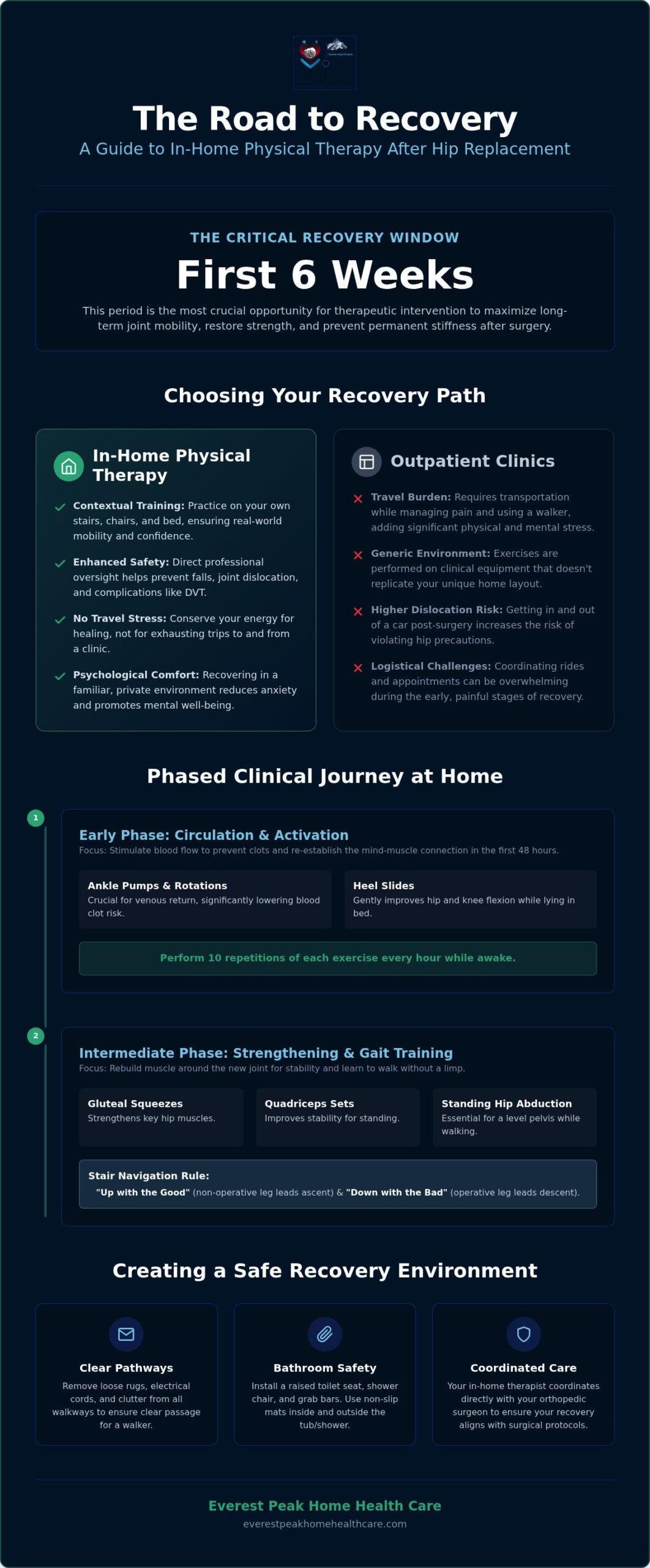
Clinical success following a total hip arthroplasty depends heavily on the quality of immediate rehabilitative support. In-home physical therapy is a specialized clinical service that bridges the gap between hospital discharge and full independence. Unlike generic exercise routines, physical therapy after hip surgery at home provides a structured environment where a licensed professional monitors the surgical incision for signs of hematoma or drainage while managing local edema. The primary clinical objectives include restoring functional range of motion, rebuilding the musculature surrounding the prosthetic joint, and establishing gait stability. The first six weeks following your procedure represent a critical window of opportunity where therapeutic intervention most effectively maximizes long-term joint mobility and prevents permanent stiffness.
Preventing Post-Operative Complications
Professional oversight serves as a protective layer against common post-surgical setbacks that can delay your return to health. Licensed therapists are trained to identify the subtle precursors of Deep Vein Thrombosis (DVT), often implementing ankle pumps and elevation protocols to maintain healthy circulation. They also conduct thorough assessments of the surgical site to detect early markers of infection, such as localized heat or unusual redness, which an untrained eye might miss. They provide constant reinforcement of “hip precautions,” ensuring that patients don’t inadvertently move in ways that could lead to a painful dislocation of the new joint.
The Psychological Benefit of Home-Based Care
The emotional stability provided by home-based care shouldn’t be underestimated during the early stages of recovery. Navigating the logistics of transportation to an outpatient clinic can be a source of significant distress when you’re still mastering a walker or managing post-operative pain. By receiving physical therapy after hip surgery at home in a familiar residence, you can focus your energy on recovery rather than the exhaustion of travel. This setting allows for practical, real-world training; your therapist helps you navigate your specific furniture and floor plan, which builds the confidence needed to regain your independence. Using your own bed and chairs for exercises makes the transition to daily life feel more manageable and less like a clinical hurdle.
Essential Exercises and Clinical Goals for Home Rehabilitation
Effective recovery is a phased clinical journey that requires precise movement to ensure the long-term success of the prosthetic joint. Professional physical therapy after hip surgery at home allows for the immediate adjustment of resistance and repetition based on a therapist’s daily assessment of pain levels and incision healing. This structured progression ensures that you don’t overexert the joint while still meeting the milestones necessary for functional independence.
Early Phase: Circulation and Basic Activation
The early phase of rehabilitation focuses on stimulating blood flow and re-establishing the mind-muscle connection. Ankle pumps and rotations are foundational movements that use the calf muscles to assist in venous return, which significantly lowers the risk of post-surgical blood clots. Heel slides are introduced to improve hip and knee flexion by gently sliding the foot toward the buttocks while supported by the bed. To maximize these circulatory benefits, patients should perform these activation movements for ten repetitions every hour while awake during the initial 48 hours following discharge.
Intermediate Phase: Strengthening and Gait Training
As the patient gains stability, the focus shifts to isometric contractions and weight-bearing activities. Performing gluteal squeezes and quadriceps sets strengthens the musculature surrounding the new joint, which directly improves the stability of the prosthetic hip during standing tasks. Standing hip abduction and extension exercises are later integrated to rebuild the gluteus medius, a muscle group essential for maintaining a level pelvis while walking.
Gait training is a primary objective during this phase to prevent the development of an “antalgic gait,” which is the clinical term for a persistent limp. A visiting therapist provides real-time feedback to ensure equal weight distribution and proper foot placement. To navigate stairs safely, patients follow the clinical rule of “up with the good, down with the bad,” where the non-operative leg leads the ascent to provide power while the surgical leg leads the descent to maintain control. Our licensed physical therapists provide the specialized oversight necessary to ensure these movements are performed with correct biomechanics.
Transitioning from a walker to a cane is a significant milestone that requires a professional assessment of balance and muscle endurance. Moving to a less restrictive assistive device too early can lead to falls or improper joint loading, while staying on a walker too long can hinder the development of natural balance. Physical therapy after hip surgery at home ensures this transition happens at the optimal clinical moment, allowing you to regain your independence with confidence and safety.
Home PT vs. Outpatient Clinics: Choosing the Right Recovery Path
The first 14 days following a hip replacement are often the most physically taxing. Attempting to travel to an outpatient clinic during this period involves significant logistical hurdles that can impede the healing process. Patients must navigate the physical strain of entering and exiting a vehicle, endure the discomfort of transit, and manage the fatigue of a public waiting room. In contrast, physical therapy after hip surgery at home removes these barriers entirely. A primary advantage is “contextual training,” where the therapist uses your own furniture and stairs for rehabilitation. Instead of practicing on standardized clinic equipment, you learn to safely navigate your specific living environment, ensuring that every functional gain is directly applicable to your daily life.
The Safety Advantages of Home Health
Safety is the cornerstone of the home health model during early rehabilitation. By eliminating the need for transport, you significantly reduce the risk of accidental falls or joint strain during the most vulnerable stage of healing. A visiting therapist conducts a thorough assessment of your residence to identify specific trip hazards, such as loose rugs or inadequate lighting in hallways. These personalized care plans focus on your specific home layout, allowing you to master daily tasks like getting in and out of your own bed or shower with professional supervision.
Coordination with Skilled Nursing Care
Comprehensive recovery often requires an integrated clinical approach. Within the home health framework, physical therapists work closely with Registered Nurses providing Skilled Nursing Care to ensure a seamless recovery. This collaboration is vital for managing medication schedules, as pain control must be optimized before therapeutic sessions begin. This multidisciplinary team approach allows for immediate clinical intervention if a nurse notices a change in wound healing or if a therapist identifies a new mobility challenge, creating a stable support system for complex recoveries.
Home health provides a dedicated hour of one-on-one clinical focus, which is often unavailable in a busy clinic where a therapist might manage multiple patients at once. Your therapist isn’t just watching your form; they’re observing how you interact with your actual environment. Patients are typically ready to transition to outpatient care once they achieve specific clinical milestones, such as the ability to walk longer distances without significant fatigue and the physical stamina to handle a round-trip commute. Until those markers are met, the home remains the safest and most effective clinical setting for your rehabilitation.
Creating a Safe Recovery Environment in Los Angeles Homes
Professional physical therapy after hip surgery at home involves more than just a series of exercises; it requires a clinical reconfiguration of your living space to support the healing process. Licensed therapists perform a comprehensive Home Safety Assessment to identify environmental risks that could lead to falls or joint strain. This process ensures that your residence in Los Angeles or the San Fernando Valley becomes a stable recovery hub. To protect the integrity of the prosthetic joint, you must adhere to the 90-degree rule by ensuring that your hips remain at a higher level than your knees whenever you’re seated.
Lighting and flooring are critical components of a safe environment that often go overlooked. Therapists recommend removing all area rugs, as these are the most common causes of tripping while using a walker. Enhancing the brightness of lighting in corridors and stairwells helps you navigate safely during the night and reduces the risk of missteps. Creating a clear, wide path through the living room ensures that your assistive device doesn’t catch on furniture or electrical cords, allowing for a fluid and safe gait.
Bathroom and Bedroom Modifications
The bathroom is often the most hazardous room for a post-operative patient. Installing a raised toilet seat and using a sturdy shower chair are necessary steps to maintain hip precautions while performing personal care tasks. In the bedroom, the height of the bed must be assessed; a surface that’s too low makes standing up difficult and potentially dangerous for the new joint. We suggest organizing a “recovery station” on a sturdy nightstand that keeps your phone, hydration, and prescribed medications within reach. This setup minimizes the need for unnecessary movement and ensures you stay comfortable while resting between therapy sessions.
Navigating the San Fernando Valley Climate
Residents in North Hollywood and the surrounding San Fernando Valley must account for the local climate during their rehabilitation period. High temperatures during Southern California heatwaves can lead to rapid dehydration, which increases the risk of orthostatic hypotension and dizziness when you stand up. It’s vital to maintain a cool indoor temperature to ensure your body isn’t overtaxed while trying to heal from a major surgical procedure. If you need assistance with these environmental adjustments, our team can help you identify local North Hollywood resources for temporary home modifications.
For a comprehensive evaluation of your living space and specialized support, schedule a clinical home health assessment with our experienced team today. Our therapists ensure that your physical therapy after hip surgery at home is conducted in the safest possible environment.
Comprehensive Post-Operative Care with Everest Peak Home Health
Everest Peak Home Health Care implements specialized clinical protocols designed specifically for the post-arthroplasty patient. We recognize that the success of a hip replacement depends on the precise execution of the surgeon’s post-operative plan. Our licensed therapists maintain direct communication with your orthopedic surgeon to ensure that every exercise during physical therapy after hip surgery at home aligns with their specific surgical technique and weight-bearing restrictions. This high level of coordination ensures that your recovery remains on a steady, safe trajectory toward full mobility.
While the physical recovery is paramount, we also address the logistical and emotional strain placed on family caregivers. Our Medical Social Services team provides essential support by identifying community resources and helping families navigate the complexities of post-surgical care. This multidisciplinary approach ensures that the patient’s environment is supportive and that caregivers have the knowledge they need to assist with daily activities safely. The transition from hospital discharge to the first home visit is handled with professional precision; a clinician typically arrives within 24 to 48 hours of your return home to establish a baseline and begin the mobilization process.
Our Clinical Team in North Hollywood
Our clinical staff consists of highly skilled Registered Nurses and Physical Therapists who specialize in rehabilitative medicine. We maintain a firm commitment to patient dignity and the preservation of independence, ensuring that every interaction is respectful and focused on the patient’s long-term comfort. Based in North Hollywood, we serve the broader San Fernando Valley and Los Angeles communities, providing a stable and professional extension of the hospital’s surgical team. Our clinicians are observant and disciplined, ensuring that no aspect of your post-operative health is overlooked.
Getting Started with In-Home Rehabilitation
Securing professional physical therapy after hip surgery at home begins with a physician’s referral, which confirms the medical necessity of home-based clinical services. During the initial clinical assessment, your therapist evaluates your vital signs, wound status, and current mobility levels to create a customized rehabilitation plan tailored to your specific goals. For those seeking comprehensive Post-Operative Care North Hollywood, our intake process is designed to be efficient and thorough. This structured start allows you to focus entirely on your healing journey while we manage the clinical details of your recovery.
Restoring Your Independence with Professional Care
Recovery is a methodical process that requires both patient dedication and expert clinical oversight. By choosing physical therapy after hip surgery at home, you prioritize your safety during the critical early stages of healing while ensuring that your environment is optimized for success. We’ve examined how specialized exercises, environmental modifications, and direct coordination with your surgeon create a stable foundation for regaining your mobility. This clinical partnership allows you to focus on healing in the comfort of your own residence while a professional team manages the complexities of your rehabilitation.
Everest Peak Home Health Care is licensed by the California Department of Public Health and features an expert clinical team serving the San Fernando Valley and Los Angeles. Our specialized post-operative rehabilitation protocols are designed to restore your autonomy with dignity and professional precision. To begin your journey toward a pain-free lifestyle, Request a Clinical Consultation for In-Home Recovery today. We’re committed to providing the steady support and clinical excellence you need to return to your daily activities with confidence.
Frequently Asked Questions
How soon after hip surgery does physical therapy start at home?
Clinical protocols generally require physical therapy after hip surgery at home to commence within 24 to 48 hours of your hospital discharge. This immediate start is vital for preventing joint stiffness and managing post-operative swelling through early mobilization. Your therapist will conduct an initial assessment to establish baseline measurements and verify that your surgical site is healing correctly. Early intervention ensures that you maintain the surgical gains achieved in the hospital.
Can I do physical therapy at home without a professional therapist?
Attempting rehabilitation without professional oversight is not recommended due to the high risk of improper joint loading or accidental dislocation. A licensed therapist provides the clinical expertise necessary to adjust your exercise intensity based on real-time healing markers. They ensure you adhere to strict weight-bearing restrictions and surgical protocols. Professional guidance is essential for identifying subtle complications, such as early signs of infection or deep vein thrombosis, which a patient might overlook.
What are the most common hip precautions I should follow at home?
Standard hip precautions typically include:
- The 90-degree rule, which prevents bending the hip past a right angle.
- Avoiding crossing your legs at the knees or ankles.
- Refraining from rotating your operative foot inward.
These restrictions protect the prosthetic joint while tissues heal. Your therapist will provide specific instructions tailored to your surgeon’s approach, ensuring your safety during daily movements.
How many times a week will a physical therapist visit my home?
Most post-operative care plans involve physical therapist visits two to three times per week during the initial phase of recovery. The frequency is determined by your surgeon’s orders and your specific clinical needs as identified during your home health assessment. These sessions focus on progressing your mobility and ensuring you can perform your home exercise program safely. As you gain strength and independence, the frequency of visits may be adjusted to support your transition to outpatient care.
Is physical therapy at home covered by insurance or Medicare?
In-home physical therapy is typically covered by Medicare and most private insurance plans when it is deemed medically necessary and the patient is considered homebound. To qualify for this coverage, a physician must certify that leaving your residence requires a taxing effort and that skilled therapy is required for your recovery. Our team coordinates with your insurance provider to verify benefits and ensure that your physical therapy after hip surgery at home meets all regulatory and clinical requirements.
What should I wear for my in-home physical therapy sessions?
You should wear loose, comfortable clothing that allows for a full range of motion and provides easy access to the surgical incision site. Athletic pants or shorts with an elastic waistband are ideal for allowing the therapist to monitor swelling and wound healing. It is equally important to wear sturdy, closed-toe shoes with non-slip soles to ensure stability during gait training and standing exercises. Proper footwear reduces the risk of slips while you practice navigating your home.
How long does the typical home health PT program last after hip surgery?
A typical home health physical therapy program lasts between two and six weeks, depending on your rate of healing and functional progress. The primary goal is to reach a level of independence where you can safely perform daily activities and navigate your home without a high risk of falls. Once you meet these clinical milestones and have the stamina for travel, your therapist will facilitate a transition to an outpatient facility to continue your long-term strengthening.
What happens if I experience sharp pain during my home exercises?
You should stop your exercises immediately if you experience sharp or sudden pain and notify your physical therapist or surgeon. While some muscular soreness is expected during rehabilitation, sharp pain can indicate joint strain or other clinical concerns that require an assessment. Your therapist is trained to distinguish between therapeutic discomfort and warning signs of complications. They will adjust your plan of care to ensure that your recovery remains safe and effective without causing unnecessary joint stress.