
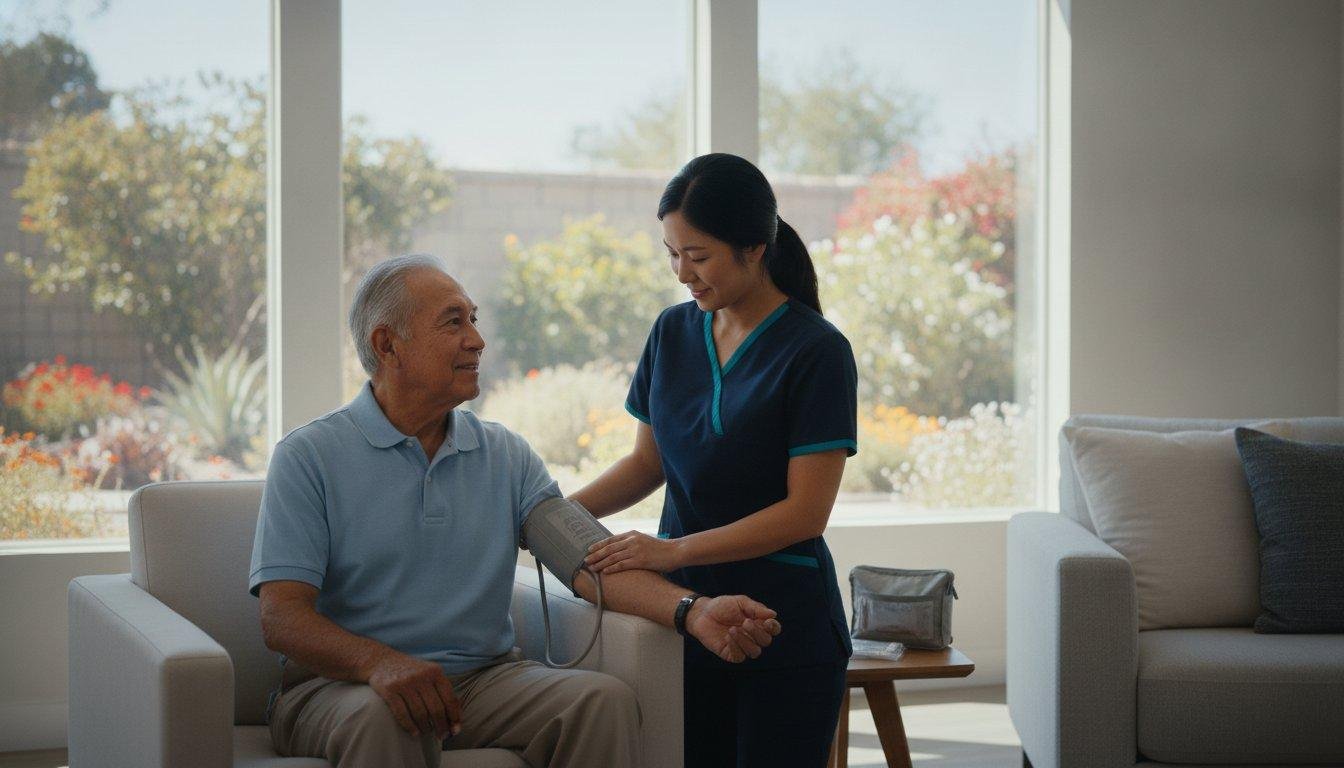
What if the support you arranged for a loved one’s recovery provides comfort but lacks the clinical authority to prevent a medical setback? Many families mistakenly assume that all home-based assistance includes medical monitoring, yet the gap between non-medical care and professional in-home nursing care Burbank is significant. It’s understandable to feel confused when you’re suddenly tasked with coordinating complex post-operative requirements or managing chronic conditions after a hospital discharge. You want the reassurance that comes with licensed expertise, not just a helping hand.
This guide will help you navigate these clinical complexities with confidence. You’ll learn how to identify the specific qualifications of registered nurses and specialized therapists, ensuring your home environment becomes a safe extension of hospital-grade care. We will examine the essential components of a robust clinical care plan, from medication management to rehabilitative therapy, all designed to reduce the risk of readmission. By the end, you’ll have a clear framework for selecting a provider that prioritizes professional oversight and patient dignity.
Key Takeaways
- Distinguish between non-medical home care and skilled clinical services to ensure your loved one receives the appropriate level of medical oversight.
- Learn to evaluate agencies based on their multidisciplinary teams, including RNs and specialized therapists, to provide a comprehensive recovery environment.
- Understand the importance of clinical interventions like advanced wound care and medication reconciliation in maintaining patient safety at home.
- Discover how to coordinate with discharge planners at local facilities like Providence Saint Joseph to secure reliable in-home nursing care Burbank.
- Identify the specific clinical outcomes, such as reduced readmission rates, that define a successful home-based rehabilitative plan.
Defining Skilled In-Home Nursing Care in Burbank
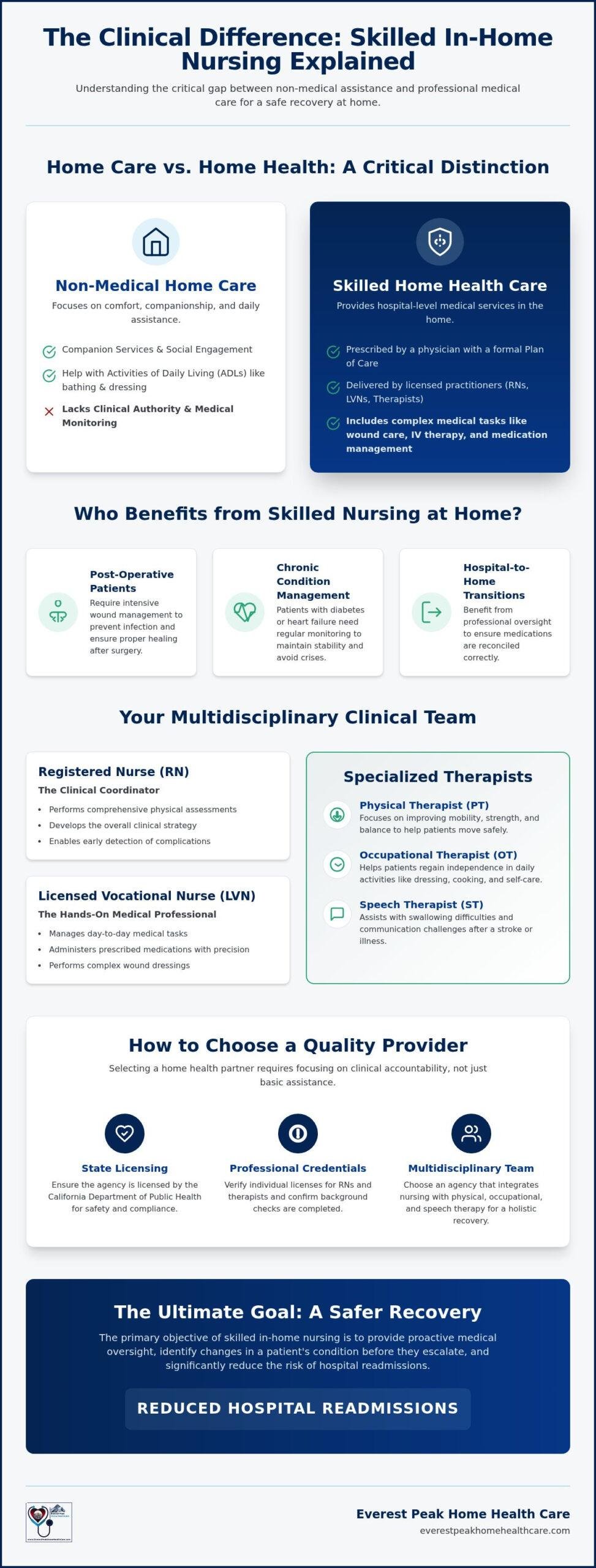
Understanding the distinction between residential assistance and clinical intervention is critical for patient safety. Skilled in-home nursing care Burbank is a medical service prescribed by a physician and delivered by licensed practitioners. While non-medical “home care” focuses on companion services and activities of daily living, clinical “home health” involves complex medical tasks like Home health nursing. This specialized field ensures that patients receive hospital-level oversight in the comfort of their own residence. It includes vital sign monitoring, sterile wound care, and intravenous therapy, all of which require professional licensure to perform safely.
Every clinical intervention is governed by a strict Physician-approved Plan of Care. This document serves as the legal and medical blueprint for the patient’s recovery, outlining the frequency of nursing visits and the specific goals of therapy. By adhering to this structured roadmap, the nursing team can identify subtle changes in a patient’s condition before they escalate into emergencies. This proactive monitoring is essential for reducing the risk of hospital readmissions, especially during the vulnerable weeks following a major health event or surgery.
The Role of the Registered Nurse (RN) and LVN
A Registered Nurse (RN) acts as the primary clinical coordinator in the residential setting. They perform comprehensive physical assessments, which allow for the early detection of complications like fluid retention or infection. While the RN focuses on the broader clinical strategy, Licensed Vocational Nurses (LVN) handle the technical, day-to-day medical tasks. These professionals manage complex wound dressings and administer prescribed medications with precision, ensuring that the patient’s daily health requirements are met without error. A Plan of Care is a physician-led roadmap for recovery that dictates every clinical intervention and therapeutic goal for the patient.
Who Benefits from Skilled Nursing at Home?
Determining if a patient requires clinical in-home nursing care Burbank depends on the complexity of their medical requirements. Professional nursing visits provide a layer of safety that standard caregiving cannot match, particularly during recovery transitions.
- Post-operative patients: Individuals recovering from orthopedic or cardiac surgeries require intensive wound management to ensure surgical sites remain free of infection and heal properly.
- Chronic condition management: Patients living with diabetes or heart failure need regular vitals monitoring and medication adjustments to maintain stability and avoid acute health crises.
- Hospital transitions: Those moving from Burbank medical facilities back to their residence benefit from professional oversight during the critical first days of home-based recovery to ensure medications are reconciled correctly.
Key Criteria for Choosing a Burbank Nursing Care Provider
Selecting a partner for in-home nursing care Burbank requires a shift in focus from basic assistance to clinical accountability. It’s not enough to find someone who is simply helpful. You need an agency that operates as a disciplined extension of the hospital. This starts with verifying that the agency is licensed by the California Department of Public Health. Licensing ensures the provider adheres to strict state regulations regarding patient safety, infection control, and professional documentation standards.
Clinical Licensing and Certifications
State licensing is the non-negotiable foundation for any reputable agency. Beyond the agency’s credentials, you should confirm that every practitioner has undergone rigorous background checks and carries professional liability insurance. You can verify the individual credentials of Registered Nurses (RNs) and therapists through the California Department of Consumer Affairs website. This verification protects your family from unqualified practitioners and ensures the care provided meets the high standards required for complex medical recovery.
Multidisciplinary Support Systems
A robust clinical team is rarely composed of just one discipline. The most effective recovery plans integrate Physical Therapists (PT) and Occupational Therapists (OT) alongside skilled nurses. While the nurse manages clinical stability, the PT focuses on mobility and the OT helps the patient regain independence in daily activities. Speech therapists also play a vital role for those recovering from strokes or neurological challenges by addressing swallowing and communication issues. This variety of expertise ensures that every facet of the patient’s health is addressed simultaneously.
Medical Social Workers (MSW) provide an additional, essential layer of support. They assist families with long-term planning and help navigate the complex landscape of healthcare resources and insurance. This multidisciplinary approach ensures that no aspect of the patient’s well-being is ignored. When these specialists work for the same agency, they can coordinate care more effectively than a fragmented group of independent contractors. Families seeking this level of integrated care often find that a multidisciplinary home health team provides the most stable environment for recovery.
Finally, inquire about the frequency of clinical assessments and how the agency communicates with your primary physician. Effective care is dynamic, not static. The agency should follow established protocols like IDEAL Discharge Planning to ensure the transition from the hospital is seamless. Regular updates to the physician allow for timely adjustments to the Plan of Care, which is essential for managing changing medical needs and preventing complications.
Specialized Medical Interventions for Home Recovery
Professional in-home nursing care Burbank provides more than just a presence in the home; it offers specific clinical interventions that are vital for a safe recovery. One of the most critical services performed during a nurse’s visit is medication reconciliation. This process involves a meticulous review of all current medications to identify potential duplicates or dangerous drug interactions. Because hospital discharge often results in new prescriptions, having a licensed professional verify the safety of the entire regimen is a necessary safeguard against pharmacological errors.
Wound Care and Post-Surgical Monitoring
Post-operative recovery necessitates a disciplined approach to surgical site management. Skilled nurses follow strict clinical protocols for dressing changes and wound debridement to prevent the onset of infection. They are trained to observe subtle changes in the wound bed, such as shifts in color or the presence of exudate, which might indicate a stalled healing process. Monitoring systemic signs like a rising temperature or increased localized pain allows for immediate intervention. This vigilant oversight ensures that any complications are addressed before they require a return to the emergency room, maintaining the patient’s stability and comfort.
Effective wound management also requires seamless coordination with the patient’s surgical team. Nurses provide detailed reports on the healing progress, ensuring that the surgeon’s specific instructions are followed to the letter. This collaborative effort keeps the recovery on a predictable schedule and gives the family peace of mind that professional standards are being upheld.
Rehabilitative Therapy Integration
A comprehensive recovery plan often requires the expertise of specialized therapists to restore physical function. Physical therapy is essential for patients who have undergone joint replacements or have experienced a decline in mobility. The therapist focuses on strengthening the musculoskeletal system, which directly leads to improved balance and a significant reduction in the risk of falls. Occupational therapy serves as a companion to this work, helping patients adapt their daily routines and home environment to match their current physical capabilities.
- Physical Therapy: Focuses on gait training and lower-body strength to ensure safe movement throughout the residence.
- Occupational Therapy: Assists with adapting self-care tasks, such as dressing and grooming, to preserve a patient’s independence.
- Speech Therapy: Provides critical intervention for swallowing disorders (dysphagia) and helps restore communication after a stroke or neurological event.
By integrating these therapeutic disciplines into the daily care routine, families choosing in-home nursing care Burbank can expect a more holistic and efficient recovery. Each specialist contributes a unique set of skills that, when combined with skilled nursing, creates a protective circle of professional support around the individual. This multidisciplinary approach ensures that every functional deficit is addressed through professional, evidence-based care.
Navigating the Transition: Hospital to Home in Burbank
The transition from a clinical facility to a residence is a vulnerable period that requires precise logistical coordination. For families arranging in-home nursing care Burbank, the process begins well before the patient leaves the hospital. A successful transfer depends on the seamless exchange of medical data between the facility and the home health agency. This coordination ensures that the clinical team arrives prepared with the specific supplies and knowledge required to maintain the patient’s stability from the moment they cross the threshold of their home.
Coordinating with Local Medical Centers
Effective discharge planning involves close collaboration with professionals at local facilities, such as Providence Saint Joseph. The hospital discharge planner acts as a vital bridge, ensuring that the Physician’s orders and medical records are transmitted directly to the home health provider. It’s essential to verify that all new prescriptions are filled and ready at the residence before the patient arrives. Proximity to the service area is a practical advantage; an agency based in nearby North Hollywood can provide more responsive care and faster admission times for Burbank residents, which is critical for preventing gaps in clinical oversight.
The Initial Clinical Assessment Process
Within 24 to 48 hours of the patient’s return home, a Registered Nurse will conduct a comprehensive initial assessment. This visit is a rigorous clinical evaluation designed to establish baseline vitals and reconcile the current medication list against the hospital’s discharge instructions. The nurse will also evaluate the home environment for safety risks, such as fall hazards or inadequate space for necessary medical equipment. This assessment allows the team to set realistic, measurable goals for the first 30 days of recovery, focusing on quantifiable improvements in the patient’s functional status and independence.
Preparing the home environment is a shared responsibility between the family and the clinical team. You should ensure that pathways are clear and that there is a dedicated, well-lit area for medical supplies and documentation. If you are ready to begin this process, you can contact our Burbank clinical team to initiate a transition plan today. By following these structured steps, you reduce the likelihood of medical errors and create a stable foundation for the patient’s long-term improvement.
Everest Peak Home Health Care: Clinical Excellence in Burbank
Everest Peak Home Health Care operates as a disciplined clinical extension of the hospital, providing a high level of medical authority for families in the local area. By maintaining a clinical hub in North Hollywood, our team ensures responsive and reliable in-home nursing care Burbank for patients navigating complex health transitions. We prioritize clinical excellence through a structured approach that emphasizes both patient dignity and measurable health improvements. This localized focus means our specialists can implement physician-led orders with minimal delay, providing a practical benefit for those who require immediate post-operative or chronic care management.
Our Professional Nursing Standards
Our team consists of highly trained Registered Nurses (RNs) and Licensed Vocational Nurses (LVNs) who deliver evidence-based medical interventions. Each patient receives a comprehensive assessment, which leads to a personalized care plan tailored to their specific therapeutic requirements. This methodical oversight allows our nurses to monitor clinical stability with quiet confidence, ensuring that every intervention serves a clear purpose in the patient’s recovery. We remain dedicated to stabilizing health challenges while actively working to preserve the patient’s autonomy and independence.
Comprehensive Support for Burbank Families
The recovery process often requires more than clinical monitoring, which is why we integrate a multidisciplinary team of specialists. Our physical, occupational, and speech therapists work in direct coordination with our nursing staff to address functional deficits and improve mobility. Additionally, our Medical Social Workers assist families by navigating the complexities of healthcare resources and providing essential support during stressful transitions. You can Learn more about our Skilled Nursing Care and see how our integrated team supports holistic recovery.
This synergy between nursing and therapy ensures that no aspect of a patient’s care is overlooked, directly contributing to reduced hospital readmissions through rigorous and observant professional oversight. By positioning ourselves as a protective and professional extension of the family’s care circle, we provide the stability needed for a safe and dignified recovery at home. Our commitment to clinical excellence remains the foundation of every visit we perform.
Securing a Safe Path to Recovery at Home
Choosing the right clinical support is a vital decision that directly impacts the safety and speed of a loved one’s recovery. You now understand the essential difference between basic assistance and skilled in-home nursing care Burbank, which provides the professional oversight needed to prevent medical errors. By prioritizing agencies that offer a multidisciplinary team of Licensed Registered Nurses and specialized therapists, you ensure that every clinical and rehabilitative need is addressed under a unified Plan of Care. This structured approach reduces the risk of hospital readmissions and allows for a dignified transition back to the residence.
Everest Peak Home Health Care remains a dedicated partner for families across Burbank and the San Fernando Valley. Our team of Licensed Registered Nurses (RN), along with specialized Physical and Occupational Therapists, is committed to delivering evidence-based care that prioritizes patient autonomy. If you’re ready to establish a professional clinical roadmap for your family, please contact Everest Peak Home Health Care for a clinical consultation. We’re here to provide the steady support and medical expertise required for a successful transition home.
Frequently Asked Questions
Is in-home nursing care covered by Medicare in Burbank?
Medicare Part A or Part B covers eligible home health services if they’re medically necessary and ordered by a physician. This coverage includes intermittent skilled nursing and therapy for short-term recovery. It’s important to understand that Medicare is designed for rehabilitation rather than long-term custodial support. Patients must be homebound and under the care of a doctor who regularly reviews their specific clinical care plan to maintain eligibility.
How is skilled nursing different from a home health aide?
Skilled nursing involves clinical interventions performed by licensed professionals like RNs or LVNs, such as administering injections or managing complex wounds. In contrast, a home health aide provides personal care assistance with activities of daily living, including bathing, dressing, and grooming. While aides offer essential support, they don’t possess the medical licensure required to perform the technical clinical tasks that define professional in-home nursing care Burbank.
Do I need a doctor’s referral for in-home nursing in Burbank?
Yes, a formal physician’s referral is a mandatory requirement for initiating skilled home health services. The doctor must certify that the patient requires intermittent skilled care and is homebound due to their condition. This referral leads to the creation of a Physician-approved Plan of Care, which serves as the medical roadmap for all nursing and therapy visits. The agency then coordinates directly with the prescribing doctor to ensure all clinical goals are met.
What medical tasks can a home health nurse perform?
Home health nurses are licensed to perform a wide range of specialized clinical tasks that ensure patient safety and stability. These include advanced wound care for surgical sites, medication reconciliation to prevent drug interactions, and the administration of intravenous therapies. Nurses also conduct regular physical assessments and monitor vital signs to detect early complications. Their role is to provide the same level of medical oversight a patient would receive in a hospital setting.
How often will a nurse visit my home in Burbank?
The frequency of nursing visits is determined by the patient’s specific medical needs as outlined in their Plan of Care. Some patients may require daily visits during the initial stages of recovery, while others might only need professional oversight two or three times per week. The clinical team continuously evaluates the patient’s progress and adjusts the schedule in coordination with the physician to ensure the level of care matches the current health status.
Can Everest Peak provide physical therapy along with nursing care?
Everest Peak utilizes a multidisciplinary team to provide comprehensive rehabilitative support. We offer physical therapy alongside our skilled nursing services to help patients regain mobility and strength after surgery or illness. By integrating these disciplines, we ensure that the patient’s clinical stability and physical recovery are managed simultaneously. This collaborative approach between nurses and therapists is essential for achieving the best possible long-term outcomes for our patients.
What if my loved one needs 24/7 care?
Everest Peak focuses exclusively on intermittent skilled medical care and does not provide 24/7 live-in assistance or hospice care. If your loved one requires around-the-clock supervision for safety or personal care, you’ll need to explore private duty caregiving agencies or residential facilities. Our services are designed to provide professional medical interventions and therapy during scheduled visits to support recovery and preserve independence rather than providing a constant custodial presence.
How do I start home health services after a hospital stay?
Initiating in-home nursing care Burbank after a hospital stay involves coordination with the facility’s discharge planning team. Before leaving the hospital, ensure the discharge planner sends the physician’s orders and medical records directly to our agency. Once we receive these documents, our clinical team will contact you to schedule an initial assessment within 24 to 48 hours. This proactive process ensures there is no gap in medical oversight during the transition back home.