The first clinical visit to your residence isn’t a formality or a sales presentation; it’s the most critical diagnostic hour of your recovery journey. For many families in the San Fernando Valley, transitioning from a hospital to the home can feel like losing a safety net, especially when faced with complex discharge instructions. An in-home skilled nursing assessment Los Angeles providers conduct serves as a professional extension of your doctor’s office. It’s designed to stabilize your environment and prevent the medical complications that often lead to hospital readmission.
We understand that navigating Medicare eligibility and homebound status requirements for 2026 can be confusing during a health crisis. This guide provides a clear roadmap of exactly what happens when a licensed Registered Nurse enters your home for the first time. You’ll learn how clinical care is structured, how we verify your eligibility for services, and how our multidisciplinary team of nurses and therapists works together to prioritize your safety and long term recovery.
Key Takeaways
- Understand that skilled nursing care is a medical necessity requiring licensed expertise to manage complex clinical tasks within a home setting.
- Learn the specific steps involved in a professional in-home skilled nursing assessment Los Angeles residents receive, from medication reconciliation to a full physical evaluation.
- Discover how advanced clinical interventions, such as IV therapy and specialized wound care, are safely transitioned from the hospital to your private residence.
- Clarify the clinical criteria for “homebound” status and why a formal Physician’s Order is the essential first step for initiating care.
- Recognize how professional home-based care reduces infection risks and leverages the psychological comfort of a familiar environment to support recovery.
What is Skilled Nursing Care? Defining the Clinical Standard
Skilled nursing care is often misunderstood as general assistance with daily living. In reality, it represents a specific tier of medically necessary care that only a licensed professional can safely perform. Whether managing a post-surgical wound or administering intravenous medications, the “skilled” designation refers to the clinical complexity of the task rather than the physical effort involved. For families seeking an in-home skilled nursing assessment Los Angeles clinicians provide, this distinction is vital. This level of care is an extension of the hospital’s clinical environment, requiring a formal physician’s order to initiate and qualify for insurance coverage. Unlike 24/7 facility care, home health nursing is provided through intermittent visits. A nurse arrives to perform specific clinical tasks and monitor the patient’s status before departing, ensuring the safety of the home environment while respecting the patient’s privacy and independence. This structured approach allows for professional oversight without the intrusive nature of institutionalization.
The Legal Scope of Practice for RNs and LVNs
In California, Home health nursing is governed by strict scopes of practice that dictate how care is delivered. Registered Nurses (RNs) carry the primary responsibility for patient assessment and the development of the comprehensive care plan, utilizing tools like the OASIS assessment to track clinical progress. Licensed Vocational Nurses (LVNs) focus on the technical execution of this plan, such as performing complex dressing changes and medication administration. These professional roles collaborate closely under a physician’s supervision to ensure every clinical action supports the patient’s recovery goals.
Medical Necessity vs. Personal Preference
Medical necessity is the benchmark used by insurance providers to determine if clinical intervention is required at home. While family members are often eager to help, they lack the specialized training to manage complex medical needs like sterile wound care or central line maintenance. An in-home skilled nursing assessment Los Angeles agencies perform determines if a patient requires this professional judgment. This care focuses on short-term rehabilitative goals, such as stabilizing a chronic condition, which contrasts with long-term custodial support that handles non-medical daily living tasks.
The goal of this clinical standard is to bridge the gap between the intensive care of a hospital and the total independence of home life. By providing professional interventions in a familiar setting, skilled nursing reduces the risk of hospital readmission and ensures that recovery follows a predictable, medically sound path. It’s a disciplined approach to health that prioritizes clinical outcomes while maintaining the patient’s dignity and comfort during a vulnerable transition.
The In-Home Skilled Nursing Assessment Process in Los Angeles
The initial clinical encounter, often called the “Entry Visit,” is the most comprehensive phase of home-based recovery. This session typically requires 60 to 90 minutes of focused interaction between the clinician and the patient. During an in-home skilled nursing assessment Los Angeles professionals perform, the nurse meticulously reviews hospital discharge summaries to understand the trajectory of the recent hospitalization. This isn’t merely a paper review; it’s a verification process to ensure the transition from a facility to the home is seamless and medically sound.
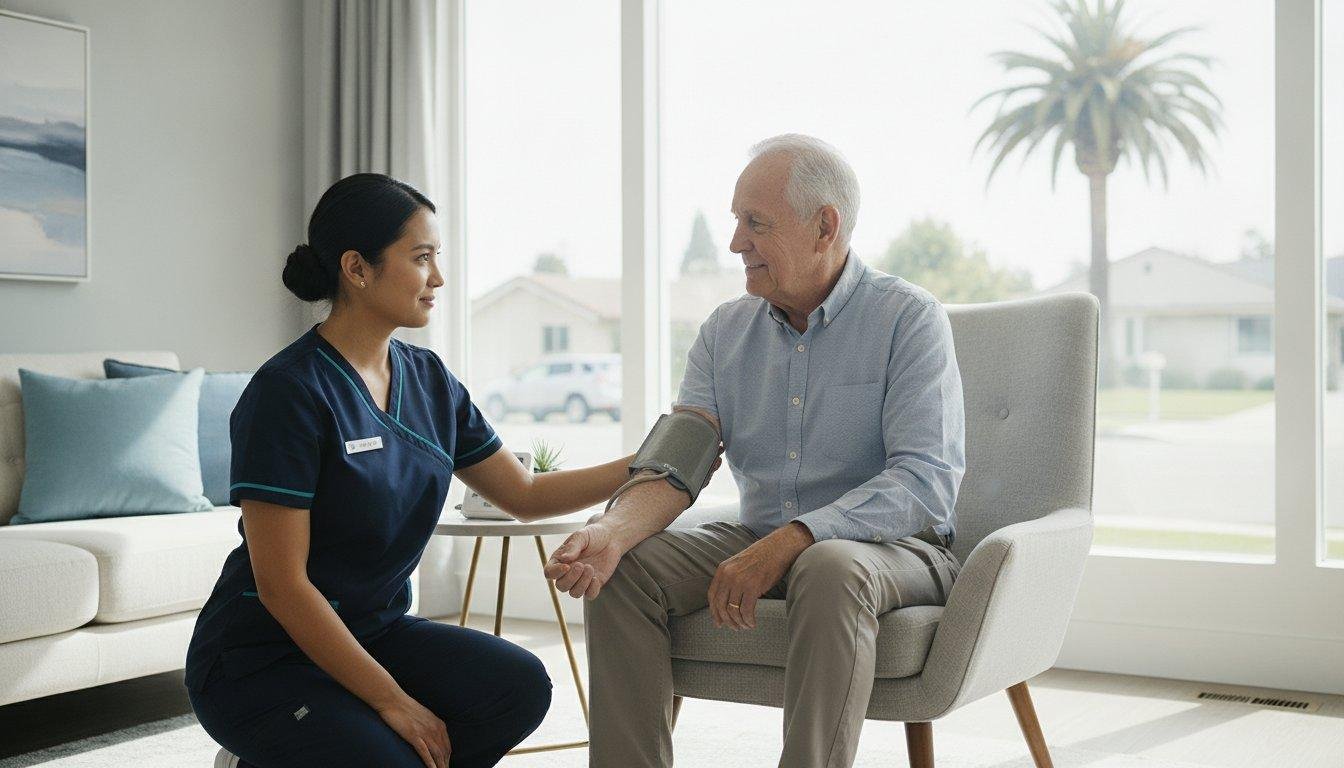
The physical evaluation follows this administrative review. The nurse performs a head-to-toe assessment, checking vital signs, auscultating lung sounds to monitor for fluid retention, and performing a detailed inspection of any surgical incisions or pressure ulcers. This baseline data is essential for identifying early signs of infection or respiratory distress before they escalate into emergencies. Simultaneously, the clinician conducts an environmental safety check. They identify potential fall hazards, such as loose rugs or inadequate lighting, which are primary causes of readmission for seniors in the San Fernando Valley.
Understanding the OASIS Assessment Tool
The Outcome and Assessment Information Set, or OASIS, is the federal data collection standard for all home health agencies. This tool provides a rigorous framework for documenting the patient’s functional status and clinical needs at the start of care. By recording precise metrics during the first visit, the nursing team creates a benchmark to track improvement over time. Thorough OASIS documentation is critical for verifying that the patient meets the clinical requirements for Qualifying for Skilled Care at Home, ensuring that insurance coverage remains uninterrupted throughout the recovery period.
Medication Reconciliation: A Critical Safety Step
One of the most dangerous periods for a patient is the first 48 hours after discharge, often due to medication confusion. The nurse performs a formal reconciliation by comparing hospital discharge orders with every medication currently found in the home’s cabinets. They look for duplicate therapies, potential drug interactions, and dosage discrepancies that could lead to adverse events. Families can find peace of mind through the structured clinical intake provided by Everest Peak Home Health Care, which includes educating the patient on new side effects and proper administration schedules.
All findings from this in-home skilled nursing assessment Los Angeles visit are compiled into the “Plan of Care,” legally known as Form 485. This document serves as the clinical blueprint for all future visits and must be reviewed and signed by the patient’s primary physician. Once authorized, it establishes the frequency of nursing visits and the specific interventions required to meet the patient’s rehabilitative goals. This methodical approach ensures that every member of the care team, from therapists to social workers, operates with the same clinical objectives in mind.
Beyond Basic Care: Clinical Interventions During a Visit
Professional nursing visits provide specialized medical interventions that exceed the capabilities of non-clinical caregivers. While the initial in-home skilled nursing assessment Los Angeles clinicians perform establishes the clinical baseline, subsequent visits focus on the technical management of complex health needs. This includes advanced wound care for pressure ulcers and surgical incisions, utilizing sterile techniques and specialized dressings to promote tissue regeneration. For patients requiring long term medication delivery, nurses manage IV therapy by maintaining line patency and administering antibiotics, which reduces the risk of systemic infections and avoids unnecessary hospital returns.
Monitoring chronic diseases such as Congestive Heart Failure (CHF), Diabetes, or Chronic Obstructive Pulmonary Disease (COPD) requires precise clinical observation. Nurses perform regular auscultation of lung sounds and monitor for peripheral edema, allowing for early intervention if symptoms worsen. Additionally, they manage technical supports like enteral nutrition through feeding tubes and the maintenance of indwelling catheters. These interventions ensure that medical devices function correctly and remain free from infection, which is vital for patients recovering in the San Fernando Valley.
Post-Operative Recovery and Surgical Site Management
Following major orthopedic or cardiac procedures, the recovery phase is delicate. Our specialized Post-Operative Care North Hollywood services focus on surgical site management to ensure incisions heal without complication. Nurses are trained to identify early physiological markers of sepsis or localized infection, such as changes in temperature or heart rate. This vigilant oversight provides a critical layer of protection during the first weeks of recovery, when the risk of readmission is highest.
Patient and Caregiver Education
Patient and caregiver education is a cornerstone of the nursing visit. We utilize the “Teach-Back” method, where family members demonstrate their understanding of care tasks to ensure safety when the nurse isn’t present. By teaching patients to recognize “red flag” symptoms, such as sudden weight gain in CHF patients or increased redness at a wound site, we empower them to take an active role in their health. As the patient achieves clinical milestones, the nurse gradually transitions responsibilities, fostering the confidence needed for long term independence.
The success of an in-home skilled nursing assessment Los Angeles relies on this transition from observation to active clinical management. By integrating advanced medical tasks with comprehensive education, the nursing team creates a stable environment for healing. This disciplined approach ensures that every aspect of the patient’s physical health is monitored, managed, and improved within the comfort of their own home.
Eligibility and Coverage: Qualifying for Skilled Care at Home
Qualifying for an in-home skilled nursing assessment Los Angeles clinicians provide starts with a clear understanding of “homebound” status. This is a clinical determination rather than a legal restriction. For 2026, the definition remains focused on the “considerable and taxing effort” required for a patient to leave their residence. It’s a common misconception that homebound means you can never leave the house. In reality, patients are permitted short, infrequent absences for religious services, medical appointments, or licensed adult day care programs. The primary goal is to ensure that the medical necessity for home-based care is documented and that the patient’s condition makes leaving the home medically contraindicated or exceptionally difficult.
A formal Physician’s Order is the essential catalyst for this process. Without a signed directive from a licensed doctor, home health agencies cannot legally initiate care or bill insurance providers. This order serves as a medical bridge, ensuring that the skilled nursing interventions provided at home are a direct continuation of the treatment plan established in the hospital or clinic. This structured coordination prevents gaps in care that often occur during the transition from a facility to the home.
The Physician-Home Health Partnership
Everest Peak acts as a professional partner to Los Angeles based physicians. We coordinate directly with your primary care team to ensure all clinical actions align with their medical strategy. A critical requirement for Medicare certification is the “Face-to-Face” encounter. This mandate requires the patient to have seen their doctor regarding the primary reason for home health within 90 days before or 30 days after the start of care. If you’re currently preparing for a hospital discharge, you should explicitly request a referral from your hospital social worker to initiate a Home Health Assessment for Elderly patients.
Navigating Insurance in the San Fernando Valley
Understanding coverage often requires specialized assistance. Medical social workers play a vital role by verifying benefits and explaining the differences between Medicare Part A and private insurance. While Medicare typically covers 100% of skilled nursing visits for eligible patients, private PPO or HMO plans often require pre-authorization and may have specific visit limits. Most services are delivered within a 60-day “Benefit Period.” If the patient continues to require clinical intervention after this window, the nursing team can recertify the patient for a new period, provided the medical necessity remains documented.
Ensuring your coverage is secure allows you to focus entirely on your physical recovery. If you’re unsure about your eligibility or need assistance coordinating with your physician, you can contact our clinical coordinators to review your specific insurance requirements. This proactive step helps avoid administrative delays and ensures that your in-home skilled nursing assessment Los Angeles visit occurs exactly when it’s needed most.
Why Choose Home-Based Skilled Nursing in the San Fernando Valley?
Selecting home-based care is a strategic clinical decision that prioritizes both physical recovery and psychological stability. Recovering in a familiar environment significantly reduces the cognitive stress and disorientation often associated with institutional settings, particularly for elderly patients. Beyond the emotional comfort, home care provides a controlled clinical environment that minimizes exposure to multi-drug resistant organisms and hospital-acquired infections. By scheduling an in-home skilled nursing assessment Los Angeles families ensure their loved ones receive focused, one-on-one attention that institutional staff, often managing multiple patients simultaneously, simply cannot replicate. This individualized oversight allows for the immediate detection of subtle physiological changes, ensuring that the patient’s recovery remains on a stable trajectory.
Everest Peak Home Health Care operates as a specialized local expert for North Hollywood and the surrounding San Fernando Valley communities. We understand that recovery is more than just a series of medical tasks; it’s about maintaining the patient’s dignity and autonomy. Our nursing team provides a protective layer of professional care, acting as a dependable partner for families who are navigating the complexities of post-operative or chronic health transitions. This localized approach ensures that clinical standards are met with a sense of quiet compassion and steady support.
Clinical Excellence Without the Commute
For fragile patients, the logistical challenge of traveling to follow-up appointments can be physically exhausting. Home visits eliminate the stress of navigating Los Angeles traffic, which is a significant barrier to care for many residents in the San Fernando Valley. Our nursing team maintains deep roots in the local medical landscape, facilitating seamless communication with regional hospitals and specialists. To ensure a comprehensive recovery, we provide multidisciplinary coordination that includes Physical Therapy, Occupational Therapy, and Speech Therapy, all delivered within the safety of the patient’s residence.
A Stable Partner for Family Caregivers
The transition from hospital to home often places an immense emotional and physical burden on family members. Professional nursing care alleviates this pressure by providing a consistent clinical anchor in the home. The nurse serves as the primary point of contact for the entire medical team, translating complex physician orders into actionable care steps. This professional presence instills confidence in caregivers, knowing that a licensed expert is monitoring their loved one’s health with disciplined rigor. To begin your recovery journey with professional oversight, Contact Everest Peak for an In-Home Skilled Nursing Assessment.
The ultimate goal of an in-home skilled nursing assessment Los Angeles is to create a sustainable path toward independence. By combining high-level medical authority with a personalized care model, we help patients regain their strength while staying connected to their homes and families. This methodical, thorough approach to home health ensures that no aspect of the patient’s well-being is overlooked, providing the professional rigor required for a successful clinical outcome.
Securing Your Path to Clinical Recovery
Transitioning from a hospital environment to the home requires more than just physical presence; it demands a disciplined clinical framework. By understanding the rigorous standards of an in-home skilled nursing assessment Los Angeles clinicians provide, you’ve taken the first step toward a safer recovery. This process ensures that every medication is reconciled and every clinical intervention is authorized by your physician, creating a stable environment for healing. Our team of licensed RNs and LVNs specializes in the San Fernando Valley medical landscape, providing the professional oversight necessary to prevent complications and hospital readmissions.
We’re committed to maintaining your independence through comprehensive OASIS-certified clinical assessments and direct coordination with your Los Angeles physicians. This level of expert care allows you to focus on your health within the comfort of your own residence. To ensure your recovery is managed with the highest level of professional rigor, Schedule Your Professional In-Home Assessment Today. You don’t have to navigate these health transitions alone; expert support is available to guide you through every clinical milestone.
Frequently Asked Questions
What is the difference between skilled nursing and a home health aide?
Skilled nursing care is strictly medical and must be performed by a licensed Registered Nurse or Vocational Nurse. This includes complex tasks like medication management and wound care. In contrast, home health aides provide non-clinical support, such as assistance with personal hygiene, dressing, and mobility. While both roles support the patient, only skilled nursing requires the advanced clinical judgment necessary to manage medical complications during the recovery process.
Does Medicare cover an in-home skilled nursing assessment in Los Angeles?
Medicare Part A typically covers 100% of the cost for an in-home skilled nursing assessment Los Angeles patients receive, provided they meet specific eligibility criteria. To qualify, the patient must be under the care of a physician and require intermittent skilled services. This coverage ensures that professional medical oversight is accessible without out of pocket expenses for those who meet the federal “homebound” definition for 2026.
How do I qualify as “homebound” for nursing services?
To qualify as homebound, a patient’s condition must make leaving the residence a “considerable and taxing effort.” This doesn’t mean the patient can never leave; short absences for medical appointments or religious services are permitted under 2026 guidelines. The clinical determination is based on whether the patient requires assistive devices or the help of another person to leave safely, ensuring that care is delivered where it is most medically appropriate for the individual.
Can I get skilled nursing care at home after a knee replacement?
Yes, skilled nursing is a standard component of post-operative recovery for total knee arthroplasty. A nurse monitors the surgical site for signs of infection, manages complex pain medication regimens, and coordinates with physical therapists to ensure rehabilitative milestones are met. This professional intervention is vital during the first few weeks when the risk of deep vein thrombosis or localized inflammation is highest, providing a safety net for patients in their own homes.
How often will a nurse visit my home in North Hollywood?
The frequency of visits in North Hollywood is determined by the specific Plan of Care authorized by your physician. Most patients initially receive two to three visits per week, though this may increase or decrease based on clinical necessity and the speed of recovery. As the patient stabilizes and gains independence, the nursing team gradually reduces visit frequency while maintaining close communication with the primary medical provider to ensure long term stability.
Do I need a doctors referral for a skilled nursing assessment?
A physician’s referral is a mandatory requirement for initiating an in-home skilled nursing assessment Los Angeles agencies perform. This order ensures that the home health team operates under the direct supervision of a doctor who understands the patient’s full medical history. If you’re currently in a hospital or rehabilitation center, the facility’s social worker or discharge planner can facilitate this referral to ensure a seamless transition of care.
What clinical tasks can a skilled nurse perform that a family member cannot?
Skilled nurses perform technical interventions that require clinical licensure, such as administering intravenous medications, performing sterile wound debridement, and managing indwelling catheters. While family members provide essential emotional and personal support, they lack the training to identify early physiological markers of sepsis or to manage complex medical equipment. The nurse’s role is to handle these high level clinical tasks while educating the family on safe daily care and symptom recognition.
Is skilled nursing at home safer than a nursing home during recovery?
Recovering at home is often safer than a facility because it significantly reduces the risk of exposure to hospital-acquired infections like MRSA. In a nursing home, staff ratios are often divided among many residents, whereas home care provides dedicated, one-on-one clinical attention. This focused oversight allows for more precise monitoring of the patient’s condition, leading to faster identification of potential health risks within a stable and familiar environment.