Imagine your phone vibrates at midnight with a call from a Los Angeles area code, and your first instinct isn’t to answer, but to brace for a crisis. For many families, long distance caregiving Los Angeles is defined by this constant state of high alert and the nagging guilt of not being physically present for every doctor visit or daily struggle. You want to know that your loved one is safe, but a casual update from a neighbor isn’t enough when complex clinical needs are at stake.
We understand that managing a senior’s health from hundreds of miles away requires more than just a check-in; it requires a professional clinical anchor. This guide explains how to coordinate professional medical oversight and personal care to ensure your loved one’s safety and dignity. We’ll show you how a dedicated team of licensed nurses and medical social workers can act as your local advocates, providing the expert eyes needed to manage medication and mobility. By the end of this article, you’ll have a clear framework for building a reliable emergency plan and receiving the professional updates you need to finally feel a sense of security.
Key Takeaways
- Identify the specific clinical hurdles of managing care from over 50 miles away and how a local anchor stabilizes the situation.
- Understand why skilled nursing is essential for complex medication management and how it differs from basic companion care in long distance caregiving Los Angeles.
- Discover the role of a Medical Social Worker as your primary local advocate for navigating the complexities of the Los Angeles healthcare landscape.
- Learn how to initiate a comprehensive in-home health assessment to verify insurance coverage and establish a professional clinical oversight plan.
Understanding Long Distance Caregiving in Los Angeles
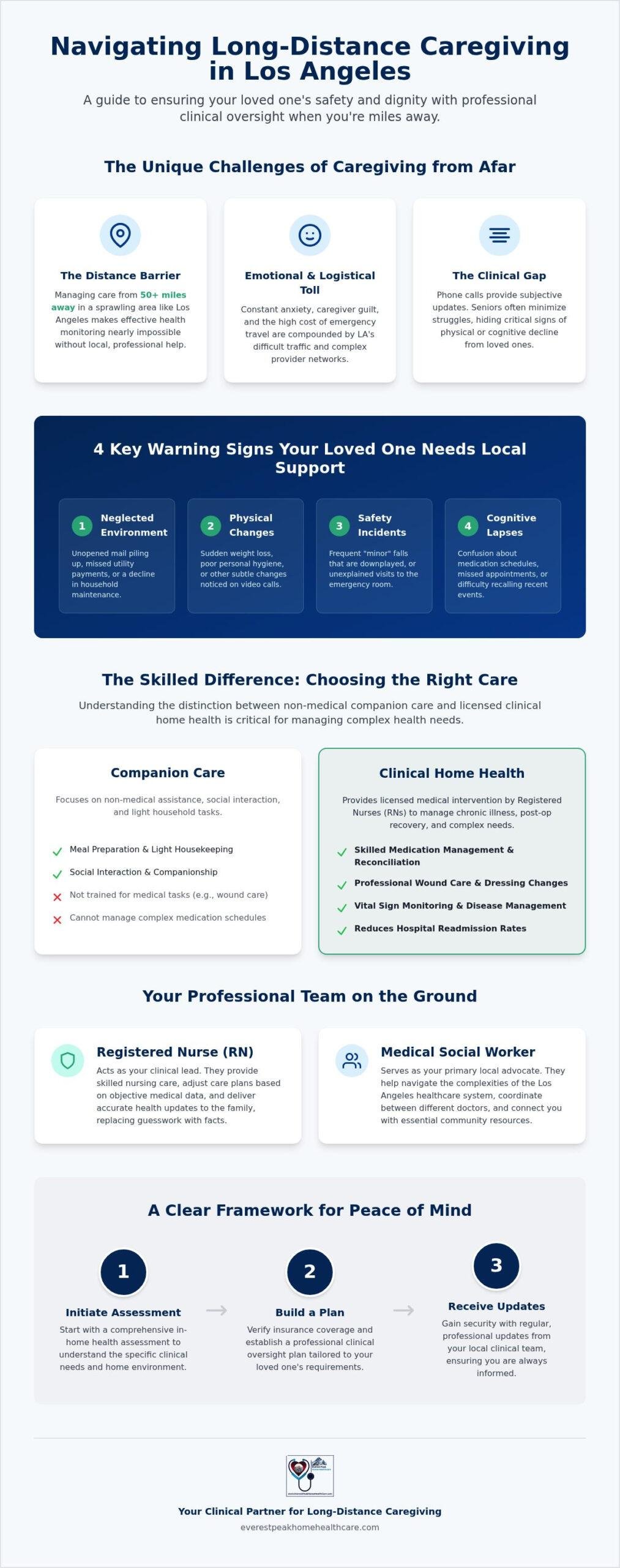
Understanding Long Distance Caregiving typically involves managing a relative’s health and personal needs from a distance of 50 miles or more. In a sprawling metropolitan area like Los Angeles, this distance creates significant barriers to effective health monitoring. While a daily phone call provides a verbal update, it often lacks the clinical objectivity required to assess physical decline or cognitive changes. Aging parents may unintentionally minimize their struggles to avoid worrying their children, making “checking in” an unreliable method for ensuring safety.
Los Angeles presents a unique healthcare landscape characterized by immense geographic spread and complex provider networks. Coordinating care between a specialist in Santa Monica and a primary care physician in North Hollywood is difficult for someone living out of state. Professional home health services bridge this gap by delivering objective medical data directly to families. This replaces vague assurances with concrete clinical observations regarding medication adherence, wound healing, and vital signs. For those managing long distance caregiving Los Angeles, having a clinical anchor on the ground is the only way to ensure medical accuracy.
The Emotional and Logistical Toll on Families
Living in a different state often leads to a persistent sense of caregiver guilt. You aren’t there to see the empty refrigerator or the missed medication dose, which creates a constant state of low-level anxiety. This emotional burden is often compounded by the extreme financial cost of emergency travel. Last-minute flights into LAX or Burbank for a sudden health crisis can cost thousands of dollars, not including the time lost from professional responsibilities. Even if you arrive, the legendary Los Angeles traffic makes attending multiple medical appointments in a single day a logistical feat. Local coordination is essential to ensure that appointments aren’t missed and that physician instructions are actually implemented at home.
Signs Your Loved One in LA Needs Local Support
Identifying the need for professional intervention requires a keen eye during video calls and periodic visits. You should look for subtle indicators that suggest daily management is failing. These signs are often the first warnings of a looming health crisis.
- Neglected Environment: Unopened mail piling up or household maintenance that has been ignored for weeks.
- Physical Changes: Subtle changes in personal hygiene or sudden weight loss noticed during a video call.
- Safety Incidents: Frequent, unexplained emergency room visits or “minor” falls that the senior downplays.
- Cognitive Lapses: Confusion regarding medication schedules or missed utility payments.
These signs indicate that the current support system is insufficient. Effective long distance caregiving Los Angeles demands a proactive approach where licensed professionals provide the consistent, on-the-ground oversight that family members cannot maintain from afar.
Clinical Home Health vs. Companion Care: The Skilled Difference
Choosing the right level of support is the most critical decision for families managing long distance caregiving Los Angeles. While companion care focuses on non-medical assistance like meal preparation or light housekeeping, clinical home health provides licensed medical intervention. This distinction is vital when a senior faces a recovery period or manages a chronic illness. A companion can offer social interaction, but they aren’t trained to identify early signs of congestive heart failure or manage complex sterile dressing changes.
Professional medical oversight is particularly effective at reducing hospital readmission rates. In a high-volume healthcare market like Los Angeles, patients are often discharged quickly. Without a Registered Nurse (RN) to monitor vital signs and reconcile medications, the risk of a relapse is high. Coordinating Care through a clinical team ensures that physician orders are executed with precision, providing the family with accurate data instead of subjective observations.
Skilled Nursing Services for Complex Medical Needs
Licensed Registered Nurses and Vocational Nurses provide a level of clinical stability that companions can’t legally offer. This includes professional wound care for post-operative patients and the management of chronic conditions like diabetes. For long-distance families, an RN acts as the clinical lead who can adjust care plans based on objective medical evidence. If your loved one requires more than simple reminders to take their pills, skilled nursing care provides the expertise needed for complex medication administration and monitoring.
Rehabilitative Therapies: Restoring Independence
Restoring mobility and safety is a primary goal of clinical home health. Physical Therapy visits focus on building lower body strength and improving balance, which are the most effective strategies for fall prevention. Occupational Therapy complements this by adapting the home environment, such as recommending grab bars or removing trip hazards. For those recovering from a stroke, Speech Therapy addresses communication barriers and swallowing disorders. These therapeutic disciplines work together to preserve a senior’s autonomy, allowing them to remain in their home longer while providing peace of mind to relatives living far away.
Coordinating Care: The Role of Medical Social Services
Effective long distance caregiving Los Angeles requires more than clinical visits; it necessitates a professional who can navigate the bureaucratic complexities of the local healthcare system. Medical Social Workers act as the family’s primary local advocate, bridging the gap between clinical needs and administrative requirements. They possess the specialized knowledge required to interpret insurance policies, including the updated 2026 Medi-Cal asset protection rules, ensuring that seniors receive the maximum benefits available without compromising their financial stability. By conducting thorough psychosocial assessments, social workers help families develop a sustainable long-term care plan that evolves alongside the patient’s changing health status.
The role of the social worker extends to facilitating high-level communication between various medical specialists and out-of-state relatives. In a city where healthcare providers are often siloed, the social worker serves as the central point of contact. This coordination ensures that the primary care physician, physical therapists, and family members are all aligned on the current treatment goals. This professional oversight prevents the information vacuum that often leads to caregiver anxiety and medical errors.
Bridging the Communication Gap
Communication is the cornerstone of successful distance management. Medical Social Workers ensure that HIPAA-compliant updates reach designated family members promptly, maintaining privacy while providing necessary transparency. They specialize in translating complex medical jargon into actionable family decisions. If a physician recommends a change in therapeutic discipline, the social worker explains the practical implications for the senior’s daily life. They also organize essential local resources, such as specialized transportation for appointments or meal delivery services, ensuring that the logistical needs of the household are met without requiring the family to fly into Los Angeles.
Crisis Planning and Emergency Readiness
A proactive approach to emergencies is essential when you cannot be there in person. Social workers help families establish a Red Folder placed prominently in the home for emergency responders. This folder contains updated medication lists, physician contact information, and advance directives. Establishing clear notification protocols is equally important; these protocols define exactly when the family should be contacted and who has the legal authority to make decisions. By identifying local North Hollywood emergency resources and hospital networks in advance, the social worker ensures that a structured response is ready before a crisis occurs, providing a level of preparedness that phone calls alone cannot achieve.
Setting Up Care in North Hollywood and the San Fernando Valley
Establishing a professional care plan for long distance caregiving Los Angeles begins with addressing the specific logistics of the local area. North Hollywood and the surrounding San Fernando Valley present unique residential layouts and healthcare access points that require a team with local expertise. The process starts with a comprehensive in-home health assessment, which serves as the foundation for all future clinical interventions. This assessment isn’t a mere interview; it’s a rigorous clinical evaluation designed to identify immediate risks and long-term needs.
Verifying insurance coverage for skilled nursing and rehabilitative therapy is a critical early step. Most families find that professional coordination helps them navigate the complexities of Medicare or private insurance, ensuring that clinical necessity is properly documented. Once coverage is confirmed, the clinical team works with the family to customize a care schedule that balances medical requirements with the family’s budget. Selecting a primary point of contact within the family ensures that communication remains streamlined and that medical updates are delivered to the right person without delay.
The Clinical Assessment Process
During the initial home visit, a Registered Nurse (RN) performs a systematic review of the patient’s health status. The RN conducts a full medication reconciliation, identifying potential drug interactions that may occur when a senior sees multiple specialists across the Los Angeles area. Beyond medical history, the RN evaluates the physical safety of the San Fernando Valley residence. They look for specific environmental hazards common in the region’s diverse housing stock, such as inadequate lighting or high-threshold entryways, to ensure the home environment supports the patient’s mobility goals.
Integrating Personal Care with Medical Visits
A balanced care plan integrates hourly personal care assistance with per-visit clinical therapies. While personal care assistants help with daily activities like hygiene and dressing, Physical and Occupational Therapists provide the targeted exercises needed to restore independence. Ensuring a seamless transition between these providers is essential for maintaining a stable routine. The clinical team sets realistic goals for recovery, which are regularly reviewed and adjusted based on the patient’s progress. For families seeking a structured start to this process, you can schedule a comprehensive clinical assessment to begin building a reliable local support system. This professional oversight ensures that every aspect of the patient’s recovery is managed with clinical rigor and quiet confidence.
Everest Peak: Your Clinical Partner for Long Distance Caregiving
Everest Peak serves as a stable, professional extension of your family’s care circle in North Hollywood and the greater San Fernando Valley. For those managing long distance caregiving Los Angeles, we provide a structured path through the complexities of home-based medical care. Our approach is rooted in a service-to-outcome framework, where every clinical intervention is designed to produce a measurable improvement in the patient’s quality of life. This methodology ensures that distant families receive more than just vague updates; they receive professional data regarding their loved one’s recovery and stability.
Our team consists of licensed Registered Nurses, Vocational Nurses, and specialized Medical Social Workers who prioritize clinical excellence. By maintaining a high level of medical authority, we instill confidence in families navigating stressful health transitions. We don’t rely on hype or aggressive sales tactics. Instead, we offer a serious commitment to patient well-being, focusing on the preservation of independence and the dignity of the individual. This professional medical oversight acts as a protective layer, ensuring that no aspect of the patient’s care is overlooked.
Why Families Choose Everest Peak Home Health Care
Families select our services because we bridge the gap between basic assistance and hospital-level safety. Our expertise in post-operative care and chronic disease management allows us to handle complex medical needs, such as wound care and medication reconciliation, that companions cannot legally address. We provide transparent, professional reporting that keeps out-of-state relatives fully informed. This level of transparency goes beyond simple check-ins and includes detailed clinical observations on medication adherence, wound status, and therapeutic progress. Our focus remains on clinical excellence while treating every patient with the respect they deserve.
Taking the Next Step for Your Loved One
Initiating professional support from outside of California is a straightforward process designed to reduce immediate stress. During an initial consultation, we’ll discuss your loved one’s clinical history and current challenges. Within the first 48 hours of service, a licensed clinician will conduct a comprehensive in-home assessment to establish a baseline for care. This rapid response ensures that safety measures are implemented quickly, providing you with the peace of mind that a professional medical team is on the ground. Schedule a clinical assessment for your loved one in Los Angeles today.
Securing Your Loved One’s Health and Independence
Managing the health of a parent from afar doesn’t have to be a source of constant anxiety. By establishing a clinical anchor in the San Fernando Valley, you transition from reactive crisis management to proactive medical oversight. This guide has detailed how skilled nursing care and rehabilitative therapies provide the objective data necessary for safe recovery; specialized medical social services navigate the logistical complexities of the local healthcare system. This structured approach ensures that clinical interventions lead directly to improved patient outcomes and a higher quality of life.
Effective long distance caregiving Los Angeles requires a dedicated team that acts as your professional eyes and ears on the ground. Whether your loved one is recovering from surgery or managing a chronic condition, having licensed registered nurses and therapists based in North Hollywood ensures that every clinical need is met with precision and respect. You don’t have to navigate these transitions alone.
Contact Everest Peak Home Health Care for a Professional Assessment to begin building a stable support system for your family. With the right clinical partner, you can ensure your loved one maintains their dignity and autonomy while you gain the peace of mind you deserve.
Frequently Asked Questions
What is the difference between home health care and home care for long-distance families?
Home health care involves clinical medical services provided by licensed professionals like nurses and therapists, whereas home care typically focuses on non-medical companion services. For those managing long distance caregiving Los Angeles, clinical home health is often necessary to manage medication and wound care. This distinction ensures that patients receive the specialized medical oversight required for recovery rather than just assistance with daily chores or social interaction.
How does Everest Peak communicate updates to family members living out of state?
We maintain a structured communication protocol that ensures out-of-state families receive timely, HIPAA-compliant clinical updates. Our team provides professional reports that detail vital signs, medication adherence, and progress toward therapeutic goals. This methodical approach replaces vague assurances with objective medical data. Families can expect regular consultations with our Medical Social Workers to discuss the evolving care plan and any necessary adjustments to the clinical interventions provided to their loved ones.
Can skilled nursing services be covered by insurance in Los Angeles?
Skilled nursing services are frequently covered by Medicare and various private insurance plans when medical necessity is documented by a physician. Our administrative team assists families in verifying coverage for clinical visits and rehabilitative therapies. We help navigate the specific documentation requirements to ensure that your loved one receives the maximum available benefits, including the expanded 2026 Medi-Cal asset protection provisions for long-term clinical support in the San Fernando Valley.
What happens if my parent has a medical emergency and I am not there?
We establish clear emergency protocols during the initial assessment, including the creation of a Red Folder containing essential medical records. While we don’t provide emergency medical services, our clinical team ensures that emergency responders have immediate access to medication lists and physician contacts. We also coordinate with designated family members to ensure they’re notified according to the established communication plan, providing a structured response during a crisis when you can’t be there.
Do you provide physical therapy for seniors in the San Fernando Valley?
Our licensed Physical Therapists provide comprehensive rehabilitative visits to seniors throughout the San Fernando Valley. These sessions focus on improving lower body strength and balance to enhance mobility and reduce the risk of falls. By delivering therapy in the home environment, we ensure that the patient can practice functional movements in the space where they spend the most time. This approach leads to more sustainable improvements in independence and overall physical stability.
How often will a nurse or therapist visit my parent’s home?
The frequency of clinical visits is determined by the patient’s specific medical needs and the physician’s orders. During the initial comprehensive assessment, our team develops a customized schedule that may involve multiple visits per week for intensive therapy or periodic check-ins for chronic disease management. This schedule is regularly reviewed and adjusted as the patient’s condition improves, ensuring that the level of clinical oversight remains appropriate for their recovery and long-term health goals.
Can a Medical Social Worker help me find other local resources in North Hollywood?
Our Medical Social Workers act as dedicated local advocates who can identify and coordinate essential community resources in North Hollywood. This includes organizing specialized transportation for medical appointments, identifying meal delivery programs, or connecting families with local support groups. Their role is to ensure that the senior’s logistical and psychosocial needs are met, providing a comprehensive support network that extends beyond direct clinical medical visits and addresses the challenges of aging.
How do we start home health services if we are currently in the hospital?
Initiating services during a hospital stay ensures a seamless transition to home-based care. You can contact our team to begin the coordination process before discharge occurs. We work directly with the hospital’s discharge planner to review the physician’s orders and establish a clinical plan. For families managing long distance caregiving Los Angeles, this early coordination prevents gaps in medical oversight and ensures that necessary therapies begin immediately upon the patient’s arrival home.