

Imagine the exhaustion of driving through the 405 freeway for a brief clinical appointment, only to find that the exercises practiced in a sterile facility don’t quite translate to the specific layout of your own kitchen or bathroom. For many seniors, the logistical challenges of Los Angeles traffic make traditional clinic visits nearly impossible, leading families to seek professional occupational therapy at home Los Angeles. It’s common to feel a sense of mounting concern as a loved one begins to struggle with basic tasks like dressing or preparing a meal, leading to a fear that their independence at home is slipping away.
We recognize that the most effective recovery occurs within the environment where a patient actually lives. This guide demonstrates how professional in-home therapy provides a structured, clinical approach to regaining autonomy by focusing on the mastery of daily activities. You’ll learn how licensed therapists assess your home for safety, implement customized interventions for aging in place, and reduce the physical and emotional burden on family caregivers. We will also clarify the specific differences between occupational and physical therapy while outlining how to manage insurance coverage for these specialized medical services.
Key Takeaways
- Practicing rehabilitative exercises in your own environment ensures that clinical gains translate directly into the mastery of daily activities.
- Distinguish between therapeutic roles to understand how Physical Therapy improves mobility while Occupational Therapy focuses on functional tasks like dressing and meal preparation.
- A comprehensive environmental safety audit identifies hidden fall risks and accessibility barriers during the initial phase of occupational therapy at home Los Angeles.
- Effective recovery plans utilize a multi-disciplinary approach, coordinating licensed therapists with skilled nursing to provide stable, clinical oversight.
- Implementing a structured care model helps preserve patient autonomy and significantly reduces the physical and emotional burden on family caregivers.
Occupational Therapy at Home Los Angeles: Overcoming the Urban Rehab Gap
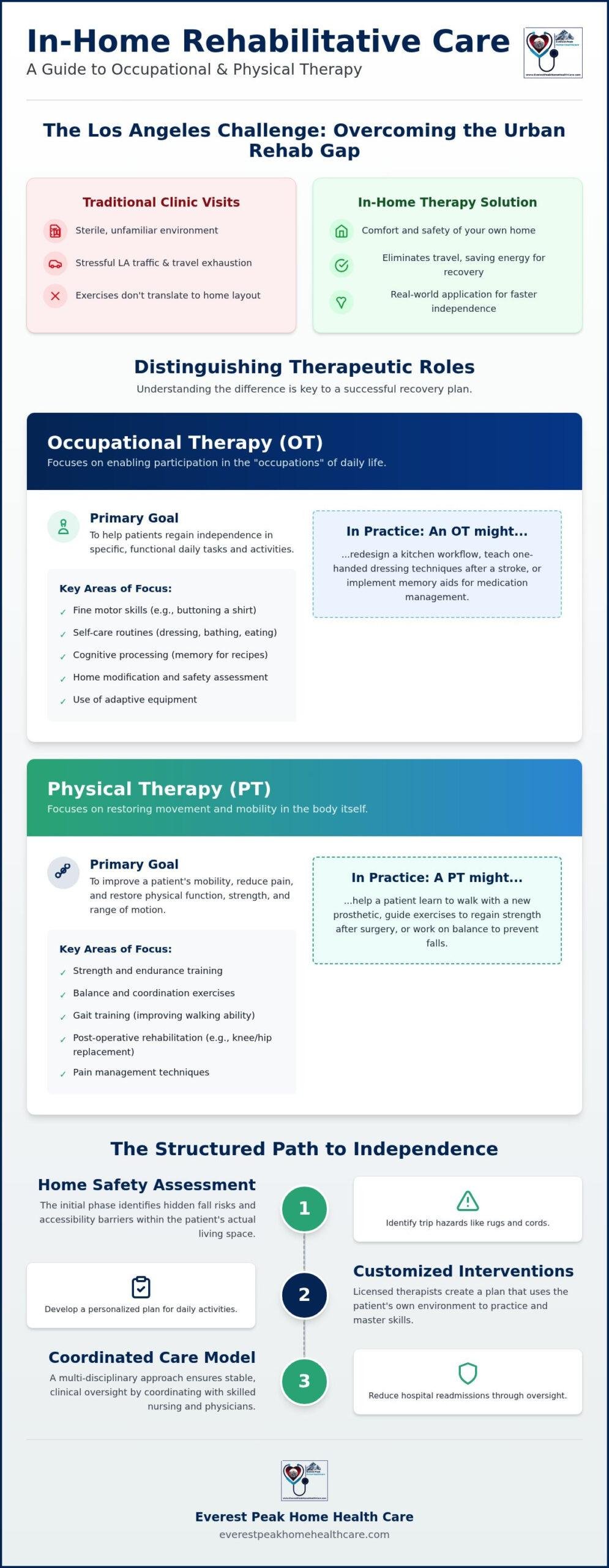
The geographic footprint of Los Angeles presents a unique set of challenges for patients recovering from illness or injury. For many seniors, the “LA Sprawl” creates a significant barrier to consistent rehabilitative care. Navigating heavy traffic on the 405 or 101 freeways to reach a specialized clinic isn’t just a minor inconvenience; it’s a physical and emotional deterrent that often leads to missed appointments. Choosing occupational therapy at home Los Angeles solves this urban rehab gap by bringing clinical expertise directly to the patient’s doorstep.
Utilizing the home as the primary clinical setting offers advantages that a sterile facility cannot replicate. Therapists observe patients in their actual environment, allowing them to tailor interventions to the specific height of a kitchen counter or the unique layout of a bathroom. This real-world application ensures that every exercise translates into a practical skill, which directly correlates with higher rates of functional independence. Additionally, this consistent oversight helps reduce the “revolving door” of hospital readmissions. By identifying environmental hazards and monitoring physical progress in real-time, our licensed professionals provide a safety net that keeps patients out of the emergency room and stable in their own homes.
The Logistical Advantage of In-Home Care
Eliminating the stress of transportation is vital for mobility-impaired patients. When a therapist visits the home, the patient avoids the exhaustion of travel, allowing them to dedicate their full energy to the session. This model supports a more consistent and frequent therapy schedule, which is essential for neurological or post-operative recovery. Home visits also transform the family into active participants in the clinical process. Caregivers receive immediate, hands-on instruction on how to assist with daily tasks safely, ensuring that the therapeutic benefits continue long after the therapist has left the premises.
Serving the Greater Los Angeles Community
Everest Peak focuses on providing localized care throughout North Hollywood and the surrounding San Fernando Valley neighborhoods. Proximity matters because it allows our team to be more responsive to the needs of the community. Los Angeles homes vary significantly, from compact apartments in high-density areas to multi-level houses in the hills. Our therapists are skilled at navigating these diverse environments, adapting clinical protocols to fit the architectural realities of each patient’s residence. This local presence also fosters better communication between the therapist, the family, and the patient’s primary physician, creating a cohesive circle of care that prioritizes clinical excellence and professional empathy.
What is In-Home Occupational Therapy? A Clinical Perspective
Occupational therapy is a regulated rehabilitative science designed to help individuals regain the ability to perform the “occupations” of daily life. While the term “occupation” often implies employment, in a clinical context, it refers to any activity that occupies a person’s time and provides meaning. Licensed therapists utilize a “service-to-outcome” model, where specific therapeutic interventions are mapped directly to functional improvements. This professional approach is distinct from non-medical home care; while a companion might assist with tasks, a therapist provides the clinical training necessary for the patient to eventually perform those tasks themselves. To maintain this level of expertise, practitioners follow the standards defined for Licensed Occupational Therapy in Los Angeles, ensuring that all care is grounded in evidence-based medical research.
The core focus of occupational therapy at home Los Angeles involves a comprehensive assessment of fine motor skills, cognitive processing, and sensory-perceptual abilities. For example, a therapist might work on hand-eye coordination to help a patient button a shirt or use memory-sequencing exercises to ensure they can safely follow a multi-step recipe. In California, these professionals must complete 24 Professional Development Units every two years to keep their licenses active, reflecting the rigorous clinical standards required to manage complex recovery cases.
Mastering Activities of Daily Living (ADLs)
Activities of Daily Living (ADLs) are the fundamental self-care tasks that define an individual’s ability to live safely and independently within their own home. Clinical intervention focuses on two primary categories:
- Basic ADLs: These include essential self-care mastery such as dressing, bathing, and grooming. Following a surgery or injury, these tasks often require modified techniques to protect healing tissues.
- Instrumental ADLs: These are more complex tasks necessary for community living, such as safely managing meal preparation, light household chores, and medication routines.
Cognitive and Sensory Intervention
For patients recovering from a stroke or managing the early stages of dementia, cognitive intervention is a critical component of the recovery plan. Therapists implement memory exercises and sequencing tasks to help patients navigate their daily schedules without confusion. This often involves environmental modifications, such as labeling cabinets or simplifying work areas to reduce sensory overload. Additionally, therapists provide specialized training in the use of adaptive equipment. While we do not sell durable medical equipment, our therapists are experts at teaching patients how to use reachers, sock aides, and specialized utensils to overcome physical limitations and preserve their dignity during the recovery process.
Occupational Therapy vs. Physical Therapy: Which Do You Need?
Many families in Southern California find themselves confused when a physician prescribes both physical and occupational therapy at home Los Angeles. While these disciplines often overlap in their goal of restoring a patient’s quality of life, they serve distinct clinical functions. Physical Therapy (PT) primarily addresses gross motor skills, gait, and large-muscle strength. It focuses on the mechanics of movement, such as the ability to walk or stand without assistance. In contrast, What is Occupational Therapy involves the restoration of fine motor skills and cognitive functions required for specific tasks. For post-operative patients or those recovering from a stroke, a dual-therapy approach is often a clinical necessity to ensure both physical strength and functional ability are restored simultaneously.
The synergy between these two fields is what creates a successful home health plan. When a patient can walk but cannot safely navigate their kitchen to prepare a meal, their recovery is incomplete. By integrating both services, we address the patient as a whole person rather than a set of symptoms. This comprehensive oversight ensures that no aspect of the patient’s daily life is overlooked during the recovery process.
Functional Mobility vs. Functional Independence
To understand the difference, it helps to view Physical Therapy as the science of mobility and Occupational Therapy as the science of independence. For example, a physical therapist works on the strength and balance required for a patient to get from their bed to the bathroom. Once the patient is there, the occupational therapist takes over to teach the patient how to safely use the facilities, manage clothing fasteners, and maintain personal hygiene. Everest Peak therapists coordinate these specific goals to maximize patient progress, ensuring that the strength gained in PT is immediately applied to the practical tasks addressed in OT.
Integrated Care Planning
A Registered Nurse (RN) typically oversees the multi-disciplinary approach at Everest Peak, coordinating the schedules and clinical goals of both PT and OT visits. Consider a typical recovery day for a hip replacement patient in North Hollywood. In the morning, the physical therapist might focus on gait training and stair climbing to improve cardiovascular health and joint range of motion. In the afternoon, the occupational therapist arrives to practice the “hip precautions” necessary while the patient performs light meal preparation or gets dressed. This structured coordination prevents patient fatigue and ensures a steady progression toward recovery. For more information on how we manage these complex cases, you can read more about Understanding Clinical Home Care.
Preparing for Occupational Therapy: The Home Assessment
The journey toward independence begins with a comprehensive clinical evaluation. This initial visit is more than a simple walkthrough; it is a diagnostic assessment where a licensed professional establishes the patient’s physical and cognitive baseline. By observing the individual’s current ability to perform tasks in their own environment, our specialists identify the specific neurological or physical deficits that impede daily life. This phase of occupational therapy at home Los Angeles ensures that every subsequent intervention is evidence-based and tailored to the architectural reality of the residence.
Our approach is rooted in “Professional Empathy,” a core brand value that balances clinical authority with deep respect for the individual’s dignity. We understand that inviting a medical professional into your private space can feel intrusive. Our therapists act as dependable partners, ensuring the patient feels seen and heard while we navigate the complexities of their health transition. This observant and stable presence helps build the trust necessary for a successful long-term recovery.
The Environmental Safety Audit
A critical component of the baseline evaluation is the environmental safety audit. Our therapists meticulously examine the home to identify potential fall risks and accessibility barriers that could hinder recovery. This includes evaluating lighting levels in hallways, the slip-resistance of various flooring types, and the safety of high-use areas like the bathroom. We assess the need for safety features such as grab bars or shower chairs and evaluate the kitchen layout to ensure meal preparation is manageable. While Everest Peak provides professional guidance on these modifications, we don’t provide the equipment or installation services directly. Instead, we act as a knowledgeable guide to help families create a safer living environment.
Goal Setting and Care Documentation
Following the audit, our therapists collaborate with family members to establish clinical-grade goals. We believe in setting measurable milestones that allow both the patient and their physician to track progress clearly. For instance, a goal might involve mastering the sequence of dressing within a specific timeframe or safely navigating the kitchen to prepare a simple meal. Every session is documented with professional rigor, ensuring that the primary care physician remains informed of the patient’s clinical status. This “Watchful Eye” approach allows us to monitor for subtle changes in health that might require an adjustment in the care plan.
If you are ready to begin a professional assessment for your loved one, you can request a clinical evaluation for occupational therapy at home Los Angeles.
Everest Peak: Licensed Occupational Therapy in Los Angeles
Everest Peak Home Health Care operates with a clear commitment to clinical excellence from our North Hollywood headquarters. While some providers offer standalone services, we provide a structured environment where licensed Registered Nurses and therapists work in tandem. This agency-led model ensures that every patient receiving occupational therapy at home Los Angeles benefits from a high level of medical authority and professional empathy. Our unhurried approach allows us to focus on the individual’s long-term recovery rather than high-volume throughput, providing the stability families need during stressful health transitions.
We prioritize clinical excellence by maintaining a “service-to-outcome” care model. Every therapeutic intervention, whether it’s fine motor training or cognitive sequencing, is designed to produce a specific functional result that improves the patient’s quality of life. This structured path through the complexities of home-based care positions Everest Peak as a dependable partner for families across the San Fernando Valley and the Greater Los Angeles area. By choosing a licensed agency, you ensure that occupational therapy at home Los Angeles is delivered with the oversight and accountability required for medical-grade recovery.
Our Multi-Disciplinary Team Approach
Our agency utilizes a multi-disciplinary framework to address the complexities of aging and recovery. This team includes Skilled Nursing professionals who manage medication and wound care, ensuring that the physical foundation for therapy is stable. Patients also have direct access to Medical Social Workers. These specialists assist families with resource navigation and emotional support, which is often a critical but overlooked component of the recovery journey. Choosing a licensed agency provides a level of security that independent “gig” caregivers cannot match. Our staff undergoes rigorous background checks, including Live Scan fingerprinting, and adheres to strict California Department of Social Services standards.
Next Steps for Los Angeles Families
Initiating care for a loved one is a straightforward process that begins with a clinical consultation at our North Hollywood office. Once a physician’s referral is received, we typically aim to begin home health services within a 24 to 48-hour window. This rapid response is essential for post-operative patients who require immediate intervention to prevent complications. During this initial period, our team establishes the clinical oversight necessary to guide the family through the first stages of home-based recovery. This methodical progression from assessment to intervention ensures that no detail of the patient’s health is overlooked.
Contact Everest Peak Home Health Care for an Assessment
Securing a Path Toward Functional Independence
Transitioning from a clinical setting to the home requires a structured plan that prioritizes safety and the mastery of daily tasks. Professional occupational therapy at home Los Angeles offers a specialized approach where licensed therapists modify the environment to match a patient’s physical and cognitive capabilities. This ensures that every exercise translates into a tangible improvement in quality of life, from dressing without assistance to preparing a meal safely. By focusing on the specific layout of your residence, we bridge the gap between clinical recovery and real-world independence.
Everest Peak Home Health Care is licensed by the California Department of Public Health and operates from our North Hollywood base to serve the Greater Los Angeles area. Our integrated clinical team, including Registered Nurses, Physical Therapists, and Occupational Therapists, provides the comprehensive oversight needed for complex recoveries. We act as a stable, expert extension of your family’s care circle, prioritizing clinical excellence and professional empathy at every stage. Schedule a Clinical Home Health Consultation to begin the journey toward lasting independence. We’re here to provide the steady support and medical expertise your loved one deserves.
Frequently Asked Questions
Does Medicare cover occupational therapy at home in Los Angeles?
Medicare Part B typically covers occupational therapy at home Los Angeles when a physician certifies that the service is medically necessary. Patients are generally responsible for the 20 percent coinsurance after meeting their annual deductible. If you have a secondary insurance plan, these out-of-pocket costs might be further reduced. Our intake specialists can help verify your specific coverage details and navigate the clinical requirements for reimbursement before your first therapeutic session begins.
How long does a typical in-home occupational therapy session last?
A standard in-home occupational therapy session usually lasts between 45 and 60 minutes. This duration allows the therapist to conduct a thorough assessment of the patient’s progress and practice specific activities of daily living without rushing the clinical process. The exact length of each visit depends on the patient’s current endurance levels and the complexity of the rehabilitative tasks being performed during that specific stage of the professional recovery plan.
Do I need a doctor’s referral for home-based occupational therapy?
Yes, a physician’s referral is required to initiate clinical occupational therapy services at home. This ensures that the rehabilitative plan aligns with your overall medical treatment and post-operative requirements. Once your doctor provides the necessary prescription, our team coordinates with their office to establish a customized care plan. This collaborative approach maintains medical authority and ensures that all therapeutic interventions are safe and appropriate for your specific health condition and recovery goals.
Can an occupational therapist help with dementia management at home?
Occupational therapists provide essential support for managing dementia by implementing cognitive sequencing tasks and environmental modifications. They work to simplify daily routines and label household items to reduce confusion for the patient. By assessing the home environment, therapists identify ways to minimize sensory overload and improve safety. This specialized intervention helps patients maintain their dignity and independence for as long as possible while reducing the physical and emotional stress placed on family caregivers.
What is the difference between a home health aide and an occupational therapist?
An occupational therapist is a licensed medical professional who provides skilled rehabilitative services focused on restoring functional independence. In contrast, a home health aide provides personal care assistance, such as help with grooming or hygiene, without a clinical focus on rehabilitation. While an aide assists with tasks, the therapist uses a service-to-outcome model to teach the patient the skills necessary to eventually perform those activities themselves through specialized exercises and adaptive techniques.
Does Everest Peak provide the medical equipment recommended by the therapist?
Everest Peak Home Health Care does not sell or provide durable medical equipment directly. However, our licensed therapists are experts at identifying the specific tools you may need, such as reachers, grab bars, or specialized utensils. We provide detailed guidance and recommendations on where to source this equipment. More importantly, we provide the clinical training required to use these adaptive devices safely and effectively within your unique home environment to ensure maximum benefit.
How many times a week will the therapist visit our home in LA?
The frequency of visits for occupational therapy at home Los Angeles is determined by the patient’s initial clinical assessment and the physician’s orders. Most recovery plans involve two to three visits per week during the initial stages of rehabilitation. As the patient gains strength and masters daily tasks, the frequency may be adjusted. Our multi-disciplinary team monitors progress closely to ensure the visit schedule provides optimal support without causing unnecessary fatigue.
What areas of Los Angeles does Everest Peak Home Health Care serve?
Our agency is based in North Hollywood and serves patients throughout the San Fernando Valley and the Greater Los Angeles area. This localized focus allows our licensed therapists and skilled nursing staff to be responsive and attentive to the needs of our community. By maintaining a local presence, we can better coordinate care with local physicians and ensure that our team spends more time with patients and less time navigating the region’s traffic.