

Did you know that up to 65% of stroke survivors face the frightening challenge of dysphagia, or difficulty swallowing, during their initial recovery? When you’re already managing the emotional weight of a medical event, the thought of navigating the gridlock on the 101 or the 405 for a clinical appointment can feel like an impossible burden. Choosing speech therapy home visits LA families rely on allows your loved one to receive elite clinical care without the physical strain of travel or the anxiety of a sterile office environment.
We understand that the transition from a hospital setting to your own residence is a delicate time, often marked by concerns about safety and the loss of a clear voice. You deserve a recovery process that respects your dignity and prioritizes your emotional well-being. This guide will show you how professional speech-language pathology in the familiar surroundings of your Los Angeles home can accelerate the restoration of essential communication and swallowing skills. We’ll explore the clinical distinctions of medical speech therapy, the logistical benefits of home-bound care, and the specific ways our compassionate experts help survivors regain their independence and find their words again.
Key Takeaways
- Learn how clinical speech-language pathology in a home setting facilitates the generalization of communication skills within your natural daily environment.
- Understand the specialized rehabilitative approaches used to treat complex conditions such as aphasia and dysarthria following a neurological event.
- Discover how professional speech therapy home visits LA residents utilize can bypass the fatigue of local traffic while ensuring safe swallowing practices during actual mealtimes.
- Identify the specific administrative requirements for home health, including the necessity of a physician’s referral and the verification of home-bound status.
- Explore the benefits of a multidisciplinary care model where licensed therapists coordinate directly with nursing teams to provide comprehensive, dignified support.
Understanding Speech Therapy Home Visits in LA
At its core, speech-language pathology is a specialized clinical discipline dedicated to the assessment and treatment of communication, cognitive, and swallowing disorders. Within the home health framework, this care is delivered by a licensed professional who works directly with the patient in their private residence. Many families are increasingly choosing speech therapy home visits LA providers offer because this model prioritizes the patient’s comfort and energy. In a city where navigating the 101 or the 405 can take over an hour for a single appointment, bringing the therapist to the door ensures the individual remains rested and ready for the cognitive demands of rehabilitation.
The clinical advantage of the home environment is significant for neurological recovery. Practicing communication in a familiar, low-stress setting allows for the immediate application of new skills to daily life. This “functional rehabilitation” ensures that a patient isn’t just performing exercises in a vacuum but is learning to communicate with family members and manage household tasks. This specialized care often works in tandem with a broader in-home occupational therapy Los Angeles plan, creating a multidisciplinary approach that addresses both the physical and communicative aspects of independence.
Who Benefits from In-Home Speech Therapy?
Various individuals find that the privacy and focus of home-based care accelerate their progress. This includes:
- Stroke survivors: Individuals dealing with aphasia or motor speech disorders often feel less social anxiety when practicing language skills in their own living room.
- Patients with Dysphagia: Those with swallowing disorders require specialized monitoring during mealtimes. A therapist can assess safety using the patient’s own kitchen and preferred foods.
- Seniors with cognitive decline: For those experiencing memory or problem-solving issues related to neurological conditions, working in a familiar environment reduces confusion and improves engagement.
The Clinical Goals of Home-Based Intervention
Every plan of care is designed with specific, measurable outcomes to improve the patient’s quality of life. The primary focus is the restoration of functional communication, ensuring the individual can express their needs and safely interact with their support network. Therapists also work on cognitive-linguistic skills, such as improving memory and attention, which are essential for managing medications or following a daily routine. Finally, ensuring safe swallowing techniques is a critical safety goal. By teaching compensatory strategies and diet modifications, therapists help prevent aspiration pneumonia, a common risk for those with weakened oral musculature.
Specialized Conditions Treated During Home Speech Therapy
The transition from a clinical setting to the home environment marks a pivotal stage in a patient’s recovery journey. Licensed speech-language pathologists address a wide spectrum of medical conditions that impact an individual’s ability to communicate and swallow safely. For many residents in the San Fernando Valley and the greater LA basin, speech therapy home visits LA professionals provide offer a focused, one-on-one approach to complex neurological challenges. These interventions are not merely about practice; they are about rebuilding the essential functions that define a person’s daily life and dignity.
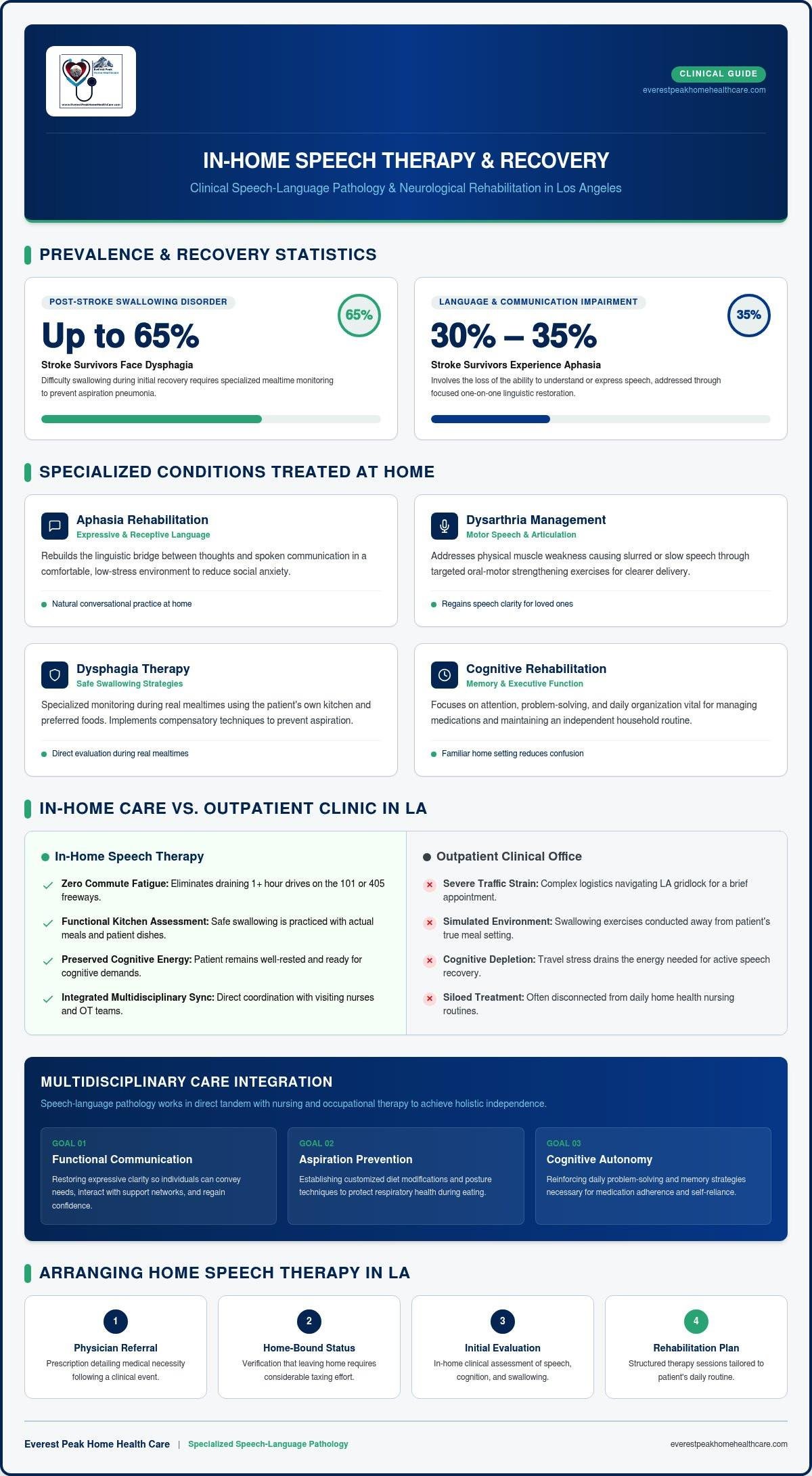
Aphasia and dysarthria are two of the most common conditions treated in a home setting following a neurological event. Aphasia, which affects approximately 30% to 35% of stroke survivors, involves the loss of the ability to understand or express speech. Therapists work to rebuild the linguistic bridge between a patient’s thoughts and their spoken words. Dysarthria involves a physical weakness of the muscles used for speech, resulting in slurred or slow delivery. By implementing targeted strengthening exercises, therapists help patients regain the clarity needed to be understood by their loved ones and caregivers.
Beyond verbal communication, therapists manage cognitive rehabilitation and dysphagia. Cognitive therapy focuses on enhancing executive functions, memory, and problem-solving skills, which are vital for maintaining an independent lifestyle. Dysphagia management is perhaps the most critical safety intervention, as between 50% and 65% of stroke survivors experience difficulty swallowing. Therapists conduct mealtimes assessments to prevent aspiration pneumonia and malnutrition, ensuring each patient can eat and drink with confidence. If you’re currently managing these challenges, licensed speech therapy can provide the professional oversight needed for a safer home environment.
Recovering from a Stroke at Home
The first 90 days following a stroke are a critical window for language restoration and neuroplasticity. During this period, speech therapy is often coordinated with medical social worker home visits LA services to help families navigate the emotional and logistical shifts in their household dynamics. Therapists set realistic, incremental milestones that focus on functional needs, such as answering the phone or requesting medication. All care is delivered while adhering to the Medicare home health coverage criteria, which ensure that homebound patients receive the high-quality, intermittent skilled care they require for a successful recovery.
Neurological Disorders and Long-Term Support
For individuals living with progressive conditions like Parkinson’s disease, ALS, or multiple sclerosis, home-based therapy provides a steady guide for managing changing needs. Our specialists adapt the home environment to support non-verbal communication tools and assistive technology when verbal speech becomes difficult. A significant portion of these visits is dedicated to caregiver training. By teaching family members how to facilitate language practice and safe swallowing techniques between professional visits, we ensure that the patient’s progress remains consistent and their well-being is protected around the clock.
Comparing In-Home Speech Therapy vs. Outpatient Clinics
The decision between an outpatient facility and home-based care often hinges on the patient’s physical stamina and the logistical realities of Los Angeles. For many, the primary hurdle of clinic-based therapy is the “LA Traffic Factor.” Transporting a patient with mobility issues across congested corridors like the I-10 or the 405 isn’t just a matter of time; it’s a significant source of physical and mental fatigue. By the time a patient arrives at a clinic, their cognitive energy is often depleted, which can diminish the effectiveness of the session. In contrast, speech therapy home visits LA families select ensure that the clinician arrives at the patient’s door, allowing the individual to dedicate their full focus to the recovery process.
Clinical outcomes also benefit from the “generalization” of skills. In a clinic, a patient might successfully perform a swallowing exercise or a speech task in a controlled, sterile room. However, transferring those skills to the real world is often difficult. When therapy occurs at home, the transition is seamless because the training happens in the exact environment where the skills are needed. Additionally, the financial aspect often favors home health for eligible patients. Under specific Medicare coverage criteria for home health services, qualifying individuals may receive these services with little to no out-of-pocket costs, whereas clinic visits frequently involve recurring co-pays and the hidden costs of specialized transportation.
The Advantage of Functional Training
Recovery is most effective when it mirrors the patient’s daily life. Licensed speech-language pathologists utilize the kitchen, bedroom, and living room as clinical spaces, turning everyday environments into tools for progress. Instead of using generic flashcards, we might use the patient’s own phone to practice dialing for help or their pill organizer to work on cognitive sequencing. This approach significantly reduces “white coat syndrome,” a phenomenon where anxiety in a medical setting hinders a patient’s speech performance. When a person feels secure in their own home, their ability to engage and communicate naturally increases.
Safety and Mobility Considerations
Safety is a paramount concern for seniors and those recovering from surgery. Eliminating the need to travel removes the risk of falls during transport, which is a major concern for fragile patients. Our therapists also conduct environmental assessments, observing real-world swallowing hazards in the patient’s own kitchen that a clinic-based provider would never see. To ensure a comprehensive recovery, our team often coordinates with personal care assistance North Hollywood experts. This collaboration ensures that the communication and swallowing strategies developed during therapy are integrated into the patient’s daily routine by their support staff, fostering a safer and more consistent environment for long-term health.
How to Arrange Speech Therapy Home Visits in Los Angeles
Securing the professional speech therapy home visits LA families require begins with a formal referral from a primary physician or a hospital discharge planner. This document is the clinical foundation that allows a home health agency to initiate skilled care. Once the referral is received, the agency’s intake team verifies insurance coverage and confirms the patient’s “home-bound” status. Under 2026 guidelines, home-bound status applies to individuals who find leaving their residence a taxing effort that requires supportive devices, special transportation, or the physical assistance of another person. We act as a steady guide during this administrative phase, ensuring that the focus remains on the patient’s well-being rather than the complexities of paperwork.
After the initial administrative intake, a licensed speech-language pathologist (SLP) conducts a comprehensive clinical assessment in the patient’s residence. On this first day, the SLP evaluates the individual’s swallowing safety, cognitive-linguistic baseline, and verbal clarity within their natural environment. Following this evaluation, the clinician develops a personalized Plan of Care (POC). This document establishes the frequency of visits and outlines specific, measurable goals tailored to the individual’s needs. The primary objective of every Plan of Care for speech therapy home visits LA residents receive is to foster independence and restore the patient’s ability to communicate their needs safely and effectively.
Navigating Insurance and Medicare in California
As of 2026, qualifying home health services, including speech-language pathology, are covered at 100% under Original Medicare for eligible patients. This means there is typically a zero dollar out-of-pocket copay and no deductible for those who meet the home-bound criteria. Our medical social workers are instrumental in this process, as they help families clarify their specific benefits and navigate the documentation of “medical necessity.” This clinical documentation is essential for justifying why skilled intervention is required for recovery. For patients utilizing Medicare Part B, the combined therapy threshold for 2026 is $2,480, which requires specific clinical modifiers to ensure continued coverage for necessary rehabilitative services.
Preparing Your Home for the First Visit
To ensure the most productive environment for rehabilitation, we suggest creating a quiet, well-lit space where the patient can focus on cognitive and speech exercises without distraction. It’s also helpful to have a list of current medications and a summary of recent medical history ready for the therapist’s review. We strongly encourage a primary caregiver to be present during these sessions to participate in training and education. This collaboration is vital, as the caregiver will help the patient implement safe swallowing techniques and communication strategies between professional visits. If you’re navigating a new diagnosis, our team provides professional home health coordination to help you manage the transition with confidence and dignity.
Why Everest Peak is the Trusted Choice for Speech Therapy
Choosing a provider for speech therapy home visits LA residents trust requires a partner who understands the delicate balance between clinical rigor and personal respect. At Everest Peak Home Health Care, our approach is defined by the “Compassionate Expert” model. We recognize that recovery is more than a set of clinical exercises; it’s a journey to reclaim one’s voice and independence within the sanctity of the home. Our licensed speech-language pathologists bring a high register of professional expertise directly to your doorstep, ensuring that every session is conducted with the dignity and patience your loved one deserves.
Our agency’s deep roots in North Hollywood and the San Fernando Valley allow us to provide a level of responsive, localized care that national providers cannot match. We don’t operate in isolation. Instead, our SLPs maintain constant multidisciplinary coordination with our registered nurses, physical therapists, and occupational therapists. This integrated communication ensures that if a patient’s physical stamina changes or a new medical concern arises, the entire care team is informed and ready to adapt. This holistic oversight is what allows us to restore self-sufficiency and safety for families throughout the LA basin.
The Everest Peak Clinical Difference
We maintain high standards for our staff through a rigorous vetting and licensing process, ensuring every speech-language pathologist on our team possesses the specialized skills needed for complex neurogenic recovery. Our focus remains firmly on outcome-based care rather than the mere completion of scheduled visits. We measure our success by the tangible improvements in a patient’s ability to swallow safely and communicate clearly. By managing the transition from hospital discharge to home-based recovery with methodical precision, we reduce the stress on family members and provide a stable foundation for long-term health.
Contacting Our Los Angeles Team
Initiating care is a straightforward process designed to support both physicians and families. Whether you’re a discharge planner looking for a reliable partner in the San Fernando Valley or a family member seeking guidance for a loved one in Beverly Hills or Santa Monica, our intake specialists are ready to assist. We serve the greater Los Angeles area with a commitment to professional integrity and clinical excellence. If you’re ready to begin the recovery journey in a supportive environment, we invite you to schedule a professional consultation with Everest Peak Home Health Care today.
Restoring Your Voice with Confidence and Dignity
Regaining the ability to communicate and swallow safely is a significant milestone that deserves a focused, supportive environment. By choosing the professional speech therapy home visits LA families prefer, you ensure that your loved one receives elite clinical care without the exhaustion of navigating city traffic. This transition to home-based rehabilitation allows for functional training in a familiar setting, where licensed therapists can directly apply recovery strategies to the patient’s daily routine.
Our approach centers on clinical excellence and deep-seated empathy. With comprehensive multidisciplinary teams that include licensed registered nurses and therapists, we coordinate every detail of the recovery process to ensure no safety concern is overlooked. Based in North Hollywood and serving the entire San Fernando Valley, we’re dedicated to restoring the independence of every individual we serve. You don’t have to navigate the complexities of medical recovery alone. Begin your recovery journey with professional speech therapy at home and discover the peace of mind that comes with expert, compassionate guidance. We’re here to help you find your voice again.
Frequently Asked Questions
Is speech therapy at home as effective as going to a specialized clinic?
Home-based therapy is highly effective because it allows for functional training in the patient’s natural environment. While clinics offer specialized equipment, home visits facilitate the immediate application of communication strategies to daily life. This real-world practice often leads to faster generalization of skills. For those seeking speech therapy home visits LA providers offer, the elimination of travel fatigue ensures the patient remains cognitively fresh and engaged during every clinical session.
Does Medicare cover speech therapy home visits in Los Angeles?
Original Medicare Part A and Part B cover qualifying home health services at 100% with no out-of-pocket copay or deductible for eligible patients. To qualify in California, the individual must be certified as home-bound and require intermittent skilled care under a physician’s plan. Our team verifies these requirements during the intake process to ensure that families in the San Fernando Valley can access essential rehabilitative support without financial uncertainty.
How often will a speech therapist visit my home each week?
The frequency of visits is determined by the personalized Plan of Care developed during the initial clinical assessment. Typically, a licensed speech-language pathologist might visit one to three times per week, depending on the severity of the condition and the patient’s recovery goals. This schedule is flexible and can be adjusted as the individual achieves specific milestones or as their medical needs evolve throughout the home health episode.
What is the difference between a speech therapist and a speech-language pathologist?
There is no functional difference between these terms, though speech-language pathologist is the formal clinical title used within the healthcare industry. This designation reflects the clinician’s extensive training in both communication and swallowing disorders. At Everest Peak, our licensed professionals bring a high level of expertise to every visit, ensuring that patients receive sophisticated care that addresses the complex neurological aspects of their recovery journey.
Can a speech therapist help with swallowing difficulties after a stroke?
Managing swallowing dysfunction, known as dysphagia, is a primary clinical focus for our therapists. Since a significant percentage of stroke survivors experience difficulty swallowing, our clinicians conduct bedside assessments to prevent aspiration pneumonia and malnutrition. We teach compensatory strategies and diet modifications using the patient’s own kitchen tools, ensuring that each meal is safe and provides the necessary nutrition for a successful recovery at home.
What happens if my loved one is non-verbal; can speech therapy still help?
Speech therapy remains vital even if a patient is currently non-verbal. Our clinicians utilize Augmentative and Alternative Communication tools and non-verbal strategies to help individuals express their basic needs and interact with their support network. We also focus on cognitive-linguistic exercises to improve memory and attention. This approach ensures that every individual maintains their dignity and a sense of connection to their family while working toward verbal restoration.
How long does a typical home-based speech therapy session last?
A standard home-based session generally lasts between 45 and 60 minutes. This duration is designed to provide intensive, focused intervention without causing excessive fatigue for the patient. Each visit includes direct therapy, progress monitoring, and caregiver education. By maintaining a methodical and steady rhythm during these sessions, our therapists ensure that no detail of the individual’s care is overlooked while respecting the sanctity of the home environment.
Do I need a doctor’s referral to start speech therapy home visits in LA?
A formal physician’s referral is a mandatory requirement to initiate speech therapy home visits LA residents receive through a home health agency. This referral ensures that all rehabilitative services are medically necessary and integrated into the patient’s broader medical oversight. Once your doctor provides the order, our intake team coordinates with their office to verify insurance benefits and schedule the initial clinical assessment at your residence in a timely manner.