
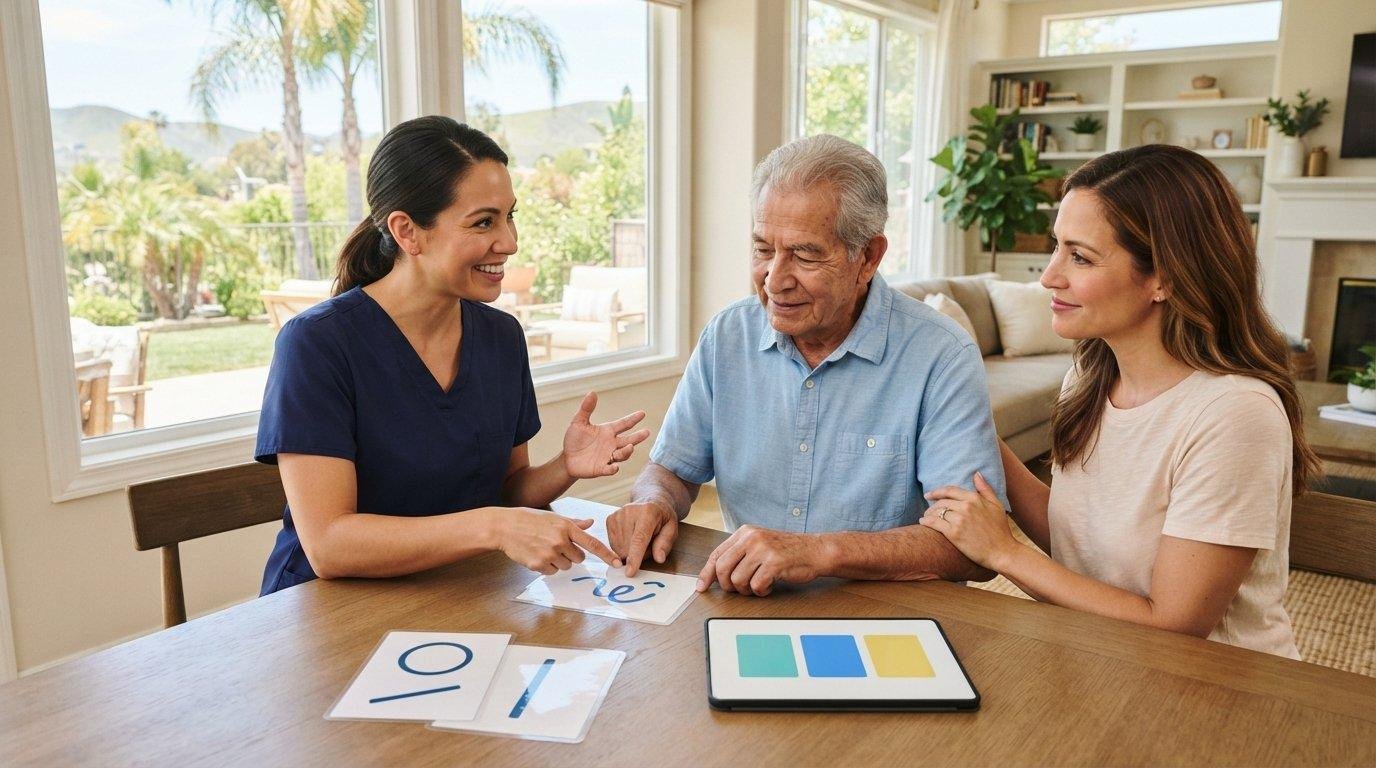
Imagine the profound frustration of knowing exactly what you want to say, yet finding the words trapped behind a wall you cannot climb. For many families in North Hollywood, this silence is often the most painful part of the recovery journey following a stroke or brain injury. It’s a heavy burden that affects not just the patient, but every loved one who wishes they could bridge the gap. Working with a dedicated aphasia speech therapist in the comfort of your own home can transform this experience from one of isolation into a methodical path of renewed connection.
We understand that the anxiety surrounding language loss is overwhelming, especially when you’re unsure if a loved one’s voice will ever truly return. This guide explains how professional speech-language pathologists facilitate neurological recovery to restore functional communication for daily living while empowering caregivers with the tools they need. You’ll learn about the latest evidence-based interventions, the clinical benefits of therapy in a familiar environment, and how our team bridges the gap between medical expertise and the sanctity of your home.
Key Takeaways
- Identify the specific symptoms of expressive, receptive, and global aphasia to better understand your loved one’s unique communication challenges.
- Discover how a professional aphasia speech therapist utilizes clinical assessments and functional goal setting to rebuild independence within your own home.
- Explore evidence-based rehabilitation techniques, including Melodic Intonation Therapy, which utilizes the brain’s musical centers to bypass language barriers.
- Learn practical strategies to create a communication-rich environment by reducing environmental distractions and implementing effective visual supports.
- Understand the importance of an integrated care approach where speech-language pathologists coordinate with nursing and physical therapy teams for holistic recovery.
Understanding Aphasia and the Role of Home-Based Speech Therapy
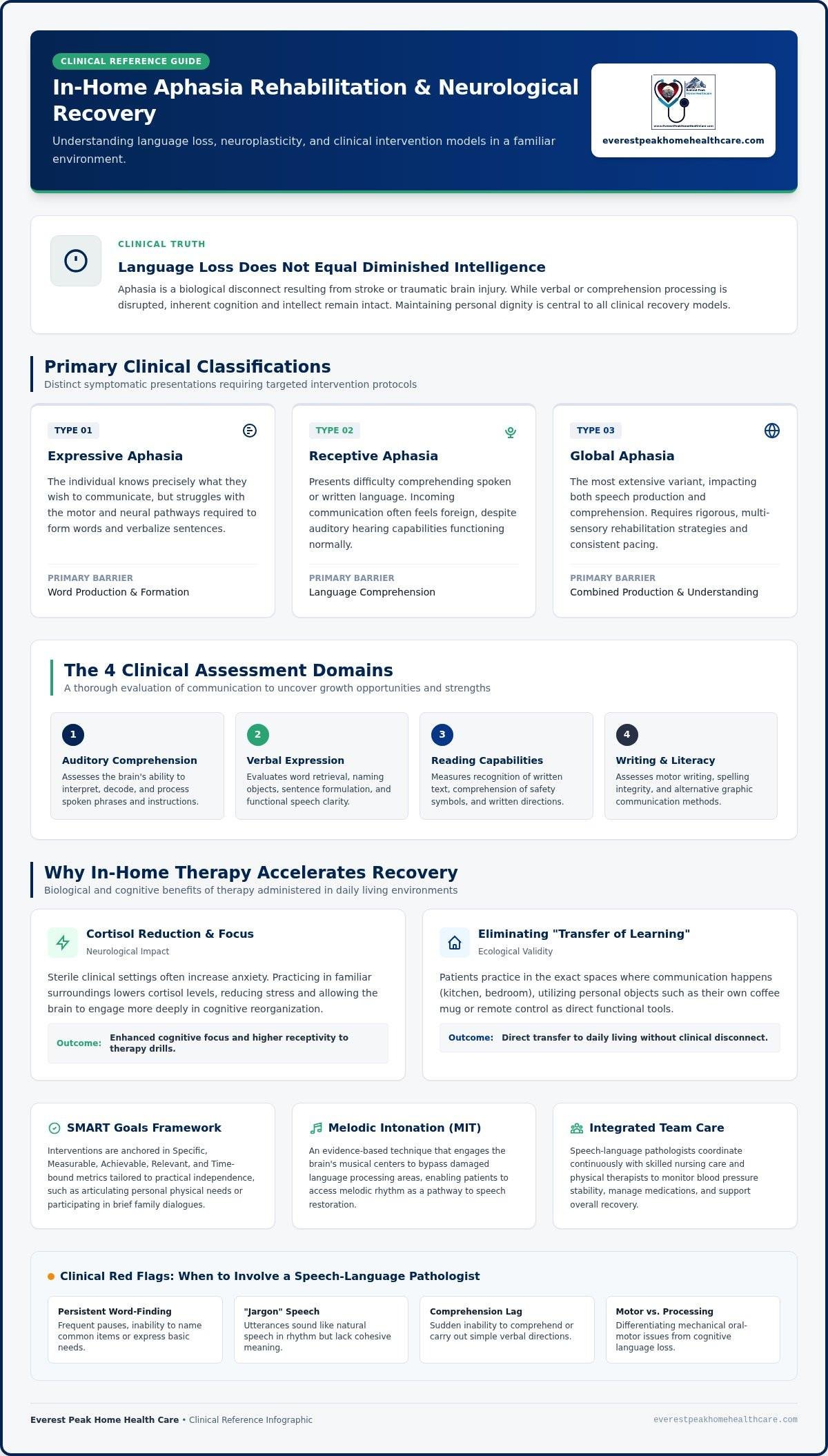
Aphasia is a neurological communication disorder that frequently occurs after a stroke or traumatic brain injury. It disrupts the brain’s ability to process language, yet it’s vital to remember that it doesn’t diminish a person’s inherent intelligence. Gaining a clinical understanding of aphasia helps families recognize that their loved one’s frustration stems from a biological disconnect rather than a cognitive decline. In these moments, maintaining the individual’s dignity is our highest priority, ensuring they feel respected as they navigate a world that suddenly feels silent.
Families typically encounter three primary forms of this condition. Expressive aphasia leaves an individual struggling to form words, even when they know exactly what they want to say. Receptive aphasia makes it difficult to comprehend spoken or written language, often making conversation feel like a foreign tongue. Global aphasia represents a more extensive challenge, affecting both the production and understanding of speech. Our approach as a “Steady Guide” emphasizes that regardless of the diagnosis, the brain possesses a remarkable quality called neuroplasticity. This ability to form new neural connections makes early intervention by an aphasia speech therapist critical for long-term recovery.
Why the Home Setting Accelerates Communication Recovery
Traditional clinical environments can feel sterile and disconnected from daily life. When a patient works with an aphasia speech therapist at home, they practice communication in the exact spaces where it’s most needed, such as the kitchen or bedroom. This approach eliminates “transfer of learning” hurdles because the therapist uses the patient’s actual belongings, like their favorite coffee mug or a specific remote control, as functional therapy tools. Research suggests that the comfort of a familiar environment lowers cortisol levels. When stress is reduced, cognitive focus improves, allowing the brain to engage more deeply with the rehabilitative exercises.
Identifying the Need for a Professional Speech Therapist
Recognizing the early signs of communication struggle is essential for a timely referral. Common red flags include persistent word-finding difficulties, the use of “jargon” speech that sounds like real words but lacks meaning, or a sudden inability to follow simple commands. It’s also important to distinguish between speech issues, which involve the motor mechanics of the mouth, and language issues, which involve cognitive processing. A qualified speech-language pathologist provides the expert oversight needed to navigate these complexities. A licensed speech-language pathologist acts as a steady guide who bridges the gap between medical stability and successful social reintegration within the community.
The Comprehensive Approach of an Aphasia Speech Therapist
A professional aphasia speech therapist begins the recovery process with a meticulous clinical assessment that evaluates four primary domains of communication: auditory comprehension, verbal expression, reading, and writing. This evaluation isn’t merely a checklist of deficits; it’s a foundational step in understanding how the individual currently processes information and where the most significant opportunities for growth exist. By identifying specific strengths, the therapist can build a bridge toward greater independence, ensuring that every session is rooted in clinical evidence and personal dignity.
According to the National Institute on Deafness and Other Communication Disorders, the success of therapy often depends on the timing and intensity of the intervention. We translate this clinical necessity into “SMART” goals: specific, measurable, achievable, relevant, and time-bound. These objectives focus on functional independence, such as a patient regaining the ability to express basic physical needs or participating in a brief family conversation. To ensure these goals remain within reach, our therapists use data-driven metrics to monitor progress, adjusting the intensity of the exercises as the brain’s neural pathways begin to heal and reorganize.
Recovery rarely happens in a vacuum. A dedicated aphasia speech therapist works in close coordination with skilled nursing care to manage the patient’s overall health profile. This collaborative effort ensures that factors like medication management or blood pressure stability are optimized to support cognitive function. When clinicians share insights across disciplines, the patient receives a seamless experience that prioritizes both their medical safety and their communicative potential.
Customized Treatment Plans for Neurological Health
Every treatment plan is uniquely tailored to reflect the patient’s pre-injury life, incorporating specific hobbies or career-related terminology to make exercises more engaging. This personalized approach is particularly effective because it leverages existing memories to stimulate language retrieval. In addition to speech, our therapists often address secondary issues like dysphagia, or swallowing difficulties, which frequently co-occur with aphasia. By integrating cognitive-linguistic therapy, we also work to improve memory and executive function, providing a holistic path toward self-sufficiency. If you’re seeking this level of specialized oversight, our team is ready to provide a compassionate clinical consultation to discuss your specific needs.
The SLP as a Family Educator and Advocate
The role of a speech-language pathologist (SLP) extends beyond the patient to include the entire family unit. We provide specialized training on “Supported Conversation for Adults with Aphasia” (SCA) techniques, which empower caregivers to act as communication partners rather than just observers. These tools help families navigate the heavy emotional toll of communication barriers, replacing frustration with actionable strategies. Our therapists also serve as advocates, connecting families with long-term community reintegration resources across the Los Angeles area to ensure that social connection remains a priority throughout the recovery journey.
Evidence-Based Techniques in Modern Aphasia Rehabilitation
An aphasia speech therapist often employs Melodic Intonation Therapy (MIT) for patients struggling with non-fluent speech production. This fascinating technique leverages the brain’s musical right hemisphere to bypass damaged language centers in the left hemisphere. By “singing” simple phrases with specific rhythms and pitches, patients can often access words that remain stuck during normal conversation. This method provides a profound sense of accomplishment and serves as a vital clinical bridge toward more traditional verbal expression.
Constraint-Induced Language Therapy (CILT) takes a more intensive approach by encouraging direct verbal attempts while limiting compensatory non-verbal gestures like pointing or drawing. This method forces the brain to recruit and strengthen specific language pathways that might otherwise remain dormant. Additionally, therapists use Semantic Feature Analysis (SFA) to address anomia, or word-finding failure. By systematically describing an object’s attributes, such as its category, use, and location, patients rebuild the semantic networks necessary for spontaneous word retrieval. These interventions align with the ASHA practice guidelines for aphasia, ensuring every session is grounded in clinical excellence.
When verbal speech is severely limited, Augmentative and Alternative Communication (AAC) provides a necessary lifeline for the individual. This domain includes both low-tech tools, such as customized communication boards, and high-tech speech-generating devices. These tools don’t replace speech; rather, they reduce the immediate frustration of being misunderstood, allowing the patient to participate in family life while they continue their rehabilitative work.
Restorative vs. Compensatory Strategies
Rehabilitation typically involves a delicate balance between restorative and compensatory strategies. Restorative techniques focus on targeted drills designed to directly rewire the brain’s language centers and return original function. Compensatory strategies teach the patient new ways to convey meaning when specific words remain elusive. A steady guide ensures that the patient can communicate their immediate physical needs today while they work toward greater neurological recovery for tomorrow. One approach re-wires pathways. The other creates functional bridges.
The Role of Technology in Home Therapy
In 2026, specialized tablet applications have become a cornerstone of home-based recovery, allowing patients to complete high-repetition “homework” between clinical visits. These platforms track progress in real-time, providing the therapist with data to adjust treatment intensity. Emerging tools like virtual reality and digital biofeedback are also entering the home health space, offering immersive environments to practice social interactions safely. A professional aphasia speech therapist carefully integrates these digital tools to enhance the recovery process, though they serve to support, rather than replace, the clinician’s expert oversight and empathetic care.
Creating a Communication-Rich Environment at Home
The home is more than just a place of residence; it is a clinical setting where recovery takes root. A professional aphasia speech therapist identifies specific environmental barriers that may hinder a patient’s linguistic progress. Reducing auditory and visual distractions is a fundamental first step. A quiet room ensures the patient can focus entirely on processing language without competing with background noise from televisions, household appliances, or street traffic. This controlled environment allows the brain to dedicate its full energy to the complex task of communication.
Visual supports act as essential communication ramps within the household. Therapists often recommend labeling common items or using customized communication boards to bridge the gap when specific words remain elusive. These tools reduce immediate frustration and prevent the individual from retreating into social isolation. Maintaining a predictable daily routine further lowers the cognitive load on the patient. When a schedule is consistent and familiar, the brain expends less energy on navigating the day and more on the active work of language retrieval and auditory comprehension.
Patience is one of the most effective therapeutic tools in the home setting. We often encourage families to practice the “Wait Ten” rule: giving the individual at least ten full seconds to process a question and formulate a response. Interrupting too early can disrupt a fragile neural pathway that is working to connect a thought to a word. Providing this silent, supportive space empowers the patient to complete their own thoughts, which is vital for rebuilding confidence and self-sufficiency.
Practical Steps for Caregivers in the San Fernando Valley
For families in the San Fernando Valley navigating these transitions, small adjustments in daily interaction can yield significant results. Our clinicians recommend three primary strategies for successful communication:
- Simplify your language: Use short, direct sentences while maintaining a respectful, adult tone. Avoid talking down to the patient, as their intelligence remains intact despite the language barrier.
- Employ multi-modal communication: Support your spoken words with gestures, drawing, or writing. Providing multiple sensory paths to meaning helps the brain process information more effectively.
- Confirm understanding: Use “yes/no” questions rather than open-ended ones to reduce the pressure of response while still validating the patient’s choices and needs.
Addressing Emotional Frustration and Communication Burnout
Neurological recovery is an exhausting process that can lead to “communication burnout.” Signs of fatigue, such as a temporary dip in ability or increased irritability, are common and often signal that the patient needs a period of cognitive rest. Validating these feelings is vital for maintaining the patient’s motivation during difficult therapy sessions. If the emotional weight of these transitions becomes overwhelming for the family, connecting with medical social worker home visits LA can provide the necessary counseling and professional support. Establishing a supportive home environment is a collaborative effort between the family and our clinical team. If you’re ready to transform your home into a space of healing, contact our specialized speech therapy team today to begin a personalized care plan.
Accessing Expert Speech Therapy in Los Angeles and North Hollywood
Accessing a qualified aphasia speech therapist begins with a formal referral from a physician or neurologist. This medical professional establishes a plan of care that identifies the patient’s specific rehabilitative needs following a stroke or injury. In North Hollywood and the wider San Fernando Valley, the transition from a clinical facility to the home is a critical period where continuity of care prevents setbacks in language recovery. Our licensed speech-language pathologists act as a steady guide during this phase, ensuring that the clinical standards established in the hospital are maintained within the domestic setting.
For families utilizing Medicare in 2026, home-based speech therapy is typically covered under Part A or Part B when the patient meets the criteria for “homebound” status. This designation means that leaving the residence requires a considerable and taxing effort, often necessitating assistive devices or the help of another person. Our administrative team assists families in navigating these regulatory requirements, ensuring that clinical-grade therapy remains accessible without the added stress of navigating Los Angeles traffic. By bringing the clinic to the patient, we prioritize their energy for the actual work of neurological healing.
Clinical outcomes often improve when an aphasia speech therapist coordinates closely with other specialists. For example, an SLP who shares insights with a provider of in-home physical therapy can synchronize sessions to manage the patient’s fatigue levels. This multidisciplinary approach ensures that physical mobility and cognitive-linguistic goals are addressed in a unified manner, promoting a more holistic recovery. When clinicians work as an integrated team, the patient experiences a more seamless path toward self-sufficiency.
The Everest Peak Commitment to Aphasia Recovery
Our licensed professionals serve the greater Los Angeles area with a commitment to both clinical excellence and deep-seated empathy. We focus on the critical transition from hospital to home, ensuring there’s no gap in rehabilitative care that could hinder progress. Every session is designed to prioritize the patient’s lifestyle, focusing on the specific communication skills they need to navigate their unique environment. This “Compassionate Expert” approach ensures that while the therapy is rigorous, the individual’s dignity and emotional well-being remain at the forefront of the recovery journey.
Next Steps for Your Family’s Recovery Journey
Initiating care requires a few practical steps to ensure a smooth start. Families should begin by gathering necessary medical documentation, including the recent hospital discharge summary and any specific orders from a neurologist. Preparing the home environment for the first clinical assessment involves identifying a quiet, well-lit space where the patient can focus without distraction. Finally, contacting a local provider to discuss your specific speech and language needs allows us to match you with a therapist who possesses the right clinical specialization for your situation. Taking these steps today creates a foundation for a more connected and communicative tomorrow.
Reclaiming the Power of Connection at Home
Recovery from aphasia is a journey of profound patience, yet the home setting provides the most fertile ground for neurological healing. By integrating evidence-based techniques with the comfort of a familiar environment, patients can bypass language barriers and rebuild functional independence. A dedicated aphasia speech therapist acts as a steady guide, transforming daily routines into clinical opportunities for growth and self-sufficiency.
Our team of licensed speech-language pathologists serves Los Angeles and the San Fernando Valley with an integrated clinical care model. We coordinate closely with nursing and physical therapy providers to ensure that every facet of your loved one’s health is supported during this transition. This collaborative approach prioritizes the individual’s dignity while working toward the restoration of their lifestyle.
For professional speech therapy home visits in LA, contact Everest Peak Home Health Care today to support your loved one’s recovery. While the road to communication recovery is methodical, every word reclaimed is a milestone worth celebrating. Your family doesn’t have to navigate this transition alone.
Frequently Asked Questions
Is aphasia permanent, or can a speech therapist help fully restore language?
Aphasia is not always a permanent condition, as the brain possesses a remarkable ability to reorganize itself through neuroplasticity. While the extent of recovery depends on the severity of the neurological injury, working with an aphasia speech therapist significantly improves functional communication. Many individuals regain the ability to express their needs and engage in meaningful social conversations. Early and consistent intervention is the most effective way to ensure the best possible outcome for long-term linguistic restoration.
How many times a week does an aphasia speech therapist visit the home?
The frequency of visits is determined by a physician’s plan of care and the individual’s specific clinical needs. Typically, a therapist visits the home two to three times per week to provide intensive rehabilitative support. These scheduled sessions ensure consistent progress while allowing the patient time to rest and practice “homework” exercises. Our team monitors these intervals closely to adjust the intensity of care as the individual’s stamina and communication skills improve over time.
Does Medicare cover in-home speech therapy for aphasia in Los Angeles?
Medicare typically covers in-home speech therapy services in Los Angeles when a patient is certified as “homebound” by an eligible practitioner. Under these guidelines, the services must be medically necessary and provided by a Medicare-certified agency. Patients generally face zero out-of-pocket costs for these clinical visits under Part A. We assist families in North Hollywood and the San Fernando Valley with verifying their specific insurance benefits to ensure a seamless transition into professional care.
What is the difference between aphasia and dementia?
Aphasia is primarily a communication disorder that affects the ability to process language, while dementia is a broader cognitive decline that impacts memory and intellect. A person with aphasia often knows exactly what they want to say but cannot access the correct words. In contrast, dementia involves a progressive loss of the thoughts themselves. Our therapists specialize in identifying these distinctions to provide the most appropriate and dignified rehabilitative support for each individual’s unique situation.
Can a person with global aphasia still learn to communicate?
Individuals with global aphasia can absolutely learn to communicate using a variety of specialized techniques and tools. While verbal speech may be limited, a professional aphasia speech therapist introduces alternative methods such as visual communication boards or high-tech speech-generating devices. These tools allow the patient to express essential needs and maintain social connections with their family. Recovery in these cases focuses on building functional independence through every available sensory and cognitive pathway within the home.
How long does a typical home speech therapy session last?
A typical home-based therapy session generally lasts between 45 and 60 minutes. This duration provides enough time for the clinician to perform targeted exercises without causing excessive cognitive fatigue for the patient. Each session is structured to include active drills, caregiver education, and the review of progress metrics. Our therapists remain flexible, ensuring the length and intensity of the visit align with the patient’s daily energy levels and specific clinical goals for that day.
What should I do if my loved one gets frustrated and refuses therapy?
Frustration is a natural part of the recovery process, and it’s important to validate your loved one’s feelings without pressure. If a patient refuses therapy, we recommend taking a brief “cognitive rest” period and discussing the situation with your therapist. Our clinicians are trained to adjust the session’s pace or focus on more engaging, interest-based activities to rebuild motivation. Maintaining a calm and supportive environment helps lower stress levels and encourages a return to active participation.
Are there specific aphasia support groups in the North Hollywood area?
Several resources are available for families in the North Hollywood and San Fernando Valley areas. Local academic centers, such as the CSUN Language, Speech and Hearing Center in Northridge, offer comprehensive adult clinics and support networks. Additionally, organizations like the American Stroke Association provide virtual and in-person groups for stroke survivors and their caregivers. Our medical social services team can provide specific referrals to these community anchors to ensure your family feels connected and supported.