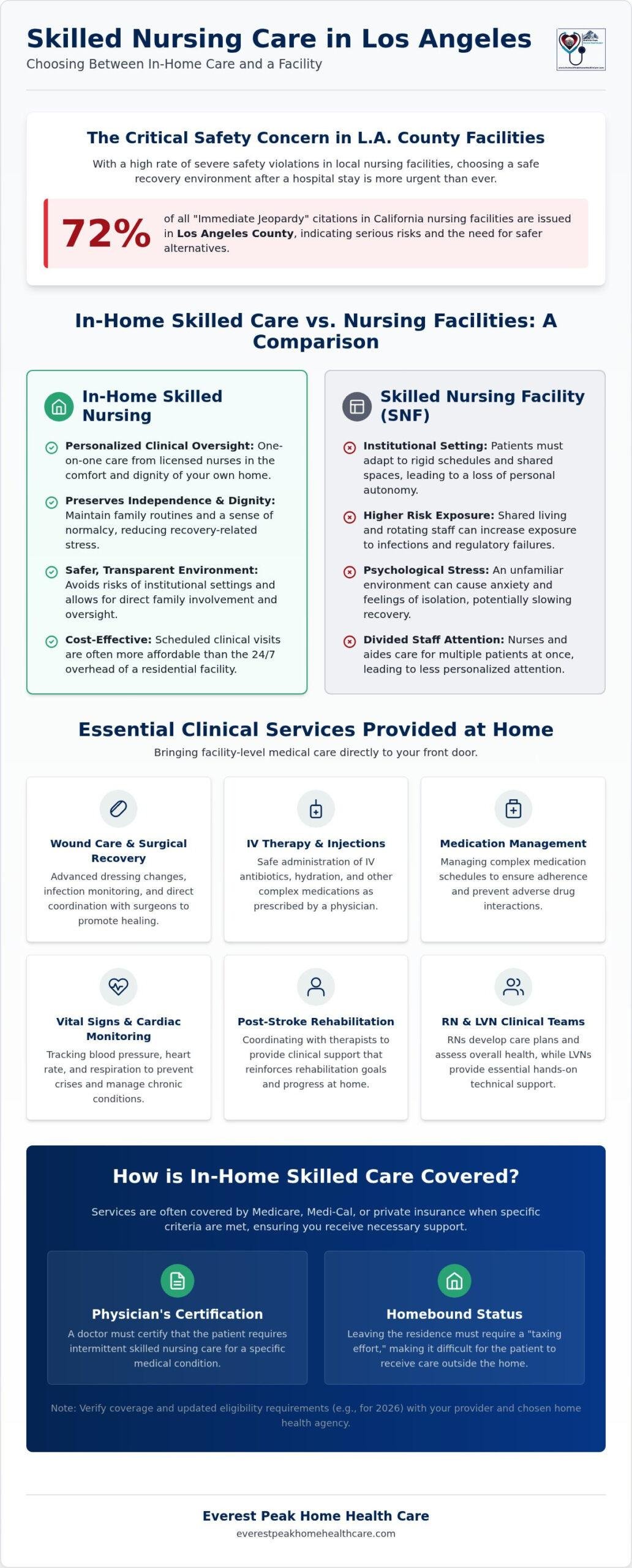
With Los Angeles County accounting for 72% of all “Immediate Jeopardy” citations in California nursing facilities, the search for a safer recovery environment has never been more urgent. You likely feel a profound sense of anxiety as a hospital discharge date approaches, fearing that managing complex medical needs like IV therapy or wound care alone will lead to a forced move into an institutional setting. It is a common concern that choosing the comfort of home might mean sacrificing the rigorous clinical oversight your loved one requires for a successful recovery.
This reference guide explores how professional skilled nursing care Los Angeles provides a clinical-grade alternative to facilities, ensuring that high-level medical support and long-term health are maintained within the dignity of your own residence. We will clarify the essential differences between general caregiving and licensed clinical nursing, explain the technical scope of home health services, and provide a roadmap for a safe, professional transition from the hospital to your front door. By understanding these options, you can secure the expert support necessary to restore your lifestyle while keeping your family together.
Key Takeaways
- Differentiate between basic custodial support and the medically necessary clinical oversight required for a safe and effective recovery.
- Discover how skilled nursing care Los Angeles provides facility-level medical outcomes while preserving the individual’s independence and dignity.
- Compare the practical benefits and cost-effectiveness of scheduled clinical visits against the institutional structure of traditional nursing facilities.
- Navigate the updated 2026 eligibility requirements for Medicare and Medi-Cal to ensure your home health services are fully supported and covered.
- Learn how to select a licensed provider that coordinates effectively with the local healthcare network to ensure a successful transition home.
Understanding Skilled Nursing Care Options in Los Angeles
Finding reliable skilled nursing care Los Angeles starts with understanding that these services are medically necessary interventions provided by licensed professionals. Unlike custodial care, which focuses on activities of daily living like bathing or meal preparation, skilled nursing involves technical clinical tasks that a layperson cannot safely perform. This includes managing complex medication regimens, administering injections, and monitoring vital signs to prevent health crises. In California, the Department of Public Health regulates these agencies to ensure they meet strict clinical standards, providing a layer of protection for vulnerable individuals.
Families throughout the region are increasingly prioritizing home-based clinical visits. This shift is often driven by the desire for a more personalized recovery experience that avoids the rigid schedules of a facility. Given the rising concerns regarding regulatory citations in local institutions, many people find that skilled nursing care Los Angeles offers a safer, more transparent alternative. By bringing professional support directly to the patient, families maintain a sense of normalcy and control during a challenging health transition.
Home-Based Care vs. Institutional Facilities
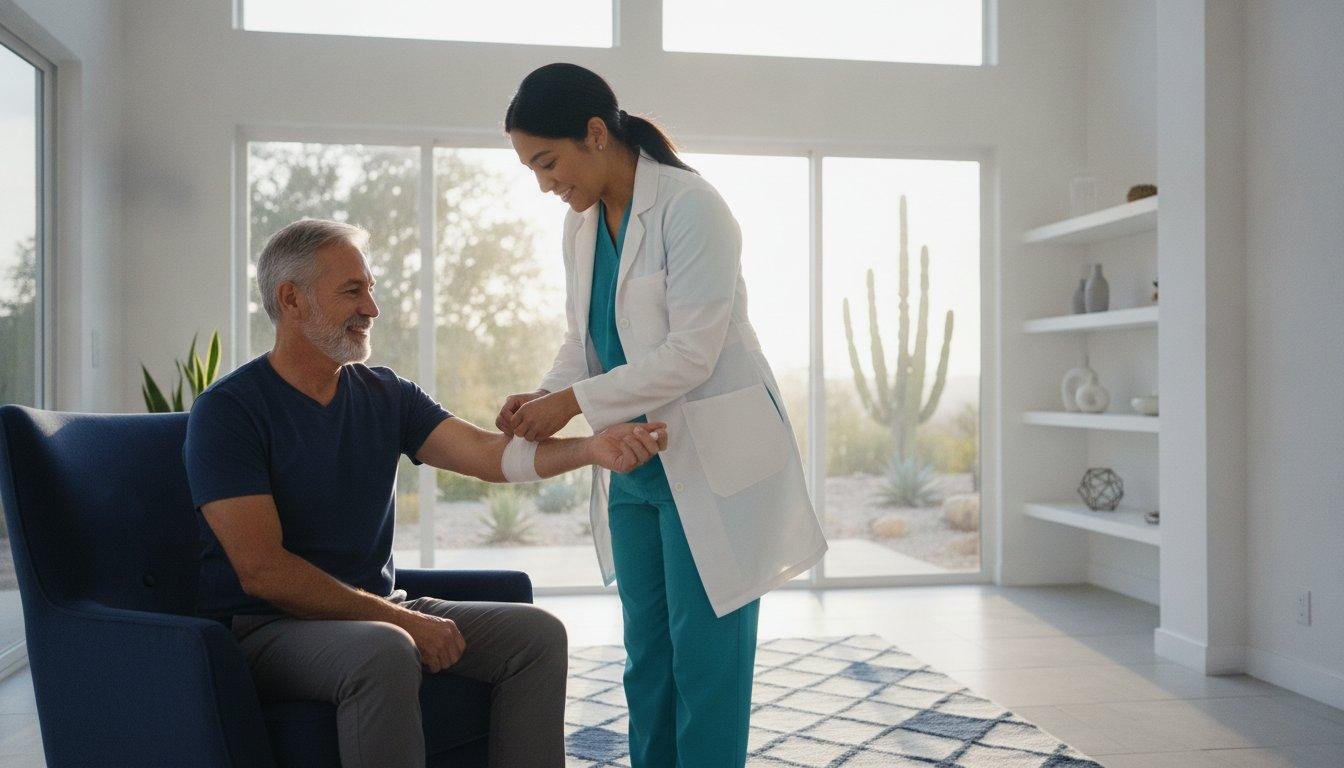
Many families initially assume that high-level clinical oversight is only available within the traditional framework of nursing home care in the United States. However, modern home health agencies now offer a level of clinical parity that allows patients to receive facility-grade medical attention in their own bedrooms. Licensed nurses assess the individual’s clinical status and coordinate with physicians to ensure the treatment plan effectively promotes healing. Recovering in a familiar environment near loved ones significantly reduces the psychological stress often associated with institutionalization. Everest Peak helps families achieve this balance by providing skilled nursing care that integrates professional expertise with the comfort of home.
When is Skilled Nursing Deemed Medically Necessary?
For insurance or Medicare to cover these services, a physician must certify that the care is medically necessary. This determination is typically based on the complexity of the patient’s condition and the need for professional judgment. Common clinical scenarios include post-stroke rehabilitation, cardiac monitoring, or complex wound management following a major surgery. Additionally, the individual must meet the “homebound” criteria, meaning that leaving the residence requires a taxing effort or the assistance of another person. This status ensures that clinical resources are directed toward those who benefit most from receiving care in a residential setting.
Essential Clinical Services Provided by Home Health Nurses
Registered Nurses (RNs) and Licensed Vocational Nurses (LVNs) form the clinical backbone of home-based recovery. While an RN typically conducts comprehensive health assessments and develops the clinical plan of care, the LVN provides essential technical medical support to ensure the patient’s stability. In areas like the San Fernando Valley, this consistent clinical oversight is vital for preventing hospital readmissions. By identifying subtle changes in a patient’s condition, such as respiratory distress or fluctuating blood pressure, nurses intervene before a situation becomes an emergency. This professional vigilance is often paired with a multidisciplinary team, including physical and occupational therapists, to support every facet of the individual’s recovery.
For those recovering from surgery, integrating post-operative care in North Hollywood into the nursing plan ensures that specific surgical protocols are followed with precision. This specialized attention bridges the gap between the intensive care of a hospital and the independence of home life. If you feel overwhelmed by the technical requirements of a new treatment plan, our professional clinical team can act as your steady guide through the process.
Specialized Wound Care and Surgical Recovery
Skilled professionals manage advanced dressing changes and utilize specialized techniques to promote tissue healing. They monitor surgical sites for early signs of infection, such as redness or unusual discharge, and coordinate directly with Los Angeles surgeons to adjust care as needed. Beyond the physical task, nurses educate both the patient and their family on how to maintain wound integrity between visits. This collaborative approach empowers families while maintaining the high standards typically found in Skilled nursing facility (SNF) care.
Advanced Medication Management and IV Therapy
Managing complex medication schedules is a critical component of skilled nursing care Los Angeles, particularly for patients dealing with polypharmacy. Nurses administer injectable medications and manage intravenous (IV) lines, ensuring that therapy is delivered safely in a residential setting. Medication reconciliation is the process of cross-referencing hospital discharge orders with home supplies. This step is essential for preventing dangerous drug interactions or dosage errors that can occur during the transition from the hospital. Through careful oversight, nurses ensure that every dose contributes to the patient’s recovery rather than complicating it.
Comparing Skilled Nursing Facilities (SNF) vs. In-Home Care
Choosing between a residential facility and home health is a pivotal decision for any family. While California skilled nursing facilities offer around-the-clock monitoring, this institutional model often splits a nurse’s attention among many residents simultaneously. In contrast, skilled nursing care Los Angeles focuses on scheduled, one-on-one clinical visits where every minute of the professional’s time is dedicated solely to your loved one’s specific recovery needs. This individualized attention allows for a deeper clinical focus, as the nurse can observe subtle environmental factors that might impact the patient’s health, such as nutrition habits or home safety hazards, which are often overlooked in a busy facility setting.
From a financial perspective, home health is frequently the more affordable clinical route because it eliminates the high overhead costs of room and board associated with institutional living. Beyond the financial benefits, the home environment naturally reduces the risk of hospital-acquired infections. Institutional settings house many individuals with complex medical needs, which inherently increases the potential for cross-contamination. By recovering at home, the patient remains in a controlled, hygienic space that they already know and trust, which significantly lowers the physiological stress on their immune system during the healing process.
The ‘LA Choice’ Framework for Families
Families should evaluate the home environment to ensure it can support a safe clinical recovery. This framework involves assessing whether the physical space is free of hazards and determining the level of family support available to assist between professional nursing visits. While home care is ideal for many, a facility might be the safer choice if the residence lacks basic stability or if the patient requires constant, 24-hour medical intervention that exceeds the scope of periodic clinical visits. We help families analyze these variables to ensure the chosen path provides the highest level of safety and dignity.
Continuity of Care with Local Specialists
A professional home health agency acts as a vital bridge to the broader Los Angeles healthcare network. Licensed nurses coordinate directly with primary care physicians to ensure that every clinical observation is communicated and every medication adjustment is authorized. Medical social workers also play a crucial role by managing local resources and helping families navigate the complexities of long-term health planning. This collaborative approach allows patients to maintain relationships with their existing therapists and doctors, ensuring that their skilled nursing care Los Angeles is a seamless extension of their established medical history rather than a fragmented start with new, unfamiliar providers. Families in communities across the San Fernando Valley, including those seeking skilled nursing care Burbank residents depend on, benefit from this coordinated local expertise when transitioning from a hospital discharge to home-based recovery.
Navigating Costs and Eligibility for Nursing Services in California
Securing skilled nursing care Los Angeles involves a structured coordination between your physician and your insurance provider. In 2026, the process remains rooted in a medical necessity model that prioritizes patient safety and clinical outcomes. Whether you’re transitioning from a hospital or managing a chronic condition, the first step is always obtaining a formal doctor’s order. This order serves as the clinical foundation for your care plan, specifying the types of professional visits required to support your recovery at home. For those with private PPO insurance, these plans often offer additional flexibility, though they typically require a detailed clinical justification from your primary care doctor to authorize the start of care.
Medicare Part A generally covers intermittent skilled nursing visits when the patient is considered homebound. As of January 1, 2026, California residents navigating Medi-Cal must be aware that asset limits have been reinstated at $130,000 for individuals and $195,000 for married couples. A 30-month look-back period for asset transfers is also in effect. These regulations differ significantly from facility-based care, where daily co-payments of $217 often apply after the initial 20-day period. Medicare typically covers 100% of home health costs for qualifying patients. This coverage includes not only the nurse’s visits but also the coordination of other essential services like physical or occupational therapy.
Medicare vs. Medi-Cal: What You Need to Know
Eligibility for short-term rehabilitative nursing under Medicare requires that the care be intermittent and provided by a licensed professional. For low-income seniors in Los Angeles County, Medi-Cal acts as a vital supplement to cover long-term clinical needs that Medicare might not address. Medicare typically covers 100% of home health costs for qualifying patients. Understanding these distinctions helps families plan for sustainable support without the fear of unexpected financial burdens.
Preparing for a Professional Home Assessment
Once eligibility is confirmed, a professional home assessment is the next logical step. During this initial evaluation, an Everest Peak nurse will visit your residence to conduct a thorough clinical review. This process is designed to be thorough yet gentle, ensuring that every medical need is documented and addressed. You’ll need to have your hospital discharge summaries, a complete list of current medications, and your insurance cards ready for review. The nurse uses this data to identify specific goals for recovery, such as wound healing or medication stabilization, and establishes a frequency of nursing visits that ensures a safe transition. This methodical approach provides families with a clear roadmap, reducing the anxiety often felt during the first few days back at home.
If you’re ready to begin this process, you can contact our clinical team to schedule your initial assessment and discuss your specific eligibility.
Choosing the Right Skilled Nursing Provider in Los Angeles
Selecting a provider for skilled nursing care Los Angeles requires a discerning eye for both clinical excellence and local reliability. You should prioritize agencies that hold current licenses from the California Department of Public Health, as this certification confirms their adherence to strict safety protocols and professional standards. Beyond basic licensing, an agency’s reputation within the local medical community serves as a vital indicator of their performance. A provider with deep roots in the Los Angeles healthcare network can coordinate more effectively with your existing specialists, ensuring that your transition from a hospital bed to your own home is handled with professional grace and clinical precision.
In a city as diverse as Los Angeles, cultural competence and language support aren’t merely conveniences but essential components of high-quality care. A nurse who understands the specific needs of your neighborhood and can communicate clearly with your family provides a sense of security that goes beyond technical skill. This localized expertise ensures that every clinical visit is respectful of your lifestyle and supportive of your emotional well-being, which is often the foundation for a successful recovery. When you choose a local expert, you’re ensuring that the care plan is tailored to the unique environment of your home and community.
The Everest Peak Approach to Clinical Excellence
Our multidisciplinary team is dedicated to maintaining the highest standards of professional integrity in every residence we serve. By identifying the unique needs of each individual, our Registered Nurses and Vocational Nurses implement care plans that prioritize both physical recovery and personal dignity. We specialize in serving North Hollywood and the broader San Fernando Valley, bringing a localized focus to every clinical encounter. To ensure a comprehensive recovery, we seamlessly integrate speech, physical, and occupational therapy into a unified plan. This collaborative structure allows our therapists and nurses to work in tandem, resulting in a more cohesive and efficient healing process for the patient.
How to Start Your Recovery Journey Today
Transitioning from a hospital discharge to your first home nursing visit is a methodical process that begins with a clear conversation about your needs. You can start by contacting our team to discuss your specific medical requirements and insurance coverage. We’ll guide you through the necessary documentation and coordinate with your physician to establish a start-of-care date that fits your schedule. Our goal is to act as your steady guide, simplifying the complexities of the healthcare system so you can focus entirely on your health. Contact Everest Peak Home Health Care for a clinical assessment to take the first step toward a safe and professional recovery in the comfort of your own home.
Securing Your Path to a Safe Recovery at Home
Choosing the right support system is the most significant step toward regaining independence after a hospital stay. By opting for professional skilled nursing care Los Angeles, you ensure that complex medical needs are met with the same clinical rigor found in a facility while remaining in the comfort of your own residence. Success in this transition relies on a multidisciplinary approach where licensed Registered Nurses and Vocational Nurses coordinate with physical and occupational therapists to drive meaningful outcomes. Understanding your 2026 eligibility for Medicare and Medi-Cal allows you to plan with financial confidence, ensuring that high-quality clinical oversight remains a sustainable part of your long-term health strategy.
You don’t have to navigate these medical complexities alone. Our compassionate, results-oriented care model is designed to provide security and clarity for families throughout the Greater Los Angeles Area. Schedule a Professional Consultation with Everest Peak Home Health Care to learn how our team can guide your recovery. With the right clinical partner, your home becomes a place of healing, dignity, and renewed strength.
Frequently Asked Questions
What is the difference between skilled nursing care and a nursing home?
Skilled nursing care refers to the specific medical services provided by licensed professionals like RNs and LVNs. A nursing home is a residential facility where individuals live long-term. You can receive clinical-grade skilled nursing care Los Angeles in your own residence through a home health agency. This model allows for one-on-one attention and recovery in a familiar environment, whereas a facility requires staff to manage many residents simultaneously in an institutional setting.
Does Medicare cover skilled nursing visits at home in Los Angeles?
Medicare Part A generally covers 100% of the costs for intermittent skilled nursing visits for qualifying individuals. To be eligible, a patient must be considered homebound and require professional medical oversight as certified by a physician. This coverage includes visits for technical tasks like complex wound care or medication management. It’s important to note that Medicare does not cover non-medical custodial care if that is the only service you require.
How often will a nurse visit my home for skilled care?
The frequency of nursing visits is determined by your physician’s specific plan of care and your current clinical stability. Initially, visits may occur several times per week to monitor a new surgical site or stabilize a complex medication regimen. As your health improves and you gain self-sufficiency, the frequency typically decreases. Each visit is designed to achieve specific recovery goals rather than providing a continuous or live-in presence in the home.
What specific medical tasks can a home health nurse perform?
Licensed Registered Nurses and Vocational Nurses perform technical tasks that require professional medical judgment. These include complex wound management, intravenous (IV) therapy, and administering injectable medications. They also conduct comprehensive health assessments and reconcile medications to prevent dangerous interactions. By providing these services at home, they ensure clinical safety while allowing the patient to remain in their own residence. This professional oversight is a vital alternative to institutionalized care.
Can I get skilled nursing care after a surgery like a hip or knee replacement?
Post-operative care is a core service for individuals recovering from major orthopedic surgeries. Skilled nurses monitor the incision site for infection, manage pain protocols, and coordinate with physical therapists to restore mobility. This multidisciplinary approach ensures a safe transition from the hospital to home. It focuses on preventing common complications like blood clots or pneumonia. Our team acts as a steady guide during these first critical weeks of surgical recovery.
How do I qualify for skilled nursing services in California?
Qualification requires a physician to certify that professional medical care is necessary for your recovery or condition management. You must also meet the homebound status, meaning that leaving your residence requires a taxing effort or specialized assistance. For those using Medi-Cal, you must meet specific financial criteria, which as of 2026 includes an asset limit of $130,000 for an individual. These requirements ensure that clinical resources reach those who need them most.
Is a doctor’s referral required for home-based skilled nursing?
A formal doctor’s order is mandatory to begin receiving licensed clinical services at home. This order outlines the medical necessity of the visits and provides the framework for the nursing plan of care. Without a physician’s authorization, insurance providers like Medicare or private PPO plans won’t cover the costs of these professional visits. Your doctor remains an active partner in your recovery, reviewing progress reports and adjusting the treatment plan as your health improves.
What happens if my medical needs increase while receiving home care?
If your condition changes, your home health nurse will immediately communicate with your physician to adjust the clinical plan. This might involve increasing the frequency of visits or adding specialized therapies like physical or occupational therapy. The goal of skilled nursing care Los Angeles is to provide a flexible, responsive level of support. If your needs exceed what can be safely managed at home, your clinical team will help coordinate a transition to a higher level of care. To better understand the full scope of clinical services available to you, reviewing a comprehensive overview of what is skilled nursing care at home can help you and your family prepare for every stage of the recovery process.
For those navigating the specific challenges of spinal procedures, our detailed resource on home care after spinal surgery Los Angeles families rely on outlines the professional protocols and clinical safeguards that support a structured, safe recovery at home.