What if the high-level medical oversight you receive in a hospital didn’t have to end the moment you were discharged? For many families, the transition from a clinical facility to the front door is filled with a mix of relief and profound anxiety. You likely want your loved one home, but you may also fear that you aren’t equipped to manage complex recovery needs or prevent a stressful hospital readmission. Understanding what is skilled nursing care at home is the essential first step toward replacing that uncertainty with a sense of clinical security.
We believe that your home should be a sanctuary for healing rather than a place of medical stress. This guide clarifies how licensed professionals deliver hospital-level care, such as wound management and IV therapy, while preserving the comfort of your personal environment. We’ll examine the specific criteria for clinical eligibility, the roles of various healthcare experts, and the practical steps for selecting a home health agency that treats your family with the dignity they deserve. By the end of this article, you’ll have the clarity needed to make an informed decision for your family’s health and peace of mind.
Key Takeaways
- Learn to distinguish between medically necessary clinical interventions and basic daily assistance by understanding what is skilled nursing care at home.
- Discover how licensed Registered Nurses and Vocational Nurses manage complex wound care and pharmacological regimens to prevent infections and ensure medical safety.
- Understand the “hospital-to-home” transition process and how professional clinical oversight significantly reduces the risk of stressful hospital readmissions.
- Gain confidence in navigating chronic conditions such as COPD or diabetes through a multidisciplinary approach that prioritizes both physical recovery and emotional well-being.
- Identify the specific qualifications and clinical standards required to choose a dependable home health partner for your family’s post-operative journey.
Defining Skilled Nursing Care in the Home Setting
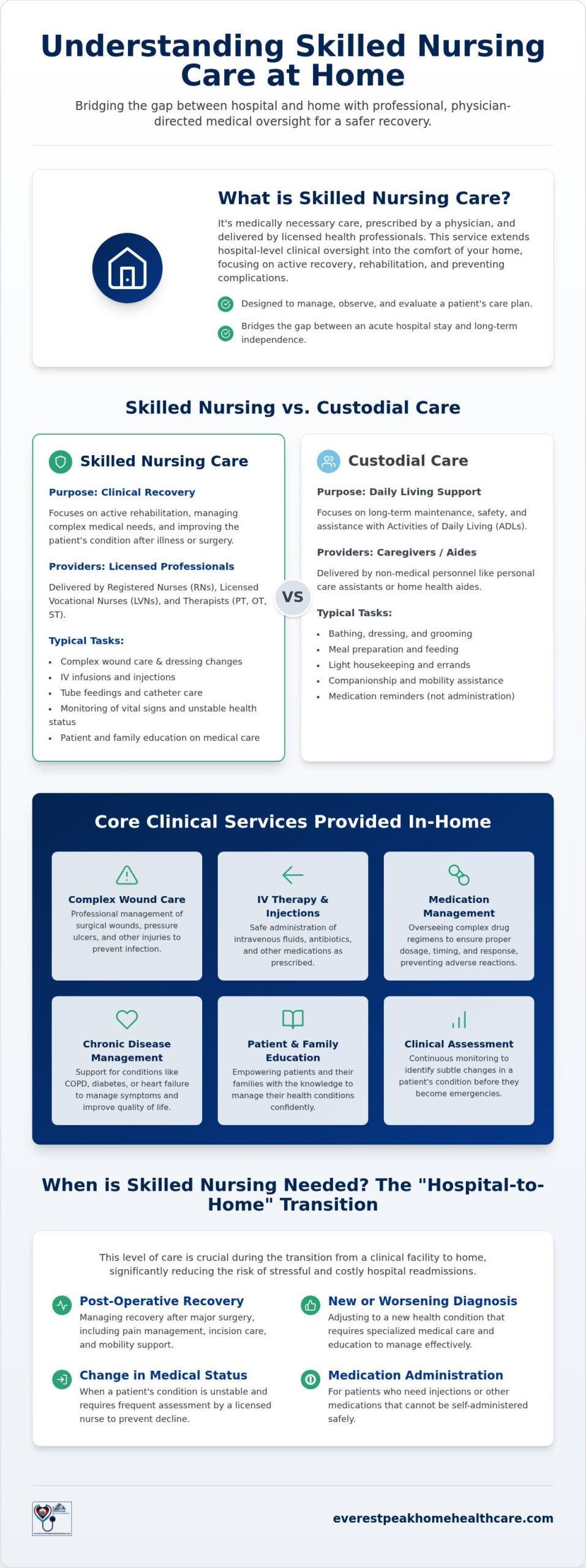
Recovery often begins in a clinical environment, but the most profound healing typically occurs within the sanctuary of one’s own residence. When a patient transitions from a hospital to their private living space, the continuity of medical oversight remains paramount. Skilled nursing care is a clinical intervention designed to manage, observe, and evaluate a patient’s care. This specialized service bridges the gap between acute hospital stays and long-term independence, ensuring that complex medical needs are met with precision and compassion.
To understand what is skilled nursing care at home, it’s necessary to recognize it as the gold standard for post-acute recovery. Unlike general companionship or custodial care, this level of support is medically necessary and must be prescribed by a physician. It is delivered exclusively by licensed health professionals, including Registered Nurses (RNs), Licensed Vocational Nurses (LVNs), and Licensed Physical Therapists (LPTs), who bring the rigor of a clinical setting into the comfort of a home environment.
The Clinical Scope of In-Home Medical Support
The clinical scope of these visits ensures that every patient receives a level of oversight that mirrors a hospital setting. When families ask what is skilled nursing care at home, they are often seeking the assurance that a professional is managing the delicate details of a recovery plan. Home health nursing encompasses complex tasks that require professional training to perform safely and effectively. The term “skilled” refers specifically to the expertise of the provider rather than the task itself. For instance, while a family member might assist with basic needs, a Registered Nurse acts as the primary care coordinator, evaluating the patient’s pharmacological response and identifying subtle changes in their clinical status before they escalate into emergencies.
The Legal and Regulatory Standards in California
In regions like North Hollywood and the San Fernando Valley, high standards of care are maintained through rigorous oversight. The California Department of Public Health (CDPH) regulates home health agencies to ensure that every patient receives safe, high-quality medical attention. Families should prioritize choosing a Medicare-certified agency, as this designation indicates that the provider meets stringent federal and state requirements for clinical excellence. Every care plan is physician-led, meaning a doctor directs the specific interventions performed by the nursing team. This structure creates a secure environment for recovery that prioritizes the patient’s physical safety and long-term stability.
Skilled Nursing vs. Custodial Care: Understanding the Difference
Distinguishing between medical interventions and daily lifestyle support is one of the most common challenges families face during a health transition. While both services promote well-being, they serve fundamentally different purposes and require different levels of professional qualification. Understanding what is skilled nursing care at home versus custodial care ensures your loved one receives the correct level of oversight for their specific clinical needs. A primary point of confusion stems from the fact that many patients require both types of support simultaneously to thrive after a hospital discharge.
The goal of care typically defines the service level. Custodial care focuses on long-term maintenance and safety, helping individuals manage the routine tasks of life. In contrast, skilled care is a clinical necessity aimed at active rehabilitation and recovery. While a caregiver provides essential companionship, a licensed nurse provides the clinical surveillance required to identify subtle changes in a patient’s medical status.
Custodial Care: Support for Daily Living
Custodial care provides essential assistance with Activities of Daily Living, often referred to as ADLs. This support typically includes help with bathing, dressing, meal preparation, and light housekeeping. When a senior is generally healthy but requires a helping hand to maintain their independence, personal care assistance is often sufficient for their needs. However, these caregivers are generally not licensed to perform medical tasks. Non-medical care has clear limitations. It cannot address surgical complications, manage complex drug interactions, or provide the specialized monitoring required for advanced illnesses.
Skilled Care: Clinical Interventions and Monitoring
Skilled nursing involves advanced medical tasks that only a licensed professional can perform safely. This includes IV therapy, catheter care, and the administration of complex injections. Understanding What Is Skilled Nursing Care involves recognizing the clinical monitoring required to prevent hospital readmissions. Beyond physical tasks, these professionals, including medical social services, help families navigate the complex healthcare system to ensure all available resources are utilized effectively.
In many recovery scenarios, these two levels of care work in tandem to provide a comprehensive support network. For example, how personal care assistance North Hollywood complements skilled nursing is evident when a licensed nurse manages a patient’s surgical wound while a personal aide assists with the patient’s morning hygiene routine. This multidisciplinary approach ensures that the patient’s lifestyle is restored while their medical safety remains the top priority. Families often find peace of mind by partnering with Everest Peak Home Health Care to guide them through these essential clinical transitions.
Core Clinical Services Provided by In-Home Nurses
When a licensed clinician enters a residence, they bring the same diagnostic and therapeutic standards found in a clinical facility directly to the patient’s bedside. This professional oversight is designed to manage high-acuity needs while allowing the individual to remain in a familiar, supportive environment. Understanding what is skilled nursing care at home involves looking at the specific clinical interventions that go beyond basic health monitoring. These services are essential for patients who require complex medical management but don’t need the 24-hour presence of a hospital staff.
A Registered Nurse acts as a clinical coordinator, performing thorough health status assessments to detect early signs of complications. By identifying subtle changes in vital signs or physical condition, the nurse can intervene quickly, often preventing a stressful hospital readmission. This proactive approach is balanced with patient and caregiver education. The nursing team teaches families how to manage chronic conditions, such as diabetes or COPD, ensuring that everyone involved feels confident in the daily care routine. Precise medication management also remains a priority, as licensed professionals ensure that complex pharmacological regimens are followed exactly as prescribed by the physician.
Advanced Wound Care and Infection Control
Licensed nurses utilize specialized techniques to manage surgical sites and pressure ulcers, which are critical for a successful recovery. The process involves sterile dressing changes and detailed wound assessments to ensure the tissue is healing correctly. Clinicians remain vigilant for signs of localized infection or systemic issues like sepsis, providing a level of safety that is difficult for untrained family members to maintain. For families seeking more information, our guide to in home wound care services provides a deeper look at these essential clinical breakdowns.
Intravenous (IV) Therapy and Injections
The administration of intravenous medications requires a sophisticated level of technical expertise and strict adherence to hygiene protocols. Skilled nurses manage PICC lines and IV starts to deliver necessary antibiotics or nutritional support directly into the patient’s system. This service allows individuals to receive intensive treatments without the need for an extended facility stay. In addition to fluid administration, nurses provide training for subcutaneous injections and develop comprehensive pain management strategies. These interventions are performed with a gentle, authoritative touch, ensuring the patient’s physical comfort while maintaining the highest standards of medical integrity.
When Does a Family Need Skilled Nursing at Home?
Determining what is skilled nursing care at home often happens in a hospital hallway during a high-pressure discharge conversation. Families find themselves at a crossroads when a loved one’s medical needs exceed what a family member can safely provide. This critical window usually opens after major orthopedic or cardiac procedures, where the risk of complication is highest in the first 48 to 72 hours. It’s also essential for managing chronic conditions like congestive heart failure or COPD, where professional monitoring can prevent a minor symptom from becoming a major crisis. When a patient’s health status is unstable or requires frequent clinical adjustments, the expertise of a licensed nurse becomes the bridge to a safe recovery.
Neurological rehabilitation after a stroke or brain injury requires a coordinated clinical approach to restore lifestyle and function. Similarly, acute injuries resulting from falls or major trauma necessitate professional oversight to ensure bones and tissues heal correctly without the interference of infection. These situations demand a steady guide who understands the clinical nuances of recovery and can act as a protective presence in the home environment. By identifying these needs early, families can ensure that the transition from a facility to a residence doesn’t result in a stressful return to the emergency room.
Qualifying for Home Health Benefits
To access these clinical services, certain regulatory standards must be met. The patient must be considered “homebound,” which means leaving the residence requires a significant and taxing effort. This doesn’t mean the individual is bedridden, but rather that their current medical state makes travel difficult or unsafe without assistance. A physician must conduct a “Face-to-Face” encounter to certify the medical necessity of the care and sign a formal plan of treatment. It’s helpful to remember that skilled home health visits are temporary and goal-oriented, designed to stabilize the patient until they can transition to a lower level of support or regain their independence.
Transitioning from Hospital to Home in Los Angeles
If you are currently in a clinical facility, you can request a home health referral directly from your hospital discharge planner. They will coordinate with licensed agencies to ensure a seamless handoff of medical records and care instructions. Before the first visit, families should prepare the home by clearing pathways and ensuring a clean, well-lit space is available for clinical assessments and dressing changes. For those specifically recovering from surgery in the San Fernando Valley, our post-operative care North Hollywood checklist provides a structured way to organize the recovery environment. Families navigating a discharge from a Burbank-area facility can also benefit from our comprehensive resource on skilled nursing care Burbank families rely on for a safe clinical transition. If you need assistance navigating these clinical transitions, please contact Everest Peak Home Health Care to discuss how our team can support your recovery journey.
Everest Peak: Professional Skilled Nursing in Los Angeles
Everest Peak Home Health Care operates with a foundational philosophy: medical recovery is most effective when it respects the sanctity of the individual’s home environment. Based in North Hollywood, our agency serves the San Fernando Valley and the greater Los Angeles area with a commitment to clinical excellence and deep-seated empathy. We understand that defining what is skilled nursing care at home involves more than a simple list of medical tasks; it’s about providing a steady guide for families navigating the complexities of post-hospital transitions. Our team consists of licensed Registered Nurses and Vocational Nurses who bring a high register of expertise to every clinical visit, ensuring that your loved one’s physical safety and emotional well-being are prioritized in equal measure.
Our approach blends clinical rigor with a warm, human-centric focus that values the individual’s dignity throughout the healing process. We recognize that a successful recovery requires a dependable, protective presence that simplifies the complexities of medical management for the layperson. By maintaining high standards of reliability and clinical integrity, we help patients regain their self-sufficiency and lifestyle within the comfort of their own residences.
A Multidisciplinary Approach to Recovery
Recovery is rarely a solitary process, which is why our care plans are intentionally multidisciplinary and collaborative. A licensed Registered Nurse coordinates the medical strategy, while specialized therapists address the functional aspects of rehabilitation. For instance, our nurses collaborate closely with in-home physical therapy San Fernando Valley experts to ensure that wound healing and physical mobility goals are perfectly aligned. Occupational and speech therapists further enhance this care by focusing on the restoration of daily living skills and cognitive functions. To support the entire family unit, we integrate medical social services to assist with the emotional and logistical hurdles that often accompany a major health event. This organized oversight ensures that no detail of the individual’s care is overlooked during their journey toward independence.
Your Partner in Clinical Home Care
Starting care with Everest Peak Home Health Care is a methodical and transparent process designed to provide immediate peace of mind. We begin by conducting a comprehensive clinical assessment to understand the specific needs of the patient and their family. Our focus remains on clear communication and the maintenance of reliable clinical standards, ensuring that every physician-led care plan is executed with professional grace. We don’t just act as a service provider; we position ourselves as an accessible, supportive extension of your family’s own care network. If you’re ready to transition from a facility to the comfort of your residence, reach out to our skilled nursing care Los Angeles team for a consultation. Our goal is to help you regain your lifestyle and dignity through the highest standards of professional clinical oversight.
Secure Your Path to a Safe Clinical Recovery
Navigating the recovery journey requires a clear understanding of what is skilled nursing care at home and how it serves as a clinical bridge to independence. By prioritizing licensed medical oversight over general assistance, families ensure that complex health needs like wound care and medication management are handled with professional precision. This specialized approach doesn’t just manage symptoms; it actively prevents complications and provides the clinical stability necessary for a successful return to daily life.
Our team of licensed clinical professionals provides compassionate, physician-led care plans tailored to the unique needs of every individual. Based in North Hollywood and serving the greater Los Angeles area, we’re committed to restoring your self-sufficiency while maintaining the highest standards of medical integrity. Ready to transition safely from hospital to home? Consult with our Los Angeles skilled nursing experts today. You don’t have to navigate these medical transitions alone when a steady guide is ready to support your family’s peace of mind and long-term health.
Frequently Asked Questions
Is skilled nursing at home the same as a nursing home?
Skilled nursing at home is fundamentally different from a nursing home facility. While a nursing home provides a residential environment with 24-hour staffing, understanding what is skilled nursing care at home involves recognizing it as a series of scheduled clinical visits. This model allows individuals to receive hospital-level medical oversight within the privacy of their own residence. It’s the ideal solution for those who want to recover in a familiar setting while receiving professional care.
How much does skilled nursing care at home cost in Los Angeles?
The cost for clinical support in Los Angeles depends on the specific medical needs outlined in your physician’s care plan. Services are typically billed as per-visit fees for licensed nurses and therapists or as hourly rates for personal care assistance. Since every recovery journey is unique, we recommend contacting a local agency for a detailed assessment. This ensures that the financial plan aligns with the level of clinical oversight required for a safe recovery.
Does Medicare pay for skilled nursing visits at home?
Medicare generally covers the cost for intermittent skilled nursing visits if a physician certifies that the patient is homebound. This benefit includes visits from Registered Nurses, physical therapists, and occupational therapists to manage acute recovery needs. However, it’s important to understand that Medicare doesn’t pay for long-term custodial care or 24/7 live-in support. Understanding what is skilled nursing care at home helps families navigate these specific insurance requirements with confidence.
What is the difference between an RN and an LVN in home health?
An RN and an LVN play complementary roles within a home health team. The Registered Nurse typically serves as the case manager, performing comprehensive medical assessments and coordinating with the physician to adjust care plans. The Licensed Vocational Nurse provides essential clinical interventions, such as administering injections or performing sterile dressing changes, under the RN’s professional supervision. Together, they ensure that every patient receives a high standard of clinical oversight and emotional support during their recovery.
How many hours a day does a skilled nurse stay at my home?
Skilled nursing visits are intermittent and task-specific rather than continuous. A typical visit from a licensed nurse lasts between 30 and 60 minutes, focusing on clinical needs like medication management or wound assessment. These visits are designed to monitor the patient’s progress and educate family caregivers on daily management. It’s important to note that home health agencies don’t provide 24/7 live-in care, as the goal is to foster independence and clinical stability.
Can I get physical therapy and skilled nursing at the same time?
You can certainly receive physical therapy and skilled nursing visits simultaneously. In fact, a multidisciplinary approach is often the most effective way to manage a complex recovery. While the nurse monitors clinical status and manages medications, the physical therapist focuses on improving mobility and preventing falls. This coordinated effort ensures that all facets of the individual’s health are addressed, leading to a more thorough restoration of their lifestyle and physical function.
What does ‘homebound’ mean for skilled nursing eligibility in California?
In California, the homebound status is a primary requirement for insurance coverage of clinical home visits. This means that leaving the residence requires a considerable and taxing effort, often needing the help of a walker, wheelchair, or another person. A patient doesn’t need to be bedridden to qualify, but their medical condition must make traveling for care difficult. A physician must verify this status during a face-to-face encounter to ensure eligibility for professional services.
How do I find a Medicare-certified home health agency in North Hollywood?
Finding a Medicare-certified agency in North Hollywood involves verifying that the provider meets strict federal quality and safety standards. You can ask your hospital discharge planner for a list of certified agencies or use the Medicare Care Compare tool online. Everest Peak Home Health Care is a locally based, certified agency that serves the San Fernando Valley. Choosing a certified partner ensures that your family receives professional clinical oversight backed by rigorous regulatory accountability.