
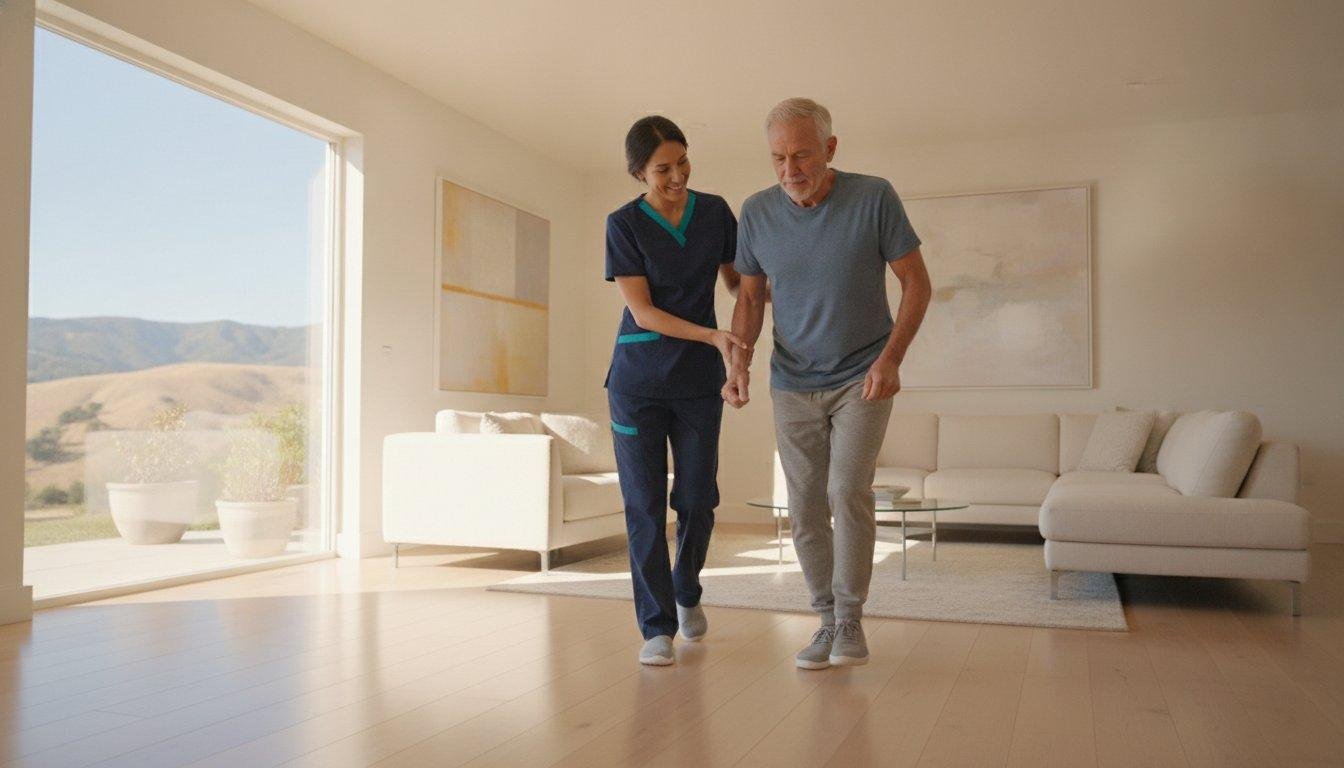
Imagine the hesitation that comes with every step across a familiar living room rug, where a simple transition from the sofa to the kitchen feels like a high-stakes challenge. For many individuals recovering from surgery or managing age-related decline, the fear of a fall isn’t just an abstract concern; it’s a constant barrier to personal independence. You likely want to reclaim your mobility, but the logistical stress of traveling to an outpatient clinic often outweighs the benefits of the session itself.
Professional gait training physical therapy at home addresses these challenges by bringing specialized clinical expertise directly to your doorstep. This approach allows a licensed physical therapist to assess your movement within the actual environment where you live and function. You’ll discover how targeted exercises and balance retraining help you regain your walking ability, reduce fall risks, and decrease your reliance on assistive devices like canes or walkers. This guide outlines the specific benefits of home-based rehabilitation, the clinical assessment process, and the structured path toward restoring your confidence in every step you take.
Key Takeaways
- Learn how gait training physical therapy at home allows licensed clinicians to analyze your walking mechanics within the specific context of your daily environment.
- Understand the clinical assessment process used to establish measurable mobility goals, such as safely navigating stairs or walking to the mailbox.
- Discover why in-home rehabilitative therapy is a critical component for recovery following total joint replacements or when managing neurological conditions.
- Identify common environmental fall hazards that physical therapists evaluate, including improper lighting, flooring transitions, and furniture heights.
- Explore how professional in-home care serves as a vital bridge between hospital discharge and the restoration of long-term independence.
What is Gait Training Physical Therapy at Home?
Gait training is a clinical discipline within physical therapy that focuses on restoring the mechanics of walking, or ambulation. It’s a targeted intervention often prescribed following a significant medical event, such as a stroke, a neurological diagnosis, or orthopedic surgery. Unlike general exercise, gait training physical therapy at home utilizes specific techniques to improve muscle memory, balance, and coordination. By performing these sessions in a familiar environment, therapists can address the precise obstacles a patient faces daily, such as doorway thresholds or transitions from hardwood to carpet. This ensures that the progress made during a session is directly applicable to the patient’s real-world needs.
The primary objective is to transform a patient’s movement from a source of anxiety into a safe, predictable habit. This requires a professional understanding of how physical impairments affect the body’s ability to move through space. When therapy occurs in the home, the clinician can design a program that is immediately relevant to the patient’s lifestyle and physical surroundings, fostering a sense of security and progress.
The Mechanics of Walking: Why Gait Matters
The act of walking is a complex sequence known as the gait cycle. This process begins with the initial heel strike and continues through the mid-stance until the toe-off phase. A licensed physical therapist observes these phases to identify abnormalities in stride length, cadence, or weight distribution. Clinical research often links gait speed to overall health outcomes in seniors. A steady and efficient pace reduces the energy required for daily tasks and significantly lowers the risk of injury. Physical therapists use these metrics to track progress and adjust the intensity of the intervention to ensure long-term safety.
In-Home vs. Outpatient Gait Training
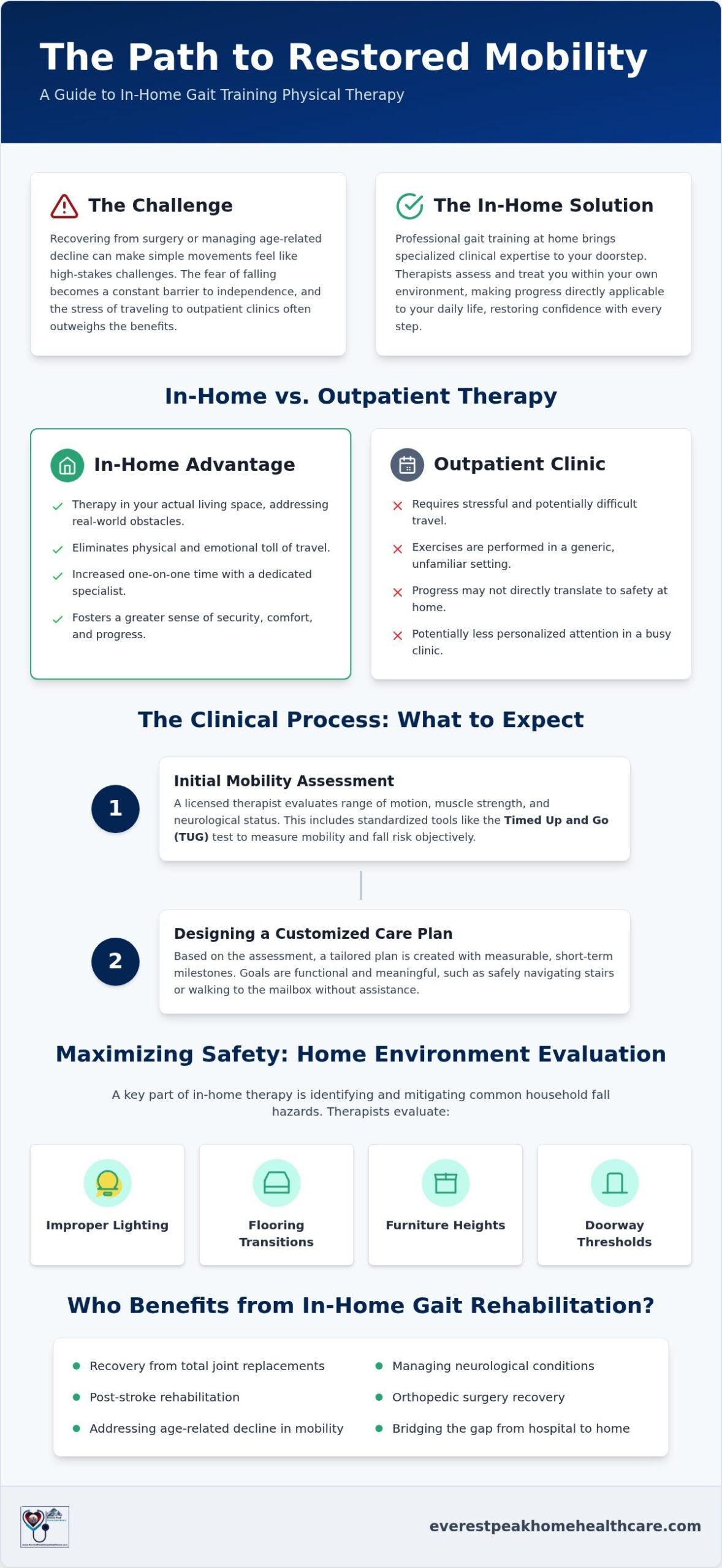
Choosing gait training physical therapy at home eliminates the physical and emotional toll of traveling to an outpatient clinic. In a city like Los Angeles, navigating heavy traffic can be exhausting for a patient who is already struggling with mobility. Home sessions provide a distinct advantage by allowing the therapist to use the patient’s actual furniture and flooring during the session. If a patient needs to use a Gait trainer or other assistive equipment, they can practice in the exact hallways where they spend their time. This direct application of clinical skills to the patient’s living space ensures that every improvement in mobility translates into safer daily living. These sessions also provide increased one-on-one time with a specialist, ensuring that no aspect of the patient’s form is overlooked during their recovery.
The Clinical Process: What to Expect During Home Visits
Professional gait training physical therapy at home begins with a structured methodology designed to ensure patient safety and clinical efficacy. This process isn’t merely a series of walking exercises; it’s a comprehensive medical intervention overseen by a licensed professional. During the initial visits, the therapist establishes a baseline of the patient’s current abilities while identifying the specific physiological barriers to safe movement. Progress is monitored clinically at every stage, allowing the clinician to adjust the intensity of the therapy as the patient’s strength and coordination improve.
Step 1: The Initial Mobility Assessment
The therapist evaluates the patient’s current range of motion, muscle strength, and neurological status to understand the root cause of any walking abnormalities. A central part of this phase involves standardized clinical tools, such as the Timed Up and Go (TUG) test, which provides a quantifiable measurement of mobility and fall risk. Gait training also includes a rigorous assessment of any existing assistive devices, ensuring that walkers or canes are properly fitted to the patient’s height and that they’re being used with the correct technique. This initial data ensures that the therapy is grounded in objective clinical needs from the very first session.
Step 2: Designing a Customized Care Plan
Once the assessment is complete, the clinician designs a care plan tailored to the individual’s surgical or medical history. This plan sets measurable, short-term milestones that provide both psychological motivation and a clear path toward safety. For many, these goals are highly functional, such as successfully navigating a flight of stairs or walking to the mailbox without assistance. If the patient is recovering from a recent operation, the therapist may also integrate the program with other needs, such as monitoring post-operative wound care, to ensure a holistic recovery process.
Step 3: Supervised Therapeutic Exercises
Supervised sessions involve a sequence of weight-bearing exercises that improve bone density and joint stability. These movements are often paired with proprioception training, which helps the brain better interpret the body’s position in space. One of the most effective components of this stage is task-specific training. This includes practicing “sit-to-stand” transitions using the patient’s favorite chair or navigating the specific doorway thresholds mentioned in earlier sections. By focusing on these real-world movements, the therapy builds the strength and confidence needed for daily life. This level of clinical precision is a hallmark of the Physical Therapy services provided by Everest Peak, where every visit is an opportunity to refine a patient’s path to independence.
Conditions That Benefit from In-Home Gait Rehabilitation
The transition from a hospital or skilled nursing facility to the home environment is often the most vulnerable period for a patient. Gait training physical therapy at home serves as a vital bridge during this time, ensuring that the rehabilitative progress achieved in a clinical setting continues without interruption. While many associate walking exercises with sports medicine, this specialized therapy is a medical necessity for individuals managing a variety of complex health transitions. By addressing mobility within the patient’s actual living space, therapists can tailor interventions to the specific physical demands of their daily life.
Orthopedic Surgery and Joint Replacements
Post-operative recovery for total hip or knee replacements is a primary driver for professional gait intervention. Immediately following surgery, patients must strictly adhere to weight-bearing restrictions to protect the integrity of the new joint. A licensed physical therapist provides the necessary supervision to ensure these protocols are followed while working to reduce joint stiffness through controlled, professional gait practice. For those seeking specialized support after a surgical procedure, our In-Home Knee Replacement Rehab offers deeper insights into the recovery timeline and the targeted exercises required to restore joint function and stability.
Neurological and Balance Disorders
Neurological conditions such as a stroke or Parkinson’s Disease require a specialized focus on motor relearning and the brain-body connection. For stroke survivors, the goal is often to overcome hemiparesis or coordination deficits that make walking feel unpredictable. In the case of Parkinson’s, therapists work specifically on managing “freezing” gait patterns, where a patient feels momentarily unable to move their feet. By practicing rhythmic stepping and visual cueing in a familiar hallway, patients gain the tools to manage these symptoms safely. Clinicians also address vestibular issues related to the inner ear, which can cause significant dizziness and instability during movement.
Geriatric mobility decline and the muscle atrophy that follows a prolonged hospitalization also necessitate clinical intervention. When a patient has been bedbound or limited in their activity for an extended period, the simple act of standing can feel overwhelming. Professional gait training reverses this decline by rebuilding core strength and addressing the psychological “fear of falling” that often limits a senior’s independence. This methodical approach ensures that every patient, regardless of their medical history, has a structured path toward safe and confident ambulation.
Maximizing Safety: Environmental Assessment and Fall Prevention
Safety is the foundational element of effective gait training physical therapy at home. While clinical exercises are designed to build physical strength, the physical environment often dictates the ultimate success of a patient’s recovery. A licensed physical therapist views the home through a clinical lens, identifying specific risks that family members might easily overlook. This process transforms a standard living space into a controlled rehabilitative environment where hazards are mitigated and functional movement is prioritized. By addressing these environmental factors, the therapist ensures that the patient can practice their mobility drills with a significantly reduced risk of injury.
The Home Safety Audit
A comprehensive audit identifies specific danger zones where falls are most likely to occur, particularly in high-traffic areas. Bathroom floors, which are prone to moisture, and poorly lit transitions between rooms are common areas of concern for patients with limited mobility. Therapists provide clinical recommendations for the installation of grab bars, the use of non-slip mats, and the enhancement of lighting to improve visibility during nighttime movement. Environmental modification is a clinical safety strategy that involves altering a patient’s physical surroundings to eliminate barriers and minimize the risk of injury during daily activities. These adjustments create a safer foundation for the patient to refine their walking mechanics in the spaces where they spend the majority of their time.
The Role of Assistive Devices at Home
Properly utilized assistive devices are essential for maintaining stability, yet many patients use equipment that isn’t correctly fitted to their frame. During home visits, therapists ensure that walkers and canes are adjusted to the precise height required for optimal postural alignment. This prevents the secondary back or shoulder pain that often arises from leaning too far forward or reaching too high to compensate for a poor fit. Training also focuses on navigating different floor types, such as transitioning from smooth hardwood to high-pile carpet, which requires a specific shift in weight and device placement. As a patient’s balance and proprioception improve, the clinician develops a structured plan for weaning off these devices to promote greater autonomy.
Education for family caregivers is another critical component of the safety process. Therapists provide hands-on instruction on how to assist with walking and transfers without causing injury to the patient or themselves. This includes learning exactly where to stand and how to provide “contact guard” assistance during more challenging movements. Rather than simply removing all challenges, therapists often incorporate functional obstacles, such as stepping over a low threshold, into the therapy sessions to prepare the patient for real-world movement. If you’re ready to secure a safer environment for your recovery, contact Everest Peak Home Health Care to schedule a professional clinical assessment.
Everest Peak: Clinical Gait Training in the San Fernando Valley
Everest Peak Home Health Care functions as a specialized extension of your medical team, providing licensed physical therapists who understand the specific needs of Los Angeles seniors. Our team focuses on delivering gait training physical therapy at home to residents of North Hollywood and the wider San Fernando Valley. This local presence allows us to offer clinical-grade rehabilitation without the logistical stress of navigating city traffic. We prioritize a model of care that balances technical expertise with a steady sense of support, ensuring that every patient feels respected throughout their recovery journey.
Our approach integrates clinical rigor with professional empathy, acknowledging the challenges of aging while focusing on the preservation of dignity. By bringing high-level therapy into the home, we help patients bridge the gap between hospital discharge and full independence. This transition is supported by a highly organized team that prioritizes clinical excellence and patient well-being above all else.
Expertise You Can Trust in Your Own Home
Our licensed professionals prioritize patient safety and the restoration of independence. We utilize methodical progress tracking and provide detailed reports to the patient’s primary physician to ensure continuity of care. This collaborative approach means that your doctor is always informed about your mobility milestones and any adjustments made to your therapeutic plan. We also recognize that recovery is more effective when it aligns with the patient’s natural rhythm. Our therapists offer flexible scheduling to accommodate sessions during peak energy levels, which maximizes the impact of each strengthening and balance exercise. This level of customized care ensures that the patient isn’t overwhelmed but is steadily challenged to improve.
Getting Started with Home Health Care
Initiating gait training physical therapy at home typically begins with a physician’s referral. If you or a loved one are experiencing a loss of mobility or a persistent fear of falling, your primary doctor can order home health services as part of a post-operative or rehabilitative plan. To prepare for the first clinical assessment, it’s helpful to have a list of current medications and any specific mobility goals ready for discussion. During this initial visit, the therapist performs a comprehensive evaluation to establish the baseline measurements required for a successful care plan.
Beyond physical therapy, Everest Peak coordinates care between Skilled Nursing Care, Occupational Therapy, and other essential disciplines. This multidisciplinary framework ensures that no aspect of the patient’s health is overlooked during the recovery process. Whether you’re transitioning from a hospital stay or managing a chronic condition, we act as a dependable partner in your health journey. Families in North Hollywood and the San Fernando Valley can contact Everest Peak to learn more about how our professional clinical visits support a dignified and safe recovery.
Restoring Your Path to Safe and Independent Movement
Reclaiming your mobility involves more than just physical exercise; it requires a structured clinical approach tailored to the specific environment where you live. By choosing gait training physical therapy at home, you allow a licensed professional to address the unique transitions and obstacles within your own living space. This specialized care ensures that every step taken during rehabilitation directly contributes to your safety and long-term independence. Whether you’re managing a neurological condition or recovering from joint surgery, professional supervision provides the stability needed to reduce fall risks and rebuild your confidence.
Everest Peak Home Health Care is dedicated to providing this high level of clinical support to residents in North Hollywood and the Greater Los Angeles area. Our licensed physical therapists specialize in post-operative care and comprehensive mobility assessments, acting as a bridge between the hospital and your full recovery. You don’t have to navigate the challenges of mobility decline alone. Schedule a clinical home health assessment with Everest Peak today to begin your journey toward a safer and more active lifestyle. We’re here to help you move forward with steady support and professional expertise.
Frequently Asked Questions
Is gait training at home as effective as going to a physical therapy clinic?
In-home gait training is highly effective because it focuses on functional mobility within the patient’s actual living environment. While clinics offer specialized machines, home sessions allow therapists to address specific obstacles like narrow hallways or bathroom transitions. This direct application of clinical skills to your daily surroundings often leads to faster improvements in safe, independent movement. It ensures that the progress you make is immediately useful for your daily routine.
How many sessions of gait training are typically needed after a hip replacement?
The number of sessions depends on the patient’s surgical outcome and baseline health, but most post-operative plans involve visits two to three times per week. A typical course of gait training physical therapy at home for a hip replacement lasts between four and six weeks. This duration allows the therapist to monitor joint stability and progress the patient from a walker to a cane and eventually to unassisted walking.
Does Medicare or insurance cover in-home gait training physical therapy?
Medicare and most private insurance providers cover gait training physical therapy at home when it is deemed medically necessary and ordered by a physician. For Medicare Part A, the patient must be considered homebound, meaning leaving the home requires a taxing effort. Our team coordinates with your primary doctor to ensure all clinical documentation meets the requirements for coverage, allowing you to focus on your physical recovery and safety.
What should a patient wear during an at-home gait training session?
Patients should wear comfortable, loose-fitting clothing that doesn’t restrict movement of the hips, knees, or ankles. It is especially critical to wear sturdy, closed-toe shoes with non-slip soles to ensure maximum stability during walking drills. Avoid wearing slippers, sandals, or loose socks, as these significantly increase the risk of slipping or tripping during therapeutic exercises. Proper footwear is a vital component of a safe and successful rehabilitation session.
Can gait training help a senior who has already had several falls?
Gait training is specifically designed to help seniors who have a history of falls by identifying the underlying physiological or environmental causes. The therapist focuses on strengthening the core and lower extremities while improving proprioception, which is the brain’s ability to sense body position. By addressing these factors in the home, we help patients regain the confidence and physical stability required to perform daily activities without the constant fear of falling.
How does gait training differ from regular walking for exercise?
Unlike regular walking, gait training is a clinical intervention that involves a professional analysis of your walking mechanics. A licensed therapist monitors your stride length, weight distribution, and cadence to correct abnormalities that could lead to injury. This process involves specific drills, such as side-stepping or tandem walking, which are designed to improve coordination and muscle memory far more effectively than unmonitored walking. It is a targeted and supervised medical treatment.
What happens if a patient cannot stand up for therapy yet?
If a patient cannot yet stand, the therapist begins with “pre-gait” exercises performed in a bed or chair. These movements focus on building the foundational strength and range of motion necessary for future ambulation. As the patient’s muscle tone and joint stability improve, the clinician will safely transition them to standing drills and eventually to supervised walking using appropriate assistive devices. Progress is always paced to the patient’s current physical tolerance and safety.
Do I need to buy special equipment for gait training at home?
You don’t need to purchase specialized equipment before your first visit. Our therapists utilize the existing furniture and layout of your home to create a functional rehabilitation space. If specific assistive devices like a walker or a gait belt are medically necessary, the therapist will provide professional recommendations on the best options to support your safety and progress. We ensure you have the right tools to achieve your mobility goals without unnecessary expense.