

What if accepting help could protect your loved one’s independence rather than diminish it? When caregiving starts affecting your health, work, or relationships, it can be difficult to know whether to seek emotional support, community resources, or practical help at home. Looking for caregiver burnout support Los Angeles families can turn to is a way to assess those needs, not a sign that you’ve let someone down.
Your concern is understandable: you want your loved one to feel safe and respected, while making sure you can continue to provide care without sacrificing your own well-being. This guide explains how to recognize when caregiving strain needs attention, compare local support options, and identify what questions to ask as you explore them.
We’ll look at emotional and community resources alongside possible in-home assistance, including how skilled nursing, rehabilitation therapies, medical social services, or personal care assistance may address specific needs. These services aren’t the same as counseling or dedicated respite care, and clinical visits may depend on individual circumstances. Understanding the distinctions can help your family choose support that fits while preserving your loved one’s dignity and daily routines.
Key Takeaways
- Notice changes such as persistent exhaustion, irritability, or trouble keeping up with care tasks, and treat them as reasons to review the support plan.
- Compare caregiver-focused community resources, counseling, and in-home services by the need each can address and what eligibility or availability details to confirm.
- Caregiver burnout support Los Angeles families consider can complement family involvement; start by separating the caregiver’s emotional needs from the patient’s care needs.
- Use a practical checklist to identify priorities, discuss the care plan, contact resources, compare options, and reassess as circumstances change.
- Learn how skilled nursing, therapies, medical social services, or hourly personal care assistance may fit specific needs, and what to ask about local availability and suitability.
Caregiver Burnout Support in Los Angeles: Recognize the Strain and Find a Starting Point
Caregiving can become a sustained source of strain when a person’s needs leave little room for sleep, work, relationships, or personal health. This experience is often called caregiver burnout, though noticing possible signs doesn’t mean you have a diagnosis. Caregiver burden describes the physical, emotional, social, and financial difficulties that may come with caring for someone. Recognizing that the demands are affecting you is a reasonable first step toward finding support.
Needing help isn’t a measure of how much you love someone, how committed you are, or how capable you are as a caregiver. Support can help families make care more manageable while respecting the loved one’s preferences and dignity.
How can a family caregiver recognize mounting strain?
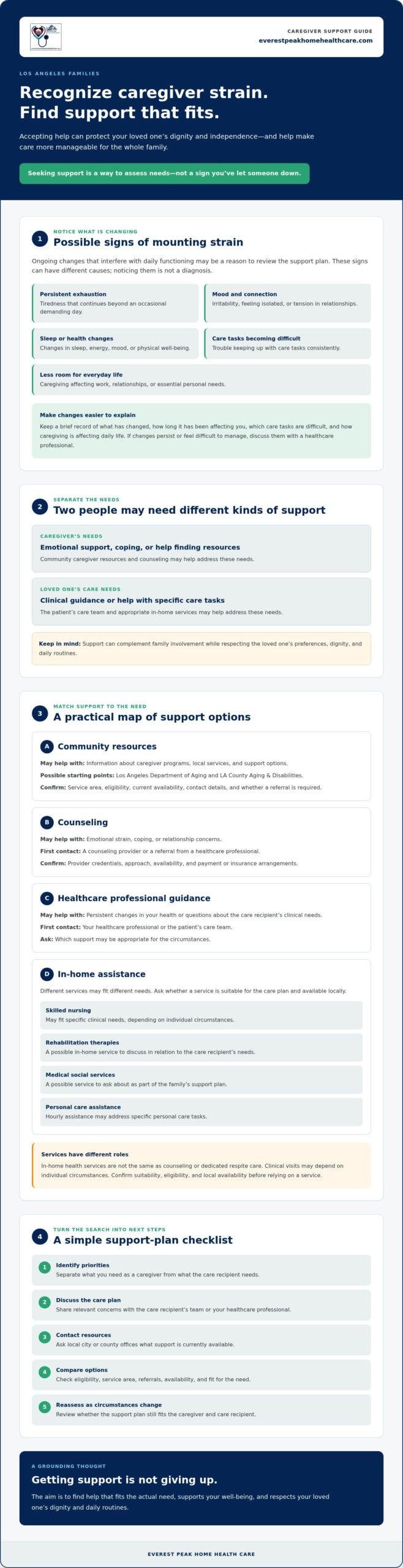
Occasional tiredness after a demanding day is different from ongoing strain that interferes with daily functioning. Possible signals include persistent exhaustion, irritability, feeling isolated, changes in sleep or health, tension in relationships, or difficulty keeping up with care tasks. These signs can have different causes, so avoid trying to diagnose yourself. Instead, note what has changed and how long it has been affecting you.
A brief record can make it easier to explain the situation to a healthcare professional. Consider tracking:
- Changes in sleep, mood, energy, or physical well-being
- Care tasks that are becoming difficult to complete consistently
- Effects on work, relationships, or time for essential personal needs
If these changes persist or feel difficult to manage, contact a healthcare professional to discuss what you’re experiencing and what support may be appropriate.
Where can Los Angeles caregivers begin looking for support?
For caregiver burnout support Los Angeles families can explore, begin with a local public resource pathway. The Los Angeles Department of Aging may be a starting point for information about city services and caregiver resources. LA County Aging & Disabilities may help families locate relevant county services. These organizations can help you identify where to ask, but current programs and eligibility can vary.
Before relying on a resource, confirm whether it serves your location, who may qualify, how to make contact, and whether a referral is required. Ask what support is currently available and what information you’ll need to provide. These simple checks can help turn a broad search into a practical next step, whether you’re seeking guidance for yourself, help with a care task, or both.
Compare Los Angeles Caregiver Burnout Support: Community Resources, Counseling, and In-Home Help
Different kinds of support address different parts of caregiving strain. A community resource may help you identify caregiver programs, counseling can focus on your emotional well-being, and in-home assistance may address specific care tasks. These options can complement one another, but they aren’t interchangeable. Use the comparison below to identify a starting point and the questions to ask.
| Support type | What it may address | First contact | Details to verify |
|---|---|---|---|
| Caregiver-focused community resources | Information about caregiver programs, local services, or support options | City or county aging and caregiver resource offices | Current service area, eligibility, contact details, and referral steps |
| Counseling | Emotional strain, coping, or relationship concerns | A counseling provider or a referral from a healthcare professional | Provider credentials, approach, availability, and payment or insurance arrangements |
| Health-professional guidance | Questions about persistent changes in your own health or the care recipient’s clinical needs | Your healthcare professional or the patient’s care team | Which professional can address the concern and what follow-up is appropriate |
| In-home personal care assistance | Specific activities of daily living, such as grooming and hygiene | A provider offering personal care assistance | Task fit, schedule, service area, and current availability |
| Skilled home health | Clinical needs that may call for skilled nursing or therapy | The patient’s healthcare professional or a home health agency | Whether the service is appropriate, what referral steps apply, and whether the location is served |
When might community resources or counseling be a useful fit?
Community directories can help you ask about caregiver-specific programs without assuming that a particular service is available or that you qualify. The federal National Family Caregiver Support Program is another place to learn about caregiver support efforts and ask how to locate relevant resources locally. Confirm current details with the organization before making plans.
Counseling may offer a setting to discuss emotional well-being, stress, or changes in family relationships. Ask about the provider’s credentials and whether their approach fits your concern. Community support and counseling focus on the caregiver’s needs; neither replaces clinical assessment of a loved one’s health or daily care requirements.
When might in-home care help with practical caregiving demands?
If daily tasks are becoming difficult to manage, personal care assistance may help with activities such as grooming and hygiene, depending on the service plan and availability. Skilled nursing and physical, occupational, or speech therapy address clinical needs when appropriate. They aren’t counseling services, and clinical home health visits aren’t suitable for every situation.
Medical social services may help families navigate care-related needs. Learn more about medical social worker home visits in Los Angeles, and ask about service fit and current local coverage. If home-based support may address a defined need, you can also review home health care services as one possible part of your family’s plan.
Does Asking for Caregiver Burnout Support Mean Giving Up? Understand What Help Can and Cannot Do
No. Accepting help doesn’t mean stepping away from your loved one. It can allow family members to remain involved while sharing defined tasks with other supports. A relative might continue coordinating appointments and making decisions while getting assistance with daily living needs or seeking emotional support for themselves.
The right support depends on the caregiver’s needs and the patient’s care plan. Each option has a different role, and none can resolve every source of strain. Community resources may help identify programs; counseling can support the caregiver’s emotional well-being; and health professionals can discuss health concerns. In-home services may address specific patient care needs, but they aren’t a substitute for counseling or for support that a caregiver may need independently.
Caregiving strain can affect health and well-being, so it’s reasonable to discuss it with a healthcare professional. The Office on Women’s Health offers guidance on signs of caregiver stress and ways to prevent or relieve caregiver stress. If distress persists or feels difficult to manage, consider seeking professional guidance rather than expecting a change in the patient’s care arrangements to address every concern.
What can in-home personal care or clinical visits reasonably support?
Personal care assistance may help with activities of daily living, such as grooming and hygiene. Skilled nursing and therapy may address appropriate clinical or rehabilitation needs. These services have defined purposes; they shouldn’t be assumed to provide counseling, emergency response, or continuous supervision. Availability, schedules, and suitability depend on the family’s circumstances and require direct discussion and assessment.
Before considering a service, identify the particular task or clinical need that is difficult to manage. For example, is the challenge assistance with a daily routine, or is there a health or rehabilitation concern to discuss with the patient’s care team? A clearer distinction helps families ask the right provider specific questions.
What concerns should families discuss before choosing support?
Start with the loved one’s preferences. Talk about privacy, routines, and which tasks they’d like help with, while involving them in decisions as much as possible. Support is more likely to feel respectful when it protects the person’s independence and focuses on agreed needs, rather than changing familiar routines without discussion.
Before making arrangements, clarify:
- Which specific tasks or needs the service can address
- Provider qualifications and how care will be coordinated
- Visit arrangements, current availability, and how changes are communicated
- Whether the service fits the patient’s care plan and location
These questions can make caregiver burnout support Los Angeles families consider more practical and realistic. They also help set clear expectations: assistance can ease particular demands, while caregivers may still need separate community or emotional support.
How to Find Caregiver Burnout Support in Los Angeles: A Practical Next-Step Checklist
A clear plan can make the search for caregiver burnout support Los Angeles families need feel more manageable. Start by separating two questions: what support would help you as the caregiver, and what care does your loved one need? Emotional support, practical daily assistance, and clinical care may require different providers. Use this checklist to prepare and compare options without assuming that one service can address every need.
- Identify the pressure points. Write down the tasks creating the most strain and when help would be most useful. Note which needs affect your well-being, such as persistent worry or difficulty making time for your own appointments, and which relate to your loved one’s care.
- Review the care plan. Record your loved one’s location, relevant care needs, preferences, daily routines, and any professionals already involved. If clinical questions or changes in health are part of the concern, ask the patient’s healthcare professional what guidance or next steps are appropriate.
- Contact relevant resources. Reach out to a city or county resource, caregiver program, counseling provider, or home-based care provider according to the need you’ve identified. Ask about eligibility, service area, referral steps, and who to contact next.
- Compare options. Consider each provider’s service scope, qualifications, availability, communication practices, and confirmed payment arrangements. Check that the service addresses the specific need rather than relying on a broad label.
- Reassess after taking a first step. Review whether the support is addressing the original pressure point and whether your loved one feels comfortable with the arrangement. If needs have changed, update the questions and explore other appropriate options.
What should caregivers write down before contacting a Los Angeles resource?
Prepare a short, practical summary before making calls. Include the tasks that are hardest to manage, the times support may be most useful, and the patient’s neighborhood or location. Note relevant care needs, personal preferences, existing professional support, and any questions about eligibility, scheduling, cost or payment, and next steps. Having this information ready can help you explain the situation clearly and compare answers afterward.
Which questions help compare home-based support options?
Ask which specific services are offered, which professional would provide them, and whether the service is available in the relevant Los Angeles-area neighborhood. Confirm expected visit arrangements, how communication with family works, and whether the service fits the patient’s needs and care plan. For an overview of one service type, read about medical social services in home health.
Everest Peak Home Health Care is based in North Hollywood and serves the surrounding Los Angeles area. If you’re exploring whether its services fit a defined care need, ask about home health care services, including local availability and appropriate next steps.
How Everest Peak Home Health Care May Fit a Los Angeles Family’s Support Plan
Some caregiver strain comes from the practical work of supporting a loved one at home. Everest Peak Home Health Care, based in North Hollywood and serving the surrounding Los Angeles area, may be one option to explore when a patient has specific clinical, rehabilitation, or daily-living needs. Its services aren’t a substitute for caregiver counseling or community programs, and availability depends on the family’s location and circumstances.
Which Everest Peak services may address care needs at home?
Different services address different needs. Skilled nursing provides professional clinical care, while physical, occupational, or speech therapy may be relevant when a patient has assessed rehabilitation needs. These clinical services aren’t general caregiver counseling, and families should ask what is appropriate for the patient’s situation.
Medical social services may help families navigate care-related needs. Their specific scope should be discussed directly. Hourly personal care assistance may support activities of daily living, such as grooming and hygiene. A family can start by identifying the particular tasks that are becoming difficult, then ask whether the agency’s services may fit those needs.
Everest Peak does not provide 24/7 live-in care, hospice care, emergency services, or counseling. In-home services address defined care needs; they don’t provide continuous supervision or resolve every source of caregiver strain. Clinical home health visits may not be appropriate for every patient, so families should confirm suitability rather than assume eligibility or coverage.
How can a family take a low-pressure next step?
A first conversation can focus on gathering information, not making an immediate commitment. Be ready to share the patient’s location, current care needs, the tasks that are most challenging, and any relevant care-plan details. Then ask which services may fit, which professional would provide them, whether the location is served, what availability and visit arrangements can be confirmed, and what payment arrangements apply.
Clear answers can help your family decide whether a home-based service addresses a practical need, or whether another kind of support is a better starting point. Exploring an option doesn’t mean giving up your role. It can help you understand where professional assistance may complement the care and involvement your family wishes to continue.
For a calm first step, contact Everest Peak Home Health Care to discuss your family’s needs, including location, service fit, and current availability.
Take One Manageable Step Toward More Support
Caregiving strain deserves attention before it begins to undermine your health, relationships, or ability to manage daily responsibilities. The right next step may be emotional support for you, practical assistance with a loved one’s daily needs, clinical guidance, or a combination of options. These supports can work alongside family involvement, but each has a distinct purpose and scope.
As you explore caregiver burnout support Los Angeles families can access, start by identifying the specific need and confirming which local resources or services may fit. Everest Peak Home Health Care is based in North Hollywood and serves the surrounding Los Angeles area. Its offerings include skilled nursing, therapy from licensed professionals, medical social services, and personal care assistance. Whether any service is suitable depends on the patient’s needs and current availability in your location.
If in-home support may help address a defined care need, contact Everest Peak Home Health Care to discuss your family’s needs. Asking questions is a practical first step, not a commitment to change everything. With thoughtful support, your family can make room for care that respects your loved one and your well-being.
Frequently Asked Questions
What are the signs of caregiver burnout?
Persistent exhaustion, irritability, isolation, or difficulty keeping up with daily responsibilities may signal caregiver strain, but these signs don’t diagnose burnout or explain their cause. Consider whether your sleep, mood, physical health, relationships, or ability to manage care tasks have changed over time. If concerns persist or feel hard to manage, speak with a qualified healthcare professional to discuss what you’re experiencing and what next steps may be appropriate.
Where can I find caregiver support in Los Angeles?
For caregiver burnout support Los Angeles families can begin with the Los Angeles Department of Aging or LA County Aging & Disabilities to locate local resources. Ask which programs address caregiver needs and how to proceed. Before relying on a listing, confirm current programs, eligibility, service areas, contact information, and referral steps directly with the organization. Availability and requirements can change, and a directory may not reflect current services in your neighborhood.
Does Medicare pay for caregiver burnout support or respite care?
Medicare coverage depends on the specific service, the person’s circumstances, and current program rules, so don’t assume it pays for caregiver support or respite care. Coverage for a clinical service may differ from payment for personal care, counseling, or a community program. Contact the relevant insurer or program to confirm benefits, and ask each provider for written details about covered services, out-of-pocket costs, and any payment responsibilities before arranging care.
Can home health care help reduce caregiver stress?
Appropriate home-based services may ease particular care demands, such as a clinical need addressed by skilled nursing or therapy, or daily-living needs supported by personal care assistance. Medical social services may also help with care-related navigation. These services aren’t automatically counseling, continuous supervision, or respite care. Ask the provider whether the service fits the patient’s care plan, whether it’s available at their location in California, and what arrangements apply.
What is the difference between caregiver support and home health care?
Caregiver support focuses on the caregiver’s emotional well-being or connection to community resources. Home health care addresses a patient’s clinical, rehabilitation, or daily-living needs through services such as nursing, therapy, or personal care assistance. A family may need both, but one doesn’t replace the other. Ask each provider what the service includes, who delivers it, and whether it is intended for the caregiver or the person receiving care.
How do I know whether my family needs counseling or in-home care?
Start with the main unmet need: emotional strain affecting the caregiver, a clinical concern for the patient, or difficulty managing daily activities. More than one need may be present. Discuss emotional concerns with a qualified mental health professional, and talk with the patient’s healthcare provider about clinical or rehabilitation needs. If daily tasks are the main challenge, ask a personal care provider which activities it can assist with and whether service is available.
What questions should I ask a caregiver support provider in Los Angeles?
Ask what services are offered, who qualifies, what credentials or qualifications providers have, whether your location is served, and what availability, scheduling, costs, and privacy practices apply. Confirm the next steps and any referral requirements. For home health, ask which professional provides each service and whether it fits the patient’s care plan. Verify details directly with the provider, since general online listings may not show current services or arrangements.