
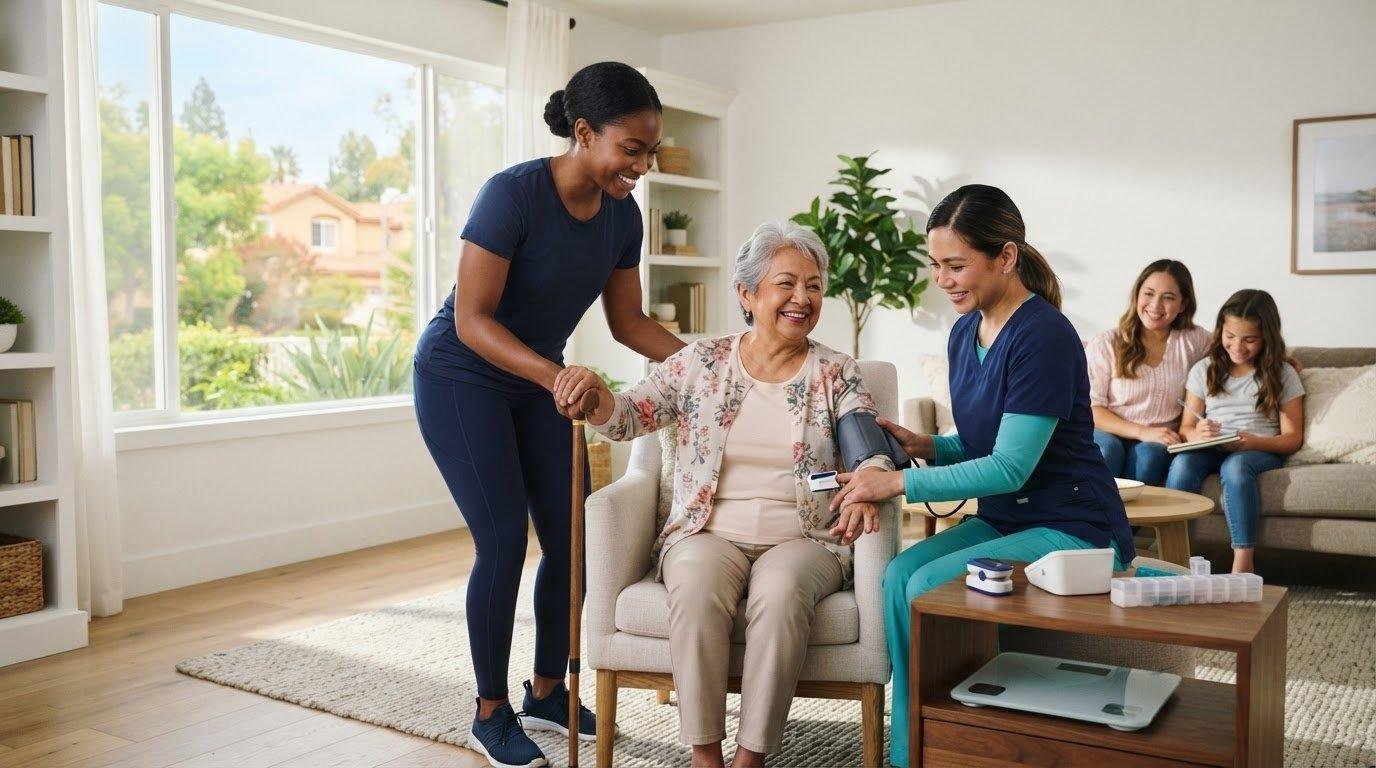
What if the most dependable defense against an emergency room readmission isn’t another exhausting hospital stay, but structured clinical care delivered right in your living room? For families managing this diagnosis, structured in-home therapy for congestive heart failure (CHF) provides vital stability while eliminating the physical debility of traveling to outpatient clinics. You already know the heavy toll of watching for sudden fluid retention, managing strict sodium restrictions alongside complex medication schedules, and wondering whether sudden shortness of breath signals an immediate crisis.
You shouldn’t have to manage these delicate medical decisions in isolation. In this clinical guide, discover how comprehensive in-home therapy stabilizes congestive heart failure, reduces hospital readmissions, and helps seniors recover safely at home. You’ll learn how skilled nurses and licensed therapists coordinate physician-approved care plans, monitor daily cardiovascular changes, and safely rebuild physical stamina so your loved one can regain lasting domestic independence.
Key Takeaways
- Understand how specialized in-home therapy for congestive heart failure (CHF) provides licensed clinical oversight to stabilize cardiac symptoms directly inside your loved one’s living space.
- Distinguish between skilled medical care and non-medical custodial services to ensure your family secures physician-directed clinical treatments.
- Discover why in-home rehabilitation protects fragile cardiac patients from the debilitating physical exhaustion of outpatient travel and high-stress clinic commutes.
- Learn how coordinated nursing surveillance, oxygen monitoring, and individualized physical therapy work together to prevent decompensation and avert emergency hospital visits.
- Navigate the physician referral process across Los Angeles to seamlessly transition your loved one from hospital discharge to structured home-based recovery.
What Is In-Home Therapy for Congestive Heart Failure (CHF)?
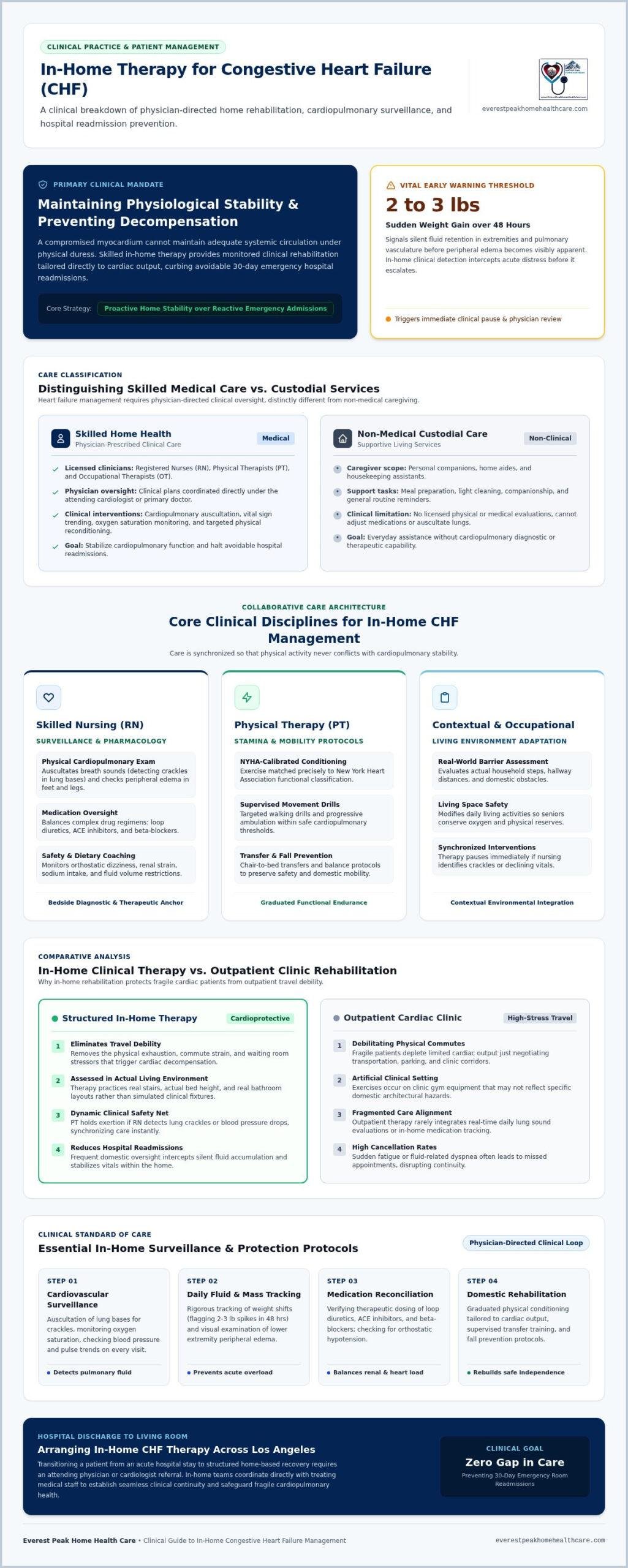
Physician-directed in-home therapy for congestive heart failure (CHF) delivers targeted clinical rehabilitation and skilled nursing surveillance directly to a patient’s private residence. Families often conflate skilled home health with non-medical custodial caregiving, such as companion services or housekeeping assistance. In contrast, skilled home healthcare delivers specialized clinical treatments prescribed by medical doctors to stabilize fragile cardiopulmonary systems. As clinical teams frequently remind recovering patients, “Skilled in-home therapy provides monitored clinical rehabilitation tailored to cardiac output.” The central purpose of this care is maintaining physiological stability, preventing cardiac decompensation, and significantly curbing avoidable 30-day emergency hospital readmissions.
The Clinical Nature of Skilled In-Home Care
Skilled home health operates through licensed registered nurses, physical therapists, and occupational therapists who implement rigorous clinical plans under the direction of an attending cardiologist. Rather than assessing a patient in an artificial clinical setting, licensed clinicians evaluate physical stamina and safety within the individual’s actual living environment. Clinicians carefully assess how a patient manages household steps, transfers from bed to chair, and negotiates hallway distances. This contextual evaluation allows therapists to customize physical conditioning around actual domestic barriers, ensuring that therapeutic exertion builds functional endurance without compromising cardiac workload or patient safety.
Why Heart Failure Management Requires Specialized Expertise
Recovering from heart failure demands rigorous clinical oversight because a compromised myocardium cannot maintain adequate systemic circulation under stress. As ejection fraction declines, fluid retention swiftly accumulates within the extremities and pulmonary vasculature, precipitating profound fatigue and sudden breathlessness. Incorporating evidence-based heart failure management strategies into daily home visits ensures early detection of clinical decline; an unexpected gain of two to three pounds over forty-eight hours often signals silent fluid accumulation before peripheral edema becomes visible. Having skilled clinicians evaluate these subtle physiological shifts in the comfort of home provides families with profound emotional security, replacing reactive emergency room visits with proactive medical stability.
Core In-Home Clinical Disciplines for Heart Failure Management
Effective in-home therapy for congestive heart failure (CHF) relies on synchronized multidisciplinary teamwork. When clinicians align their daily objectives, they establish a dependable safety net that shields recovering seniors from physical relapse. A visiting physical therapist doesn’t push aerobic conditioning when a nurse notes crackles in lung bases; instead, therapy pauses while clinical parameters are stabilized. As outlined in the guide to What Is Heart Failure? by the National Heart, Lung, and Blood Institute, managing this condition requires comprehensive medical balance across bodily systems. Establishing this harmony begins with physician-directed skilled nursing care delivered directly to the bedside.
Skilled Nursing: Cardiopulmonary Monitoring and Medication Safety
Registered nurses conduct thorough physical examinations during each scheduled visit. They auscultate breath sounds, evaluate peripheral edema in the legs and feet, and interpret trends across blood pressure and pulse readings. Nurses manage complex pharmaceutical regimens that balance loop diuretics, ACE inhibitors, and beta-blockers, verifying therapeutic dosing while monitoring for symptoms like orthostatic dizziness or renal strain. They also provide practical coaching on low-sodium meal choices and daily fluid boundaries.
Physical Therapy: Rebuilding Endurance and Functional Mobility
Physical therapists develop structured exercise plans matched to an individual’s New York Heart Association functional classification. Therapists lead supervised walking drills, safe chair-to-bed transfers, and balance protocols designed to prevent accidental falls. Seniors can access specialized rehabilitation through in-home physical therapy San Fernando Valley clinicians who carefully gauge exercise tolerance against real-time oxygen saturation levels.
Occupational Therapy: Energy Conservation and Daily Living Strategies
Occupational therapists teach practical adaptations that minimize cardiovascular exertion during essential personal routines. They show patients how to sit while dressing, use adaptive shower tools, and pace their movements during morning hygiene to prevent sudden breathlessness. Clinicians also inspect domestic spaces to rearrange high-use household items, reducing physical strain during routine chores. Families can arrange customized support through in-home occupational therapy Los Angeles therapists to protect functional dignity. If you’re coordinating care for a family member, exploring dedicated home health services through Everest Peak Home Health Care provides the clinical framework needed to support long-term stability.
In-Home Therapy vs. Outpatient Cardiac Rehab: Evaluating Care Options
Deciding between an outpatient facility and domestic rehabilitation is a critical juncture for recovering cardiac patients. While outpatient clinics offer specialized gym equipment, the logistical demands of travel often outweigh the therapeutic benefits. For vulnerable individuals, sitting through congested Los Angeles traffic, walking across expansive parking structures, and waiting in crowded lobbies exhausts energy reserves before rehabilitation starts. Under Medicare guidelines, patients qualify for home health coverage when leaving their residence requires a considerable and taxing effort. Opting for comprehensive in-home therapy for congestive heart failure (CHF) removes these transport hazards, allowing clinicians to deliver precise therapy while actively training family members in bedside monitoring.
Comprehensive Care Setting Comparison
Care delivery differs significantly between centralized clinical facilities and private residential visits. In-home care aligns clinical interventions with daily domestic reality:
- Individualized attention: Clinicians provide continuous, one-on-one oversight rather than dividing focus among multiple gym participants.
- Environmental safety: Therapists assess actual domestic fall risks, such as high shower thresholds, loose carpets, and steep staircase entries.
- Infection control: Medically fragile cardiopulmonary patients stay protected from seasonal respiratory pathogens common in public waiting areas.
- Caregiver coaching: Family members observe safe transfer techniques and cardiac symptom tracking firsthand during each session.
Clinical Criteria for Choosing In-Home Heart Failure Care
Specific physiological indicators demonstrate when in-home care is the safest choice for recovery. Patients experiencing sudden dyspnea after walking across a bedroom, frequent lightheadedness during positional changes, or debilitating post-hospital exhaustion should avoid clinic commutes. In these situations, mobile clinical visits protect recovering cardiovascular systems from dangerous decompensation. When families navigate post-discharge coordination or require community living assistance, collaborating with medical social services home health professionals provides seamless advocacy, establishing a secure home environment that supports physician care plans.
Essential Clinical Protocols: How In-Home Therapy Protects CHF Patients
Preventing clinical decline requires structured, repetitive habits rather than guesswork. Through skilled in-home therapy for congestive heart failure (CHF), licensed therapists and nurses establish rigorous clinical routines to identify decompensation early. Clinicians track real-time changes in resting heart rate, standing blood pressure, and pulse oximetry readings during active physical exertion. They perform visual checks for pitting edema around the ankles, evaluate sacral fluid retention in seated individuals, and auscultate lung fields for fine bibasilar crackles. Clinical leaders often remind family members, “Structured daily clinical monitoring stops congestive flare-ups before emergency hospitalization becomes unavoidable.”
The Daily Weight and Fluid Retention Surveillance System
Skilled clinicians train families on methodical morning weight tracking. Patients must weigh themselves immediately after their first morning void, wearing comparable clothing, on a calibrated digital scale placed on a hard, flat floor. Clinicians establish clear escalation parameters, instructing caregivers to contact the nursing team if weight increases by more than two pounds overnight or five pounds within a week. Nurses also teach families to identify early fluid markers, such as sock indentations on lower calves or increasing tightness across the abdomen.
Paced Exercise Protocols and the Borg Exertion Scale
Physical therapists use the Borg Rating of Perceived Exertion (RPE) to keep cardiac effort within safe boundaries, targeting a light-to-moderate range of 11 to 13 on the 6-to-20 scale. Sessions begin with seated ankle pumps, seated knee extensions, and torso stability drills before progressing to supervised hallway walking with assistive devices. Clinicians establish non-negotiable stopping criteria during movement drills:
- Angina, heaviness, or burning sensation across the chest, jaw, or left shoulder
- Sudden lightheadedness, pallor, or near-syncope during postural transitions
- Profuse, unexpected cold sweating accompanied by irregular heart rhythms
- Oxygen saturation drops dipping below physician-ordered thresholds
Breathing Techniques and Energy Conservation Workflows
Occupational therapists introduce diaphragmatic breathing and pursed-lip exhalations to prevent dynamic hyperinflation and manage shortness of breath during functional movement. Patients learn the rhythm of inhaling through the nose during preparation and exhaling through pursed lips during effort, such as rising from a low chair. Clinicians also restructure the household layout by moving daily dishes, medications, and clothing to waist-height storage, eliminating repetitive overhead reaching and deep bending. To secure these structured protocols for your loved one, request clinical home health services to begin physician-aligned care.
How to Arrange In-Home CHF Therapy in Los Angeles
Arranging physician-directed clinical care doesn’t have to feel overwhelming during a hospital discharge. Initiating in-home therapy for congestive heart failure (CHF) begins by establishing clear communication between your family, attending physicians, and facility case managers. Family members have the legal right to choose their preferred home health agency rather than simply accepting default hospital assignments. Once an attending cardiologist or internist writes the formal home health order, clinical intake coordinators review medical records and deploy licensed clinicians to the home. In most instances, an initial evaluation occurs within forty-eight hours of discharge, ensuring vital cardiopulmonary monitoring begins before symptoms can destabilize.
Securing the Physician Order and Navigating Coverage
Every home health episode requires an active medical order certifying that the patient requires intermittent skilled care and meets homebound criteria. Under Medicare Part A, skilled home health visits are covered for eligible beneficiaries who find leaving home a taxing effort. Our intake team works directly with physician groups and major health networks across Southern California to verify benefits, manage clinical documentation, and secure prompt insurance authorizations. This collaborative administrative oversight relieves family members of paperwork burdens so they can focus entirely on bedside reassurance.
The Everest Peak Clinical Approach: Compassionate, Local Care
Everest Peak Home Health Care provides tailored clinical management grounded in deep familiarity with the Los Angeles healthcare community. Our licensed registered nurses and physical therapists deliver consistent, dignified care across neighborhoods in North Hollywood, Burbank, Glendale, and the San Fernando Valley. By coordinating directly with your cardiologist, we ensure every vital sign check, medication adjustment, and mobility exercise supports your loved one’s specific recovery targets. When you’re ready to secure dependable, personalized domestic care, consult our clinical team to coordinate supportive heart failure care.
Empowering Safe Cardiac Recovery at Home
Sustaining cardiovascular health after a diagnosis doesn’t have to mean living in constant fear of another hospital stay. Comprehensive in-home therapy for congestive heart failure (CHF) bridges the gap between a fragile discharge and lasting domestic stability. By uniting meticulous vital sign surveillance, monitored physical conditioning, and energy-conservation strategies, this coordinated approach eliminates exhausting clinic commutes while keeping your loved one safely out of the emergency room.
Our multidisciplinary clinical team, including licensed registered nurses, certified physical therapists, and occupational therapists, designs individualized disease-management plans focused on preventing avoidable hospital readmissions. As a trusted clinical home health provider serving North Hollywood and the greater Los Angeles area, we collaborate directly with your attending cardiologist to preserve your loved one’s comfort and dignity. Speak with our clinical team at Everest Peak to arrange comprehensive home health therapy for your loved one, and take the first confident step toward lasting peace of mind.
Frequently Asked Questions
How does in-home physical therapy help someone with congestive heart failure?
In-home physical therapy strengthens peripheral muscles so the body requires less oxygenated blood during everyday routines, directly reducing physical strain on the heart. Licensed therapists guide patients through seated intervals, gentle resistance movements, and supervised gait training. By conditioning the musculoskeletal system within a comfortable residential setting, therapy restores functional endurance for daily mobility without overburdening a compromised cardiovascular system.
Is in-home therapy safe for severe heart failure patients?
Yes, in-home therapy is safe because every session operates under strict clinical boundaries and physician guidance. Physical and occupational therapists continuously measure vital signs, including pulse rate, blood pressure, and blood oxygen levels, before, during, and after therapeutic activities. Exercises are calibrated around cardiac output tolerance, ensuring that patients with advanced New York Heart Association classifications safely build stamina without triggering cardiopulmonary distress.
What qualifies a congestive heart failure patient for home health therapy under Medicare?
To qualify under Medicare Part A, a patient must have an active physician order and be certified as homebound. Being homebound means that leaving the residence requires a considerable and taxing effort due to severe fatigue, shortness of breath, or mobility limitations. Additionally, the individual must require intermittent skilled nursing, physical therapy, or occupational therapy to manage complex heart failure symptoms and rehabilitation goals.
What is the difference between non-medical home care and in-home therapy for CHF?
Non-medical home care provides custodial assistance with daily routines such as light housekeeping, companionship, and bathing support. In contrast, specialized in-home therapy for congestive heart failure (CHF) is clinical medical care ordered by a physician. It is delivered by licensed registered nurses and therapists who perform cardiopulmonary physical assessments, adjust prescription interventions, deliver therapeutic rehabilitation, and actively prevent fluid overload.
How often will a physical therapist or skilled nurse visit our home?
Visit frequency depends on the physician’s personalized care plan and the patient’s clinical stability. Typically, skilled nurses visit one to two times per week for cardiopulmonary checks, medication reconciliation, and caregiver education. Physical and occupational therapists often conduct two to three weekly sessions to rebuild functional mobility. As cardiovascular symptoms stabilize and functional stamina improves, clinicians adjust visit schedules to support long-term self-management.
Can in-home therapy help prevent emergency room visits for heart failure?
Yes, structured in-home therapy for congestive heart failure (CHF) significantly reduces avoidable emergency hospitalizations through proactive surveillance. Visiting clinicians detect early physiological warnings, such as subtle weight gains, peripheral swelling, or adventitious lung sounds, days before acute crises emerge. Identifying these decompensation trends allows attending physicians to modify diuretic dosages promptly, stabilizing patients in their own homes and preventing sudden emergency room transport.
What symptoms indicate that a home therapy session should be paused immediately?
Clinicians immediately pause a therapy session if a patient develops chest discomfort, pressure, or angina radiating to the jaw or arm. Exercise stops at once if oxygen saturation drops below baseline thresholds, if profound dyspnea prevents speaking in full sentences, or if sudden lightheadedness occurs. Clinicians also halt exertion if they observe cold diaphoresis, irregular heart rhythms, or a sudden drop in blood pressure.