
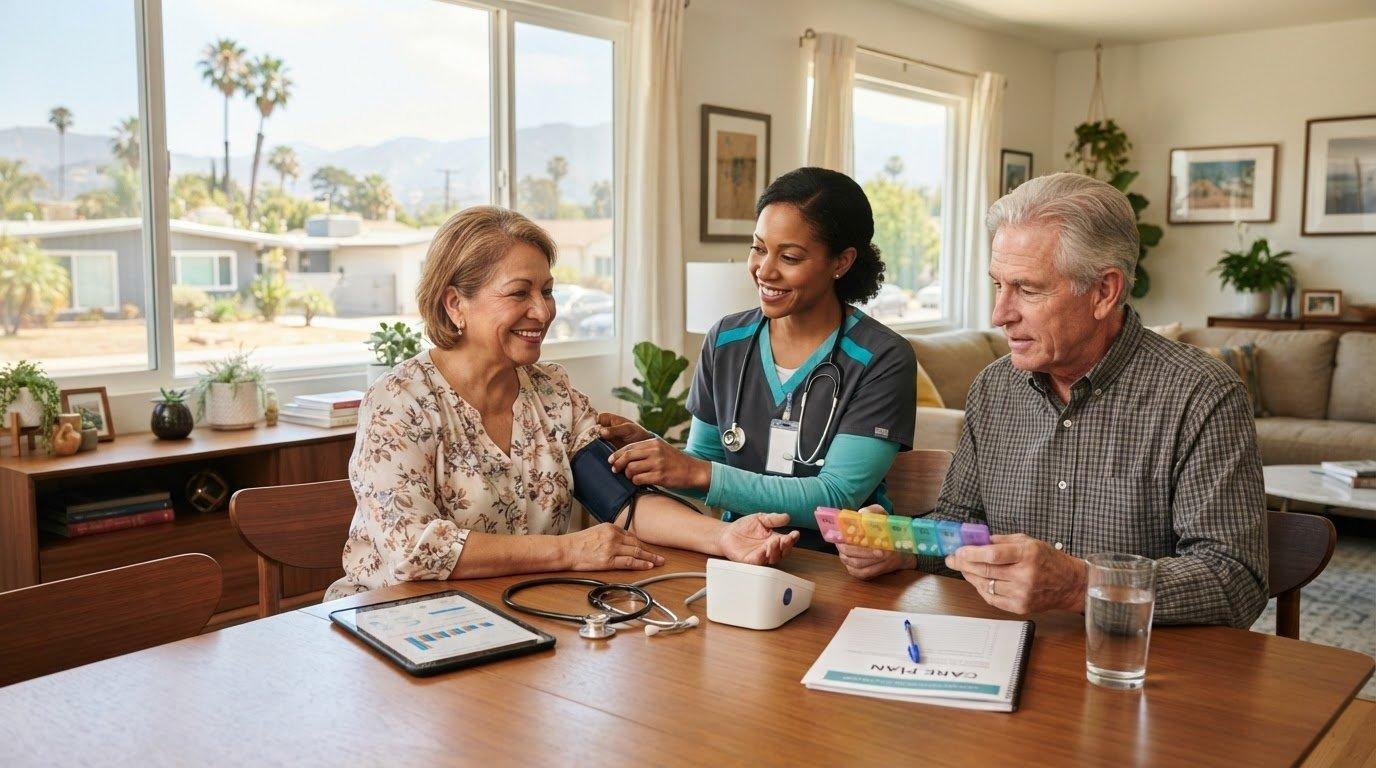
An unplanned hospital readmission is rarely an unavoidable setback; it’s almost always a predictable breakdown in post-discharge clinical care. Bringing an aging parent home brings profound relief, yet that peace quickly turns to anxiety when you’re handed dense discharge packets, complex prescription schedules, and the daunting prospect of cross-town traffic for follow-up appointments. When it comes to preventing hospital readmission for seniors LA caregivers need more than well-meaning vigilance; they need a reliable, structured clinical plan.
You shouldn’t have to carry the fear of another emergency room visit or guess which subtle symptom signals a brewing crisis. In this guide, you’ll discover actionable clinical strategies and home health protocols designed to protect your loved one during the vulnerable thirty days following discharge. We’ll examine how rigorous medication reconciliation, targeted vital sign monitoring, and close coordination between visiting nurses, therapists, and primary physicians create an effective bridge between the hospital and lasting recovery at home.
Key Takeaways
- Recognize why the initial 48 to 72 hours post-discharge present the greatest clinical vulnerability, making prompt in-home assessment essential.
- Implement a structured post-discharge protocol centered on clinical medication reconciliation, a vital factor in preventing hospital readmission for seniors LA families face today.
- Learn how skilled nursing care and physical therapy detect early physiological warning signs before they turn into acute health crises.
- Overcome Greater Los Angeles transit obstacles and fragmented health networks through coordinated, in-home professional care.
- Align hospital discharge planners, primary physicians, and visiting clinicians into an integrated bridge that safeguards long-term recovery at home.
Why Hospital Readmissions Threaten Senior Health Across Los Angeles
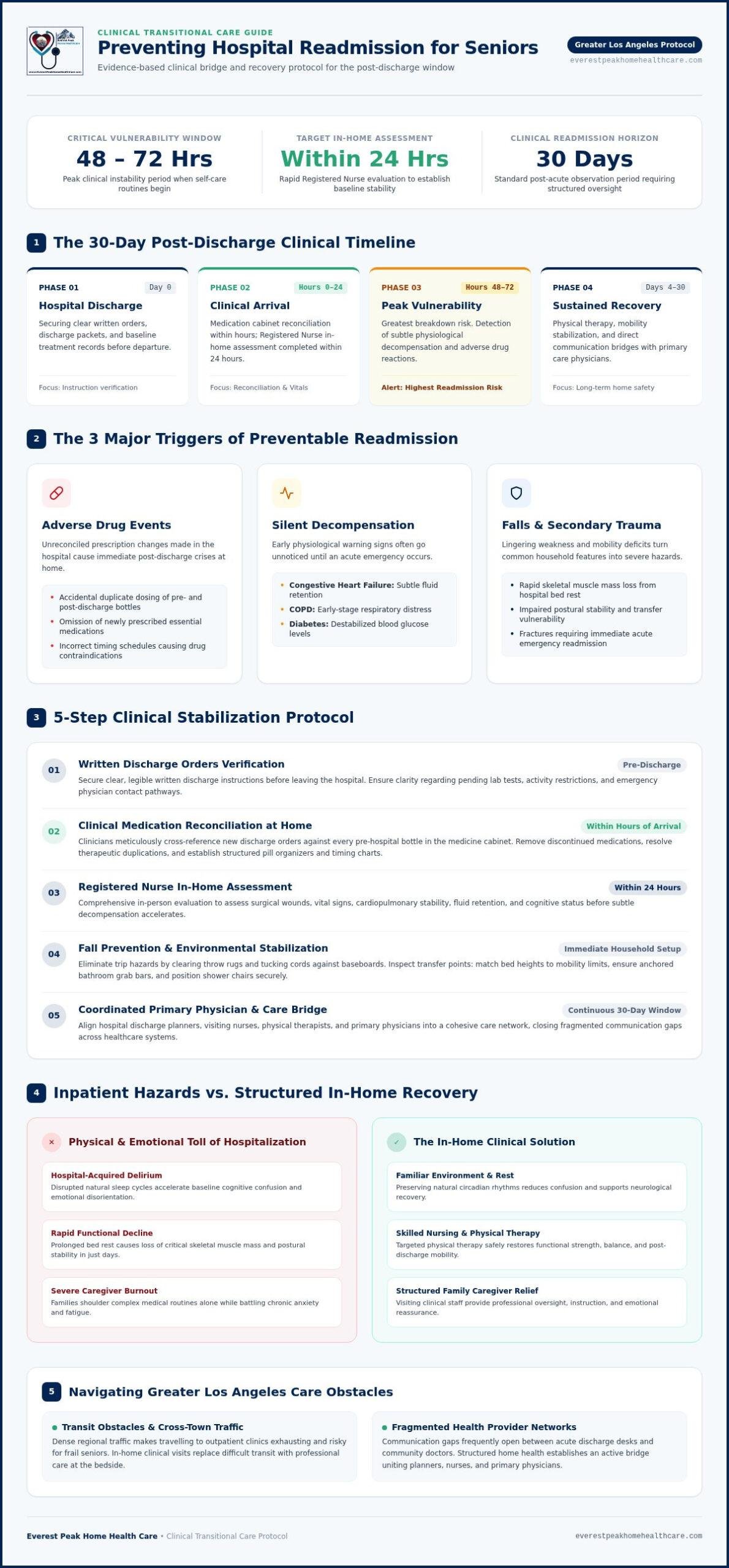
Clinically defined, a 30-day hospital readmission is an unplanned inpatient return occurring within a month of discharge, serving as a critical indicator of post-acute clinical instability and fragmented transitional oversight. Hospital readmission rates often reveal that the first forty-eight to seventy-two hours following discharge represent the greatest clinical vulnerability, a fragile window when complex self-care routines begin. For vulnerable older adults across the Southland, preventable readmissions rarely stem from the natural progression of an underlying illness alone; instead, they originate in sudden communication gaps between hospital discharge desks and the patient’s home. Successfully preventing hospital readmission for seniors LA families face requires identifying these systemic risks before an emergency room visit becomes necessary.
Common Triggers of 30-Day Hospital Readmissions
Breakdowns during the transition home usually trace back to several recurring clinical obstacles:
- Adverse Drug Events: Unreconciled prescription changes made during hospital stays often lead to accidental duplicate dosing, incorrect administration, or omitted essential medications once the patient unpacks at home.
- Silent Clinical Decompensation: Subtle physiological warning signs in chronic conditions like congestive heart failure, chronic obstructive pulmonary disease, or diabetes frequently go unnoticed until acute fluid retention or respiratory distress takes hold.
- Domestic Falls and Secondary Trauma: Lingering weakness and unfamiliarity with post-discharge mobility limitations leave seniors prone to catastrophic falls, resulting in fractures that force an immediate return to acute care.
The Physical and Emotional Impact of Hospitalization on Seniors
Repeated acute hospitalizations exact a devastating physical and psychological toll on aging adults. Inpatient environments disrupt natural sleep cycles, frequently triggering hospital-acquired delirium that worsens baseline cognitive vulnerabilities and accelerates confusion. Simultaneously, prolonged bed rest drives rapid functional decline; older adults can lose critical skeletal muscle mass and postural stability during just a few days of immobility. This revolving door of acute admissions also inflicts profound exhaustion on family caregivers, who must shoulder complex technical care while battling severe emotional distress. Establishing structured in-home recovery protocols remains essential for preventing hospital readmission for seniors LA communities hope to protect.
Step-by-Step Protocol to Prevent Readmission After Hospital Discharge
Establishing stability starts long before stepping through your front door. A safe return requires five deliberate phases: securing clear written instructions before leaving the hospital, executing medication reconciliation within hours of arrival, scheduling a registered nurse assessment within twenty-four hours, modifying the home environment to eliminate fall hazards, and linking the patient’s primary physician directly with visiting clinicians. By treating discharge as an active clinical process, families take the single most effective step toward preventing hospital readmission for seniors LA doctors recommend.
Step 1: Clinical Medication Reconciliation at Home
Clinicians meticulously cross-reference new discharge orders against every pre-hospital bottle found in the medicine cabinet. This careful side-by-side review catches dangerous contraindications, flags unintended therapeutic duplications, and removes discontinued prescriptions before an adverse drug event occurs. Engaging dedicated skilled nursing care Los Angeles professionals provides structured pill organizers, precise timing charts, and routine monitoring that ensure medications support recovery rather than complicate it.
Step 2: Fall Prevention and Environmental Stabilization
Physical weakness following an acute admission turns common household features into severe hazards. Securing pathways requires clearing throw rugs, gathering electrical cords against baseboards, and ensuring adequate lighting between the bedroom and bathroom. Transfer points also require clinical scrutiny: bed heights must match physical capabilities, bathroom grab bars need secure anchoring, and shower chairs must remain firmly balanced. Coordinating focused home evaluations alongside in-home physical therapy San Fernando Valley therapists allows seniors to rebuild functional mobility while practicing transfers safely in their own space.
Step 3: Establishing the Red-Yellow-Green Symptom Plan
A structured symptom plan eliminates dangerous guesswork by categorizing daily health changes into clear, actionable clinical zones:
- Green Zone (Stable): Baseline vital signs remain consistent, energy levels feel manageable, and prescribed daily activities occur without sudden shortness of breath or dizziness.
- Yellow Zone (Caution): Early warning signs emerge, such as a three-pound weight gain over forty-eight hours, minor ankle swelling, lingering productive coughs, or unusual fatigue. These require an immediate call to your visiting home health nurse to adjust care plans before decompensation occurs.
- Red Zone (Emergency): Acute symptoms appear, including persistent chest pain, profound respiratory distress, sudden confusion, or an inability to bear weight. These indicators demand calling 911 right away.
To establish these clinical safeguards and protect your loved one during this sensitive window, connect with our care team at Everest Peak Home Health Care to coordinate a personalized transitional care plan.
Clinical Home Health Services That Keep Seniors Safely at Home
While non-medical caregiving assists with basic household chores and companionship, skilled home health delivers physician-ordered medical interventions performed exclusively by licensed clinicians to treat acute instability and manage complex disease regimens directly in the home. This professional oversight serves as an indispensable defense against clinical decompensation. By bringing sophisticated clinical assessments into the patient’s living environment, visiting clinicians intercept emerging physiological complications before they require emergency intervention, proving vital for preventing hospital readmission for seniors LA families care for.
Skilled Nursing and Post-Operative Clinical Monitoring
Registered nurses evaluate wound healing, maintain surgical drain integrity, and perform sterile dressing changes that keep dangerous surgical site infections at bay. Beyond physical wound management, these nurses routinely track critical cardiopulmonary parameters, fluid retention levels, and blood glucose fluctuations to catch disease exacerbations early. Families managing complex surgical recoveries can explore detailed clinical regimens through specialized post-operative care North Hollywood services tailored to support seamless healing at home.
Physical, Occupational, and Speech Therapy Interventions
Rehabilitation clinicians re-establish physical autonomy through targeted clinical therapies:
- Physical Therapy: Therapists rebuild lower-extremity strength, correct hazardous gait deviations, and restore dynamic balance so seniors can safely walk across different residential surfaces.
- Occupational Therapy: Clinicians train patients in energy-conservation methods and adaptive self-care techniques for grooming, meal preparation, and dressing without dangerous exhaustion.
- Speech Therapy: Specialists conduct bedside swallow evaluations to treat post-stroke dysphagia and manage cognitive-communication deficits, directly preventing life-threatening aspiration pneumonia.
Medical Social Services for Community and Emotional Stabilization
Medical social workers examine the broader social determinants of health that quietly disrupt a patient’s recovery. These professionals identify household barriers, navigate long-term support networks, and guide families through complex advance care directives. By arranging supportive medical social worker home visits LA households receive personalized guidance, targeted counseling, and community-based solutions that alleviate family caregiver burnout and maintain home stability, reinforcing long-term success in preventing hospital readmission for seniors LA physicians and families prioritize.
Navigating Los Angeles Healthcare Networks and Local Discharge Challenges
Recovering at home within Southern California introduces environmental and logistical hurdles rarely addressed in standardized hospital discharge folders. Between dense geographic sprawl, rigid pharmacy delivery cutoffs, and intense regional heat across the San Fernando Valley that compromises hydration in vulnerable seniors, the local landscape requires vigilant coordination. When family caregivers must juggle work obligations against unexpected traffic bottlenecks, managing a senior’s post-acute recovery becomes deeply complicated. Successfully preventing hospital readmission for seniors LA residents care for demands a care strategy tailored to these specific municipal realities.
Coordinating with Major Los Angeles Hospital Discharge Planners
Seamless care transitions depend on early, direct communication with hospital case management teams and discharge planners across regional medical centers. Families must ensure complete clinical records, surgical summaries, and therapy documentation transfer immediately to the receiving home agency before the patient leaves the acute care ward. Asking attending physicians to sign explicit home health orders prior to discharge prevents dangerous administrative delays that leave vulnerable seniors without nursing or therapy coverage over their first critical weekend at home.
Overcoming Urban Transit Barriers for Timely Medical Follow-Up
Demanding follow-up itineraries across town often jeopardize a fragile senior’s initial recovery:
- Highway Congestion and Missed Appointments: Gridlock along the 101, 405, and 134 corridors turns simple clinic follow-ups into exhausting, multi-hour ordeals. Recovering seniors often cancel or postpone these critical visits, missing timely adjustments to vital therapies.
- Minimizing Patient Travel Strain: Dispatching qualified clinicians directly into the home eliminates painful transfers into vehicles, prevents postural fatigue, and preserves patient energy for physical rehabilitation.
- Assisted Clinical Telehealth: Visiting home health nurses can initiate coordinated virtual visits alongside primary physicians, presenting real-time vital metrics and physical assessments directly to doctors without moving the patient from their living room.
Eliminating transit barriers and establishing prompt clinical oversight remain fundamental to preventing hospital readmission for seniors LA families protect daily. If you are preparing for an upcoming hospital transition, contact Everest Peak Home Health Care today to arrange personalized clinical home visits that keep your loved one safe at home.
Everest Peak’s Tailored In-Home Recovery in Greater LA
Everest Peak Home Health Care operates as a licensed clinical agency based in North Hollywood, delivering personalized clinical transitional visits directly to residences throughout the San Fernando Valley and Greater Los Angeles. Our multidisciplinary care model coordinates visiting registered nurses, licensed therapists, and medical social workers to build an impenetrable bridge between hospital discharge desks and sustained domestic stability. By maintaining direct, structured communication channels with primary care physicians, our clinical teams safeguard treatment continuity and keep vulnerable older adults safe within their familiar surroundings, fulfilling a crucial mission in preventing hospital readmission for seniors LA families face each year.
A Multidisciplinary Team Dedicated to Transitional Safety
Each discipline delivers targeted clinical oversight aligned with the physician’s post-acute directives:
- Registered Nurses and Licensed Vocational Nurses: Qualified nurses conduct clinical medication reconciliation, administer intricate intravenous therapies, assess surgical incisions, and track cardiopulmonary parameters during focused home visits.
- Physical, Occupational, and Speech Therapists: Licensed therapists rebuild muscle strength, re-educate gait mechanics, adapt living environments, and assess swallowing safety to restore patient autonomy.
- Personal Care Assistance: Dedicated care personnel assist with fundamental activities of daily living, including bathing, transfer stability, and personal hygiene, preserving patient dignity and safety during recovery.
- Medical Social Workers: Experienced social workers evaluate living environments, resolve systemic community barriers, and provide family guidance to ensure long-term stability.
Initiating Timely Clinical In-Home Care Across Los Angeles
Timing remains critical during the first hours following discharge. Everest Peak initiates prompt clinical assessments, verifying that new prescriptions are properly understood, medical equipment is functional, and the patient’s immediate vital signs match safe baseline parameters. Our clinical staff collaborates closely with family caregivers, answering technical questions and providing calm guidance that eliminates confusion. This focused oversight relieves domestic strain and proves decisive in preventing hospital readmission for seniors LA communities depend on for compassionate, dignified senior care. Connect with our dedicated clinicians at Everest Peak Home Health Care to schedule comprehensive transitional clinical visits for your loved one today.
Building a Safe Path to In-Home Recovery in Los Angeles
A successful discharge isn’t a single event; it’s an active clinical bridge from inpatient care to everyday independence. By executing systematic medication reviews, setting up clear red-yellow-green symptom thresholds, and addressing household fall hazards early, you remove the hidden traps that threaten a senior’s domestic recovery. When it comes to preventing hospital readmission for seniors LA families don’t have to face this intricate process in isolation.
With a multidisciplinary clinical team spanning registered nurses, licensed therapists, and medical social workers across North Hollywood, the San Fernando Valley, and Greater Los Angeles, professional home health provides the clinical precision your loved one deserves. You can preserve their comfort, dignity, and functional strength right where they belong. Connect with our clinical team at Everest Peak Home Health Care to establish personalized in-home recovery support in Los Angeles and safeguard your family’s peace of mind.
Frequently Asked Questions
What are the most common reasons seniors are readmitted to Los Angeles hospitals?
Unmanaged chronic conditions like congestive heart failure and COPD, medication discrepancies, and accidental falls stand as the leading causes of 30-day hospital returns. Post-acute confusion and dehydration from regional heat spells often accelerate these issues. For families focused on preventing hospital readmission for seniors LA medical providers stress that these breakdowns stem from uncoordinated discharge plans rather than untreatable medical decline.
How quickly should home health care begin after a hospital discharge?
Clinical home health visits should ideally begin within twenty-four to forty-eight hours of arriving home. This initial window represents the most fragile period for an older adult adjusting to new treatment routines. A registered nurse performs an immediate comprehensive assessment, verifying vital signs, evaluating surgical incisions or mobility, and confirming that necessary prescriptions are physically present and understood before acute complications can develop.
What is the difference between non-medical home care and clinical home health care?
Clinical home health care delivers physician-ordered medical treatment performed by licensed professionals, whereas non-medical care focuses primarily on custodial help. Home health includes skilled nursing, physical therapy, occupational therapy, speech therapy, and medical social services. Non-medical care provides personal care assistance with routine hygiene, meal preparation, and companionship. Both models support senior comfort, but skilled home health specifically treats clinical instability to prevent rehospitalization.
Can physical therapy at home reduce the risk of hospital readmission?
In-home physical therapy directly cuts readmission risks by addressing muscular deconditioning and fall hazards right where the patient lives. Following acute hospital stays, seniors experience rapid loss of core strength and dynamic balance. Licensed physical therapists evaluate residential obstacles, re-educate safe gait mechanics, and train seniors on safe transfers between beds and chairs, dramatically lowering the domestic falls that send older adults back to the emergency room.
How does skilled nursing help with post-discharge medication management?
Skilled nurses eliminate hazardous drug errors through precise medication reconciliation, directly comparing new discharge regimens with previously taken home medications. Visiting nurses identify accidental duplications, verify appropriate dosages, and discard discontinued prescriptions. They also set up clear daily administration schedules, educate family caregivers on potential adverse reactions, and monitor metabolic markers to ensure that prescribed pharmaceuticals work effectively without causing unintended clinical complications.
What should family caregivers look for during the first 72 hours at home?
Caregivers should watch closely for sudden vital sign shifts, new respiratory distress, cognitive confusion, or sudden weight gain indicating fluid retention. Changes in skin color around wounds or unexpected dizziness during standing also warrant fast clinical review. Recognizing these yellow-zone warning indicators allows home health clinicians to intervene promptly, making caregiver vigilance an essential component in preventing hospital readmission for seniors LA households face after hospital stays.
How do home health clinicians coordinate with my senior’s primary care doctor?
Visiting clinicians operate under explicit physician orders, serving as direct clinical eyes and ears in the patient’s home. Registered nurses and therapists document vital signs, physical progress, and emerging symptoms during each home visit, transmitting clinical updates directly to the primary physician’s office. If subtle signs of decompensation appear, clinicians consult the physician to adjust medication dosages or update recovery directives without requiring an exhausting trip through Los Angeles traffic.