
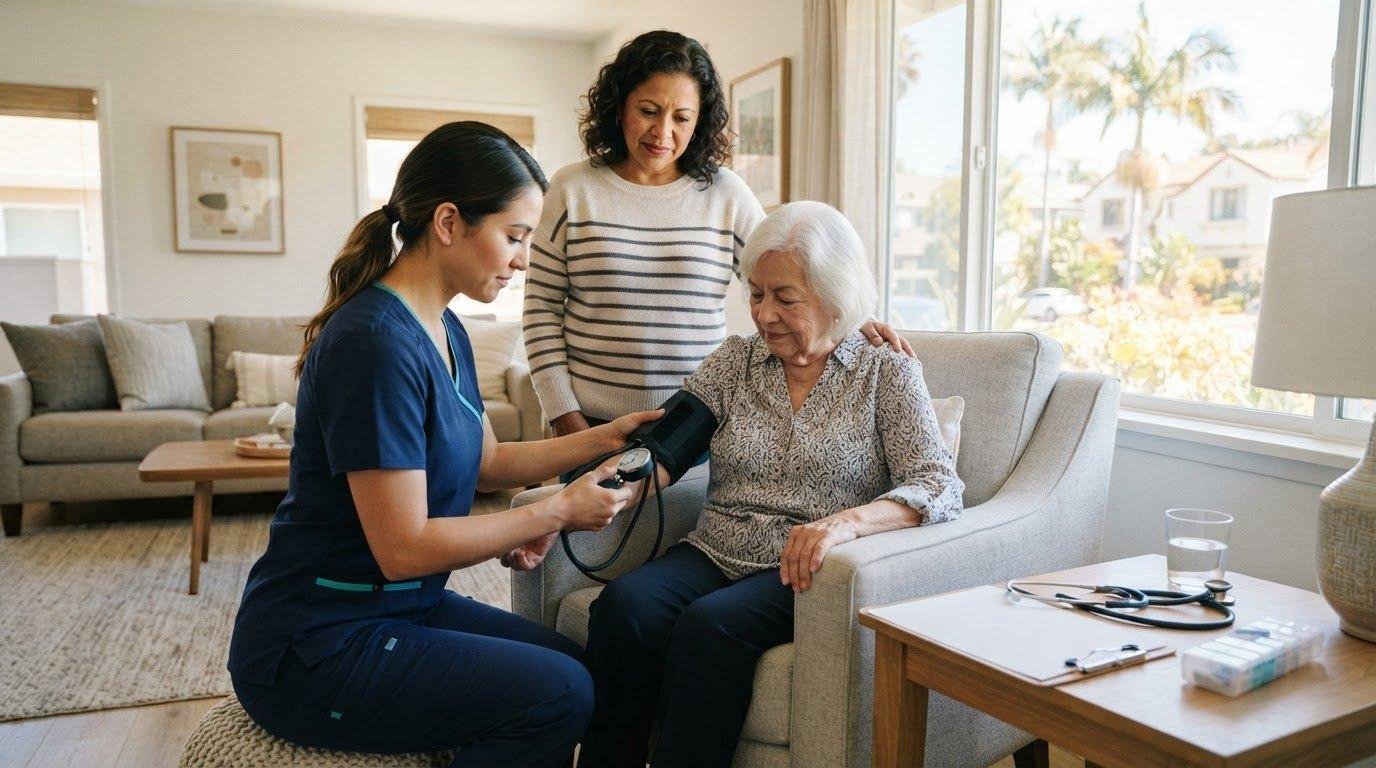
What will a home health nurse check, what questions will they ask, and should you gather records or supplies beforehand? Knowing what to expect from a home health nurse visit can make the appointment feel more comfortable and help patients and families prepare. The visit is shaped by the patient’s needs and care plan, so it may not follow the same checklist every time.
The nurse may discuss health changes and current concerns, review relevant information, and consider how the patient is managing at home. You can prepare notes and questions, ask what a planned assessment involves, and clarify what happens after the visit. Skilled nursing can also work alongside physical, occupational, or speech therapy and medical social services when those services are part of the care plan. This guide explains what to prepare, what may happen during the visit, and how to follow up. It’s relevant for families in North Hollywood and surrounding Los Angeles communities in California who are exploring care at home.
Key Takeaways
- Knowing what to expect from a home health nurse visit can help you share relevant health updates and ask focused questions.
- Have current concerns, questions, and useful records ready. Keep medication information or care instructions available if requested.
- The nurse’s assessment and any care provided depend on the patient’s needs and care plan, not a fixed checklist.
- Nursing may coordinate with physical or occupational therapy, speech therapy, and medical social services when those services are part of the plan.
- For a concern after the visit, note what changed and use the agency’s contact route for clarification. Seek prompt medical attention for symptoms that need it.
What to Expect From a Home Health Nurse Visit: What Happens During the Visit?
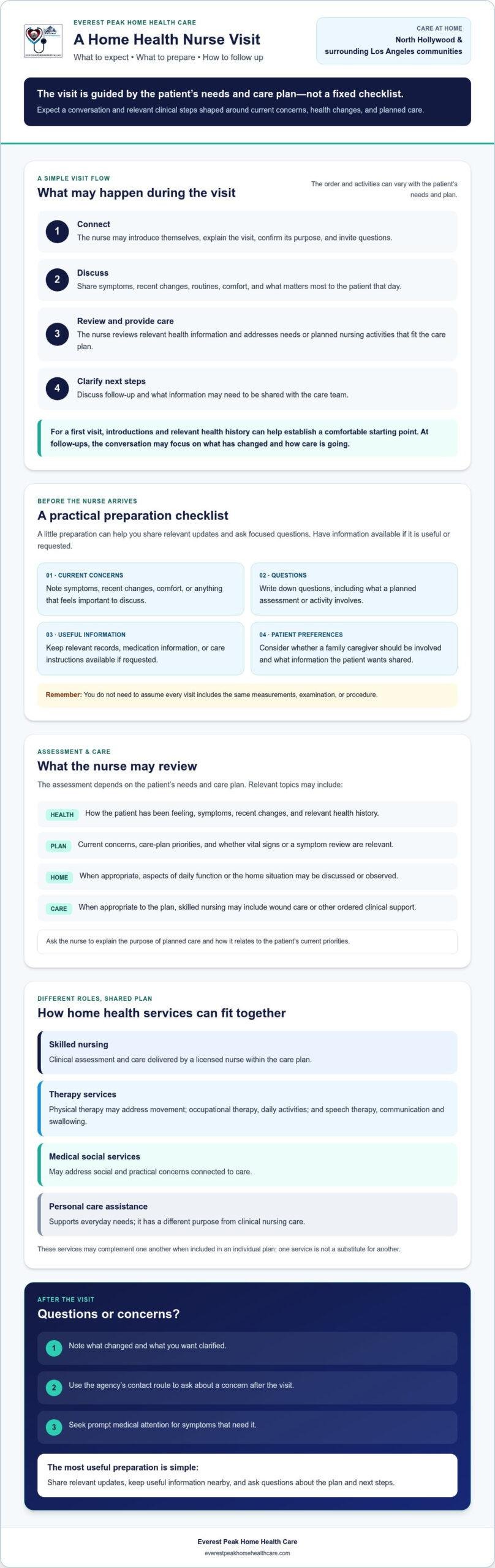
A home health nurse visit is guided by the patient’s needs and care plan, so it won’t follow an identical script in every home. The nurse may introduce themselves, confirm the purpose of the visit, and ask what matters most to the patient that day. They may then review relevant health information, discuss current concerns, and determine which planned nursing activities are appropriate.
A home health nurse visit is a clinical check-in in the patient’s home, shaped by their care needs and plan. Expect a conversation and a sequence of relevant steps, rather than a rigid checklist.
- Connect: The nurse explains the visit and invites questions.
- Discuss: The patient can describe symptoms, recent changes, routines, and priorities.
- Review and provide care: The nurse addresses relevant needs within the care plan.
- Clarify next steps: The nurse discusses follow-up or information to share with the care team.
How a first home health nursing visit may begin
At a first visit, introductions help establish a comfortable starting point. The nurse may confirm why nursing care is being provided, review relevant health history, and ask about current concerns or changes at home. Patients can ask what an assessment or planned activity involves before proceeding. The patient’s preferences should guide whether a family caregiver is involved and what information is shared.
Home health nursing is care shaped by a patient’s needs and plan. For broader background on the specialty and the nurse’s role, see Home health nursing.
What may happen during a follow-up visit
A follow-up visit may focus on what has changed since the last check-in, how the patient is progressing, and which care-plan priorities need attention. The nurse may ask how previously discussed care is going and whether the patient or caregiver has questions. Share changes in symptoms, daily routines, or comfort, even if they seem small.
Visit activities vary with clinical needs and the care plan. The nurse can explain what they’re addressing and discuss possible next steps. Patients and family members can raise concerns or ask for clarification so the conversation stays focused on the person’s current needs.
What Does a Home Health Nurse Assess and Provide?
A home health nurse’s assessment depends on the patient’s needs and care plan. Not every visit includes the same measurements or clinical activities. The nurse may ask about symptoms, recent changes, relevant health history, and the patient’s main concerns. Vital signs or a symptom review may be included when they’re relevant to the plan.
Skilled nursing provides clinical assessment and care from a licensed nurse, while non-medical personal care assistance supports everyday needs. The services have different purposes and may both be part of a person’s support, depending on their needs and plan.
Which health details might the nurse review?
The nurse may ask how the patient has been feeling, whether anything has changed, and which concerns feel most important. If relevant to the care plan, they may observe aspects of daily function or the home situation. These are possible discussion points, not a promise that every visit will include a particular measurement, examination, or procedure.
When appropriate to the patient’s needs and plan, skilled nursing may include wound care or other ordered clinical support. Ask the nurse to explain the purpose of planned care and how it relates to the patient’s current priorities. The Occupational Safety and Health Administration also describes the varied roles involved in home healthcare.
How nursing differs from therapy and personal care
Nursing is clinical care delivered by a licensed nurse within the care plan. Physical, occupational, and speech therapy address different goals related to movement, daily activities, or communication and swallowing. Medical social services can address social and practical concerns connected to care. These services may complement one another when they’re included in an individual plan, but one isn’t a substitute for another.
Personal care assistance supports everyday needs, while nursing addresses clinical care within the nurse’s role and plan. For more detail about clinical support at home, see Skilled Nursing Care: A Comprehensive Guide to Professional Clinical Support at Home. Patients in North Hollywood and surrounding Los Angeles communities can learn about in-home skilled nursing care and ask whether it may fit their situation.
What Should You Have Ready for a Home Health Nurse Visit?
You don’t need to stage your home or assemble a perfect file before the nurse arrives. A few relevant notes can make the conversation more focused. The patient’s comfort and safe access matter more than a spotless room. Preparation is mainly about making it easier to share useful information and get questions answered.
Information to gather before the nurse arrives
Collect what’s readily available, but don’t worry if something is missing. Existing records may help the nurse understand recent care and current concerns. Consider keeping these items nearby:
- A short note about symptoms, changes, and concerns, including when they began if known.
- Questions about the care plan, instructions, or what to do if a concern comes up between visits.
- An existing medication list, prescribed medications, and relevant care instructions, if requested.
- Discharge paperwork or recent provider instructions, if available.
Decide who the patient would like included in updates. The patient’s preferences and permission should guide what information is shared with family or other caregivers. For another overview of home visits and preparation, see What to Expect From Home Health Care.
How patients and caregivers can take part
The patient’s perspective is central. Encourage them to describe their goals, preferences, and concerns in their own words, and give them time to respond. Caregivers can share useful observations, such as changes in routine, while making space for the patient to speak. If the patient wants a family member involved, clarify who should receive updates.
Before the visit, clear a comfortable path to the patient and the area where you expect to talk. There’s no need to rearrange the home extensively or buy equipment for the appointment. Don’t change treatment or obtain new supplies based on assumptions. Ask the nurse or appropriate clinician what the care plan calls for.
As the visit wraps up, ask whom to contact with routine questions about instructions or the plan between visits. Patients and families in North Hollywood and surrounding Los Angeles communities can review in-home skilled nursing care to learn about the service and discuss whether it may fit their needs.
How Does the Nurse Visit Fit Into the Home Health Care Plan?
A nursing visit is one part of a coordinated plan, not a stand-alone schedule that looks the same for everyone. Visit frequency depends on the patient’s needs and clinical direction. Understanding what to expect from a home health nurse visit also means knowing how nursing may connect with other services and what follow-up to clarify.
With the patient’s permission, relevant observations or concerns may be shared with appropriate care team members to support coordination. The patient or family can ask what information will be shared and who is involved. Home health visits are scheduled care, not emergency response or continuous supervision. For urgent or emergency symptoms, use appropriate emergency medical resources rather than waiting for a planned visit.
Home health nursing compared with other in-home services
Different professionals address different needs. A care team may include more than one discipline when relevant to the individual plan, with each service serving its own purpose.
| Service | Primary purpose |
|---|---|
| Skilled nursing | Clinical assessment and nursing care provided by a licensed nurse within the care plan. |
| Physical therapy | Support movement, mobility, and physical function. |
| Occupational therapy | Address activities and skills used in everyday routines. |
| Medical social services | Help address social and practical concerns related to the patient’s care. |
| Personal care assistance | Provide support with everyday personal needs. |
These roles can complement one another without replacing one another. For more on therapy at home, see In-Home Physical Therapy San Fernando Valley: Professional Clinical Recovery.
What follow-up may look like after the visit
Before the nurse leaves, ask about next steps and whether another visit is planned, if applicable. The nurse may explain which care-plan priorities remain and what the patient or caregiver should keep track of. If instructions are unclear, ask for clarification rather than guessing or changing care on your own.
Confirm whom to contact with routine questions or changing concerns between visits. Patients and families in North Hollywood and surrounding Los Angeles communities can discuss available home health services with Everest Peak Home Health Care and ask whether its in-home care may fit their needs.
What If You Have Questions or Concerns After the Visit?
Questions may come up after the nurse has left, especially if an instruction feels unclear or the patient’s condition changes. Write down what you’ve noticed, then use the agency’s contact route and guidance for non-emergency questions. Explain what changed and when, and ask what the next step should be. A brief written note can help you describe the concern accurately.
Questions worth asking before the nurse leaves
A short conversation at the end of the visit can help patients and caregivers understand the plan. Consider asking:
- What did you assess or address during today’s visit?
- What changes or symptoms should we watch for, and what should we do if they occur?
- What are the next steps, and when is another visit planned, if applicable?
- Whom should we contact with routine questions about the care plan between scheduled visits?
If clinical terms or instructions are unfamiliar, ask the nurse to explain them in plain language or repeat the key points. The patient can also ask for the information to be written down. Before the visit ends, make sure everyone understands which concerns belong with the care team and which need more immediate attention.
When to contact the care team or seek urgent help
For routine, non-emergency questions about instructions or the care plan, follow the agency’s communication guidance. If a concern is changing or worsening, contact the appropriate healthcare professional promptly rather than waiting for the next scheduled visit. Home health visits are planned care, not emergency response or continuous supervision.
For immediate or life-threatening symptoms, call emergency services. Don’t rely on a scheduled nursing visit or routine agency contact for an emergency. If you’re unsure whether a new symptom needs prompt medical attention, seek guidance from an appropriate healthcare professional. This general information can’t determine what care an individual needs.
Knowing what to expect from a home health nurse visit includes understanding how to follow up when something is unclear. Patients and families in North Hollywood and surrounding Los Angeles communities can contact Everest Peak Home Health Care to discuss in-home skilled nursing and whether its services may fit their needs. Care plans and visit schedules vary by patient.
Feel More Prepared for the Next Step
Knowing what to expect from a home health nurse visit can replace some uncertainty with a clearer plan. The visit is shaped by the patient’s needs, so assessments and care may differ from one person to another. Relevant health information and questions can support a useful conversation, while confirming follow-up instructions helps everyone understand what to do next.
Scheduled nursing visits are not emergency care. Use the agency’s provided contact route for routine care-plan questions, and call emergency services for an immediate or life-threatening situation.
Everest Peak Home Health Care provides skilled nursing visits through licensed registered nurses and vocational nurses. The agency serves North Hollywood and surrounding Los Angeles communities in California. To discuss whether in-home skilled nursing may fit your needs, contact Everest Peak Home Health Care.
Frequently Asked Questions
What happens during a home health nurse visit?
A home health nurse visit is guided by the patient’s needs and care plan. The nurse may introduce themselves, discuss concerns and recent changes, review relevant health details, provide planned clinical care when appropriate, and explain next steps. What to expect from a home health nurse visit can differ between patients; not every visit follows the same checklist or includes the same assessment.
What should I have ready for a home health nurse visit?
Gather notes about symptoms or changes, questions, and relevant provider instructions. If available, keep an existing medication list, prescribed medications, or discharge paperwork nearby in case the nurse requests them. You don’t need to buy supplies or make the home spotless. Clear a safe path to the patient and choose a comfortable place to talk. The nurse can clarify what information is useful.
How long does a home health nurse visit usually last?
A home health nurse visit doesn’t have one standard length for every patient. The time may depend on clinical needs, care-plan priorities, and what is addressed during the appointment. Ask the agency or care team what to anticipate for the scheduled visit. If a concern or change comes up, share it with the nurse so the conversation can focus on relevant priorities.
Will a home health nurse check vital signs at every visit?
Not necessarily. Vital signs may be checked when relevant to the patient’s needs and care plan, but families shouldn’t assume the same measurements will be taken at every appointment. The nurse can explain which checks are planned and why they’re appropriate for that visit. If you’re unsure whether a particular assessment is part of the plan, ask the nurse or care team for clarification.
Can a family member stay during a home health nurse visit?
A family member may stay if the patient wants support and agrees to their involvement. The nurse should respect the patient’s preferences and privacy, and direct questions to the patient when possible. A caregiver can share helpful observations, such as changes in routine, while leaving room for the patient to speak. If you’re unsure how best to participate, ask the nurse at the start of the visit.
Does a home health nurse visit include physical therapy?
No, a nursing visit doesn’t automatically include physical therapy. Nursing and therapy are separate services with distinct purposes. A licensed nurse provides clinical assessment and care within the nursing plan, while a physical therapist focuses on movement and physical function. A care team may include both when relevant to the individual plan. Confirm which professional is scheduled and what their visit is intended to address.
What should I do if I have a concern after the nurse leaves?
Write down the concern, including what changed and when, then use the agency’s provided contact route for routine care-plan questions. Ask for clarification rather than guessing about instructions. For immediate or life-threatening symptoms, call emergency services; a scheduled home health visit isn’t emergency care. Everest Peak Home Health Care serves North Hollywood and surrounding Los Angeles communities in California. Confirm specific service availability with the agency.