
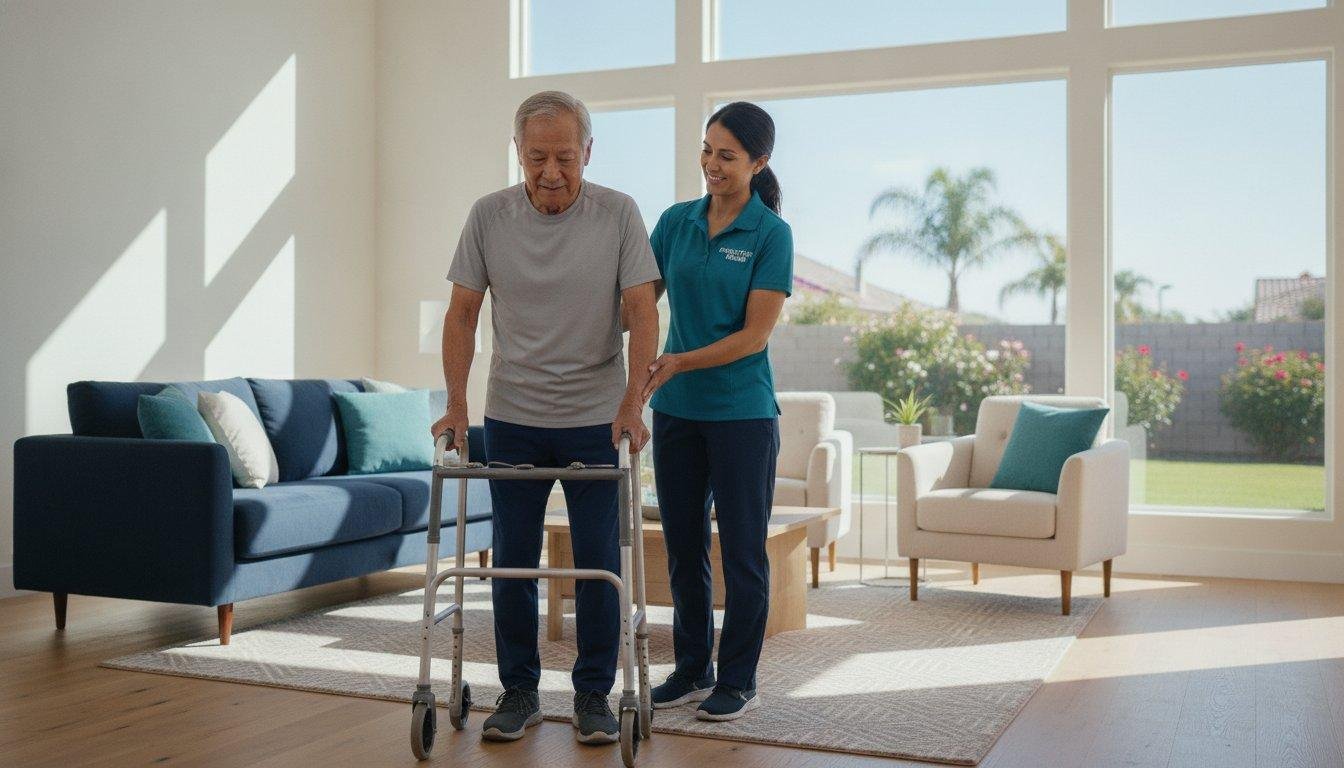
Did you know that one in four older adults reports falling every year, totaling over 14 million incidents across the country? This staggering figure highlights a growing concern for families who wish to maintain their loved one’s autonomy and safety at home. Physical therapy for fall prevention provides a structured, clinical approach to reducing these risks before a minor stumble leads to a serious injury. It’s a proactive medical strategy that focuses on the specific physical environment where you live and move every day.
You likely feel a sense of anxiety after a “near-miss” trip or worry that a loss of balance might eventually lead to a nursing home placement. It’s natural to feel unsure about which exercises are safe to perform without professional supervision. This guide will show you how specialized in-home physical therapy can identify your specific risk factors and restore your balance to prevent life-altering falls. We’ll examine the clinical assessment process, the implementation of customized strength programs, and the practical modifications needed to create a safer, more stable living environment.
Key Takeaways
- Understand how physical therapy for fall prevention serves as a proactive clinical intervention to break the cycle of fear and preserve your long-term independence.
- Learn the science of proprioception and the kinetic chain to strengthen the ankles, knees, and hips for improved stability during daily activities.
- Discover the distinct clinical advantages of practicing real-world movements, such as bed transfers, within your own home environment rather than a standard clinic.
- Identify high-impact environmental modifications through a professional home safety evaluation to eliminate common household hazards that lead to stumbles.
- Explore what to expect during a comprehensive initial assessment conducted by a multidisciplinary team of licensed therapists and registered nurses.
The Clinical Reality of Falls and the Importance of Prevention
Falling is often mistakenly viewed as an unavoidable consequence of aging. This misconception prevents many families from seeking the clinical support they need until an injury has already occurred. In reality, physical therapy for fall prevention serves as a proactive medical intervention designed to identify physiological vulnerabilities before they manifest as a crisis. By treating balance as a skill that can be maintained and restored, licensed therapists help patients retain their dignity and independence within their own homes.
The “Fall Cycle” is a well-documented clinical progression. It usually begins with a minor stumble or a “near-miss” incident. While the individual may not sustain a physical injury, the experience often triggers a profound psychological shift. This fear leads to self-imposed activity restriction, which causes muscle atrophy and further balance impairment. Breaking this cycle requires a multidisciplinary approach that combines medical assessment with targeted physical rehabilitation. Data from 2021 indicates that the age-adjusted death rate from falls increased by 63% over the previous decade, highlighting the urgent need for comprehensive fall prevention strategies.
In California, where thousands of seniors strive to age in place, the impact of a single fall can be life-altering. It’s the leading cause of injury-related hospitalizations for those over 65. When a patient loses the ability to move safely, their risk of nursing home placement increases significantly. Professional intervention isn’t just about safety; it’s about preserving the autonomy that defines a high quality of life.
Identifying Internal vs. External Risk Factors
Clinical assessments categorize risks into two distinct groups. Internal factors involve the patient’s physiological state, such as muscle atrophy, vision changes, or vestibular dysfunction that affects the inner ear’s balance mechanisms. Chronic conditions like Parkinson’s disease or diabetes further complicate these issues by affecting gait and sensation in the lower extremities. External factors, conversely, are environmental hazards like poor lighting, loose rugs, or improper footwear. A licensed therapist evaluates how these two categories interact to create a specific risk profile for each patient.
The Psychological Impact: Fear of Falling (FOF)
Fear of falling, or FOF, is more than just a feeling; it’s a clinical barrier to recovery. When a patient becomes afraid to move, their world shrinks. They may stop walking to the mailbox or navigating their stairs, leading to rapid physical decline. Physical therapy for fall prevention addresses this by providing a safe, supervised environment where patients can practice challenging movements. This professional guidance rebuilds confidence, ensuring that the patient doesn’t fall into a sedentary lifestyle that only increases their long-term risk. Through steady support, therapists help patients transition from a state of anxiety to one of calculated, confident movement.
How Physical Therapy Targets the Root Causes of Instability
Effective physical therapy for fall prevention goes beyond simple leg lifts. It addresses the neurological and mechanical systems that keep us upright. One of the most critical components is proprioception, which is the body’s internal sense of its position in space. When this system degrades due to age or injury, the brain receives delayed or inaccurate signals from the feet and joints. Therapists use specific sensory-motor exercises to retrain these pathways, ensuring the brain can react quickly to a slip or a change in surface texture.
The kinetic chain refers to the coordinated movement of the ankles, knees, and hips. If one link in this chain is weak or stiff, the entire system of balance becomes compromised. For instance, limited ankle mobility often prevents a person from clearing their foot during a step, leading to a trip. Gait training involves a clinical analysis of these movements to correct patterns that lead to instability and ensure you can clear household obstacles safely.
To establish a baseline, therapists utilize standardized assessments like the Timed Up and Go (TUG) test. This measures how long it takes a patient to stand from a chair, walk three meters, turn, and sit back down. Clinical physical therapy for fall prevention also considers how other medical factors impact these results. Dizziness is a common side effect of many medications. Our multidisciplinary team coordinates with Registered Nurses to ensure that Professional Fall Prevention plans account for these clinical complexities, including how polypharmacy affects your daily stability.
Balance Training and Vestibular Rehabilitation
Dizziness and vertigo are frequently caused by vestibular dysfunction, which is a disturbance in the inner ear’s balance organs. Vestibular rehabilitation is a specialized exercise program designed to reduce vertigo-related symptoms and improve gaze stability. Therapists employ both static balance exercises, where the patient remains still, and dynamic exercises that involve movement. These interventions are essential for patients who feel unsteady when turning their heads or walking in crowded spaces.
Strength Training for Functional Independence
Maintaining independence requires sufficient power in the “anti-gravity” muscles, specifically the quadriceps, glutes, and core. These muscles provide the necessary force to rise from a chair and the stability to remain upright when nudged. Core stability is particularly vital because it allows the body to recover from a trip without falling. For seniors with limited mobility, therapists customize resistance training using bands or bodyweight movements that are safe to perform at home. If you’re ready to begin a personalized program, the team at Everest Peak Home Health Care can help you navigate these clinical steps safely.
The Advantages of In-Home Physical Therapy in Los Angeles
While outpatient clinics offer specialized equipment, the clinical benefits of physical therapy for fall prevention are most effectively realized within the patient’s actual living space. A clinic’s gym typically features perfectly level floors and uniform lighting that rarely reflect the complex reality of a residential home. In-home care allows a therapist to observe how a patient interacts with their specific environment, from the plushness of a living room rug to the narrowness of a hallway. This context is essential because a patient who moves confidently on a gym mat may still struggle with the specific threshold of their own front door.
For seniors residing in the San Fernando Valley, transportation often becomes a significant barrier to consistent care. Navigating Los Angeles traffic for multiple weekly appointments can be physically exhausting and mentally taxing, which often leads to missed sessions. By bringing clinical expertise directly to the doorstep, we eliminate these stressors and ensure that the rehabilitation process remains uninterrupted. This consistency is vital for building the muscle memory and physiological strength required to prevent future incidents. It also allows the therapist to involve family members or personal care assistants in the training process, ensuring that safety techniques are reinforced throughout the day.
Context-Specific Training in Your Own Environment
Every home in North Hollywood has a unique layout that presents specific challenges. A licensed therapist acts as a safety guide, evaluating the exact height of your favorite armchair or the steepness of the stairs leading to the bedroom. We focus on “real-world” movements, such as practicing safe entry and exit from your specific bed or navigating the high-risk transitions found in bathrooms and kitchens. These functional repetitions in a familiar setting ensure that the skills learned during a session translate directly into safer daily living. By practicing where you live, you aren’t just learning to walk; you’re learning to navigate your life with renewed confidence.
Coordination with Skilled Nursing for Medical Safety
Medical safety is the foundation of physical rehabilitation. Our multidisciplinary approach integrates Skilled Nursing Care to monitor clinical factors that physical exercises alone cannot address. For example, a Registered Nurse may track a patient’s blood pressure to identify orthostatic hypotension, a condition where a sudden drop in pressure causes dizziness upon standing. This is especially critical for post-operative patients recovering from hip or knee surgery who are at a higher risk of instability. By ensuring medical stability first, we create a safe environment where the patient can advance to more complex balance challenges without unnecessary risk.
Creating a Fall-Proof Home: A Clinical Safety Checklist
A home safety evaluation is a cornerstone of effective physical therapy for fall prevention. While many people view their homes as inherently safe, a licensed therapist approaches a living space as a clinical environment that must be optimized for stability. During a professional assessment, the therapist identifies environmental risks that may not be obvious to the untrained eye. This process moves beyond general tidiness to address specific architectural and habit-based hazards. By modifying the physical environment, we reduce the cognitive load on the patient, allowing them to focus on their movement rather than navigating obstacles.
From a clinical perspective, there’s a significant difference between “clutter” and “trip hazards.” While clutter may be unsightly, a trip hazard is any object or surface transition that disrupts the normal gait cycle or requires a sudden change in balance. For example, a stack of magazines on a side table is clutter, but an electrical cord stretched across a high-traffic walkway is a high-risk hazard. Occupational Therapy often complements these efforts by focusing on the mechanics of daily living, such as how a patient reaches for items in a kitchen cabinet or transitions into a shower chair. This multidisciplinary collaboration ensures that every aspect of the home supports the patient’s rehabilitative goals.
Room-by-Room Safety Audit
The bathroom is statistically the most hazardous room in the house due to slippery surfaces and low-seated fixtures. Installing fixed grab bars near the toilet and inside the shower provides the necessary leverage for safe transitions, while non-slip mats and raised toilet seats reduce the physical strain on the knees and hips. In the bedroom, the primary focus is on the path between the bed and the restroom. Motion-activated nightlights ensure that this route is always illuminated during nighttime hours, which is critical for preventing stumbles when the patient is in a semi-conscious or fatigued state. Within living areas, we recommend securing all electrical cords along baseboards and removing throw rugs, which are a leading cause of “caught-toe” incidents among seniors.
Assistive Devices and Proper Footwear
Using an assistive device that is improperly fitted can actually increase the risk of a fall. A walker or cane must be adjusted to the specific height of the patient’s wrist crease to ensure proper posture and weight distribution. Our therapists provide professional fittings and training to ensure that these tools enhance mobility rather than hindering it. Footwear also plays a vital role in clinical safety. Supportive, non-skid shoes with firm soles provide the necessary friction for a stable heel-strike and toe-off during the gait cycle. Walking in socks on hardwood or tile floors is exceptionally dangerous because it eliminates the traction required to maintain balance on smooth surfaces. If you’re concerned about the safety of your living environment, you can schedule a comprehensive home safety evaluation with our licensed clinical team today.
Professional Fall Prevention with Everest Peak Home Health Care
At Everest Peak Home Health Care, we view our role as more than just service providers. We act as a protective clinical extension of your family’s care circle. Our approach to physical therapy for fall prevention is built on a foundation of professional empathy, ensuring that every patient is treated with the highest level of dignity while receiving rigorous medical support. We understand that a loss of balance often feels like a loss of autonomy. Our mission is to provide a structured path toward recovery that restores both your physical stability and your confidence in daily living.
During the initial in-home physical therapy assessment, a licensed therapist conducts a thorough investigation into the factors affecting your safety. This process isn’t a cursory glance at your living room. It’s a comprehensive evaluation of your gait, strength, and sensory systems. We analyze how your specific medical history, including any post-operative needs or chronic conditions, interacts with your physical environment. This data allows us to develop a customized plan of care that targets your personal goals, whether that’s walking to the mailbox or simply moving from the bed to the chair without anxiety.
Our commitment to clinical excellence extends to the support we provide for families and caregivers. We recognize that navigating a loved one’s health transition is stressful. By providing clear education on transfer techniques and safety protocols, we empower caregivers to become active partners in the rehabilitative process. This collaborative environment ensures that the progress made during therapy sessions is maintained throughout the week, creating a stable foundation for long-term improvement.
Comprehensive Clinical Assessments
Our assessments are designed to be multidimensional. We evaluate physical, environmental, and medical risks simultaneously to create a complete safety profile for every individual. By setting measurable goals, such as improving your score on a standardized balance test or increasing the distance you can walk unassisted, we provide a clear roadmap for progress. This methodical approach ensures that no aspect of your care is overlooked, from the way your medications might affect your blood pressure to the specific height of your favorite chair.
Serving the San Fernando Valley and Beyond
Based in North Hollywood, we provide specialized rehabilitative care throughout the San Fernando Valley and Greater Los Angeles. Our local presence allows us to be a dependable partner for families navigating the complexities of home-based medical care. We work closely with your existing medical team to ensure a seamless transition into our services. To begin your journey toward improved stability, a physician’s referral is typically the first step. Our multidisciplinary team, including Registered Nurses and licensed therapists, is ready to help you reclaim your independence. You can contact our clinical team to schedule a home assessment and take the first step toward a safer, more independent life.
Reclaiming Independence Through Clinical Support
Maintaining safety at home requires more than just caution; it demands a structured, clinical approach to movement and environmental awareness. Specialized physical therapy for fall prevention allows you to address the root causes of instability, such as proprioceptive decline and muscle atrophy, within the specific context of your living space. By integrating professional home safety evaluations with targeted strength and balance training, you can break the cycle of fear and preserve your long-term autonomy.
Our licensed clinical team at Everest Peak Home Health Care is dedicated to providing this comprehensive rehabilitative care to families throughout Los Angeles and the San Fernando Valley. Our multidisciplinary approach combines the expertise of Physical Therapists, Occupational Therapists, and Registered Nurses to ensure every medical and environmental risk is addressed. You don’t have to navigate these health transitions alone. You can Request a Clinical Consultation for In-Home Physical Therapy today to begin your journey toward regained confidence and a safer home life. We’re here to provide the steady support you need to move forward with dignity.
Frequently Asked Questions
Can physical therapy prevent falls if I have already had a hip replacement?
Physical therapy for fall prevention is highly effective following a hip replacement because it addresses the gait asymmetries and muscle imbalances that often follow surgery. Licensed therapists focus on restoring the kinetic chain and ensuring that the prosthetic joint is supported by strong, stable musculature. This clinical oversight is vital for preventing the compensatory movements that often lead to secondary stumbles or joint strain during the recovery process.
Is in-home physical therapy for fall prevention covered by Medicare?
Medicare Part B covers in-home physical therapy when it is deemed medically necessary to treat a functional deficit or prevent physical decline. In 2026, the threshold for physical therapy services requiring a KX modifier is $2,480, which signifies that the provider must certify the continued medical necessity of the treatment. Most Medicare plans, especially when paired with secondary insurance, will cover the majority of the clinical costs associated with these rehabilitative services.
How many sessions of physical therapy are typically needed for balance improvement?
The number of sessions required depends on the patient’s baseline mobility and specific clinical goals, though many programs involve two to three visits per week for six to eight weeks. Significant improvements in balance and proprioception typically emerge as muscle memory and neurological pathways are retrained through consistent practice. A licensed therapist will continuously monitor your progress and adjust the frequency of visits to ensure you reach a stable level of independence.
Do I need a doctor’s referral for home health physical therapy in California?
A physician’s referral is required to initiate home health physical therapy services in California. This ensures that the rehabilitative plan is integrated with your overall medical management and that any underlying conditions are professionally monitored. Our team works directly with your primary care provider or surgeon to establish a certified plan of care that meets all regulatory and clinical standards for licensed home-based treatment.
What is the difference between physical therapy and occupational therapy for falls?
Physical therapy primarily focuses on gross motor skills, gait mechanics, and lower-extremity strength to improve overall stability and movement. Occupational therapy complements this by addressing the activities of daily living, such as the fine motor skills needed for dressing or the cognitive strategies required to navigate a kitchen safely. While the Physical Therapist improves your ability to walk, the Occupational Therapist ensures you can function safely within the specific demands of your home environment.
Can exercises for fall prevention be done if I use a walker?
Fall prevention exercises are frequently performed while utilizing a walker or other assistive devices to ensure patient safety during the strengthening process. A therapist will customize the movements to your current level of stability, often using the walker as a support tool for standing balance drills. This supervised approach allows you to build the necessary power in your anti-gravity muscles without the risk of an unmonitored stumble or injury.
How do I know if my elderly parent needs a professional fall risk assessment?
You should consider a professional assessment if your parent exhibits furniture walking, experiences frequent near-miss stumbles, or expresses a growing fear of falling that restricts their daily activity. These behaviors are clinical warning signs that their balance systems are no longer compensating for physiological changes. A comprehensive evaluation by a multidisciplinary team can identify these risks early, preventing a minor instability from becoming a life-altering injury that requires hospital intervention.
What are the most common causes of falls in the home for seniors?
The most common environmental causes of falls include poor lighting, loose throw rugs, and unsecured electrical cords in high-traffic areas. Clinical causes often involve medication side effects, such as orthostatic hypotension, which causes a sudden drop in blood pressure upon standing. Identifying these internal and external factors through a professional home safety audit is the most effective way to create a secure living environment and preserve long-term autonomy for seniors.