
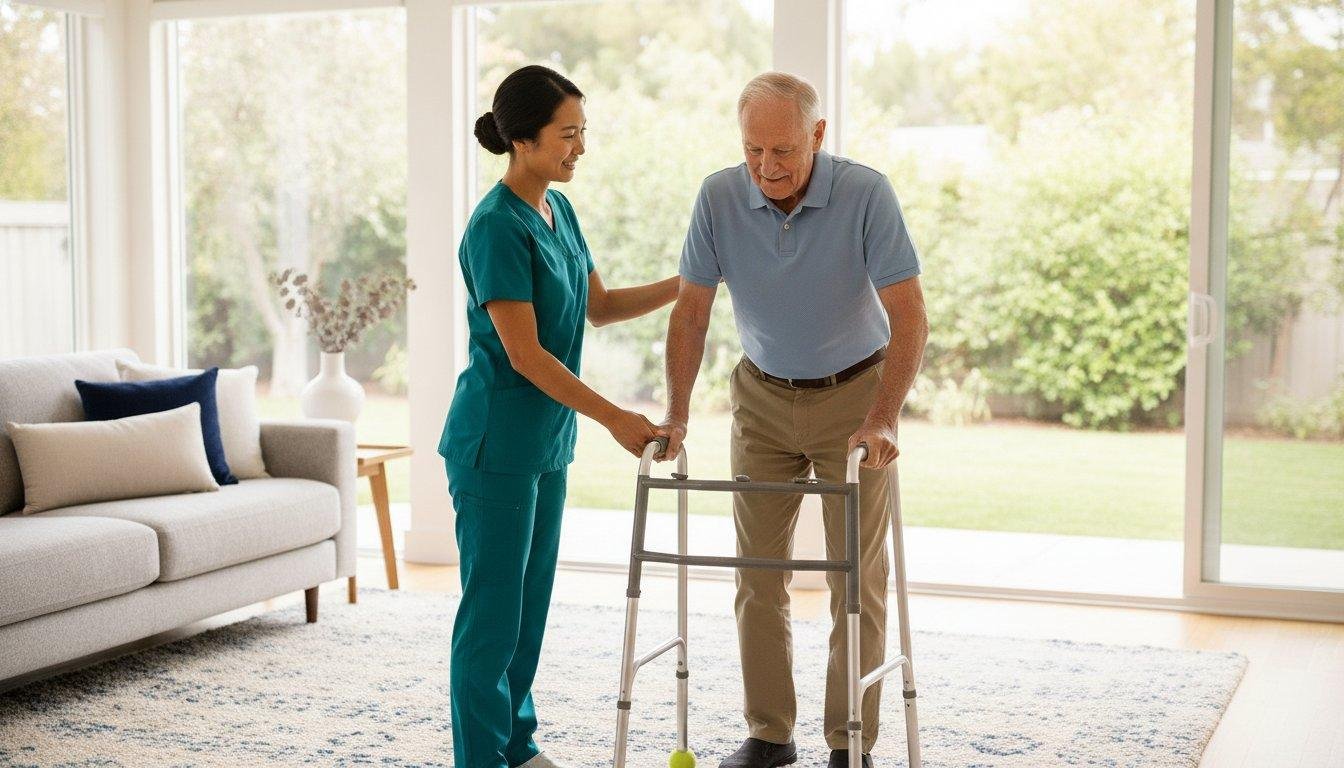
After a recent hospital stay or a change in mobility, the simple act of walking across a hallway rug can feel like a high-stakes challenge. The anxiety of a potential fall, coupled with the logistical exhaustion of arranging transport to an outpatient clinic, often leads families to feel overwhelmed by the recovery process. You likely recognize this struggle; the desire to maintain a loved one’s safety shouldn’t be compromised by the physical difficulty of reaching a medical facility. Professional physical therapy for seniors at home addresses these concerns by bringing specialized clinical expertise directly into the patient’s living environment.
This clinical guide explains how home-based interventions help seniors regain their strength and prevent falls while remaining in their own residence. You’ll discover how a customized plan of care improves patient confidence and gait through targeted exercises and thorough environment assessments. We’ll also clarify the 2026 Medicare therapy threshold of $2,480 for physical therapy and the home health process, providing a structured path toward restored mobility and lasting independence. By understanding these professional resources, you can ensure your family member receives the rigorous care they need in the comfort of their home.
Key Takeaways
- Learn why clinical assessments performed within the residence are more effective at identifying specific environmental fall risks than traditional clinic visits.
- Discover how practicing functional movements on your own furniture and stairs translates to immediate, real-world safety for daily activities.
- Understand the specialized role of physical therapy for seniors at home in managing complex recoveries, including post-operative care and neurological rehabilitation.
- Prepare for a successful first session by establishing a dedicated “Therapy Zone” to ensure a focused and safe environment for clinical intervention.
- Explore the benefits of an interdisciplinary care model that coordinates physical therapy with skilled nursing and medical social services for a comprehensive recovery.
What is In-Home Physical Therapy for Seniors?
In-home physical therapy for seniors is a specialized branch of healthcare that delivers clinical rehabilitation services directly within a patient’s private residence. Unlike outpatient clinics where patients must travel to a gym-like setting, this model utilizes the patient’s own living environment as the primary therapeutic space. A licensed physical therapist conducts a comprehensive evaluation of the individual’s physical capabilities while simultaneously auditing the home for safety risks. This approach ensures that every exercise and intervention directly addresses the specific obstacles a senior faces in their daily life, such as navigating a narrow hallway or transitioning from a specific bedside.
It’s essential to distinguish between “convenience” home care and “clinically necessary” home health. While some services offer home visits for general wellness, professional physical therapy for seniors at home is a medical intervention prescribed by a physician to treat specific functional deficits or recover from acute events. To qualify for this level of care under most insurance frameworks, the patient must meet specific criteria regarding their ability to leave the residence. According to standard clinical guidelines for Medicare eligibility, a patient is considered homebound if their illness or injury makes leaving the home difficult without a supportive device or another person’s assistance, and leaving requires a considerable and taxing effort.
The Role of a Geriatric Physical Therapist
Geriatric physical therapists possess advanced training in managing age-related physiological changes, including sarcopenia and osteoporosis. These specialists focus on geriatric rehabilitation, a discipline that prioritizes the restoration of function rather than just the treatment of a single injury. When working in a residential setting, the therapist adapts clinical protocols to fit the home’s layout. They emphasize functional mobility, which involves the specific movements required to move safely within one’s own floor plan. This might include practicing safe transfers in the actual bathroom the patient uses daily or refining gait patterns on the specific flooring types found in their home.
Understanding Eligibility and Referrals
Accessing these services begins with a determination of medical necessity, typically following a hospital discharge, a fall, or a noticeable decline in stability. A physician’s referral is a mandatory component of the home health process, as it establishes the clinical framework for the therapist’s interventions. During the initial assessment, the therapist examines more than just strength and range of motion. They perform a detailed environmental scan to identify trip hazards, lighting inadequacies, and the need for assistive devices. This first visit sets the baseline for a customized plan of care designed to maximize the patient’s independence while minimizing the risk of future injury.
The Clinical Benefits of Home-Based Rehabilitation
The transition from a clinical facility to the residence offers distinct advantages that directly influence recovery timelines and patient safety. Utilizing physical therapy for seniors at home eliminates the exhaustion associated with transportation, allowing the patient to dedicate their full energy to the therapeutic session. In a busy outpatient clinic, a therapist’s attention is often divided among multiple patients. Conversely, the home health model provides undivided, one-on-one clinical attention. This focused environment ensures that the therapist can monitor every movement with precision, adjusting the plan of care in real time to match the patient’s immediate physiological response.
The home environment also serves as a “home field advantage” that significantly boosts psychological comfort and patient compliance. Seniors often feel more confident and less anxious in familiar surroundings, which leads to a greater willingness to engage in challenging exercises. This psychological stability, combined with regular clinical monitoring, plays a vital role in reducing hospital readmissions. By observing the patient in their natural setting, therapists can identify subtle changes in health status or mobility before they escalate into medical emergencies. Securing a coordinated approach to recovery allows families to focus on emotional support while clinicians manage the technical aspects of rehabilitation.
Fall Prevention and Environmental Safety
A primary objective of home-based care is the mitigation of environmental risks that lead to injuries. In many Los Angeles area homes, older architectural features like high door thresholds, loose area rugs, or inadequate hallway lighting create “hidden” hazards. A licensed therapist performs a detailed safety audit, identifying these specific risks and recommending modifications. Balance training is then customized to the patient’s actual walking paths, such as the route from the bedroom to the bathroom. Clinical data consistently shows a direct link between improved gait speed and a reduction in fall frequency, making these environmental adjustments a cornerstone of long-term independence.
Customized Exercise and Strength Building
Effective rehabilitation does not require the expensive, heavy machinery found in gyms. Therapists develop a sophisticated Home Exercise Program (HEP) that utilizes the patient’s own furniture and body weight to build functional strength. A structured plan of care emphasizes the benefits of exercise for seniors, specifically targeting endurance and flexibility to restore autonomy. Exercises focus on Activities of Daily Living (ADLs), such as the “sit-to-stand” motion from a favorite chair. Throughout these movements, the therapist monitors vital signs like heart rate and oxygen saturation, ensuring the patient remains within a safe clinical window while pushing toward their recovery goals.
Common Conditions Treated with At-Home Physical Therapy
Physical therapy for seniors at home serves as a vital clinical bridge for individuals managing a spectrum of acute and chronic health challenges. While many associate rehabilitation with general wellness, these interventions are specifically designed to address complex medical diagnoses that impact a patient’s safety and autonomy. By applying evidence-based protocols to the patient’s actual environment, clinicians can target the physiological root causes of mobility loss. Physical therapy counters sarcopenia by implementing progressive resistance training to rebuild lost muscle mass, thereby stabilizing joints and reducing the risk of debilitating fractures. Beyond muscle loss, therapists frequently manage chronic pain stemming from arthritis or spinal stenosis. They use manual therapy and postural correction to improve daily comfort, which often reduces the patient’s reliance on analgesic medications.
Orthopedic Recovery at Home
After a total hip or knee arthroplasty, the initial recovery phase is critical for long-term success. Specialized physical therapy for seniors at home focuses on managing post-operative edema and restoring the joint’s range of motion without the stress of traveling to an external clinic. Therapists guide the patient through the methodical progression from a walker to a cane, ensuring each transition is stable on the patient’s specific flooring and thresholds. This level of care is typically delivered in coordination with Skilled Nursing Care. Clinicians work together to monitor wound healing and ensure that the patient’s physical exertion doesn’t compromise the surgical site, creating a comprehensive safety net during the most vulnerable weeks of recovery.
Neurological and Balance Support
For those recovering from a stroke or living with Parkinson’s disease, rehabilitation focuses on the principles of neuroplasticity. This involves repetitive, task-oriented training that encourages the brain to form new neural pathways. Gait training is especially essential for patients with vestibular disorders, as it helps recalibrate their sense of balance to prevent the “freezing” episodes common in Parkinson’s. By practicing specific movements in the kitchen or bedroom, patients retrain their nervous systems to navigate the exact spaces they use most frequently. This tailored approach addresses unique mobility challenges, such as turning in tight spaces or reaching for items in a cupboard, which directly accelerates the restoration of functional independence.
Preparing for Your First In-Home Therapy Session
Preparation for physical therapy for seniors at home ensures that every minute of the clinical visit is dedicated to active recovery. Unlike the controlled environment of an outpatient clinic, the home setting contains unique variables that require management before the therapist arrives. Establishing a dedicated “Therapy Zone” is the first step in this process. This involves clearing a small area of the living room or bedroom of clutter, ensuring there’s enough space for the therapist to stand beside the patient during gait training. It’s also vital to secure pets in a separate room; while they’re beloved companions, they represent a significant trip hazard during balance exercises.
Clinical safety extends to what the patient wears. Supportive, non-slip footwear is mandatory for all sessions to provide the necessary traction on various flooring types. You should also gather all relevant medical documentation, including hospital discharge summaries and an updated medication list. This information allows the physical therapist to align their interventions with the patient’s overall health status and any contraindications. During the visit, the family caregiver plays a supportive role by observing the techniques used, which helps them facilitate the Home Exercise Program (HEP) between professional visits. If you’re ready to begin this process, you can schedule an initial home assessment to evaluate your specific needs.
Safety Checklist for the Home Environment
A primary goal of the first visit is to finalize an environment that supports safe movement. You can facilitate this by removing common trip hazards before the clinician arrives. Focus on these specific areas:
- Clear the Path: Remove throw rugs and secure any loose electrical cords that cross walking paths.
- Optimize Lighting: Ensure hallways and bathrooms are brightly lit, as poor visibility is a leading cause of falls during nighttime navigation.
- Exercise Support: Prepare a sturdy chair with armrests. This provides a stable base for seated exercises and assists the patient during sit-to-stand transitions.
Setting Realistic Clinical Goals
During the initial evaluation, the therapist collaborates with the patient and family to define specific, measurable outcomes. Short-term goals might focus on immediate safety, such as walking 50 feet with a walker or performing a safe tub transfer. Long-term goals usually involve a return to previous levels of independence, like navigating a flight of stairs or walking to the mailbox. A typical home health episode involves visits two to three times per week, depending on medical necessity. The therapist documents every session, providing regular progress reports to the primary physician to ensure the entire medical team remains informed of the patient’s recovery trajectory.
Everest Peak: Expert Physical Therapy in North Hollywood
Everest Peak Home Health Care provides specialized clinical support to seniors throughout North Hollywood and the San Fernando Valley. We recognize that physical therapy for seniors at home is most effective when it’s delivered with a commitment to professional empathy and patient dignity. Our clinicians don’t simply visit a residence to perform exercises; they act as a stable and observant extension of the family’s care circle. By maintaining a high level of medical authority and a calm, reassuring presence, we help families navigate the often stressful transitions associated with aging or post-surgical recovery. Our focus remains on the individual, ensuring that every therapeutic intervention respects their autonomy while prioritizing their clinical safety.
We distinguish ourselves through a highly organized interdisciplinary approach that treats the patient as a whole person. In our model, physical therapy isn’t a standalone service. Our therapists coordinate directly with Medical Social Workers and other specialists to address the comprehensive needs of the senior. This collaboration ensures that while the therapist focuses on gait and strength, the broader team is managing the social and emotional complexities of homebound care. This structured path through the recovery process instills a sense of quiet confidence in both the patient and their loved ones, knowing that no aspect of their health is being overlooked.
A Collaborative Approach to Senior Care
Our therapists work in close coordination with Registered Nurses to monitor the patient’s overall medical stability during the rehabilitation process. This is especially critical for those receiving Post-Operative Care, where monitoring vital signs and surgical sites is as important as the physical exercises themselves. We also integrate Occupational Therapy into our plans of care when necessary to ensure total home mastery. While physical therapy focuses on the mechanics of movement, Occupational Therapy helps the patient refine the skills needed for daily tasks like dressing or meal preparation. This integrated strategy ensures a seamless transition from hospital facilities to Los Angeles area homes.
Taking the Next Step for Your Loved One
Beginning the intake process with Everest Peak starts with a comprehensive home health assessment to determine the specific needs of the patient. We understand that navigating the financial aspects of care can be confusing, so we act as a knowledgeable guide through insurance and Medicare requirements. Our team helps you understand the 2026 therapy threshold of $2,480 for physical therapy and speech-language pathology combined, ensuring your family maximizes the benefits available. By providing professional physical therapy for seniors at home, we help your loved one regain their independence in the environment where they feel most secure. Contact Everest Peak Home Health Care today to schedule an initial evaluation and begin the journey toward improved mobility.
Empowering Seniors with Clinical Care at Home
Choosing professional physical therapy for seniors at home is a proactive step toward ensuring long-term safety and functional independence. By shifting the focus from a generic clinic setting to the patient’s actual living environment, clinicians can address the specific mobility challenges that occur during daily routines. This methodical approach not only reduces the risk of falls but also fosters the confidence necessary for a successful recovery. You’ve learned how specialized assessments, environmental modifications, and interdisciplinary coordination create a stable foundation for aging in place.
Everest Peak Home Health Care provides this expert support through our comprehensive interdisciplinary care teams. Our staff includes licensed Registered Nurses and Therapists who are committed to serving North Hollywood and the Greater Los Angeles area with clinical excellence. We’re here to act as a dependable partner in your family’s health journey. Request a Home Health Assessment with Everest Peak to begin a customized plan of care tailored to your loved one’s unique needs. Restoring mobility is a gradual process, but with the right professional guidance, a safer and more independent lifestyle is entirely achievable.
Frequently Asked Questions
Is physical therapy for seniors at home covered by Medicare?
Medicare Part B covers physical therapy for seniors at home when the services are deemed medically necessary and the patient meets the clinical definition of being homebound. While the therapy visits themselves are fully covered for qualifying individuals, patients are responsible for a 20% coinsurance for any durable medical equipment used during treatment, such as walkers or canes, once the annual Part B deductible has been met.
How many times a week does a physical therapist come to the home?
A typical plan of care involves two to three visits per week, though the exact frequency is determined by the physician’s referral and the therapist’s initial clinical assessment. The schedule is designed to balance intensive rehabilitation with the patient’s energy levels. As the senior gains strength and reaches their short-term mobility goals, the therapist may adjust the frequency of visits to support a safe transition to independent exercise.
What is the difference between home health physical therapy and outpatient therapy?
Home health therapy is specifically designed for patients who are homebound, meaning leaving the residence requires a considerable and taxing effort. Physical therapy for seniors at home allows for clinical training on the patient’s own furniture and stairs, which provides a direct functional advantage. Outpatient therapy requires the patient to travel to a clinic, which may be difficult for those with significant mobility or balance deficits.
Do I need a doctor’s referral for in-home physical therapy?
Yes, a physician’s referral is required to establish medical necessity and ensure the services are part of a coordinated medical plan. While California law allows for direct access to physical therapy for up to 45 calendar days or 12 visits, a doctor’s signature on the plan of care is still necessary for insurance reimbursement. This referral ensures that the therapist, physician, and family are all aligned on the patient’s recovery goals.
What equipment do I need to have at home for physical therapy?
You don’t need to purchase expensive gym machinery or specialized equipment for home-based sessions. Therapists are trained to use your existing environment, such as sturdy chairs, hallways, and stairs, to perform functional exercises. If specific tools like resistance bands or small weights are needed, the clinician typically provides them or suggests safe household alternatives to ensure the patient can continue their exercises between professional visits.
Can physical therapy help a senior who has already had multiple falls?
Physical therapy is highly effective for seniors with a history of falls because it targets the physiological root causes of instability. The therapist performs a detailed fall risk assessment to identify muscle weaknesses, gait abnormalities, and environmental hazards. By implementing a customized program of balance training and lower-body strengthening, the clinician helps the senior regain their physical stability and restores the confidence needed to move safely within their home.
What happens if a senior is no longer considered homebound?
If a patient’s mobility improves to the point where leaving the home no longer requires a taxing effort, they are typically transitioned out of home health services. At this stage, the therapist will provide a final assessment and may recommend continuing rehabilitation at an outpatient facility. The ultimate goal of home-based care is to restore the patient’s independence so they can safely access the community and participate in activities they enjoy.
How long does a typical in-home physical therapy session last?
Most sessions last between 45 and 60 minutes, providing ample time for one-on-one clinical intervention and education. This duration allows the therapist to supervise exercises with precision, perform manual therapy when needed, and review the home exercise program with the patient or caregiver. The therapist monitors the patient’s vital signs and fatigue levels throughout the session to ensure all activities remain within a safe and productive clinical range.