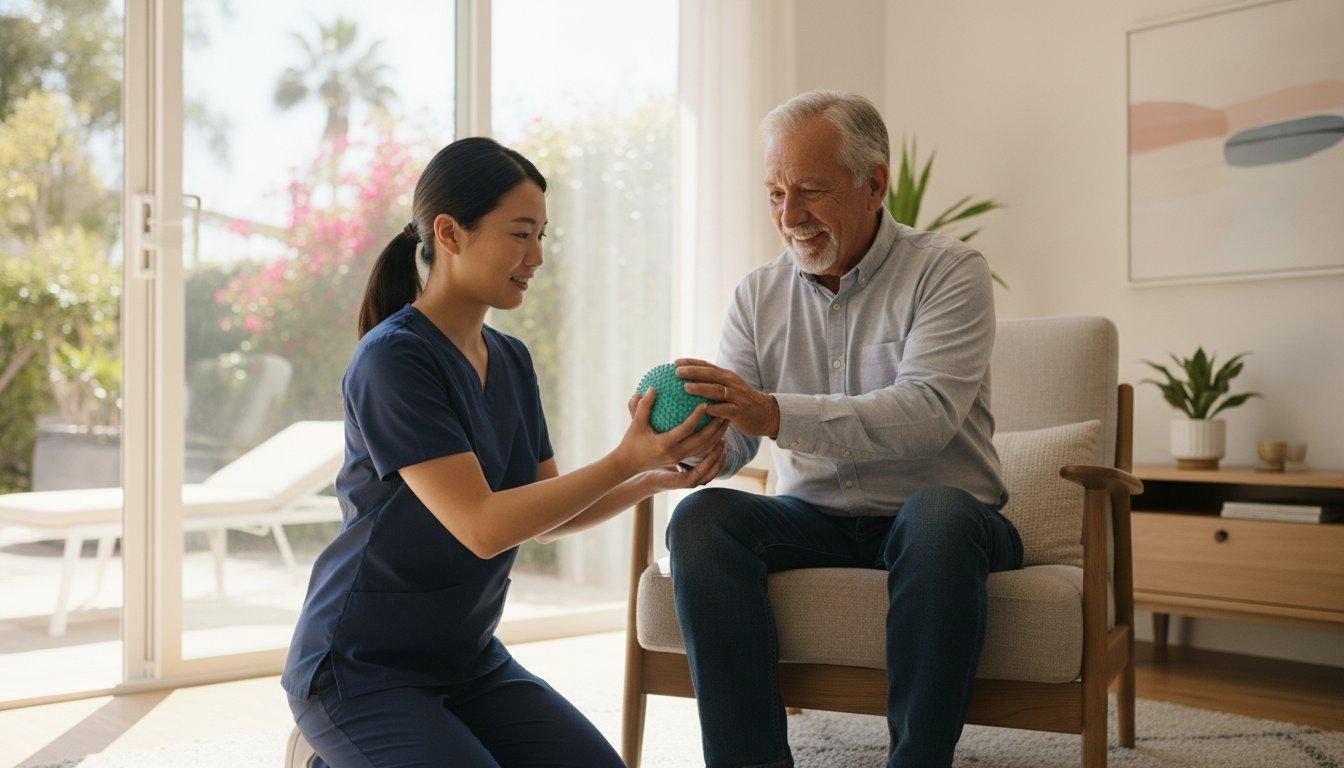
A 2025 meta-analysis confirmed that home-based rehabilitation often outperforms traditional clinical settings for restoring independence in activities of daily living after a stroke. While the transition from a hospital to a residence is frequently marked by physical exhaustion and the heavy emotional weight of caregiver burnout, it’s also the most critical window for neurological improvement. Implementing a structured plan for stroke recovery therapy at home allows patients to heal in a familiar environment while receiving the same level of medical rigor found in inpatient facilities.
You understand that the path to regaining speech and mobility requires more than just patience; it demands a precise, professional strategy. This comprehensive guide demonstrates how a multidisciplinary clinical approach accelerates neuroplasticity and restores the autonomy necessary for a dignified life. We’ll examine the specific roles of skilled nursing, physical therapy, and speech-language pathology in creating a safe environment that reduces the burden on your family. By the end of this article, you’ll have a clear roadmap for navigating the complexities of 2026 healthcare standards and ensuring a stable, professional recovery for your loved one.
Key Takeaways
- Leverage the science of neuroplasticity by utilizing home-based “contextual cues” to accelerate the brain’s ability to relearn essential daily functions.
- Coordinate a multidisciplinary team of specialists to implement stroke recovery therapy at home, focusing on the integration of physical, occupational, and speech therapy for holistic improvement.
- Integrate skilled nursing and medical social services into the care plan to manage complex clinical needs and reduce the emotional burden on family caregivers.
- Conduct a professional home safety assessment to identify and mitigate fall risks, ensuring the residence is properly modified for safe rehabilitation.
- Choose a licensed, local agency in the San Fernando Valley to benefit from faster response times and a highly organized approach to clinical care transitions.
The Science of Stroke Recovery: Why Home-Based Therapy Works
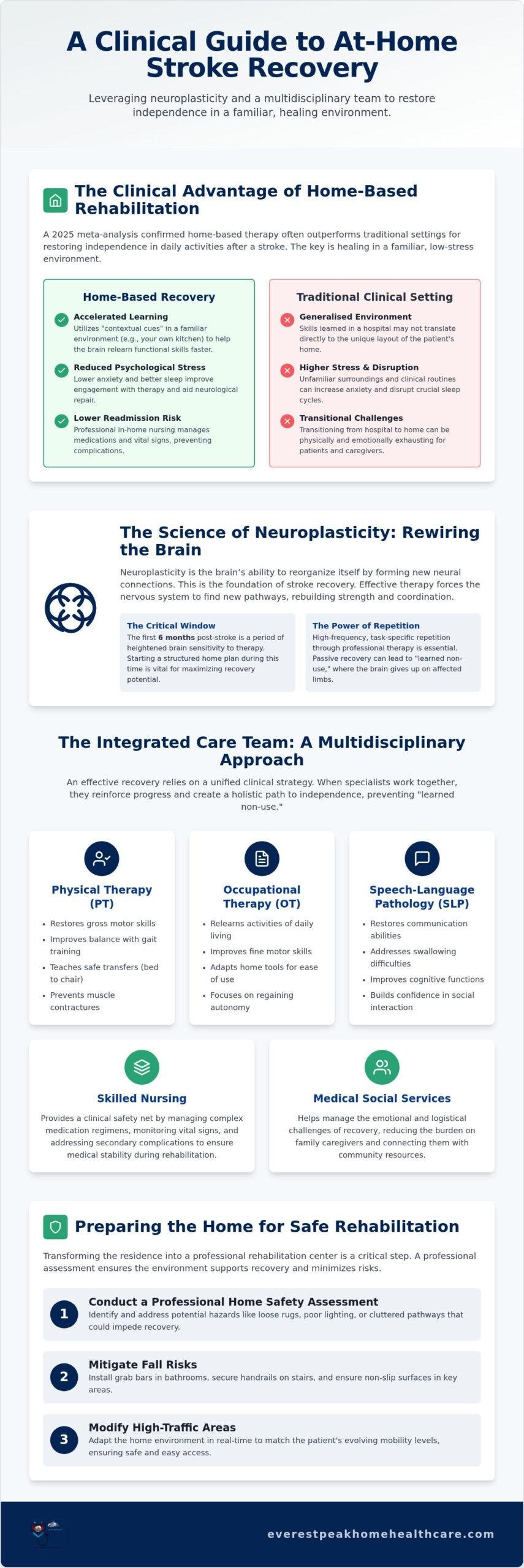
A 2025 meta-analysis highlights that home-based rehabilitation is often superior to hospital-based care for improving independence in activities of daily living. This clinical advantage is largely due to the presence of “contextual cues.” When a patient relearns to navigate their own kitchen or use their specific bathroom, the brain associates these movements with their natural environment, accelerating the recovery of functional skills. This localized approach ensures that the skills gained during therapy sessions translate directly to the patient’s daily life.
The first six months after a stroke represent a vital recovery phase known as the “critical window.” During this period, the brain exhibits a heightened state of sensitivity to therapeutic intervention. Implementing stroke recovery therapy at home during this timeframe ensures that the patient’s energy is focused on rehabilitation rather than the stress of a clinical facility. Professional oversight from a licensed agency is essential during this phase to monitor for secondary complications, such as blood pressure fluctuations or skin integrity issues, which can stall progress if left unmanaged.
Understanding Neuroplasticity and Repetition
Neuroplasticity is the foundational mechanism of stroke rehabilitation, representing the brain’s inherent capacity to reorganize its structure and functions by forming new neural connections. This process requires high-frequency, task-specific repetition to be effective. When a patient engages in active professional therapy, they’re forcing the nervous system to find new ways to send signals to the muscles. Passive recovery lacks this stimulation and can lead to “learned non-use,” where the brain essentially forgets how to communicate with affected limbs. Structured clinical exercises build the neurological strength and coordination needed for long-term independence.
The Clinical Advantage of In-Home Care
Professional monitoring at home significantly lowers the risk of hospital readmission. Licensed Registered Nurses and Vocational Nurses can manage complex medication regimens and monitor vital signs, providing a safety net that allows therapists to push for higher recovery milestones. This dual approach ensures that the patient’s medical health remains stable while their physical abilities improve. It creates a controlled environment where clinical excellence and patient safety are prioritized.
There is also a profound psychological benefit to recovering in a familiar, low-stress environment. Reduced anxiety levels lead to better engagement with therapy and improved sleep, both of which are necessary for neurological repair. As the patient progresses, therapists can adapt the home environment in real-time, modifying high-traffic areas to match the patient’s evolving mobility levels. This integrated model of stroke recovery therapy at home transforms the residence into a professional rehabilitation center that prioritizes the dignity and comfort of the individual.
The Multidisciplinary Approach: Integrating PT, OT, and Speech Therapy
Effective stroke recovery therapy at home relies on a unified clinical strategy rather than isolated treatments. When Physical Therapy (PT), Occupational Therapy (OT), and Speech-Language Pathology (SLP) operate in silos, patients often experience “learned non-use.” This is a condition where the brain permanently ignores the affected side of the body because those limbs haven’t been integrated into daily movements. A multidisciplinary team ensures that every professional intervention reinforces the others, creating a cohesive environment for recovery. This integrated model is particularly important in 2026 as healthcare policies, such as the proposed RECOVER Act, aim to improve reimbursement for multiple therapy services provided on the same day.
Physical Therapy for Mobility and Balance
Physical therapists focus on restoring gross motor skills through targeted gait training and core strengthening. By stabilizing the lower extremities, therapists help patients regain the balance necessary for safe walking within their own residence. These sessions often include training for safe transfers, such as moving from a bed to a chair, which is a critical milestone for restoring independence. Regular range-of-motion exercises are also implemented to prevent muscle contractures, which are permanent shortenings of the muscle that can severely limit future mobility.
Occupational Therapy for Task Mastery
While PT focuses on movement, Occupational Therapy restores the ability to perform Activities of Daily Living (ADLs). Therapists guide patients through relearning hygiene, dressing, and meal preparation using adaptive techniques and specialized tools. This discipline also includes cognitive rehabilitation to address deficits in memory and executive function. By practicing these tasks in the actual kitchen or bathroom where they occur, patients achieve higher levels of mastery and confidence. Our specialized Occupational Therapists work closely with families to modify these environments for long-term success.
Speech Therapy for Communication and Safety
Speech-Language Pathologists address both communication and physiological safety. For patients with aphasia, therapy involves techniques for improving word retrieval and articulation, allowing them to express their needs more clearly. Equally vital is the management of dysphagia, or swallowing difficulties. Therapists conduct rigorous swallowing assessments to prevent aspiration pneumonia, a common and dangerous secondary complication. SLPs also provide families with specific strategies to facilitate effective communication, ensuring the patient feels heard and respected throughout their recovery journey.
Clinical Nursing and Medical Social Services: The Missing Pieces
Many families view stroke recovery therapy at home as a collection of physical exercises, but clinical stability is the necessary foundation for all therapeutic progress. Skilled nurses and medical social workers provide the essential oversight that prevents medical setbacks and psychological fatigue. Without these professionals, the risk of hospital readmission increases, especially when managing complex comorbidities or the significant emotional transitions that follow a neurological event. Their presence transforms the home into a controlled clinical environment where recovery can proceed without interruption.
The Role of Skilled Nursing in Stroke Management
Licensed Registered Nurses and Vocational Nurses act as the primary clinical monitors within the home. Their expertise is vital for managing complex medication regimens, particularly anticoagulants and blood pressure medications that require precise dosing and frequent monitoring. By maintaining strict cardiovascular control and overseeing skin integrity for patients with limited mobility, nurses prevent secondary complications such as infections or pressure ulcers. This professional vigilance ensures that the patient remains healthy enough to participate fully in their physical and occupational therapy sessions.
- Secondary Prevention: Continuous monitoring for signs of a Transient Ischemic Attack (TIA) or a secondary stroke event.
- Care Coordination: Acting as the central link between the primary physician and the multidisciplinary therapy team to ensure a unified plan.
- Clinical Education: Training family members to recognize early warning signs and manage daily medical needs safely.
Social and Emotional Support for the Family
Medical Social Workers (MSWs) address the psychological health of the household, which is a critical yet often overlooked component of long-term success. They provide specialized counseling to mitigate caregiver burnout, helping family members process the emotional weight of their new roles. This support isn’t just about emotional comfort; it’s about maintaining the stability of the patient’s primary support system. An MSW’s assessment of the home’s psychological health helps identify potential barriers to recovery before they become crises.
For families in the San Fernando Valley, local social workers provide an additional layer of logistical support by navigating the complexities of 2026 healthcare regulations. They assist in interpreting Medicare Part B requirements, such as the 20% coinsurance for durable medical equipment, and help families secure the necessary documentation for medically necessary interventions. By connecting families with community resources and assisting with the transition from hospital to home health care, social workers ensure that the clinical team can focus entirely on the patient’s functional restoration.
Setting Up Your Home for Safe and Effective Stroke Rehabilitation
A successful transition to stroke recovery therapy at home requires more than just scheduled clinical visits; it necessitates a physical transformation of the living space into a safe, functional rehabilitation environment. Professional home safety assessments identify “invisible” hazards that often lead to preventable hospital readmissions. For instance, throw rugs and uneven flooring are significant fall risks that a trained therapist can identify and mitigate during an initial walkthrough. By organizing the home around the patient’s current mobility level, we create a space that supports rather than hinders the recovery process, allowing the survivor to focus entirely on regaining their independence.
High-traffic areas such as the bathroom, bedroom, and kitchen require specific clinical modifications to ensure autonomy and minimize the risk of secondary injuries. In the kitchen, moving frequently used items to waist-level shelves prevents the need for dangerous overreaching or bending that can compromise balance. In the bedroom, ensuring the bed height is optimized for safe transfers, where the patient’s feet are flat on the floor while seated, minimizes the physical strain on both the survivor and the caregiver. These adjustments ensure that the home environment acts as a protective extension of the clinical care circle.
Essential Home Modifications for Stroke Survivors
Implementing targeted modifications provides the stability needed for functional restoration. Installing high-contrast grab bars and utilizing shower chairs transforms high-risk areas into safe spaces for hygiene. Clear pathways are equally vital; removing clutter ensures that walkers or wheelchairs navigate the home without obstruction. Lighting serves as a critical clinical intervention, as disorientation during nighttime movement is a frequent cause of falls. Upgrading to motion-sensor LED lighting provides the visual clarity required for safe navigation between the bedroom and bathroom.
Creating a Daily Recovery Routine
A structured daily routine is the framework upon which neuroplasticity is built. Effective stroke recovery therapy at home relies on spatial and temporal consistency. Designating a “therapy zone”, where exercise equipment and checklists are organized, helps the patient transition into a rehabilitation mindset. Balancing intensive therapy with scheduled rest periods prevents cognitive fatigue, while integrating “micro-exercises” into daily life ensures that rehabilitation continues outside of formal sessions. To begin this process with professional guidance, you can schedule a comprehensive home safety assessment with our clinical team.
Professional In-Home Stroke Care in North Hollywood and Los Angeles
Selecting a local North Hollywood agency ensures that clinical response times are minimized when a patient’s condition or mobility needs evolve. In the San Fernando Valley, continuity of care is maintained through a dedicated team that understands the local medical landscape and specific hospital discharge protocols. This proximity allows for more frequent clinical check-ins and a highly responsive approach to stroke recovery therapy at home. When a therapist is only minutes away, the transition from an acute care facility to the residence becomes a seamless progression rather than a logistical challenge.
There is a significant clinical and legal difference between hiring independent contractors and partnering with a licensed home health agency. Licensed agencies provide rigorous clinical oversight, ensuring that every therapist and nurse adheres to established professional healthcare standards and evidence-based practices. This structure provides families with a vital layer of protection through comprehensive background checks, liability coverage, and professional supervision. By choosing a licensed entity, you ensure that the multidisciplinary team is managed by a single, organized clinical director who coordinates all aspects of the recovery plan.
The Everest Peak Difference in Stroke Rehab
Our team consists of Licensed Registered Nurses and Vocational Nurses who work in direct coordination with specialized Physical, Occupational, and Speech therapists. We prioritize “professional empathy,” a philosophy that acknowledges the emotional toll of recovery while maintaining a disciplined focus on clinical outcomes. Every care plan is customized to address the specific neurological deficits of the patient, ensuring that interventions are both methodical and unhurried. This organized approach creates a stable, observant environment where the survivor can focus on regaining their autonomy and dignity.
How to Access Professional Home Health Services
Accessing these specialized services typically begins with a physician’s referral, which establishes the medical necessity for skilled care. To qualify for services under most insurance models, including Medicare, the patient must meet the “homebound” requirement. This means that leaving the residence requires a considerable and taxing effort, or the assistance of another individual. Once a referral is received, our clinical team conducts a comprehensive initial assessment to determine the appropriate frequency of therapy and nursing visits. This structured transition ensures that the progress made during inpatient rehabilitation is preserved and built upon within the home environment.
Consult with our North Hollywood stroke recovery experts today.
Restoring Independence Through Clinical Excellence
Transitioning from a hospital setting to the residence is a pivotal moment in the healing process. Success depends on a methodical integration of physical, occupational, and speech therapy with professional nursing oversight. By leveraging the brain’s neuroplasticity within a familiar environment, patients can achieve significant milestones in mobility and communication. A professional safety assessment ensures that the residence supports these goals while protecting the patient from secondary complications. It’s this structured approach that allows for a safe and stable recovery.
Our licensed clinical team serves Los Angeles and North Hollywood with a commitment to patient dignity and unhurried, comprehensive care. We provide the specialized support families need to navigate this complex health transition with confidence. Effective stroke recovery therapy at home is achievable when clinical expertise meets the comfort of the residence. Begin Your Recovery Journey with Everest Peak Home Health Care to ensure your loved one receives the disciplined attention required for functional restoration. Every step forward is a vital victory on the path toward restored independence.
Frequently Asked Questions
How soon should stroke recovery therapy start at home?
Stroke recovery therapy at home should begin immediately following discharge from the hospital or inpatient facility. The first three to six months post-stroke represent a critical window for neuroplasticity, where the brain is most receptive to relearning motor and cognitive functions. Starting professional intervention early prevents the development of learned non-use and ensures that the patient maintains the momentum gained during their initial hospital stay. Clinical oversight ensures this transition remains safe and effective for the survivor.
Does Medicare cover in-home physical therapy after a stroke?
Yes, Medicare covers in-home physical therapy when it’s deemed medically necessary by a physician and the patient meets homebound requirements. For 2026, the annual Medicare Part B deductible is $257. After this deductible is met, Medicare typically covers 80% of the approved amount for outpatient rehabilitation services. If the therapy is provided as part of a formal home health care plan, Part A may cover the full cost for a limited duration without an additional deductible.
What is the difference between physical and occupational therapy for stroke?
Physical therapy focuses on gross motor skills, gait training, and balance to restore a patient’s ability to walk and transfer safely. Occupational therapy addresses Activities of Daily Living (ADLs) such as dressing, hygiene, and meal preparation. While a physical therapist works on leg strength and stability, an occupational therapist helps the patient master fine motor skills and cognitive strategies to regain independence. Both disciplines must work together to ensure a comprehensive and functional recovery for the individual.
Can a stroke survivor regain speech through home-based therapy?
Many stroke survivors regain significant communication abilities through speech-language pathology conducted in the home. A specialized therapist uses targeted exercises to improve word retrieval, articulation, and cognitive processing. Practicing these skills in a familiar environment provides natural contextual cues that can accelerate the relearning process. Additionally, speech therapists perform vital swallowing assessments to ensure the patient can eat and drink safely, which is a critical component of preventing secondary complications like aspiration pneumonia.
How many hours of therapy are needed daily for effective stroke recovery?
The optimal amount of stroke recovery therapy at home varies based on the patient’s clinical stability and physical tolerance. While high-frequency repetition is necessary to build new neural pathways, sessions are typically structured into manageable blocks to prevent cognitive fatigue. Most professional programs involve 45 to 60 minutes of intensive therapy per discipline several times a week. Supplementing these visits with scheduled “micro-exercises” throughout the day ensures the brain receives the consistent stimulation required for long-term progress.
What should I do if my loved one reaches a recovery plateau?
Reaching a plateau is a common part of the recovery journey and doesn’t mean progress has permanently stopped. If a loved one’s improvement slows, the clinical team may adjust the therapeutic approach or increase the intensity of specific exercises. Sometimes, a change in environment or the introduction of new adaptive tools can spark further gains. It’s essential to maintain a consistent routine and consult with your therapists to re-evaluate recovery goals and modify the customized care plan as needed.
How can a Medical Social Worker help our family after a stroke?
A Medical Social Worker (MSW) provides essential support by helping families navigate the complex logistics of long-term care. They assist with insurance documentation, including understanding Medicare’s 2026 coinsurance requirements for durable medical equipment. Beyond paperwork, MSWs offer counseling to address caregiver burnout and the emotional transitions that follow a stroke. They also connect families with local resources in the San Fernando Valley, ensuring the household remains stable and focused on the patient’s functional improvement and safety.
Is home health care better than a skilled nursing facility for stroke rehab?
Home health care is often preferred because it allows patients to relearn tasks in the actual environment where they’ll use them. A 2025 meta-analysis found that home-based rehabilitation outperformed usual care for improving independence in activities of daily living. While a skilled nursing facility offers a controlled setting, the home environment provides the unique “contextual cues” necessary for neuroplasticity. Choosing home care allows for professional clinical oversight while maintaining the patient’s comfort, dignity, and connection to their family circle.