

Imagine returning home after a major surgery only to find that your recovery is stalled not by physical pain, but by the weight of insurance forms and the fear of mounting costs. It’s a common reality for many families in Los Angeles who feel prepared for clinical care but unprepared for the logistical maze that follows. This is where the role of medical social worker in home health becomes essential to a successful recovery. While your nurse manages wound care or medication, the medical social worker acts as a clinical navigator for the non-medical obstacles that often hinder healing.
We recognize that the transition from a hospital to the home is one of the most stressful periods a family can face. You’re likely balancing technical care with the emotional exhaustion of caregiving. This article details how a Medical Social Worker (MSW) provides stability by securing local community resources and coordinating complex logistics. We’ll explore how these professionals work alongside your skilled nursing team to reduce your daily stress, manage the financial complexities of recovery, and ensure your home remains a safe, sustainable environment for your continued health.
Key Takeaways
- Understand the specialized clinical qualifications of a Medical Social Worker and how they differ from general community social work.
- Explore the role of medical social worker in home health as a vital link between clinical medical treatment and the logistical realities of recovery at home.
- Discover how comprehensive psychosocial assessments identify barriers to healing, such as financial constraints or environmental safety risks.
- Learn how short-term counseling and resource coordination can effectively mitigate caregiver burnout and reduce family anxiety during health transitions.
- Identify the specific clinical indicators and eligibility requirements for integrating medical social services into a home-based care plan.
What is a Medical Social Worker in the Home Health Setting?
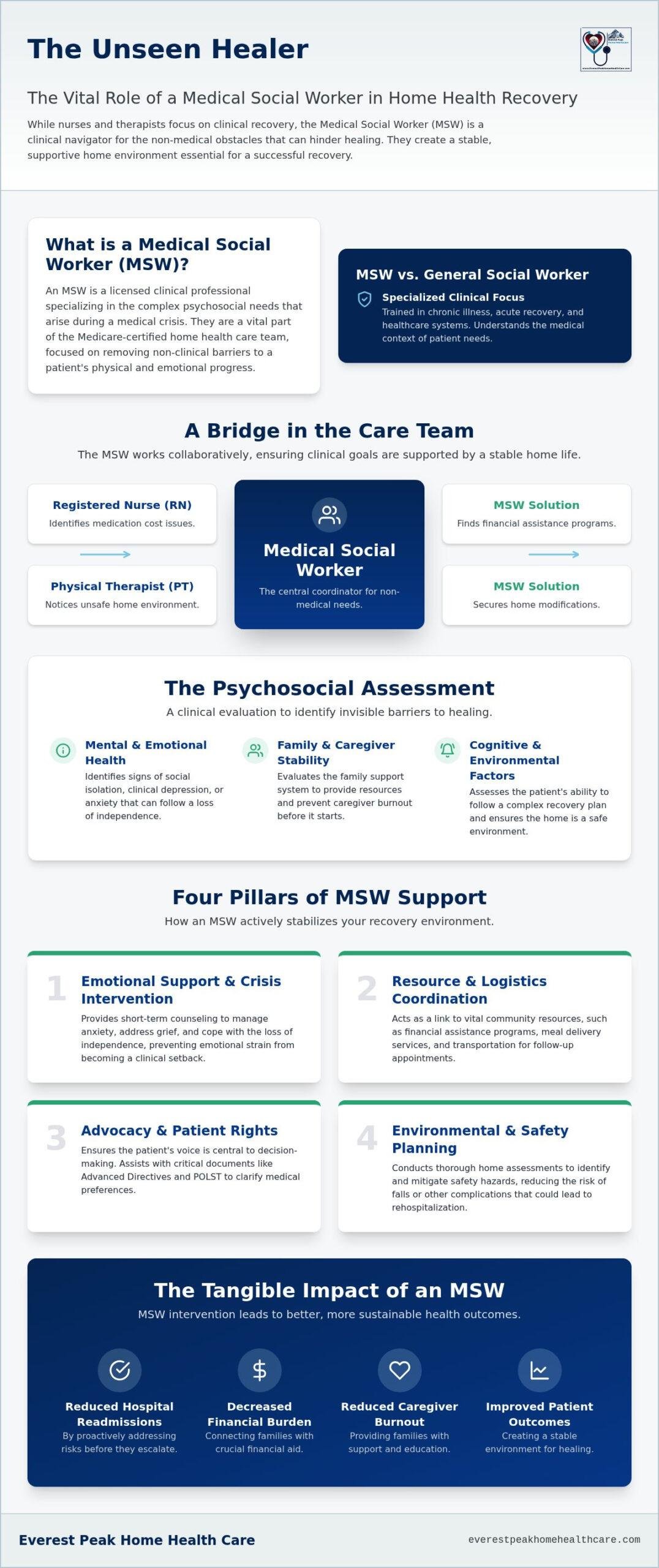
A Medical Social Worker (MSW) is a licensed clinical professional who specializes in the intersection of health and social services. While a general social worker might focus on broad community welfare, a medical-grade MSW in a home health setting is specifically trained to address the complex psychosocial needs that arise during a medical crisis. Medical social work involves a deep understanding of chronic illness, acute recovery, and the healthcare systems required to support them. In a Medicare-certified home health agency, the MSW is an essential component of the care team. Their primary objective is removing any non-clinical barriers that could impede a patient’s physical or emotional progress.
The MSW as Part of the Interdisciplinary Team
The role of medical social worker in home health is fundamentally collaborative. They don’t work in isolation; instead, they function as a bridge between various clinical disciplines to ensure a patient’s safety. For instance, when a Registered Nurse (RN) identifies that a patient is skipping medications due to cost, they alert the MSW to find financial assistance programs. Similarly, if a Physical Therapist (PT) notices that a patient’s progress is stalled by a cluttered or unsafe home environment, the MSW conducts a safety assessment to secure necessary modifications. This interdisciplinary approach ensures that clinical goals are supported by a stable home life. The MSW also maintains regular communication with the patient’s primary physician, providing updates on social factors that influence medical outcomes.
Psychosocial Assessment: More Than Just a Conversation
Every MSW intervention begins with a comprehensive psychosocial assessment. This isn’t a casual chat. It’s a clinical evaluation of the patient’s mental health and emotional resilience post-hospitalization. The MSW looks for invisible barriers that clinical staff might miss, such as:
- Identifying signs of social isolation or clinical depression that often follow a loss of independence.
- Evaluating the stability of the family support system to prevent caregiver burnout.
- Assessing the patient’s cognitive ability to follow a complex recovery plan at home.
By addressing these factors early, the MSW helps create a sustainable environment where the patient can focus entirely on their clinical recovery. This proactive assessment identifies risks before they lead to hospital readmission, ensuring the healing process remains steady and uninterrupted.
Core Responsibilities: How an MSW Supports Your Recovery
The role of medical social worker in home health extends far beyond administrative paperwork. It is a clinical intervention designed to stabilize a patient’s emotional and social environment so that physical healing can take priority. By conducting thorough environmental assessments, the MSW identifies potential safety hazards or financial gaps that might lead to a relapse. They educate families on the specifics of the care plan, ensuring everyone involved understands the trajectory of recovery and the milestones ahead. This education reduces the friction between clinical requirements and daily life, making the recovery process more sustainable for everyone involved.
Emotional Support and Crisis Intervention
Recovery is rarely a linear path. It often involves significant psychological hurdles. Patients frequently struggle with a sudden loss of independence or the weight of a chronic diagnosis. The role of a home health care social worker includes providing short-term counseling to address these emotional shifts. They utilize clinical techniques to manage post-operative anxiety and help families navigate the complexities of grief in cases of degenerative illness. This steady, professional support prevents emotional exhaustion from turning into a clinical setback, allowing the patient to remain focused on their physical therapy and nursing goals.
Advocacy and Patient Rights
The MSW serves as a dedicated advocate to ensure the patient’s voice remains central to the medical decision-making process. This advocacy is particularly vital during the transition from a hospital to the home, where details can easily be lost. They assist families with critical documentation, including Advanced Directives and Physician Orders for Life-Sustaining Treatment (POLST). By clarifying these legal and medical preferences, the MSW protects the patient’s autonomy and provides the family with a clear roadmap for future care. This level of planning is essential for preventing unnecessary hospital readmissions and ensuring that the care provided aligns with the patient’s personal values.
When these logistical and emotional barriers are removed, the entire home health team can work more effectively. If you’re feeling overwhelmed by the complexities of post-hospitalization care, our Medical Social Services team can provide the professional guidance needed to restore balance to your home environment. We focus on securing the resources you need today while building a stable foundation for your long-term recovery.
Solving the Logistics of Home Health: Resources and Planning
The clinical success of a home health program often depends on the logistical stability of the patient’s environment. While nurses focus on physiological markers, the role of medical social worker in home health is to secure the practical foundations of a safe recovery. This involves a meticulous review of the patient’s financial landscape and social support network to ensure that care doesn’t stop when the clinical team leaves. By identifying and implementing specific community resources, the MSW bridges the gap between a patient’s medical needs and their physical home limitations.
Financial Guidance and Insurance Navigation
Families often find themselves overwhelmed by the technical complexities of healthcare billing and coverage. The MSW provides a clear, structured path through the intricacies of Medicare, Medi-Cal, and private insurance policies. They act as a knowledgeable guide, helping families identify qualifying benefits that might otherwise go unused. In the Los Angeles area, this often includes connecting patients with local programs such as Meals on Wheels for nutritional support or specialized transportation services for follow-up appointments. If medication costs become a barrier, the MSW assists with applications for pharmaceutical assistance programs, ensuring that financial strain doesn’t compromise clinical compliance.
Home Safety and Equipment Coordination
A safe home environment is a prerequisite for effective physical rehabilitation. The MSW works in close coordination with Occupational Therapists to evaluate the patient’s living space for potential risks. This collaboration leads to specific recommendations for home modifications that preserve patient dignity and independence. The MSW identifies reliable sources for durable medical equipment (DME), such as modular ramps or grab bars. Beyond the home’s interior, they evaluate neighborhood safety and access to essential services, ensuring the patient isn’t isolated during their recovery period.
Reducing the burden on family caregivers is another critical outcome of MSW intervention. By organizing respite care options and structured support groups, the MSW helps prevent the emotional exhaustion that leads to caregiver burnout. They also lead the planning for what comes next after home health services conclude. Whether that involves a transition to long-term community support or a return to independent living, the MSW ensures that every logistical detail is addressed well before the final clinical visit. This comprehensive planning creates a stable, sustainable environment where the patient can continue to thrive long after their active treatment period ends.
When Should You Request a Medical Social Worker?
Clinical nursing and physical therapy are the primary drivers of physical recovery, but they aren’t designed to address the social and emotional complexities that often arise at home. Recognizing when the role of medical social worker in home health is necessary can prevent a minor logistical hurdle from becoming a major clinical setback. Under current Medicare guidelines, medical social services are considered a “dependent service.” This means that as long as you’re receiving a qualifying skilled service, such as nursing or physical therapy, you’re eligible to request an MSW visit to address psychosocial barriers to your recovery.
Key Indicators for MSW Intervention
It’s important to monitor for signs that go beyond physical symptoms. You should consider requesting an MSW referral if you observe any of the following:
- Persistent Emotional Distress: The patient exhibits signs of depression, anxiety, or a refusal to comply with medication schedules due to emotional overwhelm.
- Caregiver Exhaustion: The primary family member providing care is showing signs of physical or mental depletion, which could compromise the safety of the patient.
- Financial and Resource Barriers: There are clear difficulties in securing essential needs, such as nutritional food, specialized transportation, or prescribed medications.
Early intervention is particularly critical for long-term care planning. Waiting until a crisis occurs often limits your options for community support and increases the risk of hospital readmission. By involving an MSW early in the process, you create a more stable environment that supports the clinical goals set by your nurses and therapists.
What to Prepare for Your First MSW Visit
To make the most of your initial consultation, have your documentation organized and ready. This includes your current insurance information and your most recent hospital discharge summaries. Beyond the paperwork, take a moment to reflect on the specific challenges you’re facing. We recommend listing the top three non-medical concerns that are causing the most stress in your household. Finally, try to summarize the patient’s primary goal for independence in a single sentence. This helps the MSW align their resource coordination with your family’s personal values and long-term expectations.
If you’re noticing these indicators in your own home, don’t wait for your next doctor’s appointment to seek help. You can speak directly with your home health clinical manager or your primary physician to request a referral. Our team at Everest Peak Home Health Care is ready to help you request a medical social work assessment to ensure your recovery plan is as comprehensive and supportive as possible.
Medical Social Services at Everest Peak Home Health Care
At Everest Peak Home Health Care, we view our Medical Social Services as a cornerstone of clinical excellence. Our licensed professionals are specifically trained to handle the unique logistical and emotional challenges that families face in North Hollywood and the greater Los Angeles area. We don’t see social work as a secondary service; it’s a primary clinical intervention that ensures the patient’s home environment is as prepared for healing as their body is. The role of medical social worker in home health within our agency is deeply collaborative. Our MSWs participate in regular interdisciplinary meetings with our Registered Nurses and Physical Therapists to ensure that every social intervention directly supports the medical goals established by your primary physician.
A Reassuring Partner in Your Recovery
We believe that true healing requires more than just clinical skill; it requires a deep respect for the dignity and autonomy of the individual. Our social workers take an unhurried, methodical approach during every home visit. They aren’t there to simply check boxes on a form. They’re there to listen, observe, and provide a steady presence in what can often be a chaotic time. By acting as a protective and professional extension of your family’s care circle, our team helps restore a sense of stability. This quiet confidence allows families to stop worrying about the “what ifs” of logistics and start focusing on the day-to-day progress of their loved one’s recovery.
Serving the Greater Los Angeles Area
Navigating the specific healthcare standards of California and the vast landscape of Los Angeles programs requires localized expertise. Our team possesses deep knowledge of community resources throughout the San Fernando Valley and the wider Los Angeles basin. We understand how to bridge the gap between clinical needs and the actual resources available in your neighborhood. Whether it’s identifying specific state-sponsored assistance or coordinating with local support networks, we act as your knowledgeable guide through the complexities of the system. Starting care with our interdisciplinary team is a straightforward process that begins with a thorough assessment of your specific situation.
Our North Hollywood office is dedicated to providing the high level of medical authority and compassionate support your family deserves. We invite you to Schedule a consultation with our home health team to learn more about how our integrated approach can simplify your recovery journey. We’re here to ensure that no aspect of your care is overlooked, providing you with a structured path toward long-term health and independence.
Strengthening Your Path to Recovery
A successful recovery requires more than clinical skill; it demands a comprehensive support system that addresses the social and emotional barriers to healing. The role of medical social worker in home health serves as the vital link between medical treatment and the practical realities of life at home. By coordinating community resources and providing professional counseling, these specialists ensure that your recovery isn’t derailed by logistical stress or caregiver exhaustion. This structured support allows the clinical team to focus on physical improvements while the social worker secures the environment needed to sustain those gains.
Our interdisciplinary care teams in the San Fernando Valley and throughout Los Angeles remain committed to this holistic model of care. Our licensed Medical Social Workers work alongside nurses and therapists to create a protective, stable environment for every patient. This collaborative approach allows you to focus on your physical milestones while we handle the complexities of insurance navigation and long-term planning. Our goal is to ensure that no aspect of your health is left to chance.
If you’re ready to secure a more sustainable recovery for your family, Contact Everest Peak for Professional Home Health Support today. We act as your dependable partner, providing the quiet confidence you need to move forward with dignity and peace of mind.
Frequently Asked Questions
Is a medical social worker the same as a case manager?
No, these roles serve distinct functions within a care team. A case manager typically focuses on the administrative logistics of insurance authorizations and medical equipment. In contrast, a medical social worker addresses the psychosocial barriers to recovery, such as emotional distress, family conflict, or financial instability. While they coordinate closely, the social worker’s focus is on the human element of healing.
Does Medicare cover medical social worker visits at home?
Yes, Medicare Part A generally covers medical social services when they are ordered by a physician. To qualify, you must already be receiving a skilled service, such as nursing or physical therapy. Medicare views these visits as a “dependent service” designed to resolve social or emotional problems that are expected to impede your medical treatment or recovery process.
Can a medical social worker help with legal documents like a Power of Attorney?
A medical social worker provides essential guidance on clinical-legal documents that protect patient autonomy. They assist families in understanding and completing Advanced Directives and Physician Orders for Life-Sustaining Treatment (POLST). While they don’t provide private legal counsel, they ensure your medical preferences are clearly documented and shared with your entire clinical team to prevent future confusion.
How many times will a medical social worker visit my home?
The frequency of visits is determined by your specific clinical needs and the goals established during the initial assessment. Most medical social work interventions are short-term and goal-oriented, often consisting of one to three visits to resolve specific barriers. If your situation involves complex long-term planning or significant emotional crisis, the social worker may schedule more frequent visits as part of your care plan.
What happens if I don’t want a social worker to visit?
You always have the right to refuse any part of your home health plan. While the role of medical social worker in home health is designed to support your recovery, we respect your autonomy and personal preferences. Declining social work services won’t affect your eligibility for other skilled services like nursing or physical therapy, though it may limit your access to certain community resource coordination.
Can an MSW help me find a permanent assisted living facility in Los Angeles?
Yes, medical social workers specialize in “long-range planning” for patients who can no longer safely remain at home. They have extensive knowledge of the various levels of care available in the Los Angeles area. Your social worker can help you evaluate different facilities, understand the costs involved, and manage the transition to ensure your safety and comfort remain the top priority.
What is the difference between an MSW and a therapist or counselor?
The primary difference lies in the focus and duration of care. A traditional therapist often provides long-term treatment for chronic mental health conditions. An MSW in a home health setting provides short-term, crisis-oriented counseling specifically related to your current medical diagnosis or recovery. They focus on practical coping strategies and immediate resource linkage rather than long-term psychotherapy.