Imagine standing in a hospital hallway in Burbank, holding a discharge folder filled with complex medical instructions while worrying about how a car ride across the San Fernando Valley will affect your loved one’s recovery. You likely feel that the comfort of home is the best place for healing, yet the distinction between basic help and the high level medical oversight required can feel incredibly blurred. It’s natural to feel anxious about maintaining safety and clinical standards once you leave the structured environment of a facility. This guide clarifies exactly how to secure professional skilled nursing care Burbank families can rely on for a safe, clinical transition. We will explore the essential qualifications of a home health team, the steps to coordinate with your physician, and how local expertise simplifies the journey from a hospital bed to the sanctuary of your own home. By understanding the roadmap for professional recovery, you can replace uncertainty with a structured plan that prioritizes both medical excellence and emotional well-being. This methodical approach ensures that every detail of the transition is handled with professional grace and clinical precision.
Key Takeaways
- Clarify the distinction between clinical nursing visits and hourly caregiving to ensure your home recovery plan meets essential medical standards.
- Learn how to initiate professional skilled nursing care Burbank residents use to manage complex needs like wound care and post-operative monitoring.
- Recognize that insurance coverage generally focuses on short-term clinical outcomes rather than long-term custodial or 24/7 live-in support.
- Follow a clear roadmap by coordinating with hospital discharge planners to verify that your home health benefits are correctly activated.
- Rely on a multidisciplinary team of therapists and nurses who provide local, rapid-response care throughout the San Fernando Valley and Los Angeles.
Navigating Skilled Nursing Care in Burbank and Los Angeles
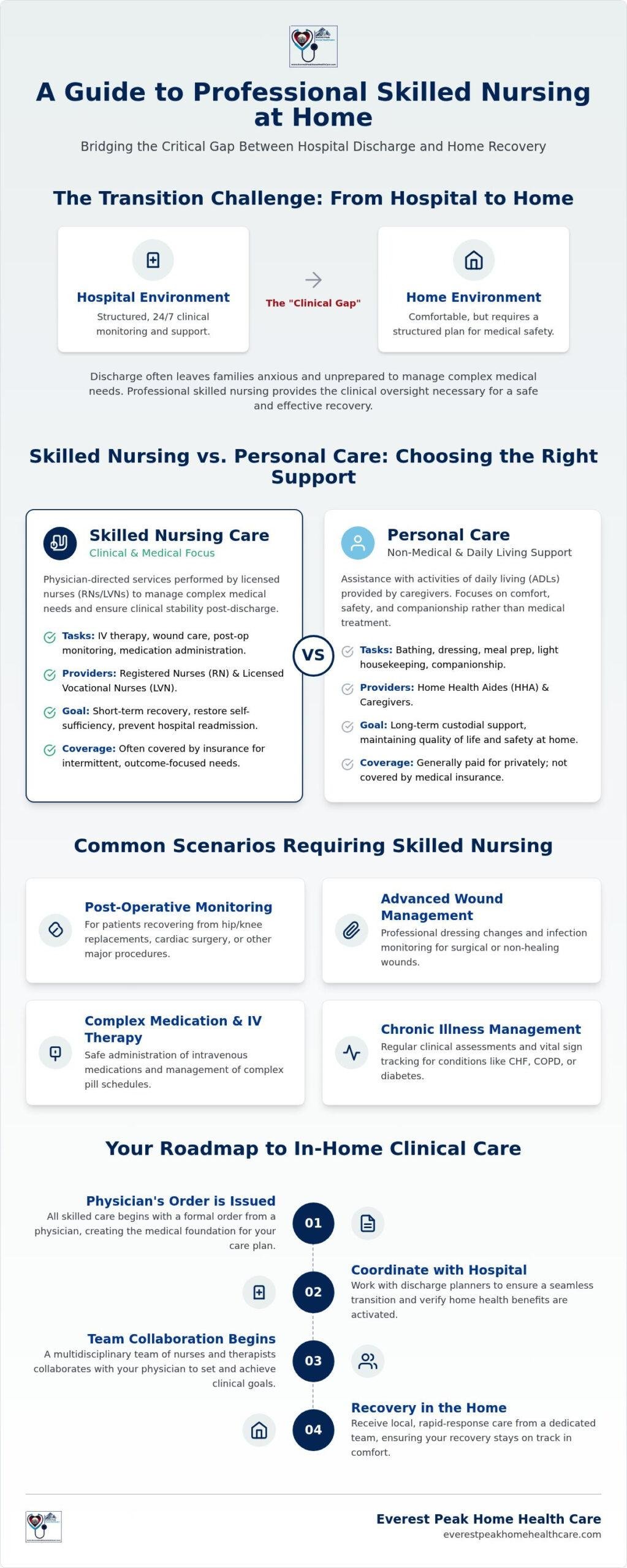
The transition from a hospital bed to one’s own bedroom often reveals a “clinical gap” that families aren’t always prepared to bridge alone. While a hospital provides around-the-clock monitoring, returning home requires a structured plan to maintain that same level of medical safety. In the sprawling landscape of Los Angeles, this transition is complicated by more than just medical needs. Families often struggle with the logistics of the local healthcare network, where traffic and provider accessibility can delay essential visits. Choosing a provider for skilled nursing care Burbank families can rely on means finding a team that understands these local rhythms. This isn’t a lifestyle choice or a simple convenience; it’s a medical necessity designed to prevent hospital readmission and ensure that recovery remains on a steady trajectory.
When is Professional Nursing Required?
Professional nursing becomes essential when the level of care exceeds what a family member can safely or legally provide. This is particularly true for patients recovering from major procedures such as hip replacements, knee surgeries, or cardiac interventions. These individuals require precise monitoring and clinical assessments that only a licensed professional can offer. Beyond surgery, advanced wound care remains a primary reason for seeking professional help. A Licensed Vocational Nurse (LVN) or Registered Nurse (RN) performs necessary dressing changes and monitors for signs of infection to ensure the surgical site heals without complication. For those specifically seeking post-operative care North Hollywood, having a local expert ensures that clinical interventions happen exactly when they’re needed. Common scenarios requiring this level of oversight include:
- Complex medication management and the administration of IV therapy.
- Post-operative monitoring for orthopedic or cardiac patients to ensure stability.
- Chronic illness management that requires regular clinical assessments and vital sign tracking.
- Advanced wound management for non-healing or surgical incisions.
The Role of the Physician in Home Health
Every clinical journey at home begins with a formal order from a primary physician or a hospitalist. This document serves as the legal and medical foundation for all services provided. By understanding the types of home care available, families can better appreciate how these orders translate into a personalized recovery plan. Our team collaborates closely with Burbank-based hospitals to ensure that discharge instructions are seamlessly integrated into the home environment. This partnership allows us to set realistic clinical goals, focusing on the restoration of self-sufficiency and the patient’s long-term well-being. When a physician, a nursing team, and the family work in unison, the home becomes a powerful site for clinical excellence. This methodical coordination ensures that no detail of the individual’s care is overlooked during the most vulnerable stages of recovery.
Understanding the Clinical Scope of Professional In-Home Nursing
Skilled Nursing is a physician-directed clinical service provided in the home. This level of care is delivered by Licensed Registered Nurses (RN) and Licensed Vocational Nurses (LVN) who possess the expertise to manage complex medical situations. While many families initially look for general support, professional skilled nursing care Burbank residents receive is fundamentally different from non-medical caregiving. A nurse provides targeted, intermittent visits to perform specific medical tasks, monitor vital signs, and manage acute symptoms at the bedside. This ensures that a patient’s clinical status remains stable after they leave the hospital. According to Medicare’s definition of skilled nursing care, these services must be complex enough to require the supervision of licensed medical professionals to be safe and effective.
The distinction between a clinical visit and hourly caregiving is vital for setting realistic recovery expectations. A caregiver might assist with light housekeeping or bathing, but a nurse focuses on the physiological aspects of healing. They track blood pressure trends, assess lung sounds, and identify early warning signs of complications that might otherwise require an emergency room visit. This steady, professional oversight provides a layer of security that allows patients to recover with dignity in their own environment.
Clinical Procedures Performed at Home
Modern home health allows for sophisticated medical interventions that were once only possible in a facility. Nurses perform advanced wound care, including the management of surgical drains and complex dressing changes, to actively prevent infection. Families concerned about managing a surgical site after discharge can learn more about how in home wound care services bring clinical expertise directly to the bedside, reducing the risk of complications and hospital readmission. They also handle medication administration, ensuring that patients receive the correct dosages and identifying potential adverse reactions before they become dangerous. Families navigating the complexities of multiple prescriptions after a hospital stay can benefit from reviewing a medication management home health safety checklist to reduce the risk of missed doses or dangerous drug interactions. Education is a cornerstone of this process. Nurses spend significant time teaching patients and their families about chronic disease management and how to use medical equipment safely. For a deeper look into these specific medical tasks, you can read our detailed guide on what is skilled nursing care at home.
Coordinating with a Multidisciplinary Team
Effective recovery requires a unified approach where different specialties work in harmony. Nurses act as the clinical hub, collaborating closely with Physical and Occupational therapists to ensure that a patient’s physical strength and mobility improve alongside their medical stability. Medical Social Workers also play a key role, helping families navigate the logistical challenges of the Los Angeles healthcare system and finding local Burbank resources for long-term support. This holistic strategy addresses the patient’s emotional well-being as much as their physical health. If you’re currently planning a transition from the hospital, exploring our licensed home health services can help you understand how a multidisciplinary team provides a more complete path to wellness.
Skilled Nursing vs. Personal Care: Choosing the Right Support
Choosing between different levels of support is a pivotal decision that directly impacts the safety and success of a home recovery. Many families find themselves confused by the terminology used during discharge planning, often using “home care” as a catch-all term. However, there’s a sharp distinction between medical (skilled) and non-medical (personal) assistance. Identifying your primary goal, whether it’s clinical recovery from a surgery or long-term support for daily living, is the first step in building an effective care plan. This clarity ensures that you don’t overlook the specialized medical oversight required for a safe transition.
Insurance providers, including Medicare and most private plans, generally provide coverage for skilled nursing care Burbank patients require when it’s deemed medically necessary. This coverage is specifically for intermittent, clinical visits aimed at improving a patient’s condition or preventing a decline in health. In contrast, custodial care, which involves 24/7 assistance with non-medical tasks, is rarely covered by standard health insurance. Relying on unlicensed or private caregivers for complex medical needs introduces significant risks. These individuals lack the clinical training, professional oversight, and liability protections required to manage medical crises or perform sterile procedures safely.
The Registered Nurse (RN) and Vocational Nurse (LVN) Role
The primary focus of a Licensed Registered Nurse or Vocational Nurse is to ensure medical stability and drive positive clinical outcomes. These professionals are legally authorized to perform complex assessments and medical procedures that a standard caregiver cannot. By monitoring symptoms and executing the physician’s orders, they provide a sense of security to families navigating the early stages of recovery. For those who need a broader understanding of these clinical standards across the region, our guide to skilled nursing care Los Angeles offers a deeper look at how these professionals maintain high standards of expertise within the home.
The Home Health Aide (HHA) and Personal Care Role
While nurses handle the clinical aspects, Home Health Aides focus on the patient’s immediate environment and physical comfort. They assist with vital activities of daily living, such as grooming, hygiene, and basic mobility, which are essential for maintaining dignity during recovery. This role supports the nursing plan by ensuring the patient remains safe and comfortable between clinical visits. If your loved one requires help with these non-medical tasks to supplement their recovery, exploring personal care assistance North Hollywood can help you find the right balance of support for a seamless transition home. This combined approach ensures that no aspect of the patient’s well-being is neglected.
How to Arrange In-Home Nursing: A Step-by-Step Guide
Setting up medical support at home doesn’t have to be a source of anxiety. By following a methodical sequence, you can ensure your loved one receives high-quality skilled nursing care Burbank providers are equipped to deliver. The process begins with a formal consultation with your primary physician or hospital discharge planner, as a medical order is the necessary foundation for all clinical services. Once the order is in place, verifying your insurance coverage for ‘Home Health’ clinical benefits ensures you understand your financial landscape. Choosing a licensed agency that specifically serves the Burbank and Los Angeles area is the next critical step. This leads to the initial clinical assessment visit, where a professional evaluates the patient’s needs. Finally, you will review and approve a personalized Plan of Care (POC) that outlines the specific goals for recovery.
- Step 1: Consult with your primary physician or hospital discharge planner to obtain a medical order.
- Step 2: Verify insurance coverage for ‘Home Health’ clinical benefits to confirm eligibility and scope.
- Step 3: Select a licensed agency with local expertise in the Burbank and Los Angeles healthcare landscape.
- Step 4: Participate in the initial clinical assessment visit conducted by a Registered Nurse.
- Step 5: Review and approve the personalized Plan of Care (POC) to align on recovery goals.
The Clinical Assessment: Your First Visit
The first visit from a Registered Nurse is a comprehensive evaluation designed to create a safe healing environment. To make this visit as productive as possible, you should have medication lists and recent hospital discharge papers ready for review. The nurse will evaluate the home environment for safety and potential fall risks, suggesting modifications where necessary. Based on the patient’s medical needs, the nurse will set the frequency of nursing and therapy visits. This structured approach ensures that the level of care matches the complexity of the recovery process.
Managing Insurance and Costs in Los Angeles
Navigating the financial aspects of care in Los Angeles can be complex, but you don’t have to do it alone. Medical Social Workers play a vital role in insurance navigation, helping families understand what is covered under their specific plan. It’s important to distinguish between ‘per-visit’ clinical fees for skilled nursing and the ‘hourly’ fees typically associated with non-medical care. At Everest Peak, we prioritize transparency in the billing process so that families can focus on healing rather than paperwork. If you’re ready to begin this transition, you can contact our clinical intake team to discuss your specific insurance requirements and start the assessment process.
The Everest Peak Difference: Clinical Excellence in Burbank
At Everest Peak Home Health Care, we believe that high-quality medical oversight should never come at the expense of a patient’s comfort or dignity. Our agency operates on a Compassionate Expert model, where our licensed professionals treat every home visit as an opportunity to build trust and provide security. By providing skilled nursing care Burbank families can rely on, we bridge the gap between clinical necessity and emotional well-being. Our team of Registered Nurses and Licensed Vocational Nurses doesn’t just manage symptoms; they act as steady guides who simplify the complexities of recovery for the entire family. This methodical approach ensures that every medical intervention is performed with the highest standards of professional grace and clinical precision.
Restoring dignity and independence is the ultimate goal of our clinical interventions. When a qualified professional enters the home, they bring a sense of calm authority that suggests reliability and high standards. This presence allows the patient to focus on their physical restoration while the family gains peace of mind. Our multidisciplinary approach ensures that nursing care is seamlessly integrated with therapy services, creating a holistic environment for healing. By prioritizing the patient’s self-sufficiency, we help individuals return to their preferred lifestyle with confidence and respect.
A Local Partner in Your Recovery
Proximity plays a vital role in the effectiveness of home health services. Because we’re based in North Hollywood, our team is uniquely positioned to provide local reliability throughout the San Fernando Valley and Burbank. This local presence means our clinicians spend less time in traffic and more time at the bedside, allowing for a more consistent and attentive care experience. We maintain deep familiarity with the Los Angeles healthcare networks and local hospitals, which facilitates a smoother transition for patients leaving a facility. Our clients often share that our blend of professionalism and empathy makes the recovery process feel like a supported journey rather than a medical chore. We take pride in being an accessible, supportive extension of your own family’s care network.
Next Steps Toward Home Recovery
Preparing for the transition to home health is a significant milestone in any recovery journey. The first step involves a clinical consultation to align our services with your physician’s orders and your family’s specific needs. We encourage you to view this transition as a partnership aimed at restoring health and peace of mind for everyone involved. By choosing a dedicated provider for skilled nursing care Burbank, you’re investing in a structured roadmap toward wellness. Our commitment to excellence means we handle the clinical complexities so you can focus on the emotional support your loved one needs. When you’re ready to begin, our intake team is available to guide you through the initial assessment and help you prepare for a safe, professional recovery in the sanctuary of your home.
Securing Your Path to Clinical Wellness at Home
Navigating a medical transition requires more than just assistance; it demands a structured clinical roadmap. You now understand the vital distinction between non-medical caregiving and the professional oversight provided by licensed medical staff. By following a physician-led intake process and coordinating with a multidisciplinary team, you ensure that every aspect of healing is addressed within the sanctuary of your own home. This methodical approach transforms a period of uncertainty into a predictable journey toward restoration.
Everest Peak Home Health Care provides the skilled nursing care Burbank families trust to bridge the gap between hospital discharge and independent living. Our team of licensed RNs and LVNs works alongside physical and occupational therapists to drive positive clinical outcomes for those we serve. Being based in North Hollywood, we offer local reliability and rapid response times throughout the San Fernando Valley. We invite you to contact Everest Peak Home Health Care today to discuss your clinical recovery needs in Burbank and Los Angeles. You don’t have to manage this transition alone. Our professionals are here to provide the steady guidance and clinical excellence your family deserves for a peaceful, successful recovery.
Frequently Asked Questions
Is in home nursing services Los Angeles covered by insurance?
In-home nursing services in Los Angeles are typically covered by Medicare and most private insurance plans when they are deemed medically necessary. This coverage applies to intermittent visits intended to treat an acute condition or manage a chronic illness. It’s important to verify your specific benefits, as insurance generally covers clinical procedures but does not extend to long-term custodial support. Our medical social workers can help you navigate these details to ensure your benefits are utilized correctly.
What is the difference between a home health nurse and a caregiver?
The primary difference lies in the level of medical training and the scope of services provided. A home health nurse is a licensed professional, such as an RN or LVN, who performs clinical tasks like wound care or medication administration. In contrast, a caregiver provides non-medical assistance with activities of daily living, such as bathing or meal preparation. While both roles are essential for a safe recovery, only a nurse can perform medical assessments and execute physician orders.
How often will a nurse visit my home in Burbank?
The frequency of visits is determined by your physician’s orders and your personalized Plan of Care. For those receiving skilled nursing care Burbank patients often start with several visits per week to ensure clinical stability after a hospital discharge. As your condition improves and you regain independence, the number of visits typically tapers off. This methodical approach allows our team to provide intensive support when you are most vulnerable while encouraging your long-term self-sufficiency.
Can I choose my own home health agency after hospital discharge?
You have the legal right to select your own home health agency following a hospital stay or surgical procedure. While a hospital discharge planner may provide a list of local providers, the final decision rests with the patient and their family. It is beneficial to choose a licensed agency with deep roots in the local healthcare network. This ensures that your chosen team can coordinate effectively with your Burbank-based doctors and provide timely, reliable clinical visits.
What clinical procedures can be performed by an in-home nurse?
In-home nurses perform a wide range of clinical procedures designed to manage complex medical needs safely. These include advanced wound care, dressing changes, and the administration of IV therapy or injections. Nurses also monitor vital signs, assess lung and heart sounds, and manage surgical drains. By providing skilled nursing care Burbank residents can receive sophisticated medical oversight that prevents the need for readmission to a facility. This professional monitoring is essential for identifying early signs of infection or complications.
Do I need a doctor’s referral for skilled nursing care at home?
A doctor’s referral and a formal medical order are mandatory requirements for starting skilled nursing care at home. This ensures that every clinical intervention is aligned with your overall medical treatment plan. Your primary care physician or hospitalist must certify that you are homebound and require the specialized skills of a nurse or therapist. Once the order is received, our team works closely with your doctor to establish specific recovery goals and a structured visitation schedule.
How long does a typical home nursing visit last?
A typical skilled nursing visit generally lasts between 45 and 60 minutes, though the duration depends on the complexity of the medical tasks required. During this time, the nurse performs necessary clinical procedures, conducts a physical assessment, and reviews your medication schedule. They also spend time educating you and your family on how to manage your condition between visits. This steady, focused time ensures that every detail of your care is addressed with professional thoroughness and grace.
What happens if my medical needs change during home recovery?
If your medical status changes during recovery, your nursing team will immediately consult with your physician to update your Plan of Care. This might involve increasing the frequency of visits or introducing other specialties, such as physical or occupational therapy. Our multidisciplinary team remains in constant communication to ensure that your care remains appropriate for your current health status. This proactive monitoring provides a sense of security, knowing that your recovery plan is dynamic and responsive to your needs.